Planet Watch
ANWR

Trump opens entire ANWR Coastal Plain to drilling

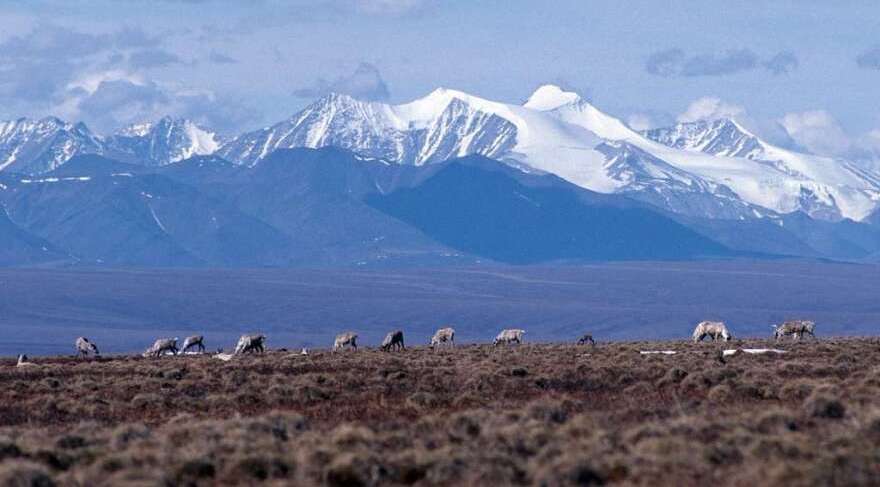
Secretary of the Interior Doug Burgum announced that he will open the entire 1.56 million acres of the Coastal Plain of the Arctic National Wildlife Refuge (ANWR) to oil and gas leasing. These lands are sacred to the Gwich’in Nation, home to irreplaceable wildlife, and have never seen industrialization. This was one of a series of resource development actions taken by the Interior Department during a government shutdown, aimed at opening up Alaska for the benefit of corporate interests. (Photo: USFWS via KALW)

Planet Watch
Wiphala

Bolivia, Syria & the challenge of plurinationalism

The recent political reversal in Bolivia raises the question of whether the advances of nearly 20 years of rule by the indigenist left will survive—including a constitution that refounded the state as a “plurinational” republic. In Episode 299 of the CounterVortex podcast, Bill Weinberg explores how the lessons of the Bolivian experience can be applied to Syria, where the new revolutionary government faces a challenge in Kurdish and Druze demands for regional autonomy. (Photo: Aymara march in Oruro, Bolivia. Via Wikipedia)

Planet Watch
climate

Podcast: Meanwhile, the planet is dying….

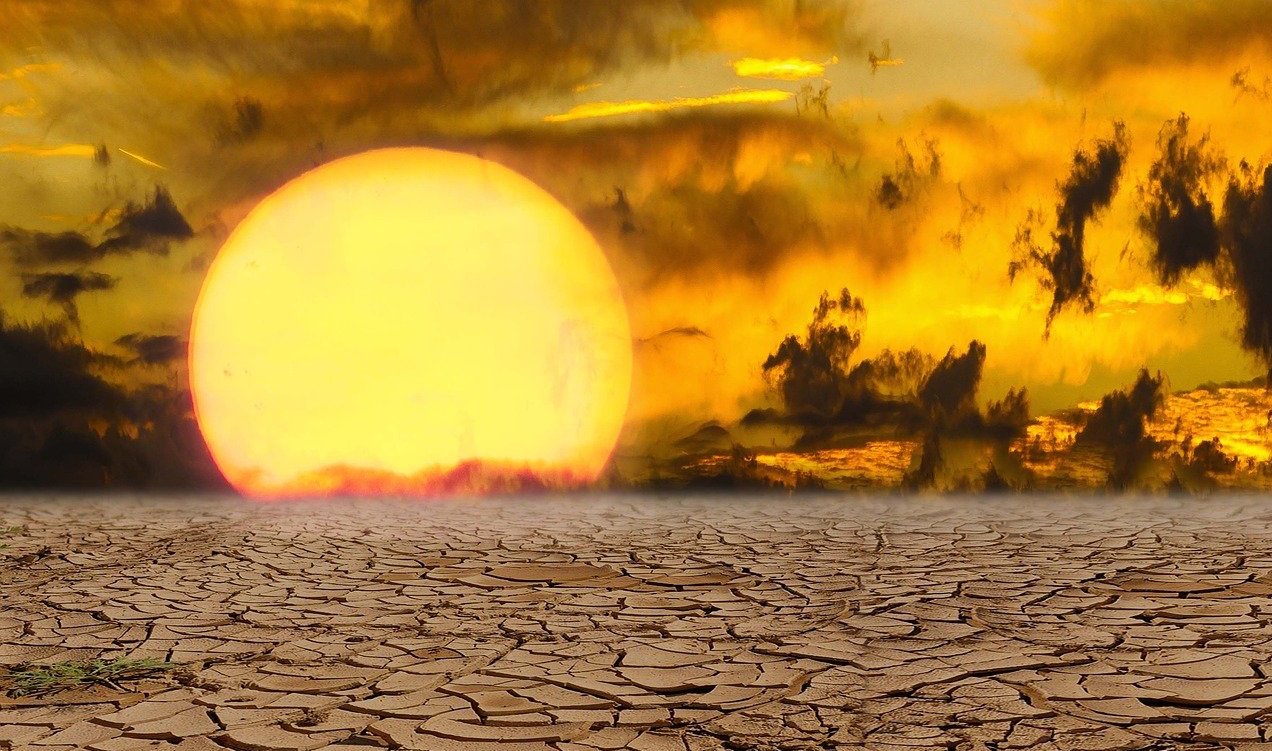
Two landmark rulings on the urgent responsibility of states to address the climate crisis are issued—by the Inter-American Court of Human Rights in a proceeding brought by Chile and Colombia, and by the World Court in a proceeding brought by the threatened Pacific Island nation of Vanuatu. Meanwhile in the USA, the Trump regime withdraws from the Paris Agreement, removes greenhouse gases from EPA oversight, drops subsidies for solar energy—and even destroys NASA’s climate-monitoring satellites! This as receding Arctic ice sheets and sea ice begin to destabilize the climate-regulating Atlantic Meridional Overturning Circulation (AMOC), melting glaciers unleash deluges from the Swiss Alps to the Himalayas of Nepal, wildfires rage from Canada to California to the Mediterranean, and ocean acidification crosses a “‘planetary boundary” that portends global biosphere collapse. In Episode 290 of the CounterVortex podcast, Bill Weinberg takes an unflinching look at the long odds for humanity’s future—even if we manage to avoid nuclear war. (Image: blende12/Pixabay)

Planet Watch
Saksonov

Podcast: in defense of dissident minorities

Amid the massive war crimes committed by Russia in Ukraine and Israel in Gaza, there are dissident Russians and dissident Israelis who are courageously protesting, and resisting the consolidation of a pro-genocide consensus. Recent violent and deadly attacks on perceived Israeli or pro-Israel human targets in the US meanwhile point to the dangers of the notion of collective guilt. In Episode 281 of the CounterVortex podcast, Bill Weinberg urges that dissident minorities must not be dismissed as irrelevant, but encouraged and offered solidarity. (Photo via Novaya Gazeta)

Planet Watch
Amazon Fires

Global forest loss shattered records in 2024

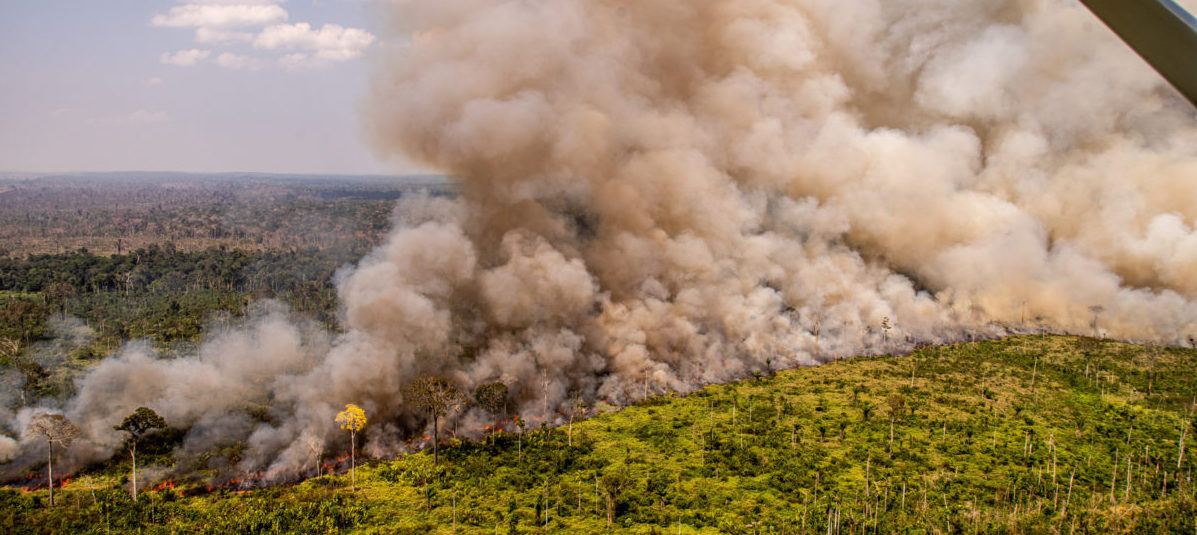
Global forest loss surged to record highs in 2024, driven by a catastrophic rise in fires, according to new data from the University of Maryland’s Global Land Analysis & Discovery (GLAD) Lab, made available on the World Resources Institute‘s Global Forest Watch platform. Loss of tropical primary forests alone reached 6.7 million hectares—nearly twice as much as in 2023 and an area nearly the size of Panama, at a rate of 18 soccer fields each minute. For the first time on record, fires—not agriculture—were the leading cause of tropical primary forest loss, accounting for nearly 50% of all destruction. This marks a dramatic shift from recent years, when fires averaged just 20%. Meanwhile, tropical primary forest loss driven by other causes also jumped by 14%, the sharpest increase since 2016. (Photo via Mongabay)

Planet Watch
Toad

Podcast: yet further thoughts on the common toad

The digitization and literal disembodiment of every sphere of human reality advances with terrifying rapidity—from the Social Security system to the New York subway system. Rather than dropping swipe-cards and bringing back tokens, returning to what was a manifestly superior and more rational system, New York’s Metropolitan Transportation Authority moves to a still more dystopian “contactless” credit system. Similarly, rather than phasing out automobiles, our corporate overlords are now imposing driverless cars, a further step toward making the human race redundant altogether and portending the ultimate abolition of humanity. In Episode 270 of the CounterVortex podcast, Bill Weinberg continues his Spring ritual of reading the George Orwell essay “Some Thoughts on the Common Toad“—which brilliantly critiqued technological hypertrophy and articulated an imperative for humanistic revolution and scaleback of the mega-machine way back in April 1946. (Photo: Partonez via Wikimedia Commons)

Planet Watch
rare earth mine

Ukraine, Greenland and the global struggle for lithium

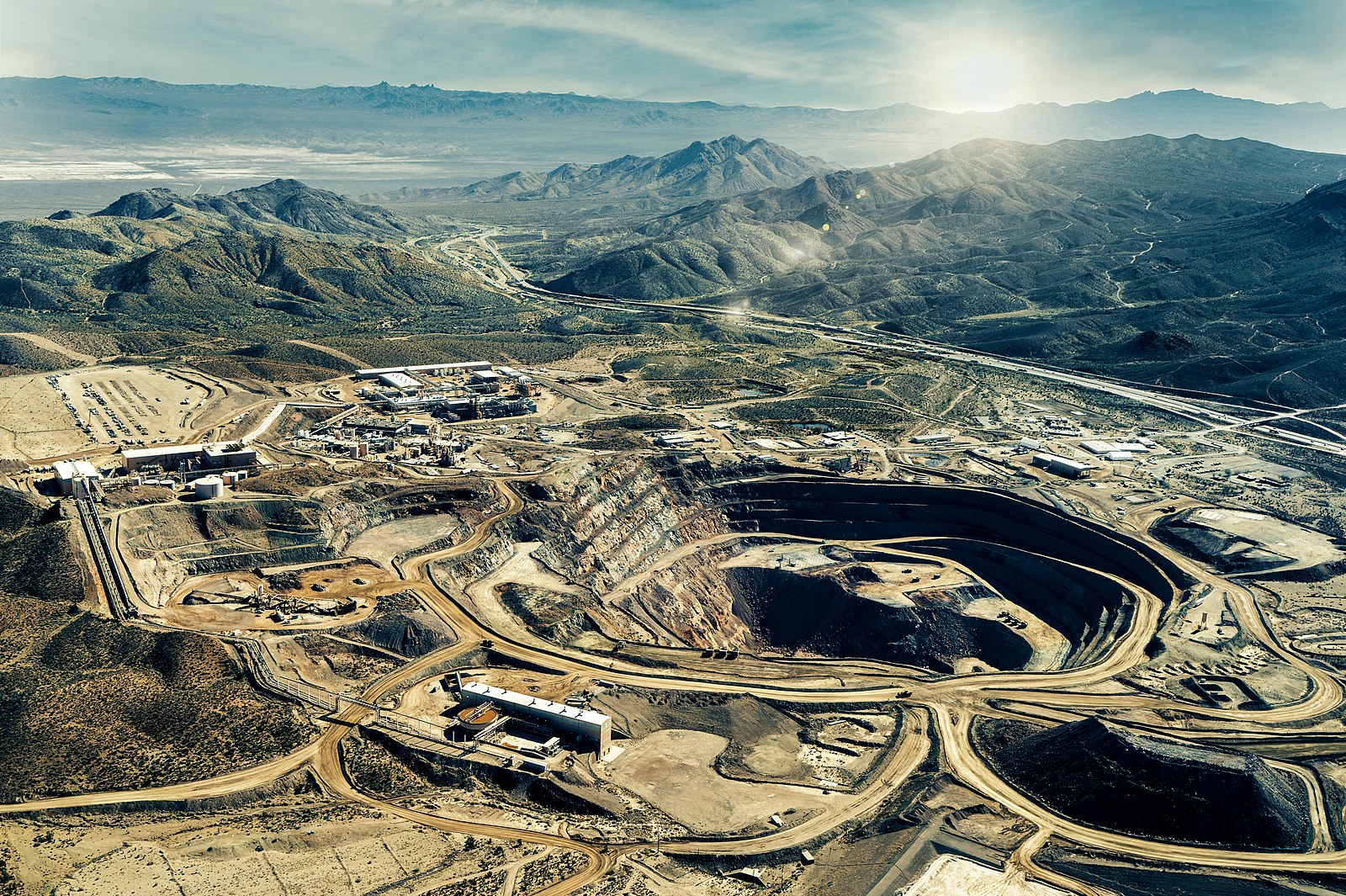
In Episode 265 of the CounterVortex podcast, Bill Weinberg examines Trump’s ultimatum to Ukraine to hand over a large share of its wealth in strategic minerals such as lithium in exchange for continued US military aid—and whether a race with China for control of the lithium and rare earth elements needed for Elon Musk‘s industrial interests might also be the agenda behind the Trump regime’s annexationist designs on Greenland. Trump is meanwhile opening Native American lands in Nevada to lithium exploitation, while Musk’s Tesla has sought to grab a share of Bolivia‘s lithium reserves—now also coveted by China. Listen on SoundCloud or via Patreon. (Photo: rare earth mine at Mountain Pass, Calif. Credit: Tmy350 via Wikimedia Commons)

Planet Watch
Tbilisi

Podcast: nullify the election! IV

Around the world, with inspiring heroism and courage, people are putting everything on the line to defend democracy and prevent the consolidation of dictatorships. In the Republic of Georgia, protests continue in the wake of contested elections that consolidated the rule of an authoritarian pro-Russia party, and the incumbent opposition-backed president is refusing to step down until new polls are held. In Romania, where a Putin-favored right-wing populist won the first-round vote for the presidency, that round has now been annulled by the country’s high court in response to a public outcry over Russian meddling. In South Korea, President Yoon Suk Yeol’s declaration of martial law was met with defiant protests, prompting an overturn of the declaration by the National Assembly, followed by a vote to impeach Yoon, and the opening of a criminal investigation on charges of “insurrection.” Mozambique has seen months of angry protests since contested elections that saw yet another victory for the entrenched machine FRELIMO—despite a deadly police crackdown. And in Brazil, ex-president Jair Bolsonaro, indicted for leading a Trump-style attempted auto-golpe in 2022, has been barred from office. In Episode 257 of the CounterVortex podcast, Bill Weinberg again asks: Why is everyone so quiet here in the United States, the seat of the empire, where the stakes are the highest? (Photo of protest in Tbilisi, Georgia: DerFuchs via Wikimedia Commons)

Planet Watch
Azerbaijan

Global carbon emissions hit record high in 2024

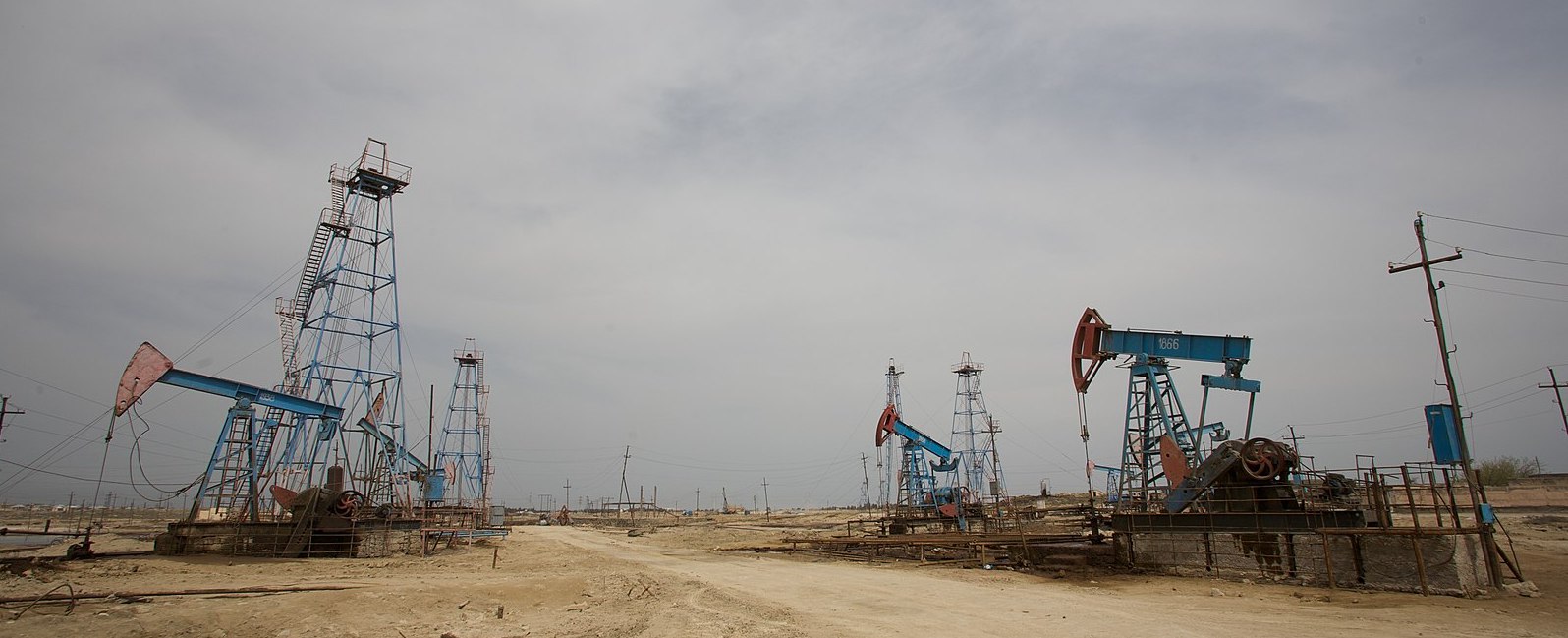
Global carbon emissions from fossil fuels have hit a record high in 2024, with still no sign that they’ve peaked, according to a “carbon budget” assessment by the UK-based Global Carbon Project. Researchers found that burning of oil, gas and coal emitted 41.2 billion tons of carbon dioxide into the atmosphere in 2024, a 0.8% increase over 2023. When added to emissions generated by land-use changes such as deforestation, a total of 45.8 billion tons of CO2 was emitted in 2024. At this rate, the researchers see a 50% chance that global warming will exceed the 1.5 Celsius warming target set by the Paris Agreement within six years. The findings come as the UN climate talks open in Azerbaijan, where the parties are ostensibly negotiating ways to meet the Paris targets. But the leaders of the biggest carbon emitters—those nations responsible for 70% of 2023 emissions—did not bother to attend the gathering. (Photo of Azerbaijan oilfields: Indigoprime via Wikimedia Commons)

Planet Watch
anthropocene

Ranting against the apocalypse II

With Lebanon under bombardment and the world awaiting Israel’s response to the Iranian missile attacks on its territory, fears mount that Iran’s nuclear facilities could be targeted—which, in addition to being an environmental disaster in its own right, could represent the crossing of a moral threshold toward the use of nuclear weapons. So two theaters of the world conflict—the Middle East and Ukraine—now constitute a looming nuclear threat. Meanwhile, the other horsemen of the apocalypse continue their relentless advance—climate change, cyber-based disinformation and the ultimate replacement of humanity by artificial intelligence. In Episode 246 of the CounterVortex podcast, Bill Weinberg looks for glimmers of hope in emerging signs of human resistance—such as the East Coast dockworkers’ strike, which is demanding a ban on all automation at the ports. Listen on SoundCloud or via Patreon. (Photo: CounterVortex)