Africa
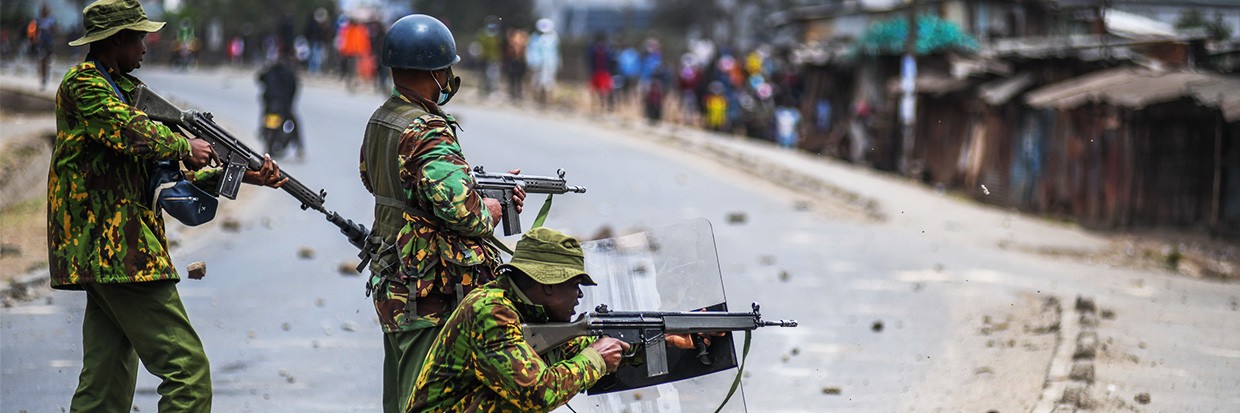
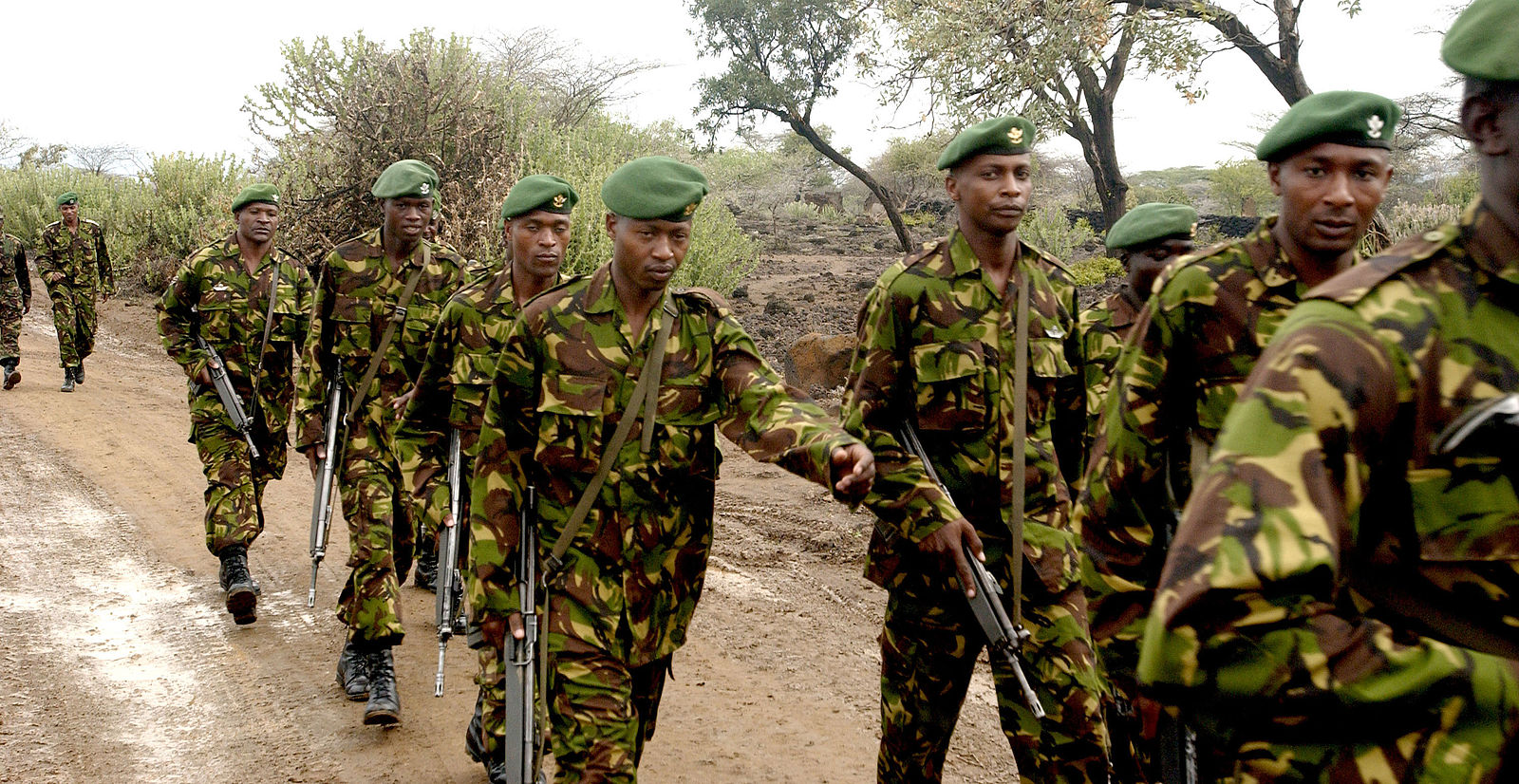
Kenyan soilders

Kenya-led intervention force approved for Haiti

The UN Security Council voted to approve a multi-national armed force led by Kenya to combat violent gangs in Haiti—marking the first time in nearly 20 years that foreign forces are to be deployed to the Caribbean nation. Kenya’s foreign minister said that his country wants to go beyond tackling the gangs, helping to strengthen infrastructure and restore democracy in Haiti, where elections have been repeatedly postponed due to the violence. But many have voiced skepticism about deployment of the force, asking how it will work if Kenyan troops don’t speak French or Kreyol, and questioning the wisdom of sending personnel from a military criticized at home for human rights abuses. (Photo: Wikimedia Commons)

Africa
#OccupyJulorbiHouse

‘Occupy’ protests hit Ghana

Hundreds held a three-day protest campaign in Ghana’s capital, Accra, to denounce harsh economic conditions and the “moral decay” of the country’s leadership. With placards reading “Ghana deserves better,” protesters attempted to march on the seat of government, Golden Jubilee House, intending to “occupy” it—but riot police and armored vehicles barred their way. In response, demonstrators sat down in the road, effectively shutting down the area for hours. Over 50 were arrested when police finally cleared the intersection. (Photo: Jurist via GhanaWeb TV)

Africa
Niger

Podcast: flashpoint Niger

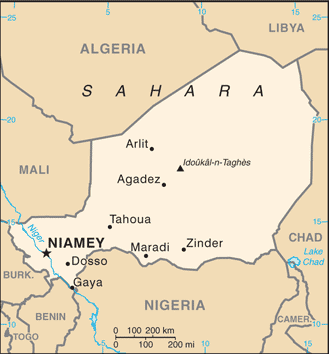
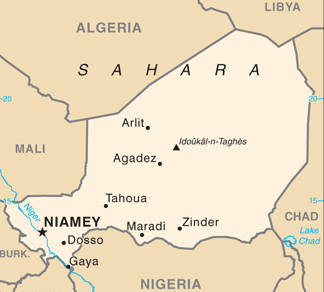
In Episode 186 of the CounterVortex podcast, Bill Weinberg examines the coup d’etat in Niger, which now threatens to plunge West Africa into regional war—with potential for escalation involving the Great Powers. Lines are drawn, with the Western-backed ECOWAS demanding the junta cede power, and Russian-backed Mali and Burkina Faso backing the junta up. Pro-junta demonstrators in Niger’s capital, Niamey, wave the Russian flag—probably to express displeasure at US and French neo-colonialism. The Wagner Group, which already has troops in Mali and Burkina Faso, has expressed its support for the junta, and offered fighters to help stabilize the regime. Elements of the tankie pseudo-left in the West are similarly rallying around the junta. Amid this, leaders of the Tuareg resistance in Niger have returned to arms to resist the new regime, and the country’s mine workers union is also demanding a return to democratic rule. Listen on SoundCloud or via Patreon. (Map: PCL)

Africa
Kenya

Cover-up of police killings seen in Kenya unrest

A Kenyan police official told the Associated Press that police received a warning against reporting deaths that have occurred during protests over the high cost of living under the government of President William Ruto. Although it was unclear who issued the direct order, it came after opposition leader Raila Odinga called for three days of protests. Since Ruto’s election last year, Kenya has witnessed tax increases and a steep rise in petrol prices. The demonstrations, and the brutal response from the state, have seen at least 30 people killed since March, according to Amnesty International. The UN says 5.4 million people need urgent food aid in Kenya following five consecutive seasons of drought. (Photo: OHCR)

Syria
Idlib displaced

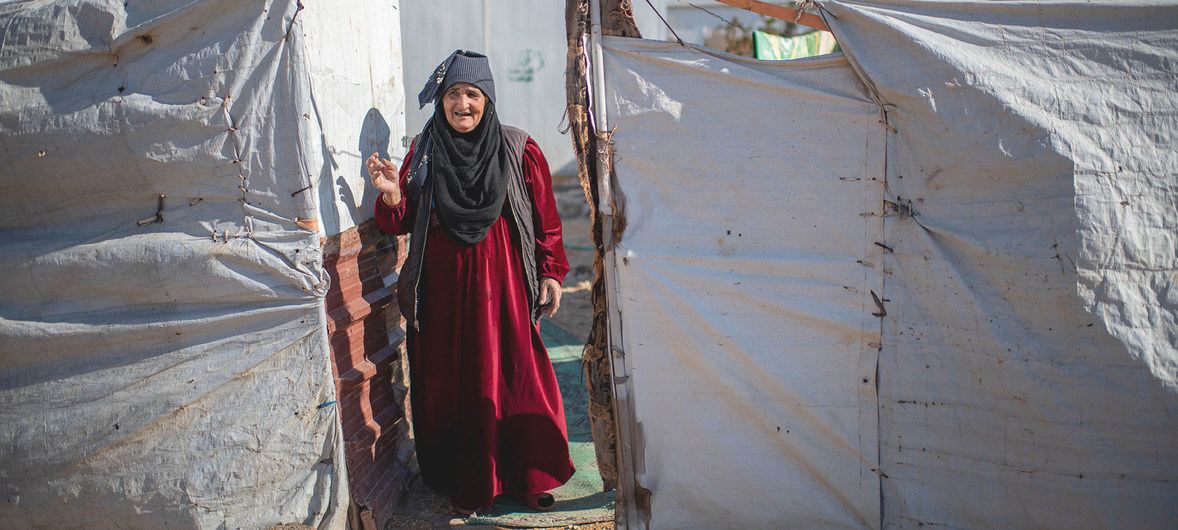
Syria: grim reality behind Assad’s new aid offer

The Security Council has failed to renew the resolution allowing the UN to deliver aid across the border from Turkey to rebel-held northwest Syria, throwing into question the future of a relief effort that is crucial for millions of people. The day after the resolution expired, Russia vetoed a new resolution that would have allowed access through one border crossing into the region, Bab al-Hawa, for nine months. Two days after that, The Assad regime said it will allow UN aid into the northwest via Bab al-Hawa for six months—if it is done “in full cooperation and coordination with the government.” But this is unlikely to be welcomed by many Syrian and international aid groups, given that the current system was set up back in 2014 largely because of the Assad regime’s obstruction of aid. (Photo: UNHCR)

Europe
Ukraine

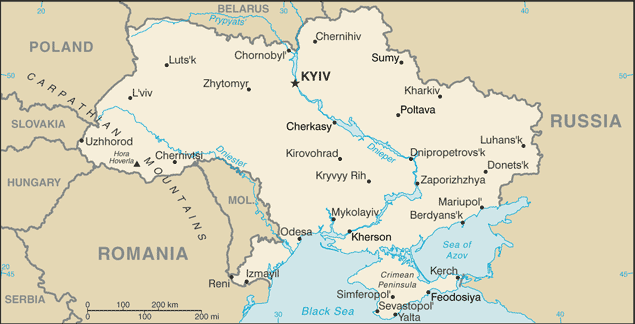
Kakhovka: ‘ecocide’ as war crime in Ukraine

In Episode 177 of the CounterVortex podcast, Bill Weinberg examines the unfolding Kakhovka dam disaster in Ukraine, an evident design by Russia to forestall a Ukrainian counter-offensive into the occupied southeast of the country. Massive flooding has been unleashed downstream, imperiling some of the world’s most important farmland. Upstream, coolant water to the Zaporizhzhia power plant is threatened, escalating Russia’s “reckless nuclear gamble” at the facility. It is true that the disaster gravely impacts much Russian-held territory, including the Crimea Peninsula. However, despite Moscow’s official denials of responsibility, Russia’s online internal propaganda organs are bragging about it. The Wagner Group mercenary outfit calls the disaster “beautiful” and boasts that the destruction of dams on the Dnipro River is a “trump card” against Ukraine. The cataclysm on the Dnipro provides a grim test case as the International Criminal Court moves to adopt “ecocide” as a recognized international crime. Listen on SoundCloud or via Patreon. (Map: PCL)

Syria
syria

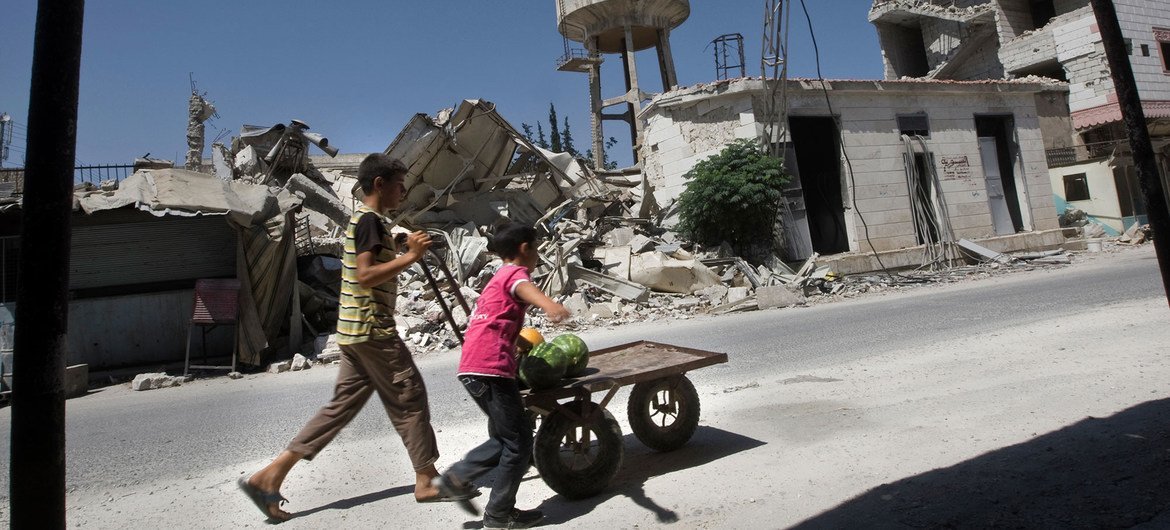
Syria: regime ‘normalization’ —amid war and hunger

At a closed meeting in Cairo, Arab League foreign ministers approved a measure to readmit Syria after more than a decade of suspension—a critical victory for the normalization of Bashar Assad’s genocidal regime. This diplomatic coup, however, cannot mask the reality that Syria’s war is not over. Assad may have retaken most of the country, but various rebel and Kurdish forces still control much of the north. Civilians are still being killed in shelling and other violence. Even before earthquakes devastated large parts of northern Syria three months ago, continuing conflict and a debilitating economic crisis meant deepening hunger. Humanitarian needs in Syria were already at a record high. But amid mounting global crises, the UN-coordinated appeal for Syria in 2023 is only eight percent funded. And food prices are still rising, making it harder still for aid groups to meet the urgent and growing needs of millions of Syrians. (Photo: Giovanni Diffidenti/UNICEF via UN News)

Mexico
maiz

Podcast: Mexico and the struggle for the genetic commons

In Episode 166 of the CounterVortex podcast, Bill Weinberg discusses how a little-noted US-Mexico dispute on trade and agricultural policy has serious implications for the survival of the human race. Washington is preparing to file a complaint under terms of the US-Mexico-Canada Agreement over Mexico’s decree banning imports of GMO corn, slated to take effect in January 2024. Concerns about the (unproven) health effects of consuming GMO foods miss the real critique—which is ecological, social and political. GMO seeds are explicitly designed as part of an “input package” intended to get farmers hooked on pesticides and petrochemical fertilizers, and protect the “intellectual property” of private corporations. Agribusiness, which can afford the “input package,” comes to dominate the market. Eased by so-called “free trade” policies, agbiz forces the peasantry off the market and ultimately off the land—a process well advanced in Mexico since NAFTA took effect in 1994, and which is related to the explosion of the narco economy and mass migration. The pending decree holds the promise of regenerating sustainable agriculture based on native seed stock. It is also a critical test case, as countries such as Kenya have recently repealed similar policies in light of the global food crisis. Listen on SoundCloud or via Patreon. (Image: Sin Maíz No Hay País)

Afghanistan

Taliban regime in oil deal with Chinese company

Afghanistan’s Taliban regime has agreed to sign a contract with a Chinese company to exploit oil in the Amu Darya basin in the country’s north. The contract with the Xinjiang Central Asia Petroleum & Gas Co. (CAPEIC) is to be the first major resource extraction deal the regime has signed with a foreign company since taking power in 2021. “The Amu Darya oil contract is an important project between China and Afghanistan,” China’s ambassador, Wang Yu, told a joint press conference with Taliban officials in Kabul. Beijing has not formally recognized the Taliban government but has significant interests in Afghanistan, a country deemed critical for its Belt & Road Initiative. (Map: Perry-Castañeda Library)

South Asia
Sindh

Pakistan floods highlight climate injustice

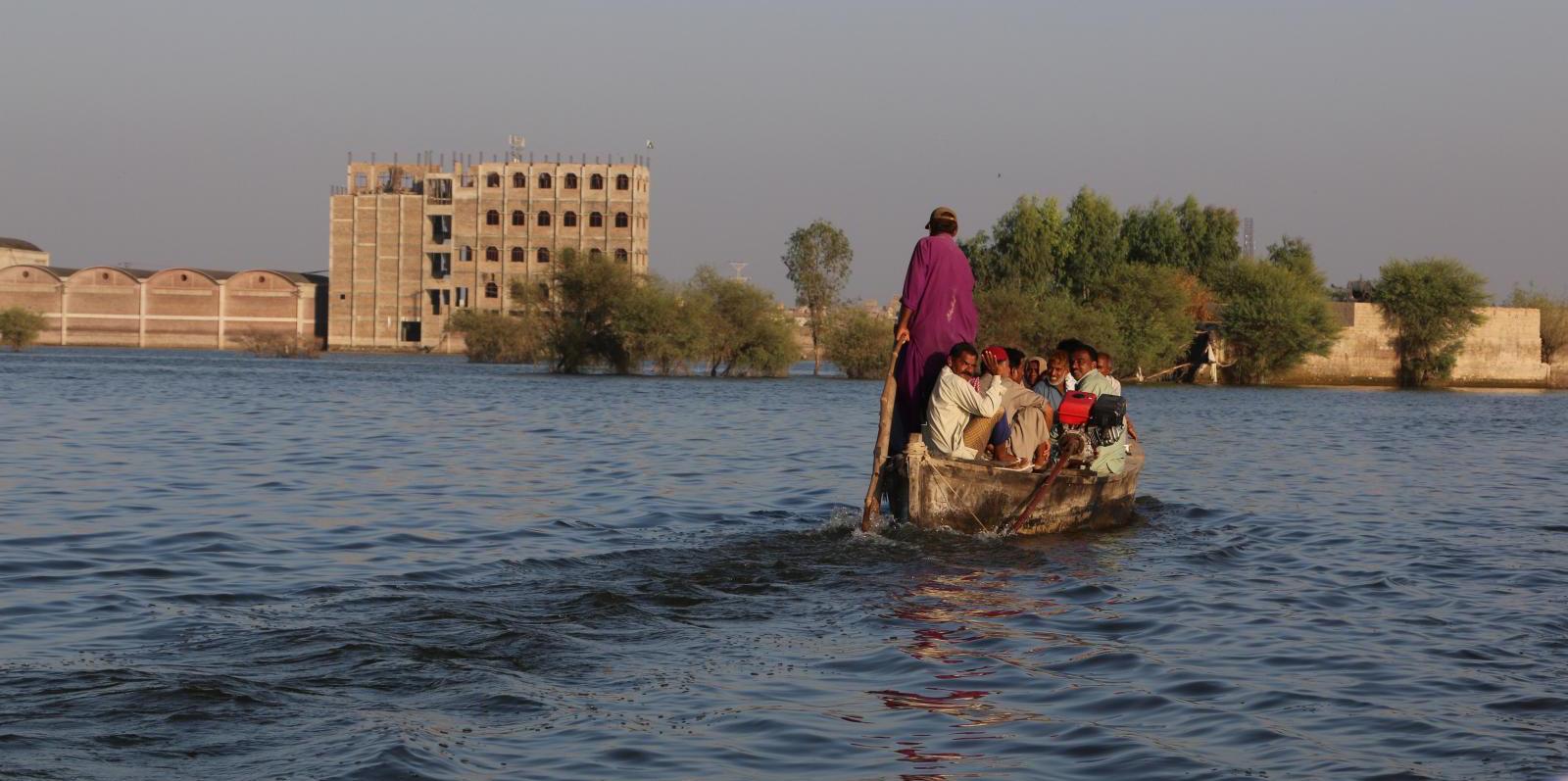
As world leaders meet at the COP27 in Egypt to try to reinvigorate stalled global climate talks, survivors of Pakistan’s heaviest flooding in living memory are facing a health crisis, with stagnating floodwaters fuelling a rise in malaria, dengue, and diarrhoea. The unprecedented scale of the disaster—up to $40 billion in economic damage, 1,700 killed since mid-June, eight million displaced, and almost half the country’s farmland submerged—has given impetus to calls for COP27 to take up the question of climate reparations. (Photo: Verena Hölzl/TNH)

Planet Watch
doomsday

Nuclear war would cause global starvation: study

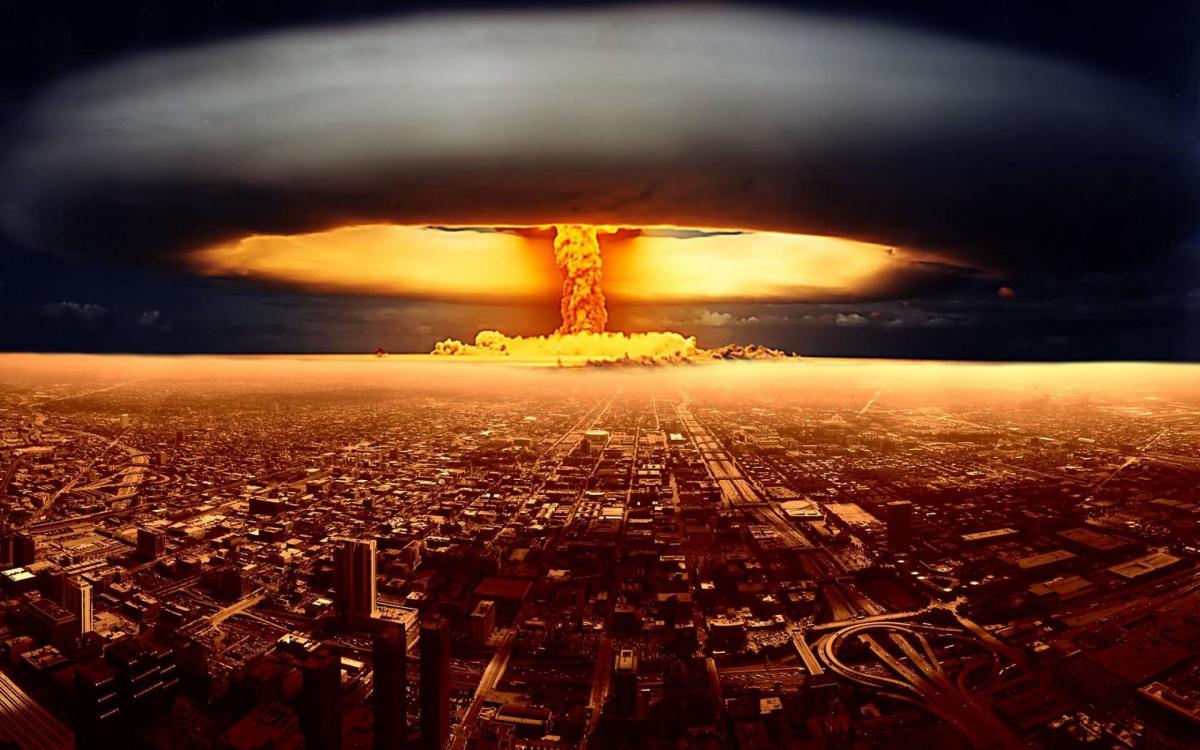
More than 5 billion people would die of hunger following a full-scale nuclear war between the US and Russia, according to a study led by Rutgers climate scientists, published in the journal Nature Food. The team estimated how much sun-blocking soot would enter the atmosphere from firestorms that would be ignited by the detonation of nuclear weapons. Researchers calculated soot dispersal from six scenarios—from a regional India-Pakistan exchange to a large US-Russia war. Under even the smallest nuclear scenario, global average caloric production decreased 7% within five years of the conflict. In the largest scenario—a full-scale US-Russia nuclear conflict—global average caloric production decreased by about 90% three to four years after the exchange. “The data tell us one thing: We must prevent a nuclear war from ever happening,” said Alan Robock, professor of climate science with the Department of Environmental Sciences at Rutgers University and co-author of the study. (Image: MoreSky)

Africa
freetown

Econo-protests rock Sierra Leone

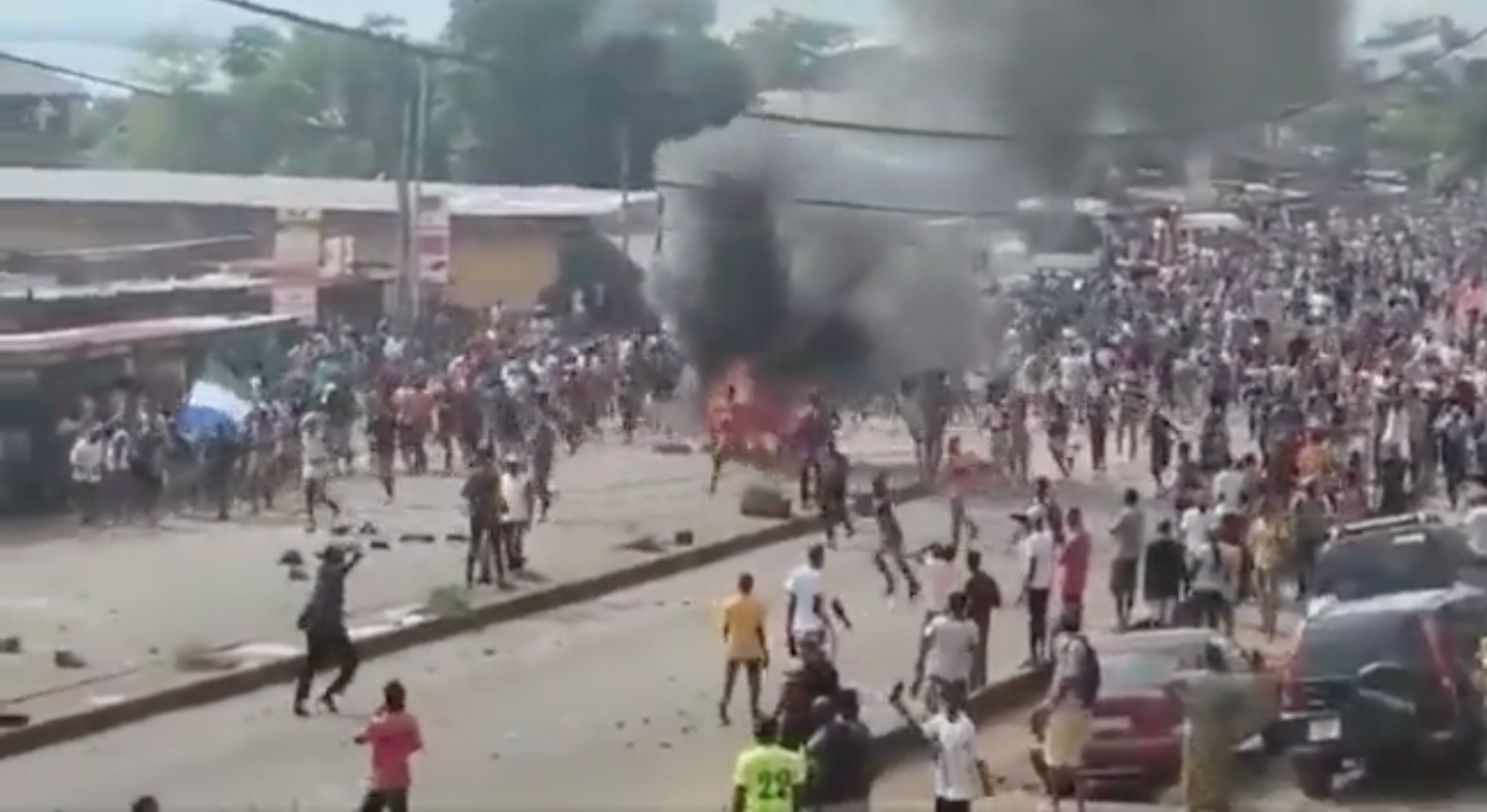
Authorities in Sierra Leone imposed a nationwide curfew amid anti-government protests, in which a still undetermined number of people have been killed, apparently including at least four police officers. In the capital Freetown, protesters barricaded the streets and clashed with security forces, enraged at a 40% spike in the cost of living. A key demand is the resignation of President Julius Maada Bio, who is on a month-long vacation with his family in London—a trip apparently paid for with misappropriated public funds. The government has shut down internet access in the country to prevent activists from issuing calls to protest and spreading images of the repression. President Bio has long been accused of rampant corruption and human rights abuses. (Image: Africa Facts Zone via Twitter)