


Leak at tar sands plant fouls Athabasca River
Tainted water poured for hours into Canada's Athabasca River before a broken pipe was sealed at one of the Suncor tar-sands plants that it is to supply the Keystone XL pipeline.
Tainted water poured for hours into Canada's Athabasca River before a broken pipe was sealed at one of the Suncor tar-sands plants that it is to supply the Keystone XL pipeline.
Trial began in US District Court for the Eastern District of Louisiana between individuals affected by the 2010 Deepwater Horizon oil spill and British Petroleum.
British Petroleum agreed to pay a record $4.5 billion in penalties and plead guilty to felony misconduct for its role in the devastation caused by the 2010 Deepwater Horizon oil spill.
An Argentine judge embargoed Chevron’s assets in the country, a win for plaintiffs trying to collect a $19 billion judgment against the company in Ecuador for environmental damage.
The US Supreme Court declined to Chevron’s bid to block global enforcement of a $19 billion judgment by a court in Ecuador, in a victory for 30,000 rainforest dwellers.
Shell Oil faces litigation over Nigerian oil spills in the Dutch courts, while the Obama administration is urging the US Supreme Court to dismiss a similar case.
An oil spill at a refinery operated by the Venezuelan parastatal PDVSA on the Dutch Caribbean island of Curaçao threatens a nature reserve which is a critical flamingo habitat.
Gunmen attacked two ships off the coast of Nigeria's oil-rich southern delta, killing two naval troops protecting the vessels and seizing four foreign workers before fleeing.
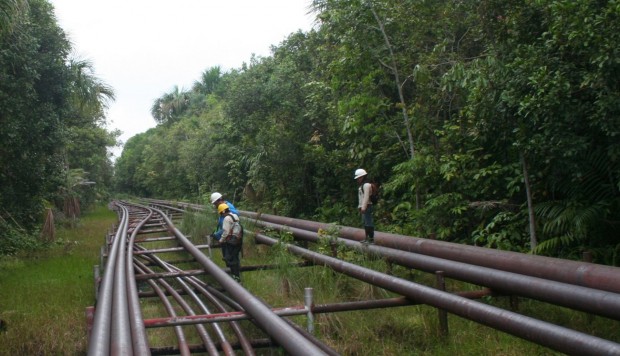 Lizardo Cauper, president of Peru's alliance of Amazonian peoples, AIDESEP, issued an urgent call for authorities to open dialogue with indigenous communities in the northern region of Loreto rather than militarizing the area in response to mounting social conflicts and attacks on the North Peruvian Pipeline. Noting that the aging pipeline is in chronic disrepair, with repeated spills contaminating the rainforest, Cauper said: "We have made a call that, in place of militarization, they put in place a new pipeline. But it is not enough to have a new pipeline, but to respond to the demands of the people who are living around these oil activities." Regional authorities have called upon Lima to declare a state of emergency in response to paralysis of the pipeline, which delivers crude from rainforest oilfields over the Andes. (Photo: Andina)
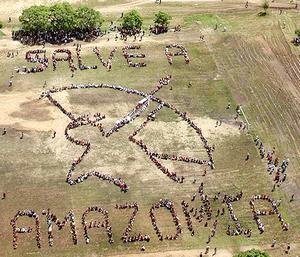
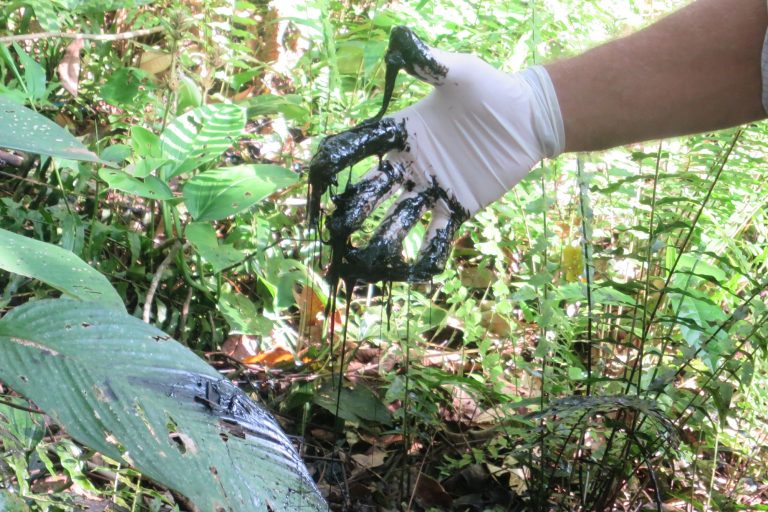 The Constitutional Court of Ecuador issued a long-awaited ruling in favor of those affected by the transnational oil company Chevron, which operated through its subsidiary Texaco in Ecuador between 1964 and 1990. Chevron will now have to pay $9.5 billion for the repair and remediation of social and environmental damage that, according to audits and expert reports, were a result of oil company operations in the Amazonian provinces of Sucumbíos and Orellana. The court found that Chevron deliberately dumped billions of gallons of toxic oil waste on indigenous lands in the Amazon rainforest. (Photo via Mongabay)
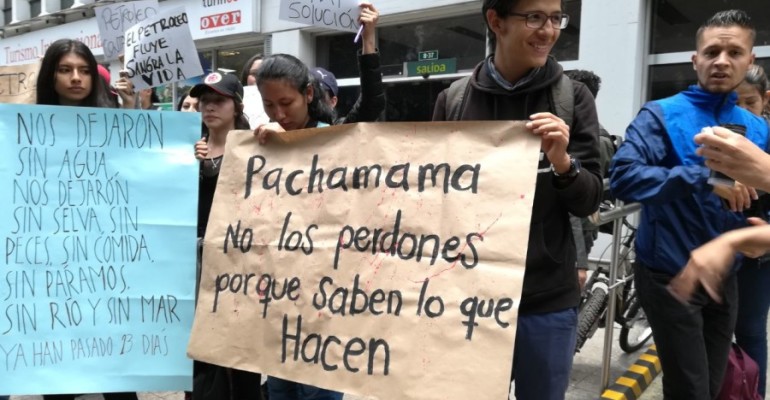 A state of emergency has been declared in Barrancabermeja, the oil hub on Colombia's Río Magdalena, following a rupture on a pipeline delivering crude to the city's refinery. The spill at the Lizama 158 well, run by parastatal Ecopetrol, contaminated local waterways that flow into the Magdalena, and which local campesino communities depend on. The affected area includes habitat for jaguars and manatees. The Fracking-Free Colombia Alliance called it a "catastrophe of unequaled magnitude" in a long history of oil spills in the area, and said the impacts could last 30 years. Colombia's attorney general has opened an investigation to determine if there is criminal liability in the spill. (Photo: Contagio Radio)