


Colombia: war, illegal mining encroach on indigenous communities
Embera indigenous communities on Colombia’s Pacific coast came under bombardment by army helicopters, while an Awá community expelled illegal gold miners from their land.
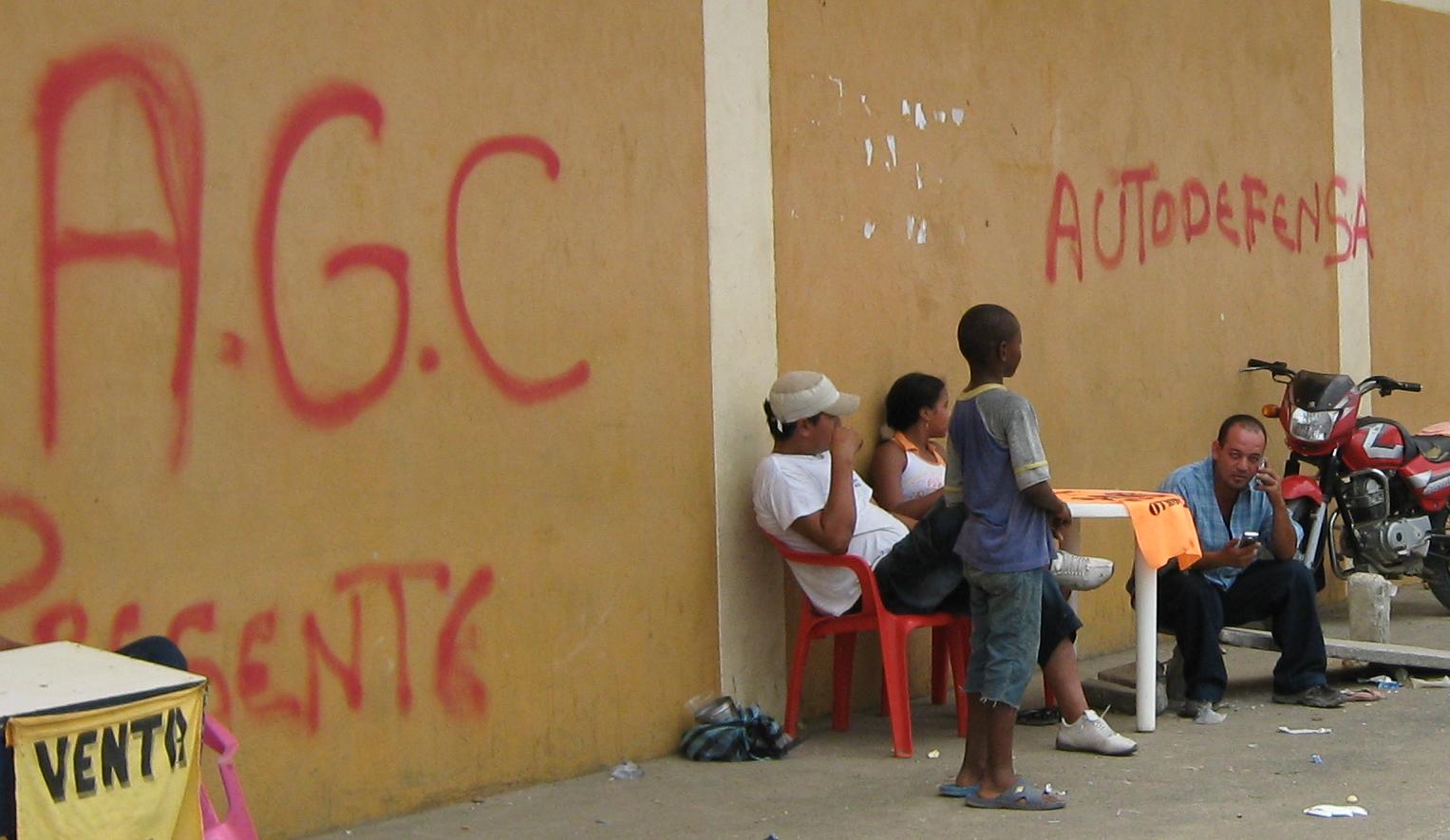
Under pressure to address the ongoing wave of targeted assassinations in Colombia, President Iván Duque for the first time spoke before the National Commission to Guarantee Security, formed by the previous government to address continuing violence in the country—which has only worsened since he took office last year. Duque said 4,000 people are now under the government's protection program for threatened citizens. But his office implied that the narco trade is entirely behind the growing violence. Interior Minister Nancy Patricia Gutiérrez told the meeting: "This great problem is derived from the 200,000 hectares of illicit crops that we have in Colombia." However, it is clear that the narco economy is but part of a greater nexus of forces that fuel the relentless terror—all related to protecting rural land empires and intimidating the peasantry. (Photo via Contagio Radio)
Gilberto Valencia, a young Afro-Colombian cultural worker, became 2019's first casualty of political violence in Colombia, when a gunman opened fire on a New Years party he was attending in his village in Cauca region. As the death toll from around the country mounted over the following weeks, the UN Mission to Colombia warned President Iván Duque that he must address "the issue of the assassinations of social leaders and human rights defenders." Colombia's official rights watchdog, the Defensoría del Pueblo, acknowledges that there was an assassination on average every two days in the country last year—a total of 172, and a rise of more than 35% over 2017. (Photo via Caracol Radio)
Colombia's President Iván Duque declared the peace process with the National Liberation Army (ELN) indefinitely suspended following a bomb blast at a National Police academy in Bogotá that left more than 20 dead and some 70 wounded. Calling the ELN a "criminal machine of kidnapping and assassination," Duque said that arrest orders against the group's top leaders, suspended for the talks, would now be carried out. He also called on Cuba, where members of the ELN command are now based, to have them arrested. The ELN took responsibility for the attack in a communique, calling it an act of "legitimate defense" that was "legal under the laws of war." The statement asserted: "The National Police School of Cadets is a military installation; there officials receive instruction and training later put to use in combat, conducting military operations, actively participating in the counter-insurgency war and bringing methods of war for use against social protest." (Photo: Colombia Reports)
The dark days of state collaboration with Colombia's murderous paramilitary groups were recalled with the arrest in New York of Javier Valle Anaya, former sub-director of Bogotá's Administrative Security Department (DAS), a now-disbanded intelligence agency that was found to be feeding information to the paras. Valle Anaya was detained on an immigration violation, but may face extradition to Colombia, where he is wanted in connection with the 2004 assassination of a human rights activist in Barranquilla. Ironically, the arrest comes just as a new scandal has emerged concerning an illegal network of chuzadas—Colombian slang for eavesdroppers. Retired National Police general Humberto Guatibonza was arrested in Bogotá, charged with running a chuzada ring that spied on labor activists—particularly members of the airline workers union, ACDAC. (Photo via Contagio Radio)
Colombia’s voters elected conservative Iván Duque as the country's president, handing a decisive defeat to leftist candidate Gustavo Petro in a run-off vote. Duque is political protege of ex-president Alvaro Urbe, a bitter opponent of the peace process with the former FARC guerillas, and campaigned on a pledge to revise the peace deal. A popular referendum on overturning the legislation that was passed to implement the peace deal has been broached.

Colombia's two guerilla groups that remain in arms pledged to open a dialogue with each other to bring their internecine conflict to an end. Fighting broke out weeks ago between the National Liberation Army (ELN) and its smaller rival, the Popular Revolutionary Army (EPL). William Villamizar, governor of Norte de Santander department, has declared a state of emergency over the violence, which he said has displaced some 1,000 families. The fighting is said to have begun as the two groups vied to take control of coca-growing lands vacated by the demobilized FARC guerillas. (Photo: Colombia Reports)
Colombia's peace process continues to advance, with institutional mechanisms for a post-war order falling into place. But violence in the countryside across Colombia remains at an alarming level, as social leaders are targeted for assassination by paramilitary factions. The ELN guerilla organization—which, unlike the FARC, remains in arms—released a statement noting that January had seen an assassination every day across the country, and charged that rightist paramilitary networks are carrying out a "systematic genocide."