Greater Middle East
ARSA

Rojava and the Rohingya: fearful symmetry

Three weeks after the fall of the Bashar Assad dictatorship, the only fighting in Syria remains between Arab and Kurdish militias—holding grim potential for destabilization of the democratic revolution. Kurds had been persecuted and even denied citizenship under the Assad regime, but the invasion of their autonomous territory of Rojava by the Turkish-backed rebels of the Syrian National Army (SNA) drove them into a paradoxical tactical alliance with the dictatorship. The tragic situation in Burma’s Rakhine state mirrors this disturbing reality. The Muslim Rohingya people had been persecuted, denied citizenship and finally targeted in a campaign of genocide by the military, but are now facing attacks by the Buddhist-supremacist rebels of the Arakan Army—driving some Rohingya into a paradoxical tactical alliance with the military junta. In Episode 258 of the CounterVortex podcast, Bill Weinberg offers this analogy in the hope that the peoples of Burma can unite across religious lines to defeat the junta, and that Syrians can find a way toward co-existence in the new revolutionary order and avoid ethnic war. Listen on SoundCloud or via Patreon. (Photo of Arakan Rohingya Salvation Army-ARSA rebels: Burma News International)

Syria
SDF

Podcast: Free Syria and the Kurdish question

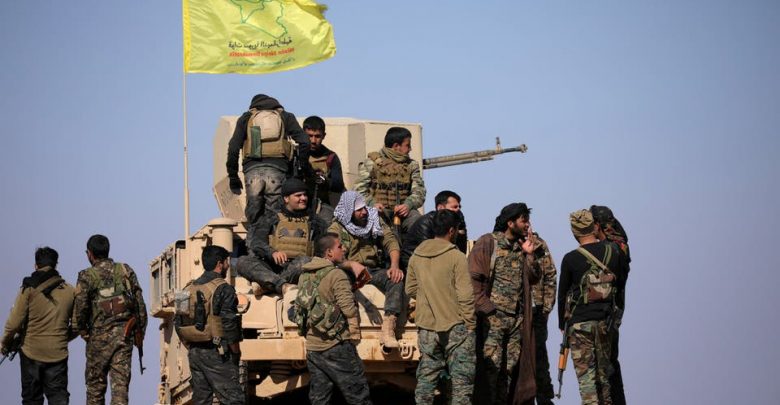
Amid jubilation following the overthrow of long-ruling dictator Bashar Assad, the only fightingin Syria is now between Arabs and Kurds—as the Turkish-backed Syrian National Army (SNA) expels the Kurdish-led Syrian Democratic Forces (SDF) from the town of Manbij. Ankara’s design is clearly to expunge the Kurdish autonomous zone in the northeast region of Rojava. Yet there are also positive signs of an accommodation between the Rojava Kurds and the new revolutionary administration in Damascus. In Episode 256 of the CounterVortex podcast, Bill Weinberg examines the new political landscape in Syria and tries to identify a way forward—past the threat of ethnic war and toward a multicultural democracy. Listen on SoundCloud or via Patreon. (Image: Rudaw)

Syria
Aleppo

Threat of Arab-Kurdish war in new battle for Syria

With the Syrian city of Aleppo now mostly in rebel hands following a surprise offensive, the danger emerges that Kurdish forces could be drawn into the conflict on the side of Assad dictatorship. Kurdish militias have for years controlled their own enclave within the city, the neighborhood of Sheikh Maqsood. The Kurdish-led Syrian Democratic Forces (SDF) are now trying to open an evacuation corridor between Sheikh Maqsood and the Kurdish-held town of Tal Rifaat to the north. An evacuation of Tal Rifaat itself to Kurdish-held areas to the east is also being prepared. This effort is being blocked by one of the rebel militias, the Turkish-backed Syrian National Army (SNA), with clashes between the two forces reported. The SNA has been repeatedly implicated in abuses against the Kurdish population in areas it took from SDF-aligned forces in a 2019 offensive. This offensive drove the SDF into a tactical alliance with the Assad regime—although this alliance has repeatedly broken down over the regime’s rejection of the SDF’s principal demand of Kurdish autonomy. (Map: Google)

Greater Middle East
Iran

Turkey strikes Syria, Iraq after Ankara attack

Turkey launched air-strikes on supposed Kurdistan Workers’ Party (PKK) targets in Syria’s Rojava autonomous enclave and Iraq’s Kurdistan region in retaliation for an attack on the headquarters of a defense contractor in Ankara. Five were killed and two attackers reported “neutralized” in the explosion and armed assault at the Turkish Aerospace Industries (TUSAS) facility in Ankara’s Kahramankazan district. No group has claimed responsibility for the attack, but Turkish authorities quickly blamed the PKK. Strikes were reported on the Rojava towns of Qamishli, Derik, Kobane, Tal Rifaat, and Manbij. Rojava’s autonomous authorities said that at least four civilians were killed, including a five-year-old child, and 15 people injured. (Image: Pixabay)

Africa
Darfur

Sudan: Fur leaders reject RSF-backed ’emirate’

Leaders and activists from the Fur people in Sudan’s Central Darfur state voiced their rejection of the Rapid Support Forces’ establishment of a new “emirate” in the ethnicity’s traditional territory for an Arab group that has migrated from the neighboring Central African Republic. They warned of an agenda of demographic change and the empowerment of outside groups at the expense of the indigenous population. The response came after platforms affiliated with the RSF published a video of a celebration held by a group called “Awlad Baraka & Mubarak,” marking the establishment of the “emirate.” RSF Brig. Gen. Mohamed Adam Bangoz addressed the event. (Map via Radio Tamazuj)

Syria
Syria

Syria: Rojava Kurds clash with Assadist forces

Clashes broke out between Syrian regime forces and militia of the Kurdish-led Rojava autonomous administration near the Euphrates River in eastern Deir ez-Zor governorate. The fighting began after regime forces west of the Euphrates launched surface-to-surface attacks on Kurdish-held towns across the river. The Syrian Democratic Forces (SDF), the principal Kurdish-led military formation, said in a statement that an operation against regime positions was carried out “in retaliation for the blood of the martyrs” killed “by artillery shelling from the Syrian regime.” The violence erupted three days after US troops were targeted in a drone attack on a position they share with the SDF at Rumalyn Landing Zone in al-Hasakah governorate to the north. The current fighting is close to al-Omar oil field, which is protected by a joint force of SDF fighters and US troops. (Map: PCL)

Mexico
Mexico

Mexican elections see record number of assassinations

The results are in from Mexico’s presidential election and Claudia Sheinbaum of the ruling left-populist National Regeneration Movement (MORENA) has won by some 60%, handily defeating a rival backed by an alliance of the country’s more traditional political parties. But the ongoing human rights crisis in Mexico that will obviously pose a grave challenge for Sheinbaum was dramatically exemplified by the record number of political assassinations that marred the elections. (Map: PCL)

Southeast Asia
Burma

Burma: Karen rebels seize strategic border town

The Karen National Union (KNU) said that it will establish its own administrative mechanism in territory recently captured from Burma’s military in and around the critical trade hub of Myawaddy, on the border with Thailand. The KNU has several departments in its governance structure, including those for health, education, foreign affairs and defense, in territories it controls in seven districts across southeastern Burma, including in Karen (Kayin) and Mon states and Bago and Tanintharyi regions. The junta has lost control of several towns on the border with China to other rebel armies in recent months, but the loss of Myawaddy is a special blow, as it is the transfer point for most of Burma’s overland trade with Thailand. (Map: PCL)

Iran
Baluch

Iran: insurgents strike in Baluchistan region

The insurgent Sunni Baluch group Jaish al-Adl carried out simultaneous attacks on bases of the security forces in Iran’s southeastern Sistan & Baluchestan province, leaving five troops dead. The attacks targeted a Border Guard post in Chabahar, and a Revolutionary Guards base in Rask. Troops gave pursuit, and skirmishes in the areas continue, with several more reported dead on both sides. Jaish al-Adl, or Army of Justice, is largely made up of followers of the banned militant organization Jundullah (Soldiers of God), and claims to “defend the rights of the Sunni Baluch people.” (Map: PCL)

Inner Asia
Karakalpakstan

Karakalpak activist detained in Kazakhstan

Police in Almaty, Kazakhstan, detained Aqylbek Muratbai, an activist who has been working to raise international awareness about the bloody crackdown on a mass protest in his native Karakalpakstan, an autonomous region of western Uzbekistan, last July. It is feared that Kazakh authorities intend to deport him to Uzbekistan, where he could face a severe prison sentence. (Map: Wikipedia)

Southeast Asia
South Thailand

Thailand: southern insurgency accepts peace plan

Muslim separatists in Thailand’s Deep South agreed in principle  to an “improved” peace plan with the government. The agreement, facilitated by Malaysia, follows years of abortive talks. The Barisan Revolusi Nasional (BRN), the main separatist organization, announced a unilateral ceasefire in 2020 in response to the COVID 19 pandemic. More than 7,000 people have been killed in 20 years of intermittent fighting between government forces and separatists in the country’s three southernmost provinces of Pattani, Yala and Narathiwat, whose populations are overwhelmingly Malay Muslim. (Map: Wikipedia)

Africa
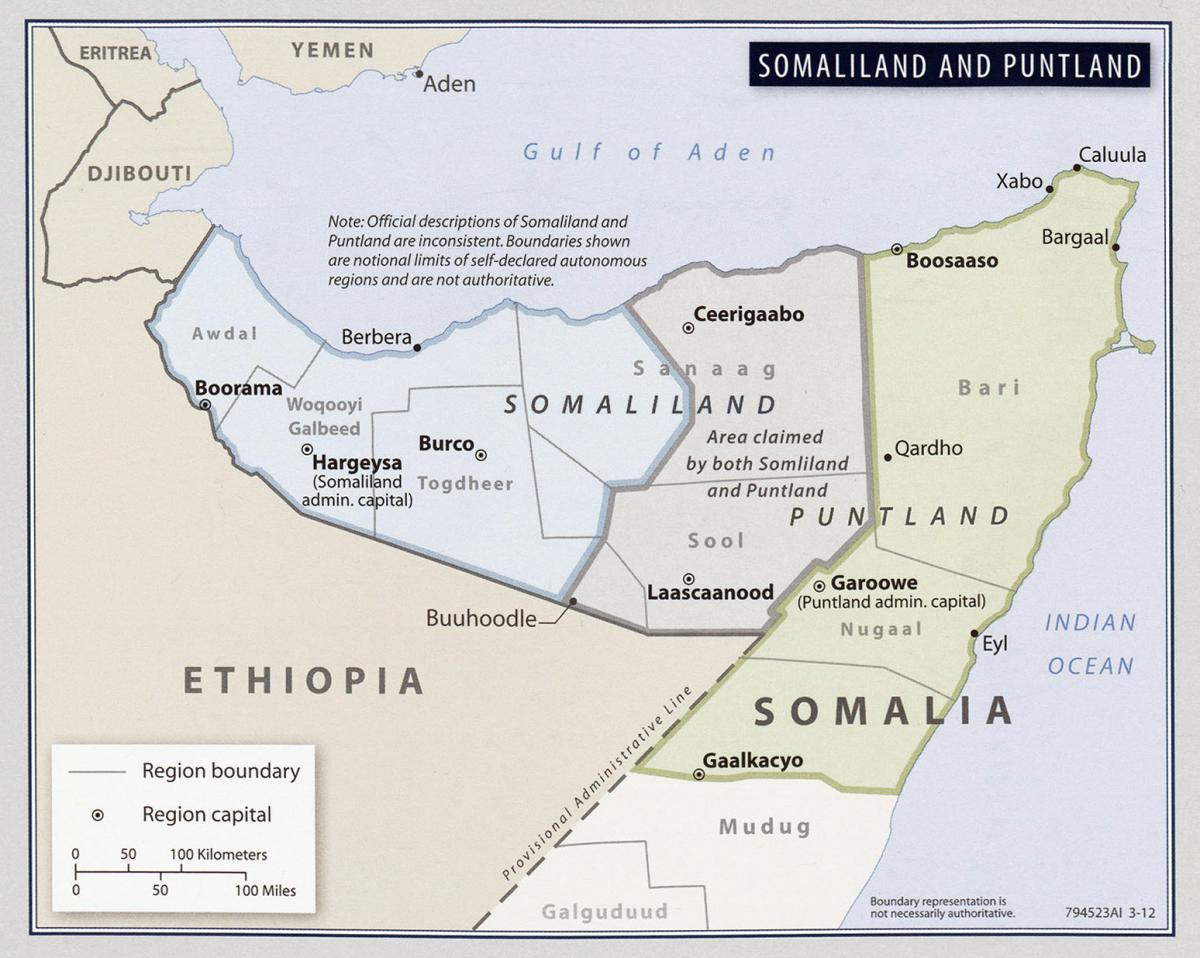
Somaliland

Regional lines drawn over Somaliland conflict

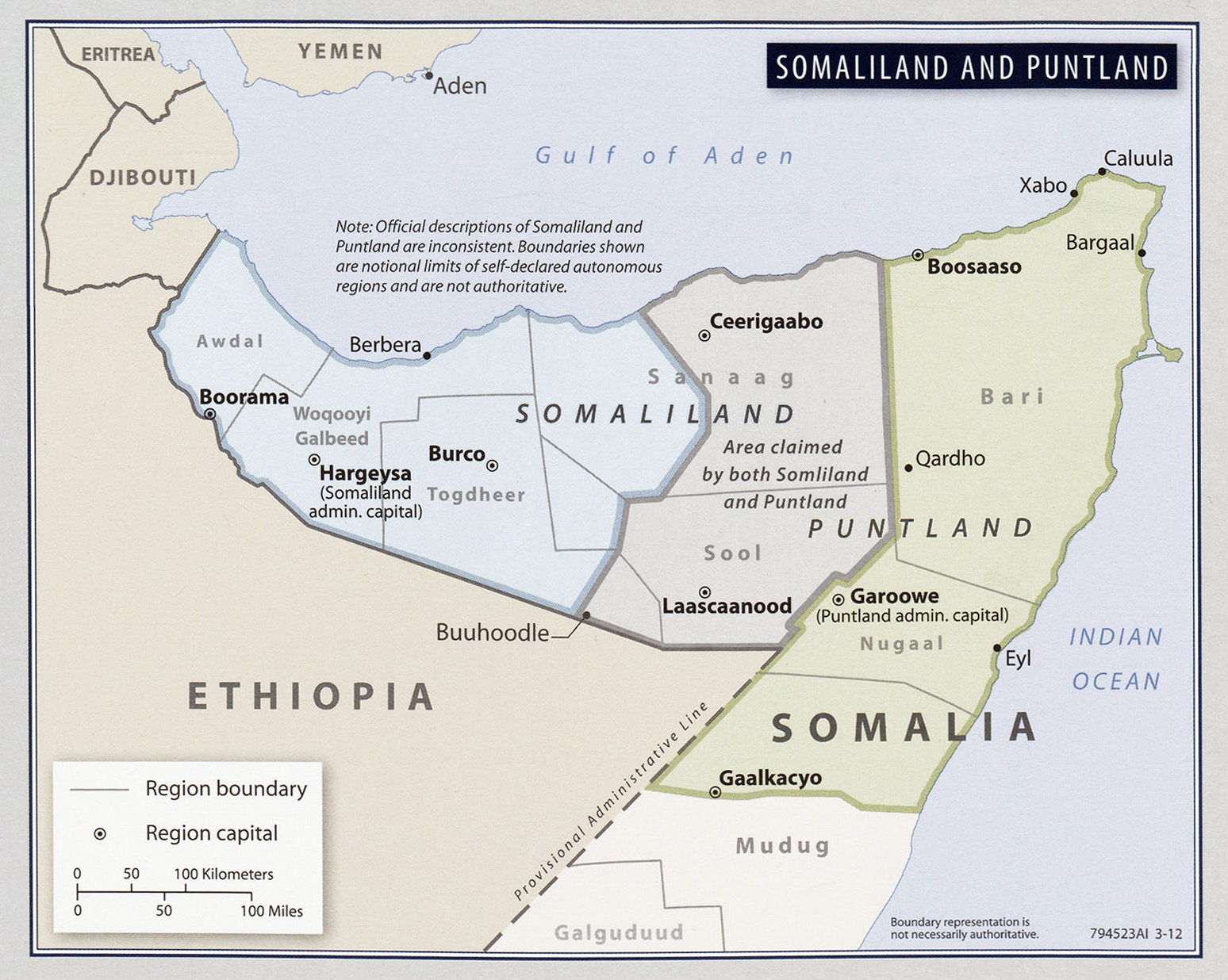
Addis Ababa held talks on military cooperation with Somaliland, after announcing a controversial deal on sea access through the self-governing but unrecognized republic. As the talks began, Somalia’s President Hassan Sheikh Mohamud visited Eritrea (Ethiopia’s regional rival) seeking support for his harsh opposition to the deal, decried as a step toward recognition of Somaliland’s independence. President Mohamud also signed a law nullifying the New Year’s Day memorandum of understanding (MoU) between the governments of Ethiopia and Somaliland, which grants the landlocked regional power a corridor to Somaliland’s port of Berbera. The Somaliland government, based in Hargeisa, claims full sovereignty, and does not recognize Mogadishu’s jurisdiction over the territory. (Map: Somalia Country Profile)