


Europe
Roma targeted in Slovak massacre?
Slovakia commemorated the victims of this week’s massacre in Bratislava with an official day of mourning. The targeted family was of mixed ethnic Slovak and Roma composition.
Slovakia commemorated the victims of this week’s massacre in Bratislava with an official day of mourning. The targeted family was of mixed ethnic Slovak and Roma composition.
Hamas claimed credit for killing four Israeli settlers near Hebron, as Israel’s right-wing Shas party—which opposes any settlement freeze—said that Hamas terror would sabotage the peace process.

Human Rights Watch condemned US Immigration and Customs Enforcement (ICE) for force-feeding detained migrants. Detained men at the agency's El Paso Processing Center have been participating in a hunger strike since early January. ICE officials said that 11 men are striking, but AP reports the number may be closer to 30. In mid-January a federal judge authorized ICE to force-feed six of the protesters. The detained men have been protesting "rampant verbal abuse and threats of deportation from guards" and long detentions while awaiting a hearing. Most of the hunger strikers are from India or Cuba. (Photo: Hetsumani/Pixabay)

The Ukraine Security Service (SBU) appears to be targeting the country's anarchist youth following an attack on a leader of the neo-fascist Right Sector. In December, the SBU carried out searches at the homes of seven anarchists in the cities of Kiev, Brovary, Dnipro and Lviv. SBU officers reportedly forced two anarchists to sign a "cooperation agreement," and one of the activists had her passport confiscated. Those targeted were members of the groups Black Banner and Ecological Initiative. The searches were carried out as part of an investigation into an attack on a Right Sector militant Dmytro "Verbych" Ivashchenko, a veteran of the war in Ukraine's eastern Donbass region. (Photo: protest outside SBU office in Kiev, via Zaborona)
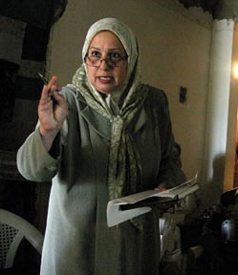
A 24-year-old Crimean Tatar was sentenced by a court in Russian-annexed Crimea to 10-and-a-half years' imprisonment for supposed involvement in a volunteer force patrolling the border of Crimea and mainland Ukraine to help enforce a blockade. Video evidence introduced in the trial only showed the suspect from behind. Nonetheless, Fevzi Sahandzhy was convicted of being a member of the Asker Battalion—also known as the Noman Çelebicihan Battalion, in honor of the martyred president of the short-lived independent Crimean Republic of 1918. The Battalion began participating in the blockade of Crimea in 2015 to press demands for the release of political prisoners and restoration of freedom of speech and assembly on the peninsula. (Photo: Human Rights in Ukraine)
Anti-war groups have issued a statement denouncing the “Iraq Debacle,” and calling for withdrawal of all US troops and military contractors, and for reparations to help the Iraqis rebuild.
Iraq’s Oil Ministry said the agreement Germany’s RWE public utility signed with the Kurdistan Regional Government to supply gas for the Nabucco pipeline project is illegal.
Our August issue featured the story BP: The Case for Public Ownership by Billy Wharton, a reprint from In These Times. Our multiple-choice Exit Poll was: “Should BP be nationalzied?” We received 16 votes. The results follow: Yes, it is… Read moreOur readers write: Should BP be nationalized?
Announcement of a joint Chinese-Argentine satellite production company comes amid growing concern within Argentina about activities at the Chinese-operated “spaceport” at Bajada del Agrio in Patagonia—and the apparent role of the People’s Liberation Army in the facility. The Bajada del Agrio facility played a part in tracking China’s recent lunar probe, but is overseen by companies that answer directly to the PLA’s General Armaments Department. Only personnel authorized by Beijing have access to the facility, arousing much suspicion about the site in Argentina’s news media. (Photo via InfoBae)

In an egregious and all too revealing faux pas, Amy Goodman appears to have put a mouthpiece of the German far right on Democracy Now as a "former UN expert" to discuss Venezuela. This is one Alfred de Zayas, who is given Goodman's typical sycophantic treatment—all softballs, no adversarial questions. We are treated to the accurate enough if not at all surprising line about how the US is attempting a coup with the complicity of the corporate media. Far more interesting than what he says is de Zayas himself. Not noted by Goodman is that he is on the board of the Desiderius-Erasmus-Stiftung, a Berlin-based foundation established last year as the intellectual and policy arm of Alternative für Deutschland, the far-right party that has tapped anti-immigrant sentiment to win an alarming 94 seats in Germany's Bundestag. He has won a neo-Nazi following with his unseemly theories of Aliied "genocide" against Germans in World War II. (Image via Democracy Now)

World oil prices remain depressed despite an uptick this month, driven by the Venezuela crisis and fear of US-China trade war. Yet this month also saw Zimbabwe explode into angry protests over fuel prices. The unrest was sparked when the government doubled prices, in an effort to crack down on "rampant" illegal trading. Simultaneously, long lines at gas stations are reported across Mexico—again due to a crackdown on illegal petrol trafficking. Despite all the talk in recent years about how low oil prices are now permanent (mirrored, of course, in the similar talk 10 years ago about how high prices were permanent), the crises in Zimbabwe and Mexico may be harbingers of a coming global shock. (Photo via Amnesty International)

Gilberto Valencia, a young Afro-Colombian cultural worker, became 2019's first casualty of political violence in Colombia, when a gunman opened fire on a New Years party he was attending in his village in Cauca region. As the death toll from around the country mounted over the following weeks, the UN Mission to Colombia warned President Iván Duque that he must address "the issue of the assassinations of social leaders and human rights defenders." Colombia's official rights watchdog, the Defensoría del Pueblo, acknowledges that there was an assassination on average every two days in the country last year—a total of 172, and a rise of more than 35% over 2017. (Photo via Caracol Radio)