


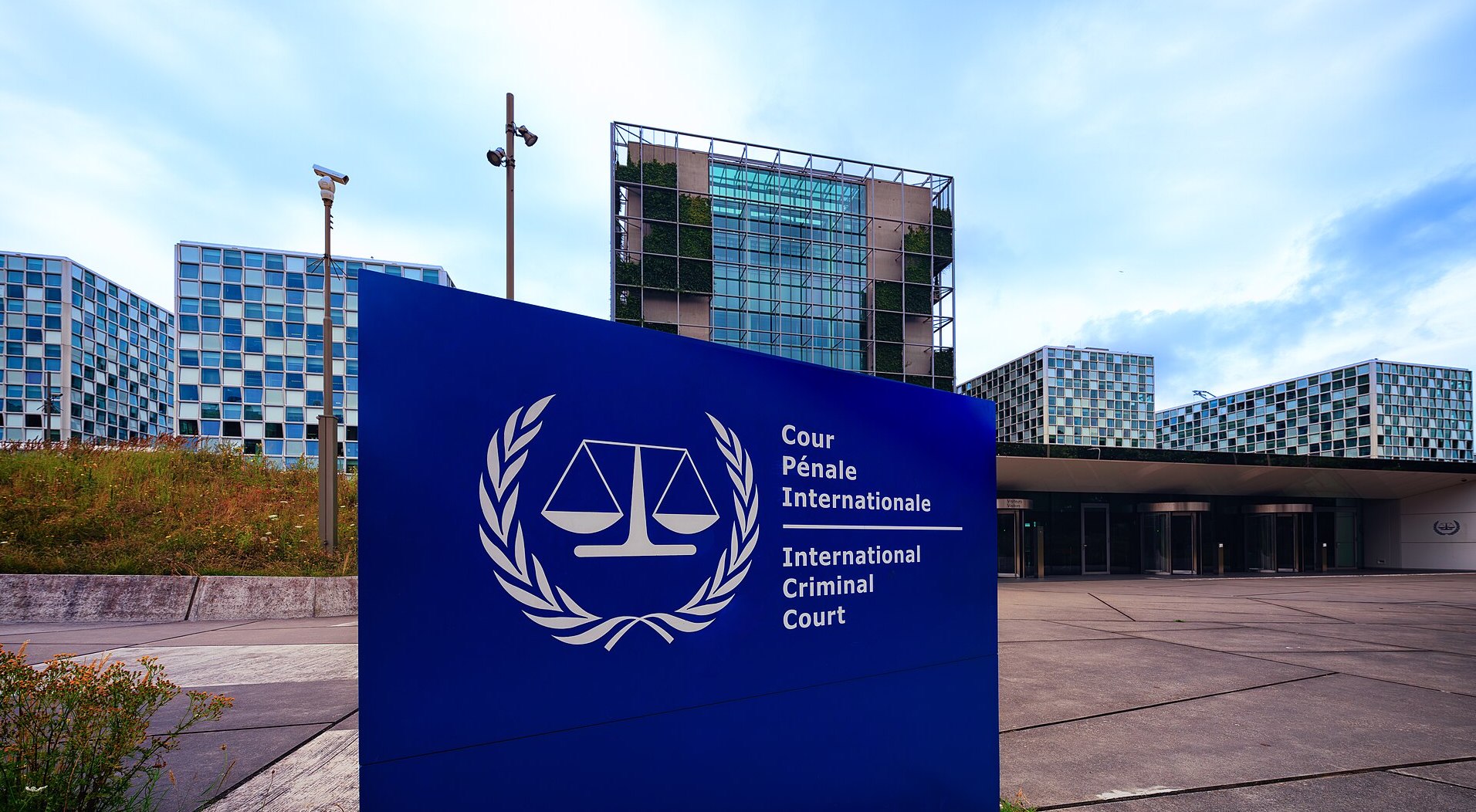
Amnesty International on May 14 called on the Philippines to apprehend Sen. Ronald dela Rosa, expressing deep concern over reports that he fled the Senate building to evade an International Criminal Court (ICC) arrest warrant.
Amnesty International Philippines executive director Ritz Lee Santos III stated: “We are deeply alarmed at the obstruction of justice and chaotic scenes witnessed at the Philippines Senate… It is hugely concerning that fellow Senators and others appear to have assisted him in evading arrest and in delaying the execution of the arrest warrant—effectively facilitating his escape for now.”
The ICC confirmed on May 11 that it issued an arrest warrant for dela Rosa. The senator is charged as an indirect co-perpetrator of the crime against humanity of systematic murder under Article 7(1)(a) of the Rome Statute, stemming from his connection to former President Rodrigo Duterte’s “war on drugs.”
The warrant against dela Rosa was issued confidentially in November 2025. Rumors subsequently spread that the ICC was building a case against dela Rosa, as well as seven other co-perpetrators of Duterte’s campaign of murder war. Following these reports, dela Rosa disappeared from public view. He re-emerged May 11 to participate in a consequential Senate leadership vote. He apparently fled the chamber after spotting Philippine government agents waiting to arrest him, and spent two days barricaded in the Senate building. The senator escaped the building after gunfire erupted on May 13. No casualties have been reported, but his present whereabouts are now unknown.
The senator, who previously served as chief of the Philippine National Police, is considered a close ally of Duterte. The former president was arrested in March based on an ICC warrantand has had his charges confirmed, thus clearing the way for the opening of the trial process. Duterte is also accused of crimes against humanity stemming from the “war on drugs,” during which death squads were allegedly used in the extrajudicial killing of thousands of suspected narcotics dealers and users since 2016, many of whom were minors.
The specific allegations cited by the dela Rosa arrest warrant are that under his command, “Philippines’ law enforcement, sometimes with the assistance of persons who were not part of the police such as non-police assets and paid hitmen, killed no less than 32 persons—alleged criminals, such as alleged thieves, or people allegedly involved in drug-related activities—at various locations in the Philippines.” While the case focuses on these 32 deaths, the actual toll during dela Rosa’s service in Duterte’s anti-drug drive is believed to number in the thousands.
Human Rights Watch has praised the case against Duterte, stating: “The ICC case reflects the determination of victims and their families to advance justice against all odds and dangers.”
The Philippines was a signatory to the Rome Statute from November 2011 until March 2019, when its withdrawal took effect. Despite the Philippines’ withdrawal from the treaty, the ICC maintains jurisdiction over international crimes committed within the country between November 1, 2011, and March 16, 2019. The charges against dela Rosa concern his time as the chief of the National Police from July 2016 to April 2018.
From JURIST, May 15. Used with permission. Internal links added.
The Duterte case is discussed in our podcast “Trump to The Hague! III”
Photo: Tony Webster via Wikimedia Commons


Philippine top court rejects dela Rosa challenge to ICC warrant
The Supreme Court of the Philippines on May 20 rejected Sen. Ronald dela Rosa’s request to bar authorities from enforcing the International Criminal Court (ICC) arrest warrant against him.
By a 9-5-1 majority, the court rejected dela Rosa’s request for a temporary restraining order that would have barred law enforcement from arresting him based solely on the ICC warrant without a domestic court’s authorization. Law enforcement authorities may arrest dela Rosa now, but his whereabouts remain unknown following the May 13 shootout in the state’s senate. The government is investigating whether the shooting was staged in order to aid in his escape.
Dela Rosa’s counsel maintained that the ICC has no jurisdiction to issue the warrant because the country officially withdrew from the ICC in 2019. Former president Rodrigo Duterte previously attempted to put forward the same contention at the ICC but failed.
Dela Rosa was the police chief who oversaw former President Rodrigo Duterte’s anti-narcotics campaign. He is wanted for crimes against humanity due to his role in the campaign, which took the lives of over 12,000 Filipinos. According to Human Rights Watch, at least 2,555 of these killings have been attributed to the Philippine National Police (PNP).
The Pre-Trial Chamber of the ICC accepted that there were reasonable grounds to believe that an attack targeting the civilian population took place, after having referred to 14 incidents as a sample of alleged conduct of Davao Death Squad (DDS) members and later law enforcement personnel. The chamber also found reasonable grounds to believe that dela Rosa made “essential contributions” to the crime against humanity of murder, established in article 7(1)(a) of the Rome Statute. These contributions include using his position as chief to enable and order killings; making public statements promoting the killings; providing personnel and weapons; rewarding the killings; encouraging the police to legitimize their killings through false self-defense scenarios; and promising impunity.
Amnesty International recently stressed the responsibility of President Ferdinand Marcos Jr to ensure dela Rosa’s arrest. Ritz Lee Santos III, executive director of Amnesty International Philippines, discussed the broader importance, stating:
The charges are similar to those against Duterte, who was arrested in March 2025. The UN has documented the “staggering number of unlawful deaths and police killings” during his tenure, calling for all those involved to be held accountable. (Jurist)
ICC orders ongoing detention of Duterte
A pre-trial chamber of the International Criminal Court (ICC) on May 22 ordered that former Philippines president Rodrigo Duterte remain in custody in The Hague. The judges found that “there is a real and substantial risk” that Duterte could “abscond or obstruct justice.”
In making their decision, the chamber summarized the Pre-Trial Chamber I Decision on the Interim Release of last November, in which the court initially determined that Duterte would be held in custody pending his trial. At that time, the judges found that Duterte “posed a flight risk” due to his rejection of the proceedings, the willingness of his close family to help him evade arrest, his international connections and resources, the severity of the charges, and the potential lengthy sentence he would receive if convicted. (Jurist)