


New York City
From Tompkins Square to the Redwoods
Bill Weinberg's Moorish Orthodox Radio Crusade brings Northern California's veteran eco-activist Darryl Cherney to the Lower East Side's Museum of Reclaimed Urban Space.
Bill Weinberg's Moorish Orthodox Radio Crusade brings Northern California's veteran eco-activist Darryl Cherney to the Lower East Side's Museum of Reclaimed Urban Space.
Mali’s government is in talks with Islamist rebels who control the country’s north, while Gen. Carter Ham in Washington warned that al-Qaeda has established a haven in the country.
A report by Amnesty International documents a "raft of gross and deeply disturbing abuses" committed by both Islamist rebels and government forces in the battle for southern Yemen.
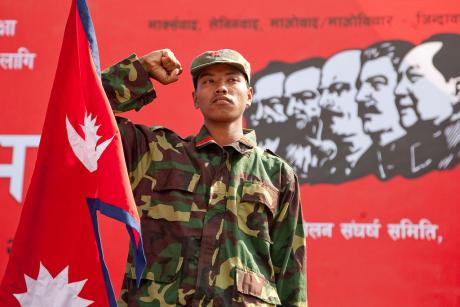 Four people were killed and three others injured in three explosions in Kathmandu, a grim reminder of the Maoist insurgency the shook Nepal for a decade before a 2006 peace agreement. A dissident faction that has remained in arms since the peace agreement claimed credit for the blasts. The Netra Bikram Chand-led "Communist Party of Nepal" had declared a nationwide general strike for the following day. And in fact many businesses and transportation services were shut down, seemingly more due to fear of attack than support for the strike. The Netra Bikram Chand faction broke from the Unified Communist Party of Nepal-Maoist (UCPN-M) when it laid down arms and joined the government. (Photo: Libcom)
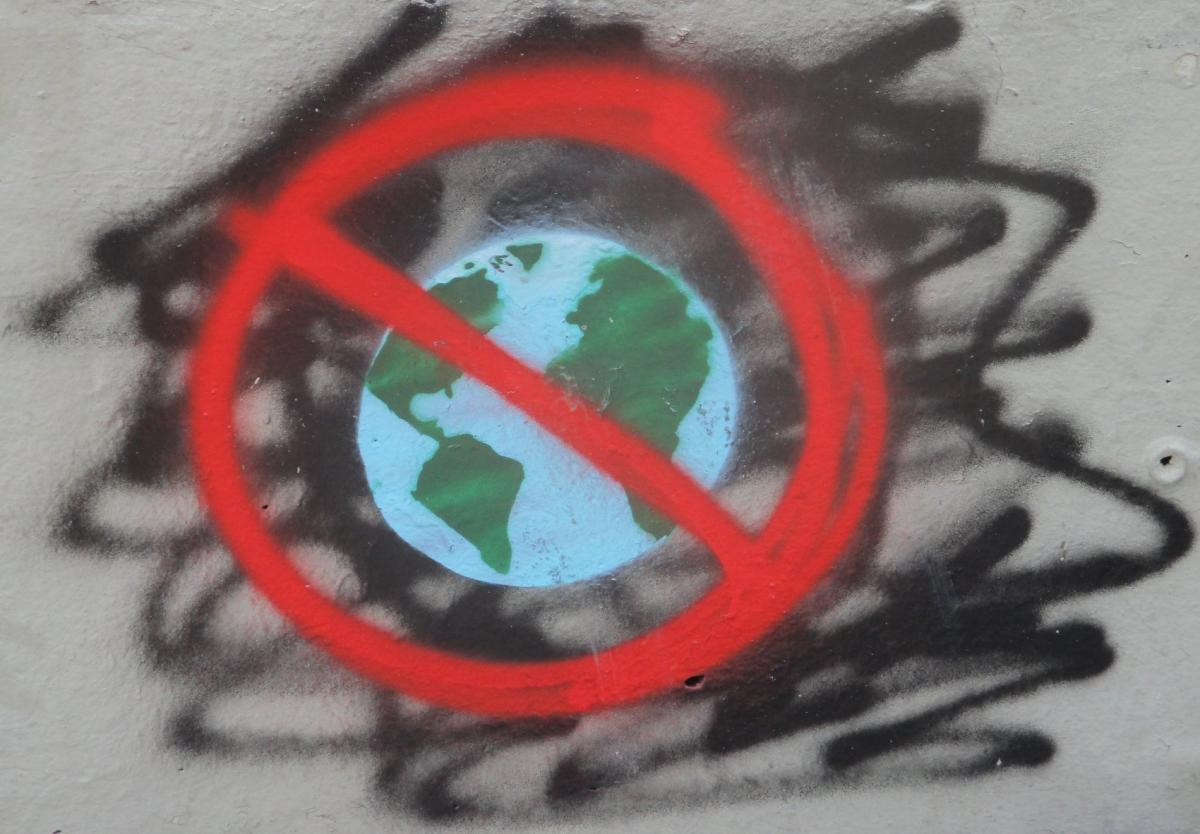 The COP26 UN climate summit concluded a deal among the 196 parties to the 2015 Paris Agreement on long-delayed implementation measures. UN Secretary-General Antonio Guterres called the deal a "compromise," and indeed it was saved through eleventh-hour haggling over the wording. Just minutes before the final decision on the text of the Glasgow Climate Pact, India, backed by fellow major coal-producer China, demanded weaker language on coal, with the original call for a "phase-out" softened to "phase-down." And even this applies only to "unabated" coal, with an exemption for coal burned with carbon capture and storage technology—a technofix being aggressively pushed by Exxon and other fossil fuel giants, in a propaganda blitz clearly timed for the Glasgow summit. Another corporate-backed fix that allows polluters to go on polluting was also embraced at Glasgow: the pact calls for establishment of a global carbon-trading market in 2023. (Photo: CounterVortex)
One resident was killed by police and three were wounded in protests that broke out in the city of Jérémie after a Brazilian company pulled out of a highway repair project.
The number of dead in the violence over the three years since the land disputes broke out in the Aguán region of Honduras is now about 90, the great majority of them campesinos.
Protests against Enrique Peña Nieto during his inauguration quickly turned into violent clashes between police and demonstrators that disrupted much of downtown Mexico City.
Dozens of opponents of large-scale mining projects were injured when hundreds of construction workers attacked them at the provincial legislature building in Chubut.
Peru’s government urged opponents of the Conga minig project to return to the dialogue table, as protesters set up an encampment at the Lima offices of Newmont Mining.
Indigenous protesters blocked Quito’s Marriott Hotel, where a major sale of Amazon oil blocs was underway. Riot police and military troops were brought in to clear the blockade.