Africa
kordofan

Sudan: regime spurring Kordofan violence?

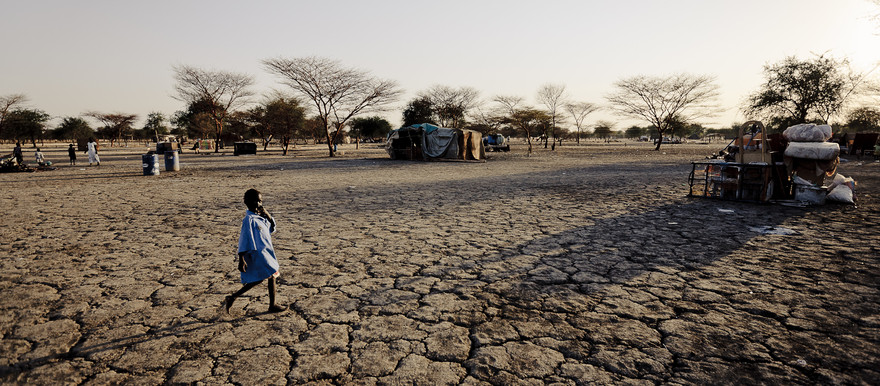
At least 30 people were killed and dozens injured in armed clashes between members of the Hamar and Misseriya pastoralist groups in Sudan’s West Kordofan state. ​​​​A Hamar militia that had been organized to protect against cattle rustlers was apparently ambushed by Misseriya gunmen in the locality of Abu Zabad, setting off the violence. Hamar leaders charge that state authorities and the paramilitary Rapid Support Forces (RSF) are protecting Misseriya bands that raid their lands with impunity. In Khartoum, the pro-democracy Resistance Committee is meanwhile calling for continued protests despite the new pact for a transition to civilian rule, saying that any deal must include provisions for transitional justice and reform of the security forces. (Photo: Tim Freccia/Enough Project via Dabanga)
Africa

Massacre claim overshadows DRC peace talks

A third round of peace talks between the Democratic Republic of Congo and rebel movements opened in Kenya. More than 50 armed and civil society groups are present at the dialogue. Rwanda, accused of backing the M23 rebels, has also been invited to this round—but not the M23 themselves. And the talks are overshadowed by accusations of a massacre of 50 civilians by the M23 in the town of Kishishe, Noth Kivu province. In a statement, the M23 rejected the claims and accused the DRC government of preparing a “genocide” against Congolese Tutsi. The M23 meanwhile continue their advance on the provincial capital of Goma. (Map: CIA)

Africa
Senegal

Senegal: peace process with Casamance rebels

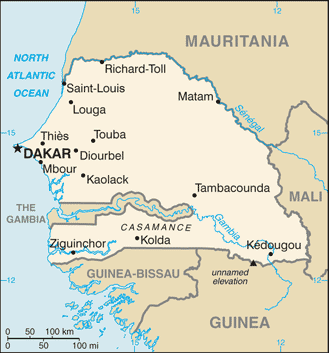
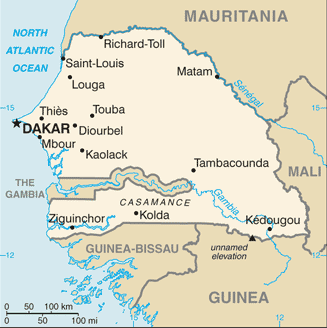
The concluding of a peace agreement between Senegal and separatist rebels in Casamance is being hailed by the government as “an important step” toward ending the 40-year conflict in the southern region. The deal was signed in neighboring Guinea-Bissau by a delegate from President Macky Sall’s administration and Cesar Atoute Badiate, leader of the Movement of Democratic Forces of Casamance (MFDC). The long-simmering conflict was re-ignited in 2021 when the Senegalese army launched a major offensive against the rebels. But Seydi Gassama, director of Amnesty International Senegal, noted that the MFDC is now but one of several rebel factions. “The negotiations must expand to include these factions so that a peace deal can be quickly signed with all the factions and peace can be established throughout all of Casamance,” Gassama said. (Map: PCL Map Collection)

Africa
Sudan

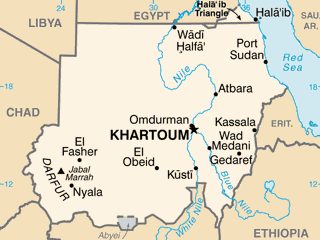
Sudan: regime spurring ethnic violence?

Fighting between Hausa and Berta tribespeople broke out in Sudan’s Blue Nile state, leaving dozens dead. While the clashes apparently began in a land dispute, tensions were elevated following calls to recognize a chiefdom for the Hausa people, who originate from Nigeria but have been settling lands in the region for generations. Authorities have imposed a curfew and mobilized the army and paramilitary Rapid Support Forces to the state, ostensibly to restore calm. But the Forces for Freedom & Changes (FFC) opposition coalition accused the military of instigating the conflict by encouraging Hausa demands to establish a chiefdom in territory traditionally inhabited by the Hamaj, a clan of the Berta people. Before a 2020 peace deal, many Hausa served in paramilitary forces to help the regime fight the SPLM-N rebels. “The FFC hold the coup authority fully responsible for the successive renewal of these events,” the opposition group said in a statement. (Map: Perry-Castañeda Library Map Collection)

The Andes
paramilitaries

Podcast: the forgotten war in Colombia

In Episode 128 of the CounterVortex podcast, Bill Weinberg provides an in-depth analysis of the under-reported multi-sided armed conflict and deepening human rights crisis in Colombia on the eve of an historic run-off election that poses two “outsider” candidates for the presidency: Gustavo Petro, an ex-guerilla and Colombia’s first leftist presidential contender, versus Rodolfo Hernández, a far-right construction magnate whose pugnacious swagger inevitably invites comparison to Donald Trump. This turning point comes as Colombia has entered a new “partnership” with NATO, in response to Venezuela’s deepening ties with Russia. Yet Colombia’s armed forces continue to collaborate with the paramilitary groups that terrorize campesino and indigenous communities. If elected, Petro will face the challenge of breaking the state-paramilitary nexus, and charting a course independent of the Great Powers. Listen on SoundCloud or via Patreon. (Photo: Contagio Radio)

The Andes
Arauca

Multi-sided warfare across Colombia

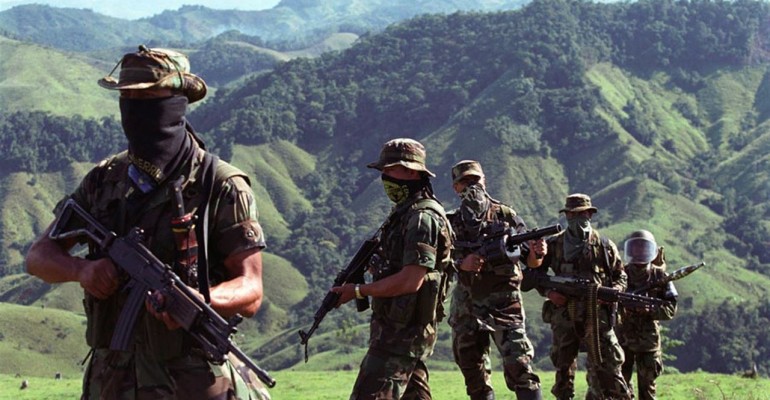
Despite a peace process that has faltered under President Ivan Duque, the internal war in Colombia continues nearly across the country—now involving multiple armed actors: remnant guerilla groups, resurgent paramilitary forces, regional cartels, and the official security forces. Thousands have been displaced in recent months, as campesino and indigenous communities are either caught in the crossfire or explicitly targeted. (Photo: INDEPAZ via Contagio Radio)

The Andes
colombiahr

Protest closing of ICC Colombia investigation

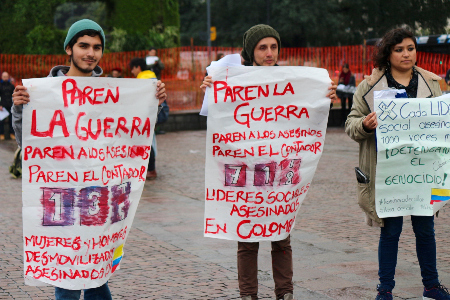
A coalition of Colombian human rights groups and survivors’ organizations released a statement decrying as “shocking” the decision by the International Criminal Court (ICC) to close its preliminary examination of possible war crimes carried out in the country. The statement, jointly issued by the International Federation for Human Rights (FIDH) and the José Alvear Restrepo Lawyers’ Collective (CAJAR), said that closure of the examination “could mean that hundreds or thousands of victims of crimes under the jurisdiction of the ICC will be deprived of knowing the truth and obtaining justice concerning the crimes committed. In Colombia…there is still a systematic absence of investigation of those responsible at the highest levels for crimes under the jurisdiction of the ICC.” (Photo: Prensa Rural)

The Andes
Francia-Petro

Colombia: pending presidency ‘between two populisms’

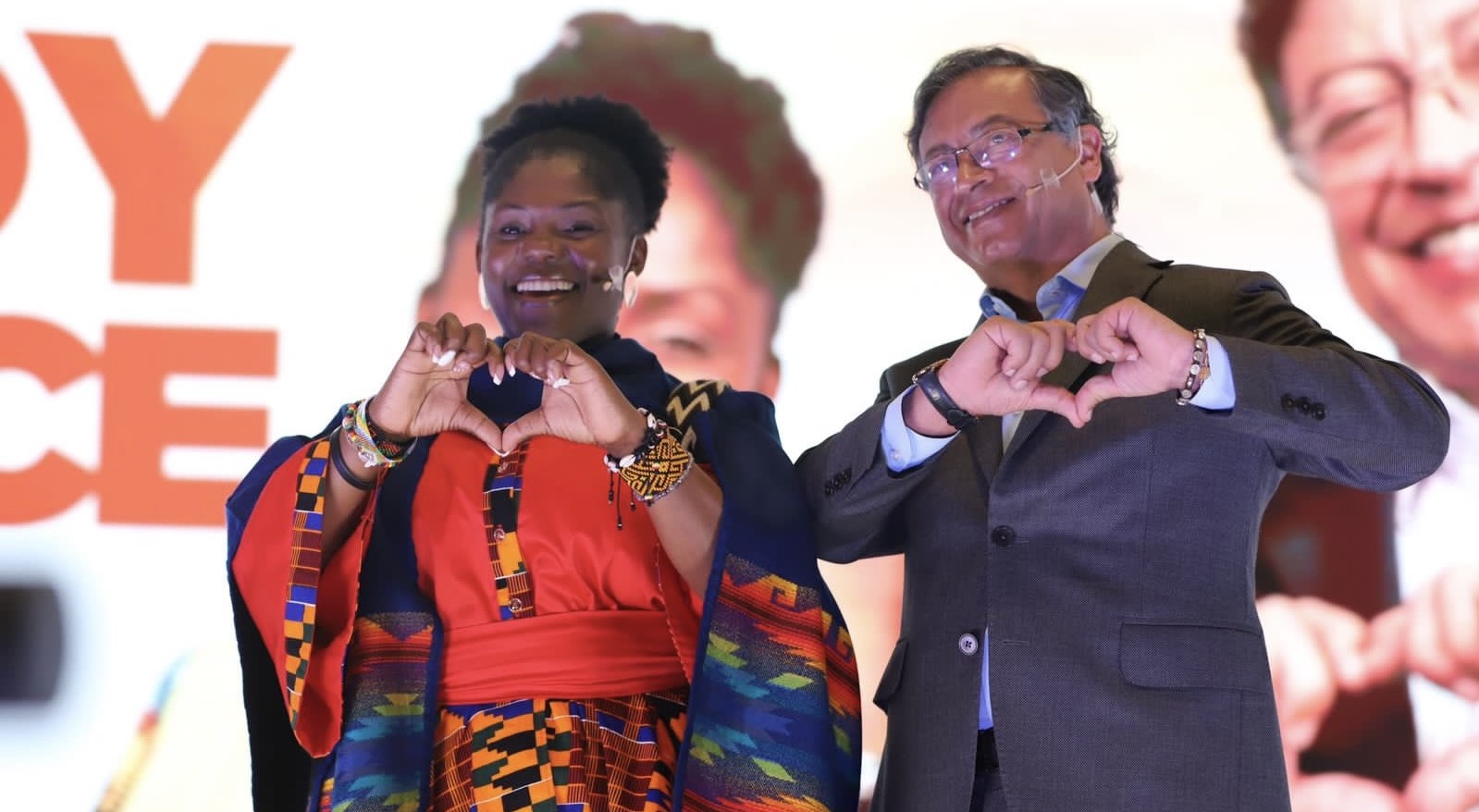
Following a first round of presidential elections, “between two populisms” is the catchphrase being used by Colombia’s media for an unprecedented moment. A pair of political “outsiders” are to face each other in the run-off: Gustavo Petro, a former guerilla leader and Colombia’s first leftist presidential contender, versus Rodolfo Hernández, a construction magnate whose pugnacious swagger inevitably invites comparison to Donald Trump. Hernández, an independent candidate and the former mayor of Bucaramanga, rose precipitously in an ostensibly anti-establishment campaign driven by social media, winning him the epithet “King of TikTok.” But Colombia’s political establishment is now lining up behind him to defeat Petro. The former mayor of Bogotá and a veteran of the demobilized M-19 guerillas, Petro is the candidate of a new progressive coalition, Colombia Humana, emphasizing multiculturalism and ecology as well as more traditional social justice demands. (Photo via Twitter)

Africa
fact

Inauspicious start for Chad peace talks

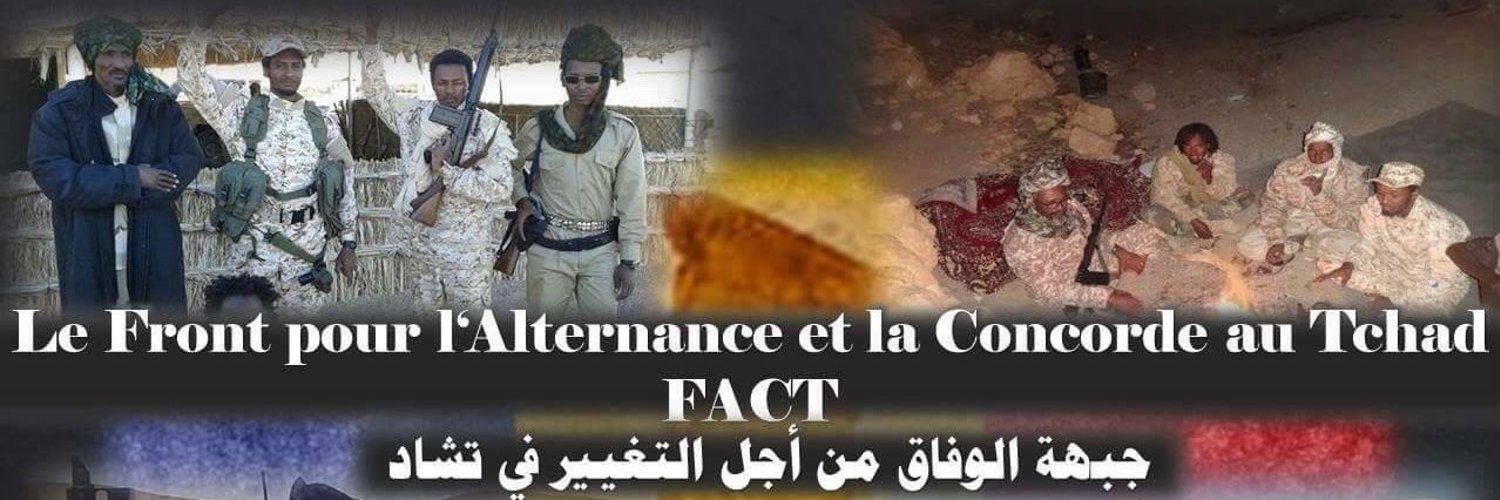
Chad’s junta opened delayed peace talks with rebel and opposition groups in Qatar. But things got off to a bad start when one of the main rebel outfits–the Front for Change & Concord in Chad (FACT)–walked out amid confusion over Doha’s role as a mediator. Chad was plunged into uncertainty last April when long-time ruler Idriss Déby was killed while commanding troops combating a FACT offensive. Power was then seized by Déby’s son, Mahamat Idriss Déby, who outlined a transition plan. The Doha talks are considered a precursor to a national dialogue that the younger Déby is organizing before planned elections. But after decades of rebellion and repression, things are unlikely to proceed smoothly. Just last month a phone conversation surfaced in which Timan Erdimi, head of the Union of Resistance Forces (UFR), one of the rebel groups present in Doha, discussed plans to oust Déby using the Kremlin-linked mercenary Wagner Group. (Image via Twitter)

The Andes
Uber Velásquez

Another assassination at Colombian ‘peace community’

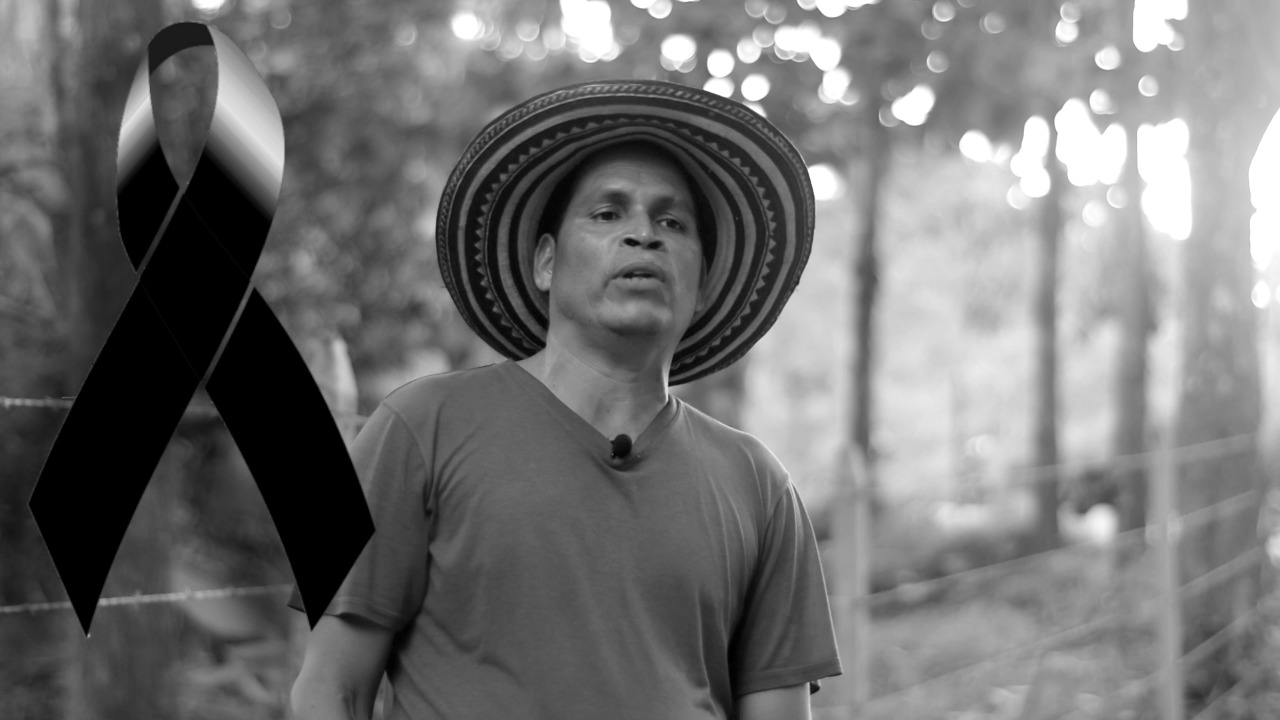
A new assassination of a campesino leader is reported from the self-declared “peace community” of San José de Apartadó, in Colombia’s conflicted northern Urabá region. Uber Velásquez was slain by unknown assailants at the hamlet of La Balsa, one of those adhering to the “peace community” which for more than 20 years has refused all cooperation with armed actors in Colombia’s conflict—and whose leaders have been repeatedly targeted for death. Days later, Colombia’s Special Jurisdiction for Peace (JEP) formally declared that the February 2005 massacre at San José de Apartadó—in which eight residents were slain, including three children—was a “crime against humanity.” (Photo via Twitter)

The Andes
arauca

Anti-war protests in northeast Colombia

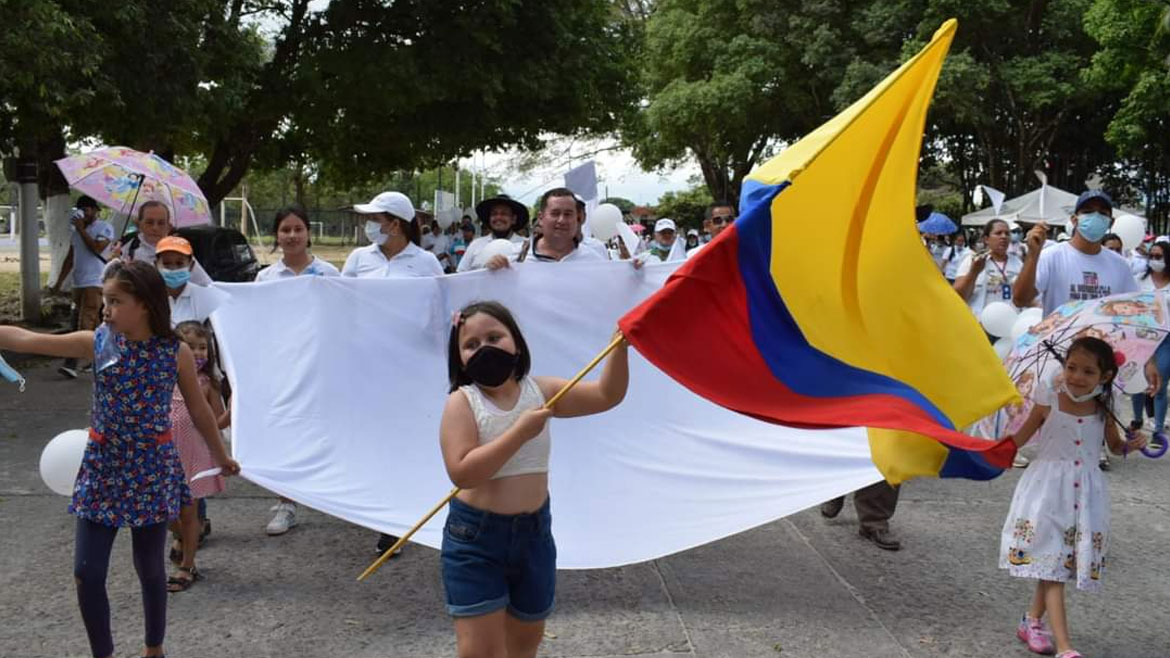
Rural communities in Colombia’s northeastern Arauca department held anti-war protests amid inter-factional guerilla violence that has been terrorizing the region. Demanding attention from the government and international human rights organizations, some 1,200 marched in the hamlets of Puerto Jordan and Botalón. Recent days had seen an outbreak of fighting in the area between the National Liberation Army (ELN) and “dissident” factions of the demobilized FARC guerillas that have refused to lay down arms, in defiance of a 2016 peace agreement. At least 23 were killed in the clashes, which were said to be over control of smuggling routes across the nearby Venezuelan border. About a dozen local families were also forced to flee their homes. (Photo: Arauca Online via Colombia Reports)

North Africa
libya

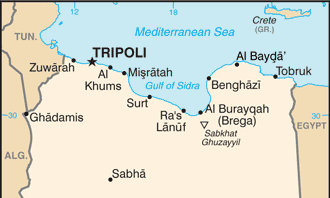
Libya: unrest as elections postponed

Several Libyan parliamentary candidates are calling for nationwide protests over the cancellation of the country’s long-awaited presidential election. The electoral commission has proposed putting off the polls for a month, citing lack of preparedness amid bureaucratic chaos. But the postponement threatens the country’s fragile peace deal. Clashes broke out last week in the southern city of Sabha between local security forces and fighters loyal to eastern warlord Khalifa Haftar, who has announced his candidacy for president. Another presidential hopeful is Saif al-Islam Qaddafi—who is wanted by the International Criminal Court for alleged war crimes committed during the revolution that overthrew his father 10 years ago. Also running is current interim prime minister Abdul Hamid Dbeibah. All three have faced challenges to their right to run, and Human Rights Watch has expressed concern over whether the elections can be free and fair given the atmosphere of insecurity and repression. (Map: Perry-Castañeda Library)