The Andes
paramilitaries

Podcast: the forgotten war in Colombia

In Episode 128 of the CounterVortex podcast, Bill Weinberg provides an in-depth analysis of the under-reported multi-sided armed conflict and deepening human rights crisis in Colombia on the eve of an historic run-off election that poses two “outsider” candidates for the presidency: Gustavo Petro, an ex-guerilla and Colombia’s first leftist presidential contender, versus Rodolfo Hernández, a far-right construction magnate whose pugnacious swagger inevitably invites comparison to Donald Trump. This turning point comes as Colombia has entered a new “partnership” with NATO, in response to Venezuela’s deepening ties with Russia. Yet Colombia’s armed forces continue to collaborate with the paramilitary groups that terrorize campesino and indigenous communities. If elected, Petro will face the challenge of breaking the state-paramilitary nexus, and charting a course independent of the Great Powers. Listen on SoundCloud or via Patreon. (Photo: Contagio Radio)
The Andes
Arauca

Multi-sided warfare across Colombia

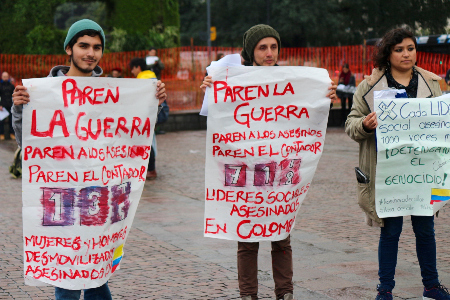
Despite a peace process that has faltered under President Ivan Duque, the internal war in Colombia continues nearly across the country—now involving multiple armed actors: remnant guerilla groups, resurgent paramilitary forces, regional cartels, and the official security forces. Thousands have been displaced in recent months, as campesino and indigenous communities are either caught in the crossfire or explicitly targeted. (Photo: INDEPAZ via Contagio Radio)

The Andes
colombiahr

Protest closing of ICC Colombia investigation

A coalition of Colombian human rights groups and survivors’ organizations released a statement decrying as “shocking” the decision by the International Criminal Court (ICC) to close its preliminary examination of possible war crimes carried out in the country. The statement, jointly issued by the International Federation for Human Rights (FIDH) and the José Alvear Restrepo Lawyers’ Collective (CAJAR), said that closure of the examination “could mean that hundreds or thousands of victims of crimes under the jurisdiction of the ICC will be deprived of knowing the truth and obtaining justice concerning the crimes committed. In Colombia…there is still a systematic absence of investigation of those responsible at the highest levels for crimes under the jurisdiction of the ICC.” (Photo: Prensa Rural)

The Andes
Francia-Petro

Colombia: pending presidency ‘between two populisms’

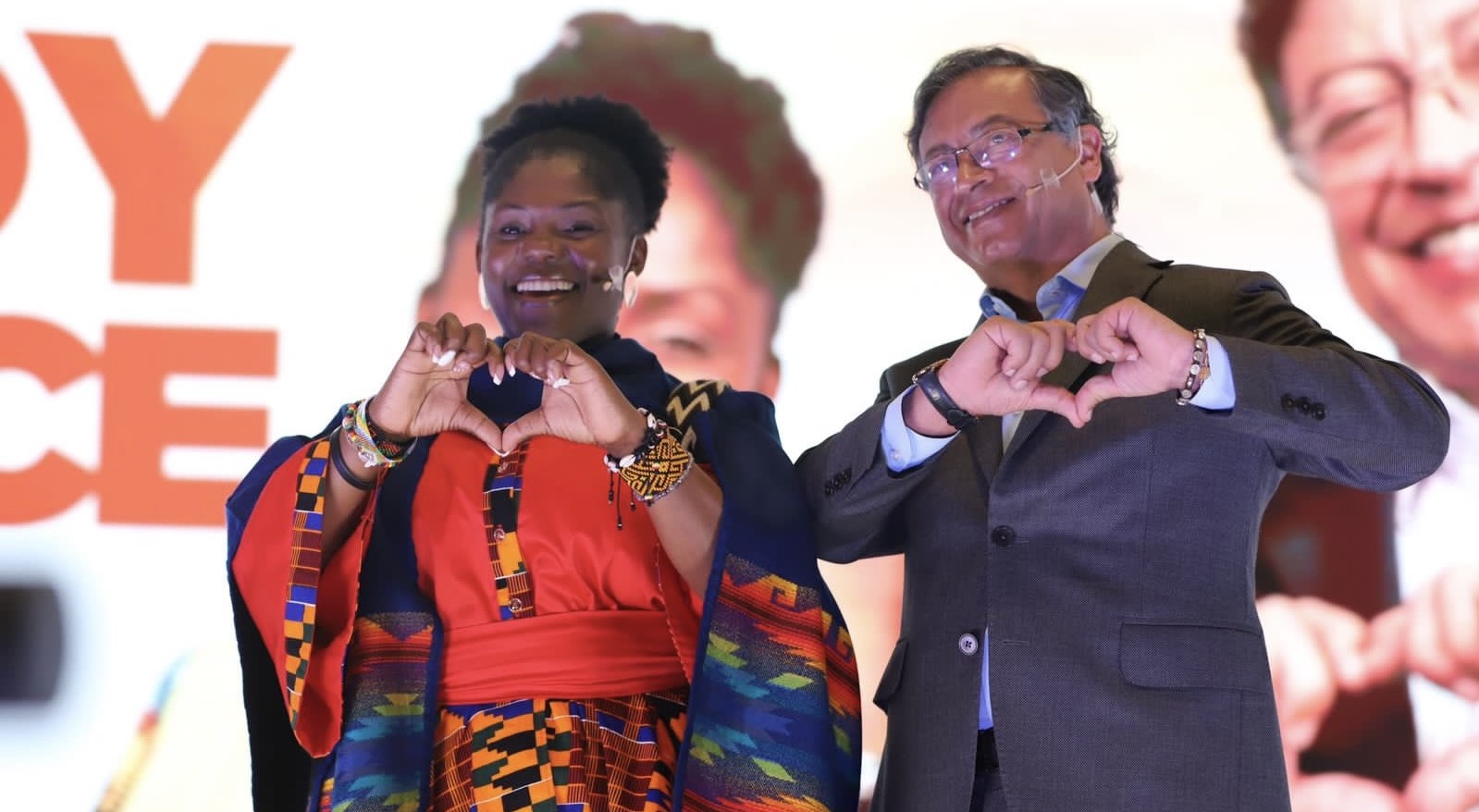
Following a first round of presidential elections, “between two populisms” is the catchphrase being used by Colombia’s media for an unprecedented moment. A pair of political “outsiders” are to face each other in the run-off: Gustavo Petro, a former guerilla leader and Colombia’s first leftist presidential contender, versus Rodolfo Hernández, a construction magnate whose pugnacious swagger inevitably invites comparison to Donald Trump. Hernández, an independent candidate and the former mayor of Bucaramanga, rose precipitously in an ostensibly anti-establishment campaign driven by social media, winning him the epithet “King of TikTok.” But Colombia’s political establishment is now lining up behind him to defeat Petro. The former mayor of Bogotá and a veteran of the demobilized M-19 guerillas, Petro is the candidate of a new progressive coalition, Colombia Humana, emphasizing multiculturalism and ecology as well as more traditional social justice demands. (Photo via Twitter)

Central America
salvador

‘Massive’ human rights violations in El Salvador

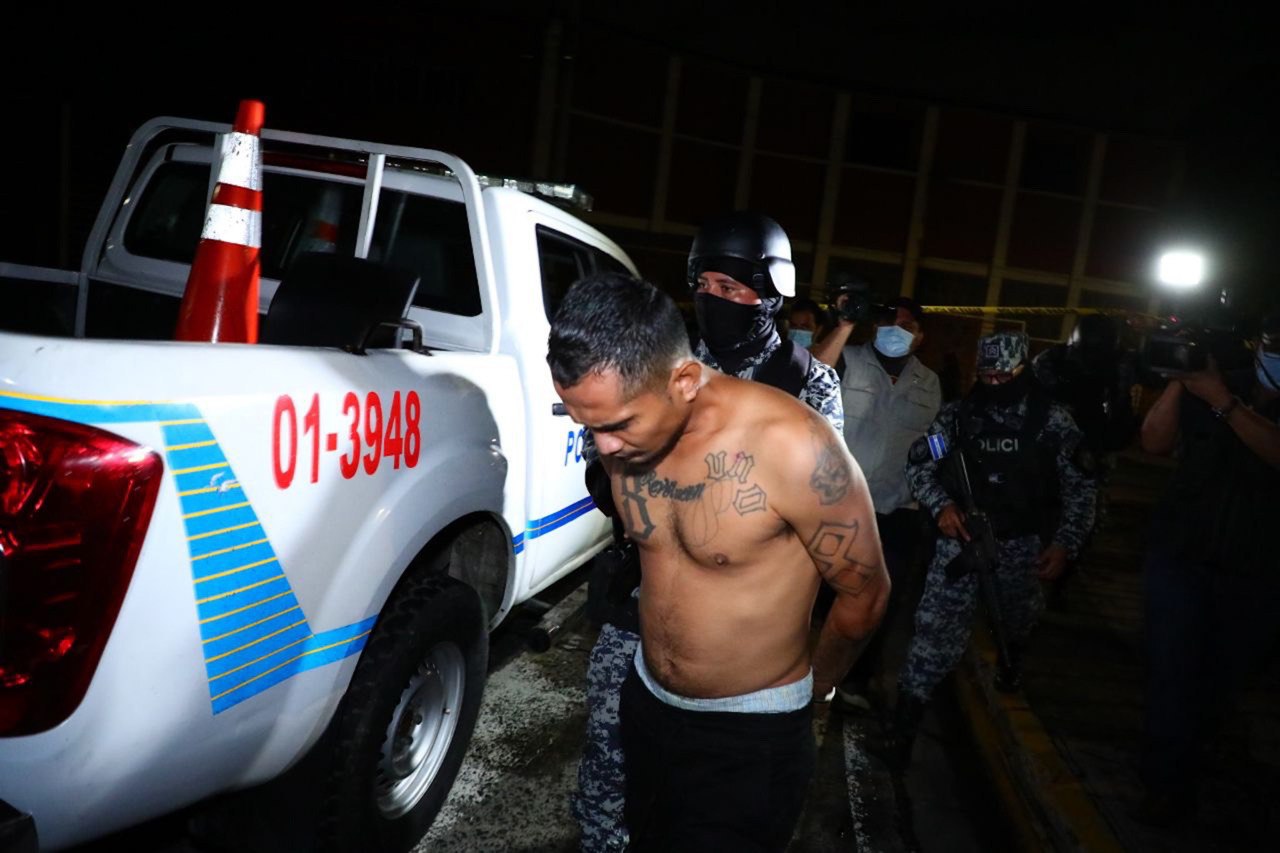
Amnesty International reported that authorities in El Salvador have committed “massive” human rights violations, including arbitrary detentions, due process violations and torture, under cover of an ongoing state of emergency. Amnesty found that 35,000 individuals have been illegally detained without due process since President Nayib Bukele declared a state of emergency in response to gang violence in March, suspending constitutional guarantees. At least 1,190 minors are among the detained, and more than 18 detainees have died in custody. The National Assembly has twice extended the so-called “regime of exception” by 30-day intervals. The day after Amnesty issued the report, the Inter-American Commission on Human Rights (IACHR) urged El Salvador’s government to comply with international human rights obligations in implementing security measures. (Photo: Presidencia de El Salvador)

Mexico
madres

Mothers of the disappeared march in Mexico

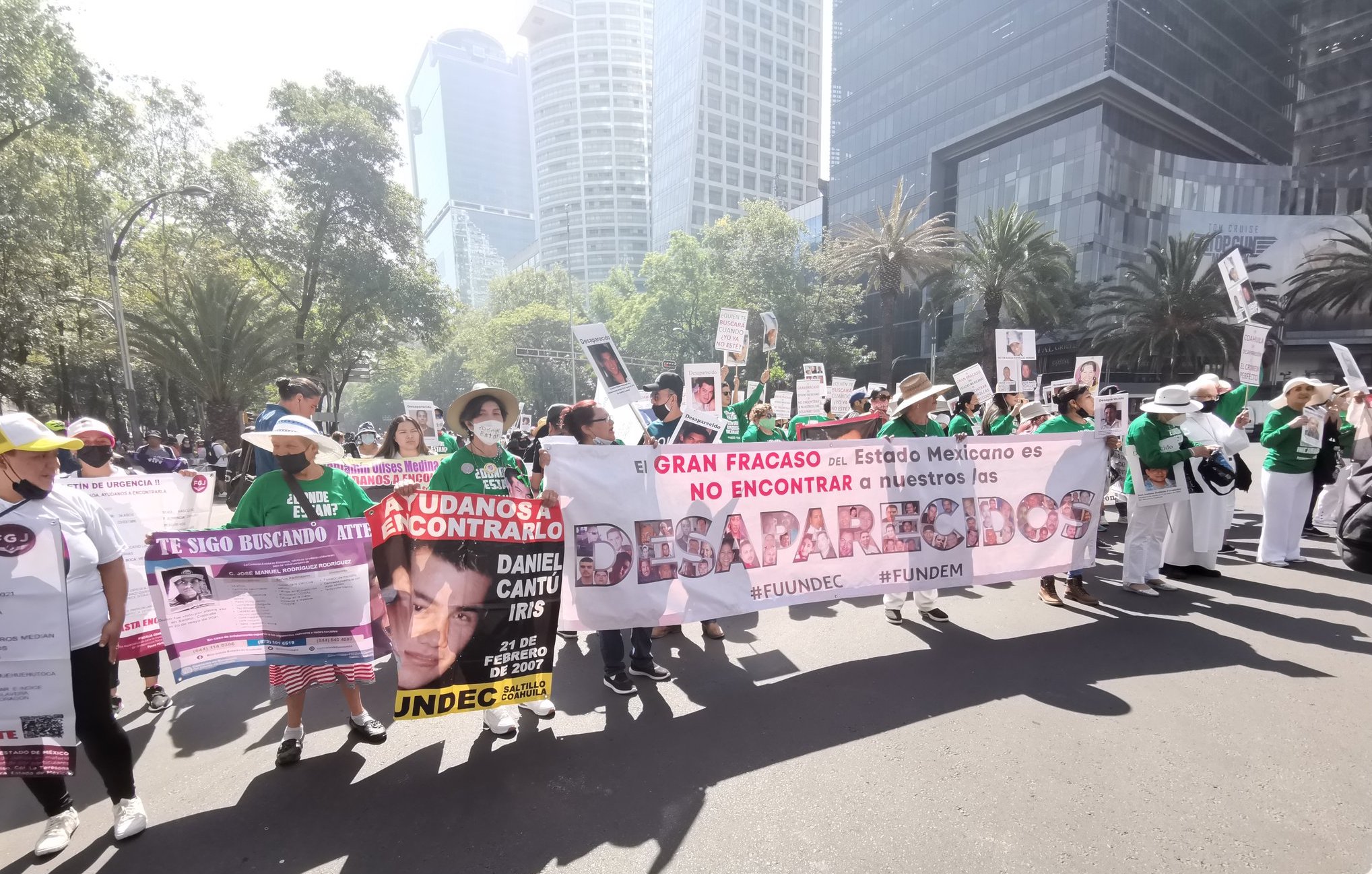
On Mexico’s Day of the Mother, thousands of mothers and other family members of the disappeared held a March for National Dignity in the capital, calling for action on their missing loved ones. The march, which filled the main avenues of Mexico City, was organized by a coalition of 60 regional collectives of survivors of the disappeared from around the country. In the days before the march, a group camped out at the National Palace, demanding a dialogue with President Andrés Manuel López Obrador. (Photo via Twitter)

Mexico
nuevo laredo

Mexico: gunfire, explosions rock Nuevo Laredo

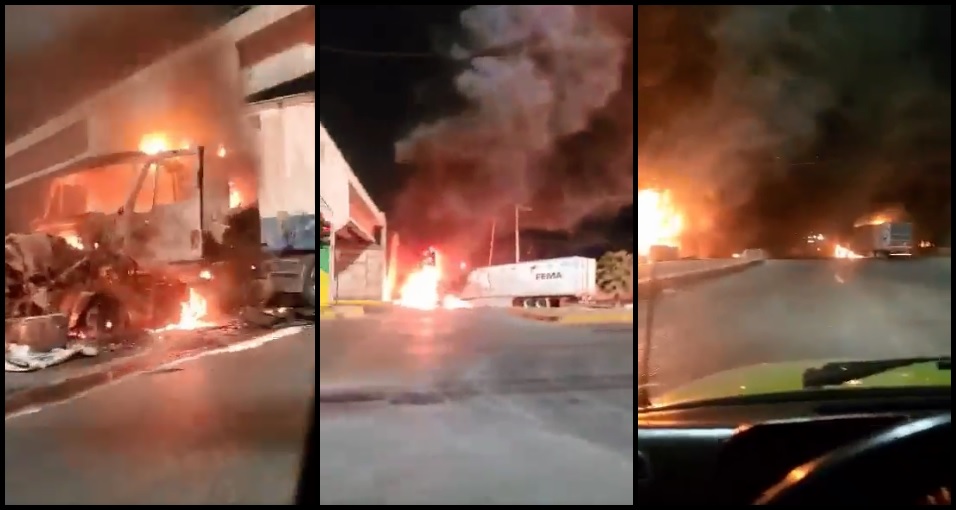
Gunfire and explosions were reported from the Mexican border town of Nuevo Laredo following the arrest of a local gang leader by federal police and army troops. Juan Gerardo Treviño, AKA “El Huevo” (The Egg), is said be leader of the Tropas del Infierno (Troops of Hell), paramilitary arm of the Cartel del Noreste (Northeast Cartel), an offshoot of the notorious Zetas. Facing charges both sides of the border, he was nonetheless turned over to US authorities, apparently because he is a US citizen. He was handed over at a border bridge in Tijuana, far to the west of Nuevo Laredo, presumably to avoid attempts to free him. In the outburst of violence that greeted his arrest in Nuevo Laredo, the city’s US consulate was hit with gunfire. Gang members also closed off streets with burning vehicles, attacked army outposts, and lobbed grenades at buildings. (Photo: social media via Laredo Morning Times)

Mexico
Pemex

Control of oil behind Mexico-Spain tensions

Mexico’s President Andrés Manuel López Obrador called for a “pause” in relations with Spain, in a speech that explicitly invoked the legacy of colonialism going back to the Conquest. But the speech was aimed principally at Spanish oil company Repsol, which had been favored during the presidential term of Felipe Calderón. Specifically, López Obrador questioned the granting of gas contracts in the Burgos Basin, in Mexico’s northeast. He charged that Repsol operated the fields less productively than the state company Pemex had. “In the end, less gas was extracted than Pemex extracted” before the contracts, he charged. Repsol is meanwhile under investigation by Spanish prosecutors on charges of graft related to the company’s efforts to fend off a take-over bid by Pemex. (Photo via Digital Journal)

Mexico
narco-fosa

Mexico approaches 100,000 ‘disappeared’

A year-end report by Mexico’s government registered a figure of 95,000 missing persons nationwide, with an estimated 52,000 unidentified bodies buried in mass graves. The report by the Comisión Nacional de Búsqueda de Personas (National Missing Persons Search Commission) found that the great majority of the disappearances have taken place since 2007, when Mexico began a military crackdown on the drug cartels. Alejandro Encinas, the assistant interior secretary for human rights, said that there are 9,400 unidentified bodies in cold-storage rooms in the country, and pledged to form a National Center for Human Identification tasked with forensic work on these remains. He admitted to a “forensic crisis that has lead to a situation where we don’t have the ability to guarantee the identification of people and return [of remains] to their families.” (Photo via openDemocracy)

The Andes
arauca

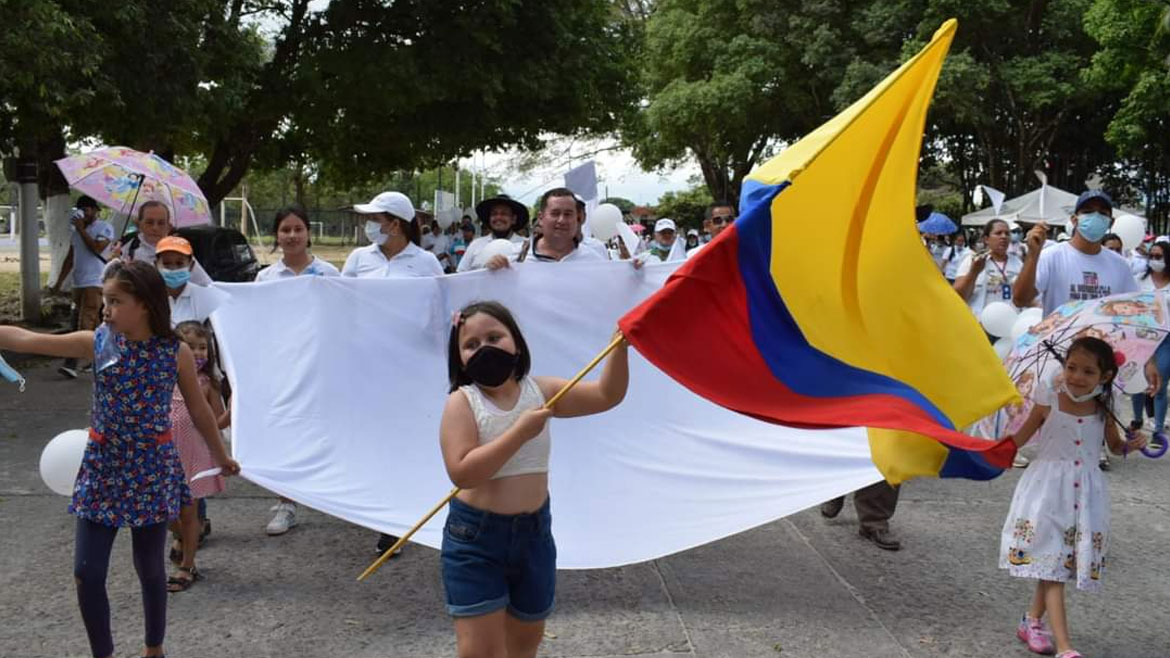
Anti-war protests in northeast Colombia

Rural communities in Colombia’s northeastern Arauca department held anti-war protests amid inter-factional guerilla violence that has been terrorizing the region. Demanding attention from the government and international human rights organizations, some 1,200 marched in the hamlets of Puerto Jordan and Botalón. Recent days had seen an outbreak of fighting in the area between the National Liberation Army (ELN) and “dissident” factions of the demobilized FARC guerillas that have refused to lay down arms, in defiance of a 2016 peace agreement. At least 23 were killed in the clashes, which were said to be over control of smuggling routes across the nearby Venezuelan border. About a dozen local families were also forced to flee their homes. (Photo: Arauca Online via Colombia Reports)

Central America

Honduras transition in the New Cold War

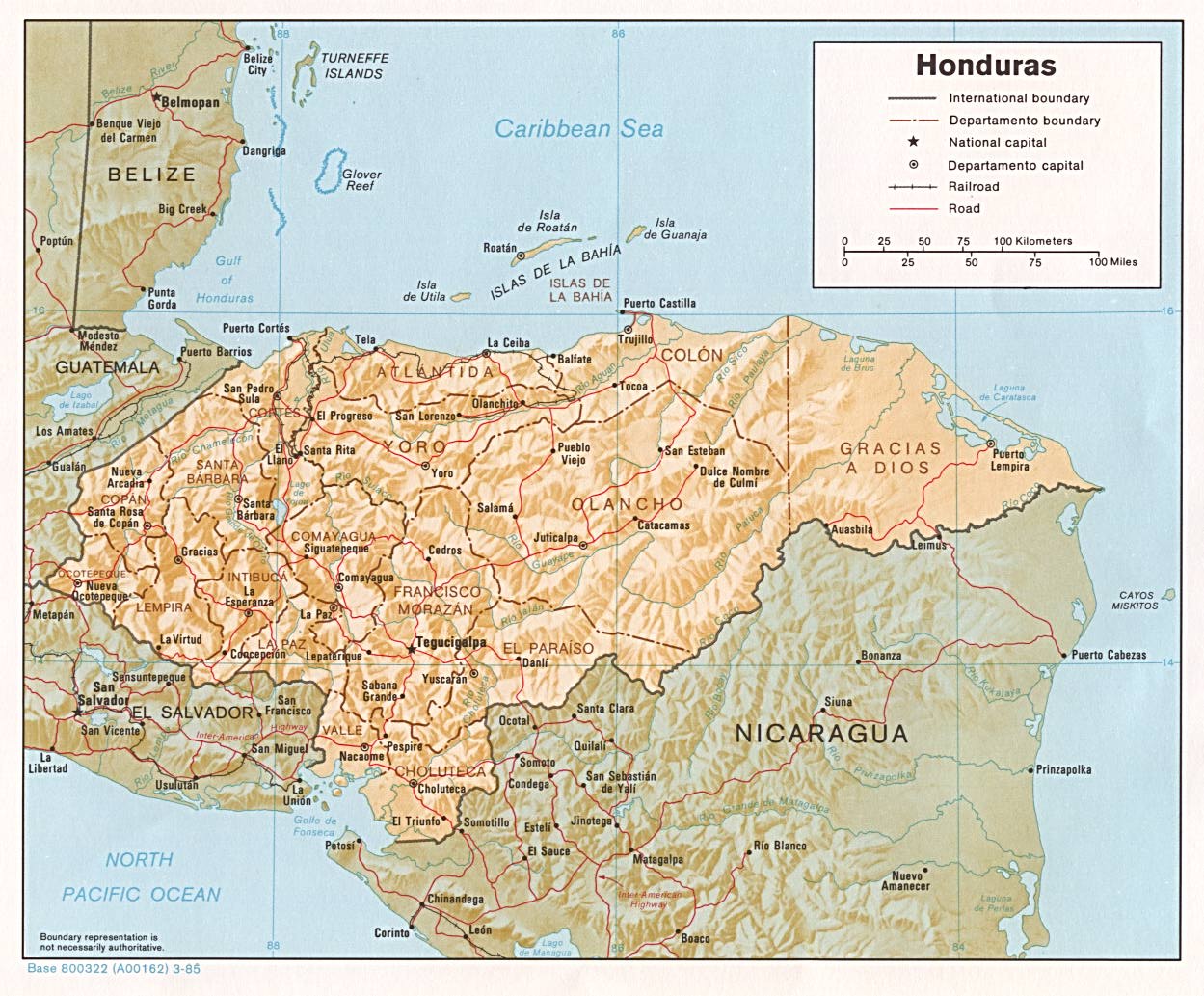
Hondurans elected self-proclaimed “democratic socialist” Xiomara Castro to be the country’s first woman president. The wife of Manuel Zelaya, the populist president who was removed in a coup in 2009, Castro pledges to revive his program—and take it much further, instating far-reaching reforms. Castro also announced that she will “open diplomatic and commercial relations with continental China,” which was widely taken as meaning a switch of diplomatic recognition. Honduras is currently one of only 14 countries that recognize Taipei rather than Beijing.  It is tragic to see the Central American republics, in their struggle to break free of Washington’s orbit, acquiesce in Beijing’s design to incorporate Taiwan into its own orbit—or, more ambitiously, its national territory.  (Map: Perry-Castañeda Library)

The Andes
paramilitaries

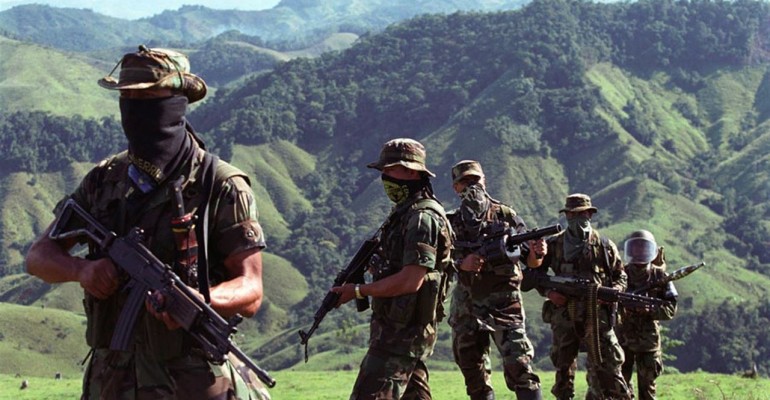
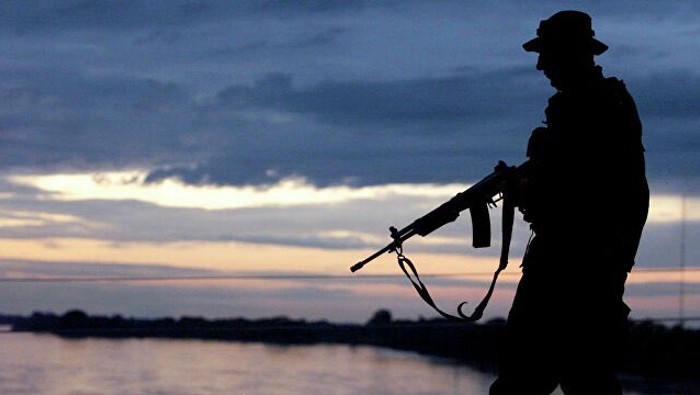
Colombia: inactive guerillas join active paras off US terror list

The US State Department announced that Colombia’s disbanded FARC guerilla army has been removed from the list of “Foreign Terrorist Organizations.” The statement acknowledged that the FARC “no longer exists as a unified organization.” In fact, the de-listing came on the fifth anniversary of the peace agreement under which the FARC agreed to demobilize. However, the right-wing paramilitary groups now active across the country are still not listed by the State Department. These paramilitary forces are overwhelmingly behind the ongoing campaign of assassinations of social leaders across Colombia.  (Photo via Contagio Radio)