Africa
Sahel summit

Sahel states launch new joint counter-insurgency force

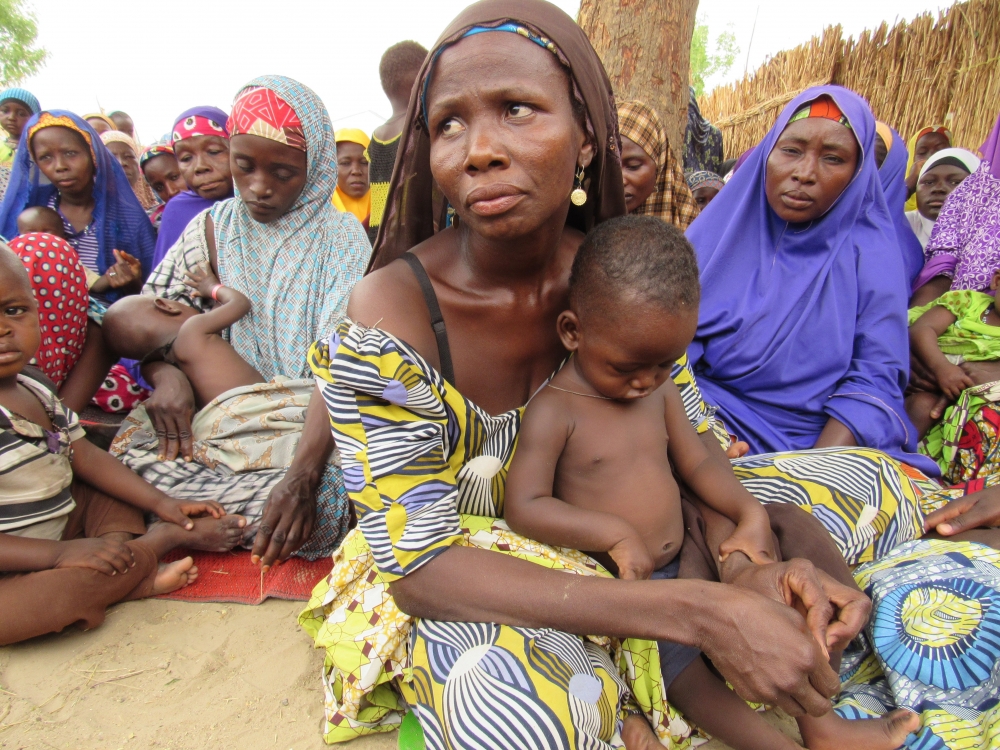
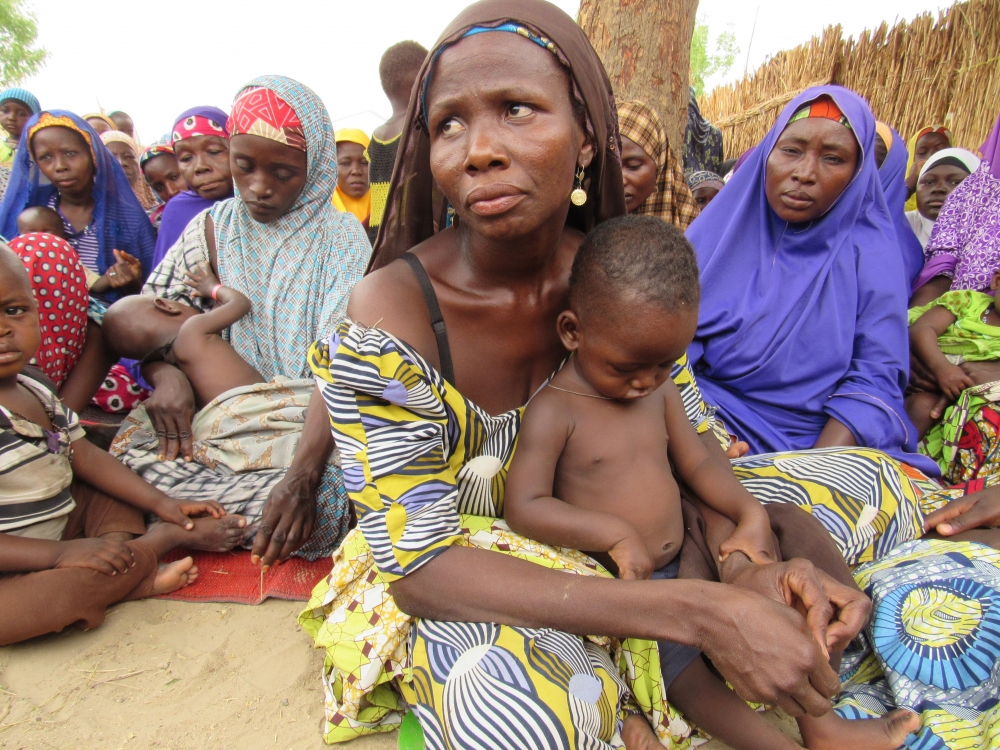
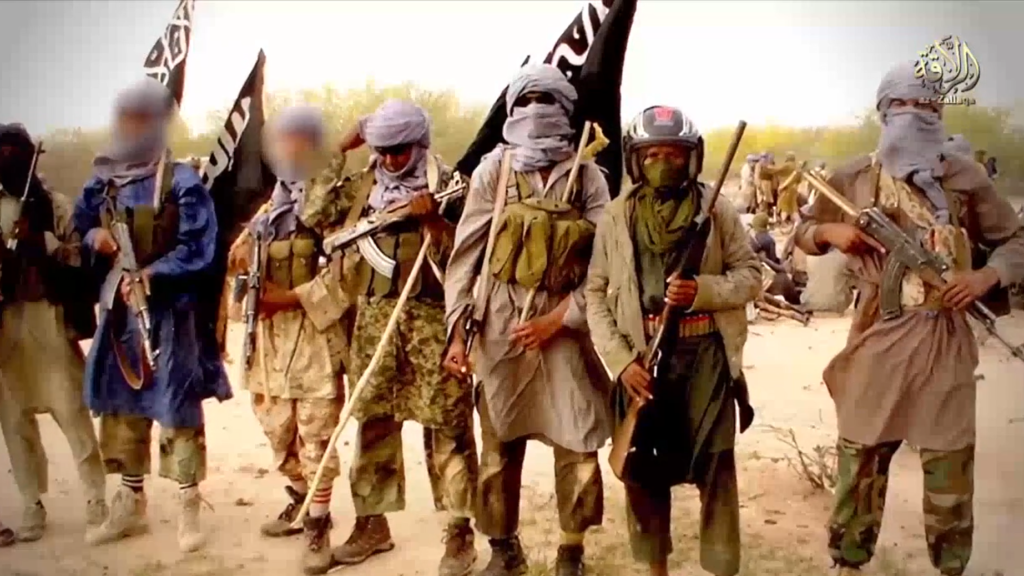
At an air base in Bamako, Mali’s military ruler Gen. Assimi Goita presided over a ceremony marking the launch of a unified force for three Sahel states to fight the rising tide of jihadist insurgency across their borders. The move comes after the three countries—Mali, Niger and Burkina Faso, all now ruled by military juntas—collectively withdrew from the West African regional bloc ECOWAS to form their own Alliance of Sahel States (AES). This new body has deepening ties to Russia, which has maintained paramilitary forces in the AES countries under the rubric of the Wagner Group or Africa Corps. These forces are increasingly accused of atrocities, with Malian refugees in Mauritania reporting rapes, beheadings and mutilation of civilians at the hands of Russian mercenaries. (Photo: PrĂ©sidence de la RĂ©publique du Mali)

Greater Middle East
Turkey

Turkey detains ISIS suspects in nationwide raids

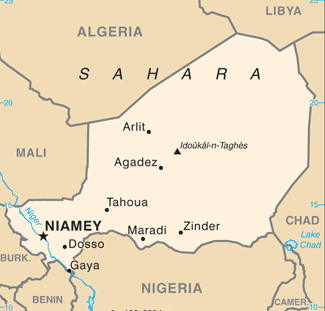
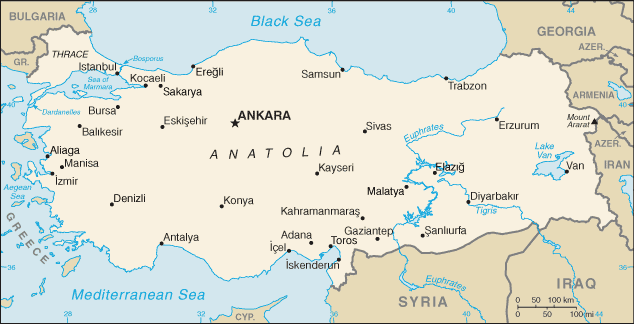
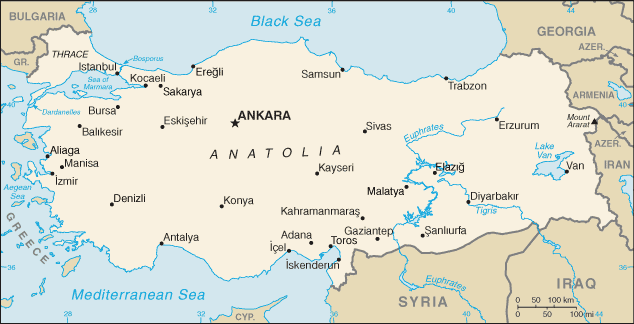
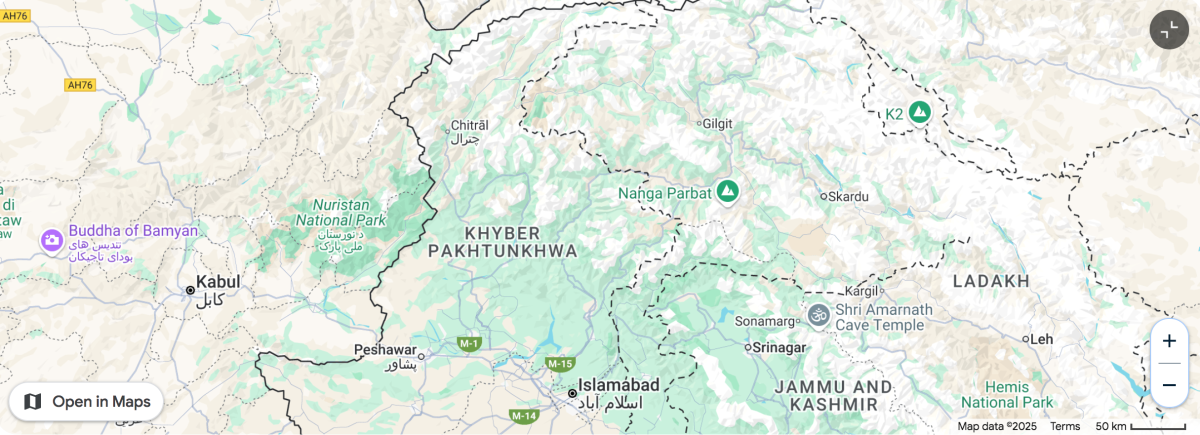
Turkish police detained 357 people in large-scale, coordinated operations targeting the Islamic State group one day after a deadly clash between police and ISIS militants in Yalova, a small city south of Istanbul on the Sea of Marmara, amid heightened security ahead of New Year’s celebrations. Three police officers and six presumed ISIS militants, all Turkish nationals, were killed in the shoot-out in Yalova, sparked by a raid on suspected safe-house. The subsequent nationwide raids were carried out simultaneously by provincial police units, working with the national counterterrorism and intelligence departments. The raids took place in major cities including Istanbul and Ankara, as well as in Yalova and several border and interior provinces. (Map: CIA)

Syria
Homs

UN condemns deadly mosque bombing in Syria

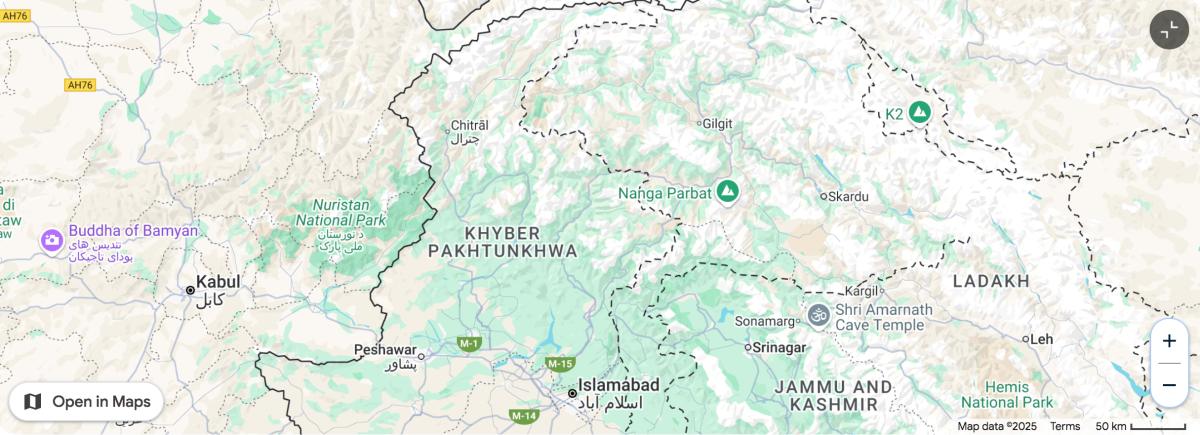
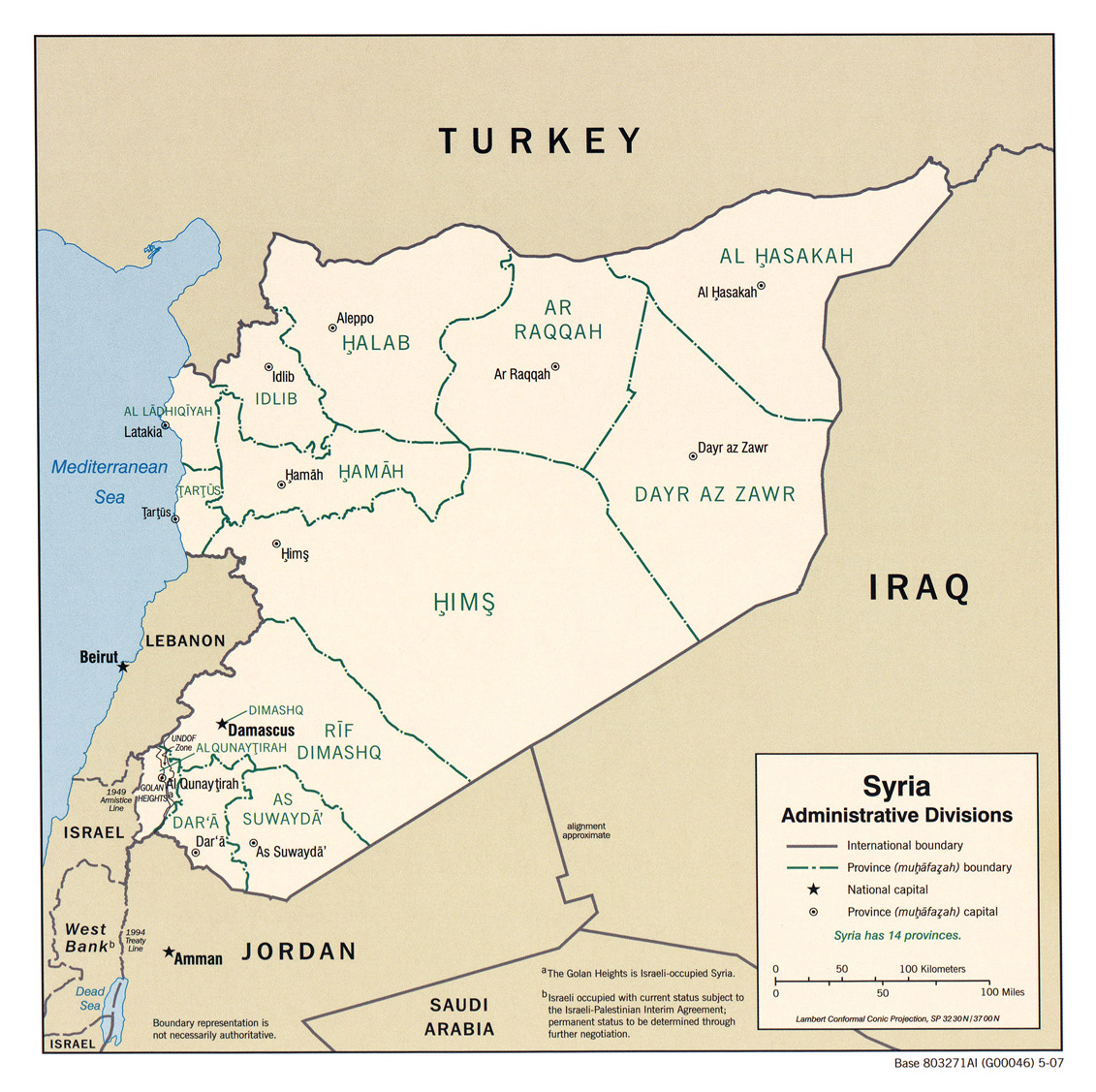
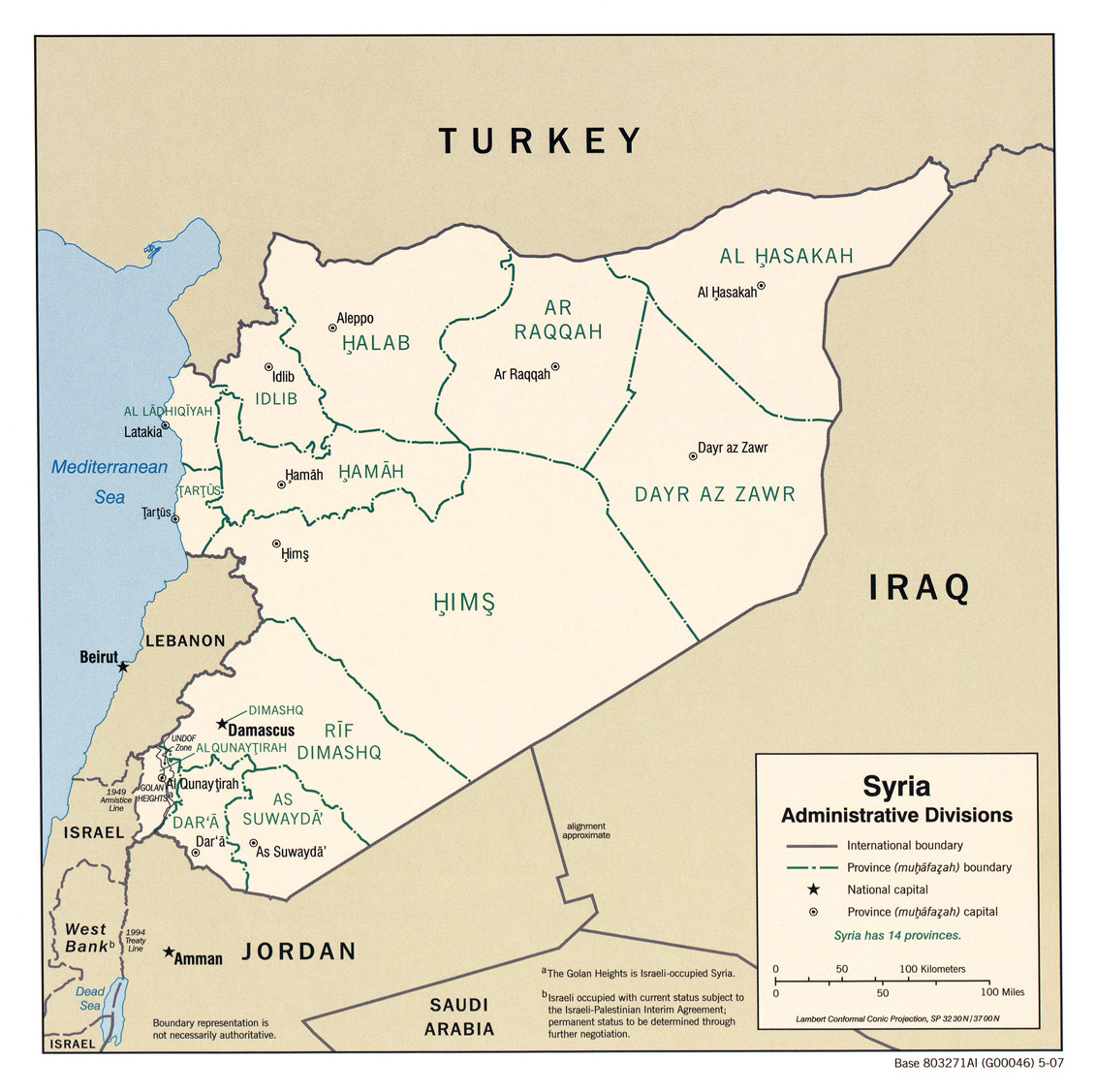
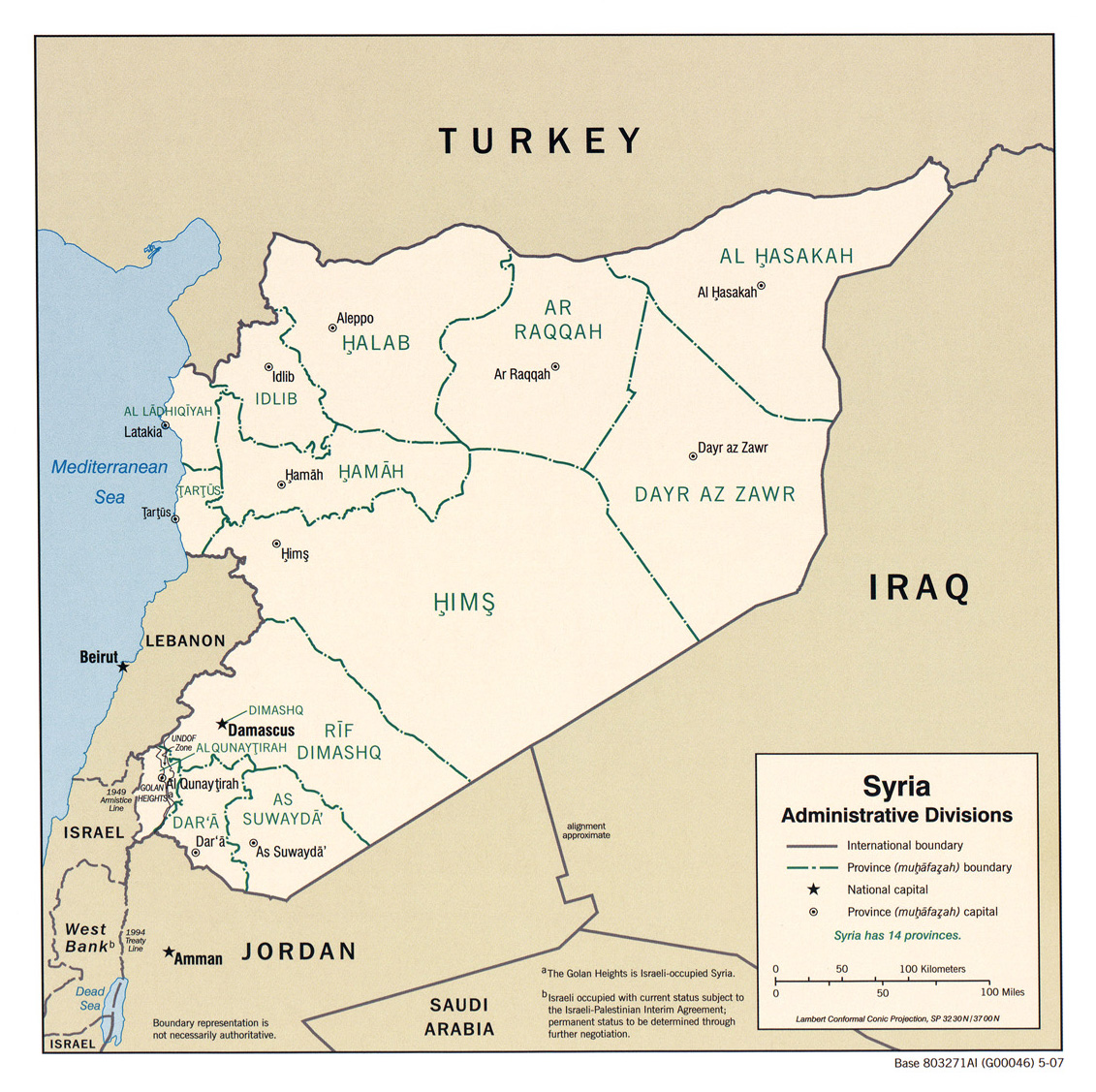
UN Secretary-General AntĂłnio Guterres condemned the deadly mosque bombing in Syria, urging that those responsible be swiftly identified and brought to justice. The explosion tore through the Ali Bin Abi Talib mosque in the city of Homs during Friday prayers, killing at least eight people and injuring around 20, according to Syrian authorities. The mosque serves members of the Alawite minority, which has faced violent reprisals since the fall of the Bashar Assad dictatorship last December. A group calling itself Ansar al-Sunna, said to be a splinter of the Islamic State (ISIS), claimed responsibility for the attack. The group had previously claimed responsibility for the June suicide bombing at Mar Elias church in Damascus that left 25 people dead, raising concerns about a pattern of attacks on religious sites. The bombing in Homs sparked angry protests and street clashes in the Alawite heartland of Latakia and Tartous provinces on Syria’s coast. (Map: Google)

Africa
Tomahawk

Podcast: MAGA-fascism and the struggle in Nigeria

With his Christmas air-strikes on Nigeria, Trump is blundering into a conflict fundamentally driven by desertification related to the very climate change that he denies, and which now threatens democratic rule throughout the West African region. And while the Muslim-Christian sectarian strife that Trump hypes is a large element of the situation, the violence has gone both ways. Furthermore, making Christians the perceived beneficiaries of imperialist intervention is only likely to exacerbate the tensions and make Christians more of a target. In Episode 310 of the CounterVortex podcast, Bill Weinberg takes an in-depth and unsparing look. (Photo: AFRICOM via Long War Journal)

Africa
Sokoto

US strikes supposed ISIS targets in Nigeria

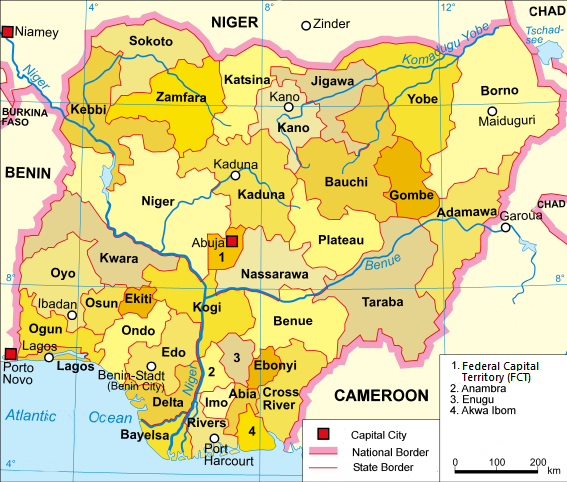
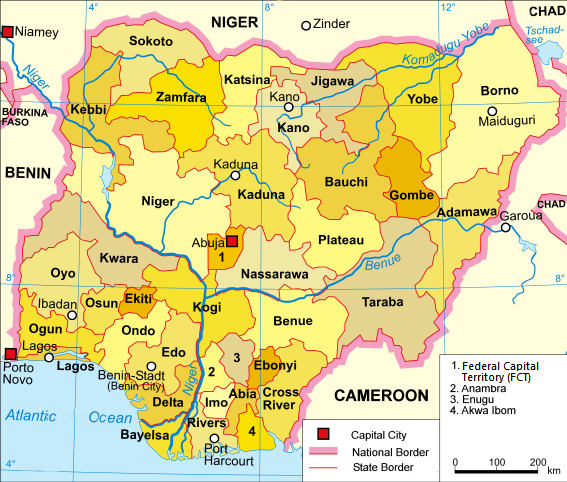
Following through on threats made last month, President Donald Trump announced on social media Christmas Day that he had ordered air-strikes against Islamic State targets in Nigeria, ostensibly in retaliation for the group’s targeting of Christian communities. Trump’s post did not specify where the military action took place, though the Pentagon’s Africa Command later stated that the strikes were in “Soboto State” —an obvious misspelling of Sokoto state, in Nigeria’s northwest. The Nigerian government confirmed the bombings, stating that they were conducted in a “joint operation” —but added that the strikes had “nothing to do with a particular religion.” (Map: Google)

Africa
DRC

ISIS franchise in new DRC attacks

The UN decried a new attack on civilians by the Allied Democratic Forces (ADF) armed group in eastern Democratic Republic of the Congo (DRC). The UN described the incident as “one of the most appalling attacks” ever recorded in the country, and indicated that it may constitute a war crime. According to information gathered by the UN Organization Stabilization Mission in the DRC (MONUSCO), a series of deadly attacks took place across several localities in Lubero territory, North Kivu province, resulting in the deaths of 89 civilians, including 20 women and an unknown number of children. These attacks included a raid on a healthcare center where 17 patients were killed. Assaults on healthcare facilities are strictly forbidden under international humanitarian law, which mandates that medical units be respected and protected in all circumstances. Despite its unassuming name, the ADF is integrated into the Islamic State Central Africa Province (ISCAP). (Map: PCL)

Syria
syria

Podcast: the new Syria in the Great Game

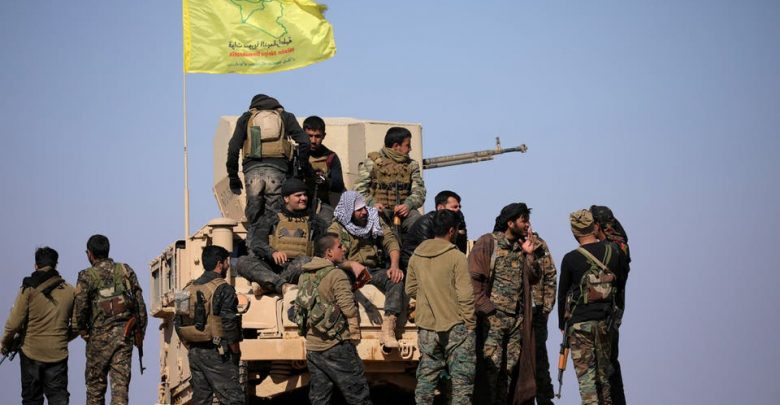
Syrian interim president Ahmed al-Sharaa’s White House meeting with Donald Trump followed the removal of his Hayat Tahrir al-Sham (HTS) from the list of designated “terrorist organizations” both at the State Department and at the UN. It also coincided with raids against ISIS by his security forces, raising the prospect of his government being invited to join the US-led Global Coalition to Defeat ISIS. The Washington visit also came just a month after al-Sharaa’s similar trip to meet Vladimir Putin in Moscow, where a deal was brokered allowing Russia to keep its military bases in Syria. Amid all this, Syria continues to see forced disappearances and other abuses targetting Druze, Alawites and Kurds—pointing to the looming threat of an ethnic or sectarian internal war. The US troop presence in Syria is largely embedded among the Kurdish forces in the east. As al-Sharaa becomes a new “anti-terrorist” partner (or proxy) for the Great Powers, will these troops be withdrawn—providing a “green light” for Damascus to attack the Kurdish autonomous zone? In Episode 305 of the CounterVortex podcast, Bill Weinberg weighs the risks at this critical moment in Syria’s transition process, nearly one year after the fall of the Assad dictatorship. (Image: Pixabay)

Africa
Nigeria

Trump threatens Nigeria with military action, aid cut

US President Donald Trump said that he has ordered the Pentagon, or “Department of War,” to prepare contingency plans for potential military action in Nigeria. Trump alleged that the Nigerian government has failed to protect Christian communities from violent extremist attacks. The comments follow Trump’s declaration designating Nigeria as a “country of particular concern” (CPC) for religious-freedom violations, citing what he described as an “existential threat” to Christianity. (Map: PCL)

Iraq
Ain al-Asad

US troops to remain at Iraq air base

A “small force” of US troops will remain at Iraq’s Ain al-Asad air base in order to fight ISIS, the Baghdad government announced. The decision reverses plans for a full withdrawal of US forces from the base. Prime Minister Mohammed Shia al-Sudani said that a force of up to 350 Pentagon advisors and support personnel would stay at the base in western Iraq, as well as al-Harir base in Iraqi Kurdistan. The decision to allow the US troops to stay was made in response to “developments in Syria,” al-Sudani said. This presumably refers to the fall of the Assad regime in December 2024, after the draw-down agreement between the US and Iraq was reached. (Photo: Spc. Timothy VanDusen/US Army via Task & Purpose)

Africa
Sahel States

Mali, Niger, Burkina Faso announce withdrawal from ICC

Mali, Niger and Burkina Faso announced that they will withdraw from the International Criminal Court (ICC), accusing the tribunal of serving “imperial” rather than African interests. The three countries, each governed by military juntas and members of the newly formed Alliance of Sahel States (AES), issued a joint declaration stating that they no longer recognize the ICC as a legitimate forum for justice, charging that it has become an “instrument of neo-colonialist repression.” The decision comes amid ongoing security crisis in the Sahel region, where armed groups linked to al-Qaeda and the Islamic State are waging brutal insurgencies, carrying out attacks against civilians as well as security forces. Human rights groups have accused state security forces of committing extrajudicial killings and other serious abuses in counter-terrorism operations. (Image: Wikipedia)

Africa
IS Sahel

Niger: mounting atrocities by ISIS franchise

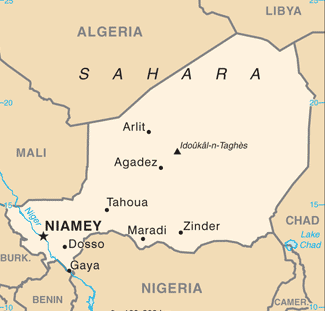
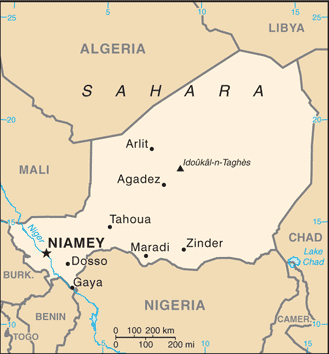
Human Rights Watch (HRW) stated that the armed group Islamic State in the Sahel Province (IS Sahel) is escalating attacks on civilians, reporting that since March the group has illegally executed 127 people in western Niger. HRW documented five armed attacks by the group in Tillabéri region during that time frame. The group killed 70 worshipers at a mosque in a mass execution in June. In May, IS Sahel attacked villages and burned at least a dozen homes, the report found. HRW stated that these attacks constituted war crimes. (Photo: Aharan Kotogo via Wikimedia Commons)

Africa
FARDC

Violence escalates in DRC —despite ‘peace’ deal

UN High Commissioner for Human Rights Volker TĂĽrk condemned a recent surge in deadly attacks against civilians by M23 fighters and other armed groups in eastern Democratic Republic of the Congo (DRC). The attacks come in spite of a Washington-brokered ceasefire agreement between the DRC government and Rwanda, which backs the M23 rebels. The DRC government and M23 have only signed a “declaration of principles” supposedly committing them to a formal peace deal—but meanwhile, violence on the ground has escalated. (Photo: Sylvain Liechti/MONUSCO via Wikimedia Commons)