
Watching the Shadows
NSS

Trump Corollary: spheres of influence, white supremacy

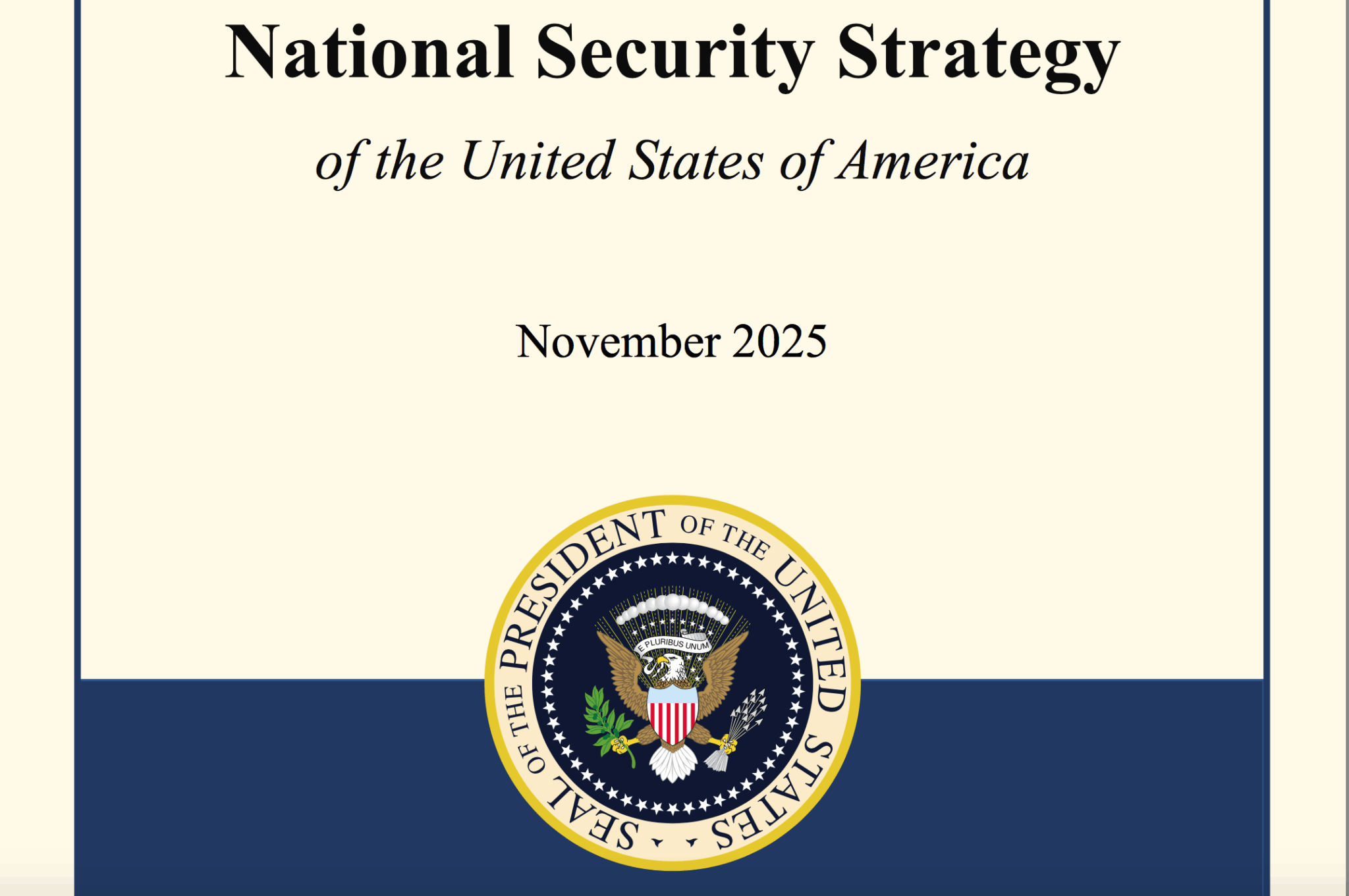
Donald Trump’s new National Security Strategy instates a “Trump Corollary” to the Monroe Doctrine. Like the Roosevelt Corollary of 1904, which was used to justify the “gunboat diplomacy” of that era, this new corollary openly calls for dividing the world into spheres of influence—with the Western Hemisphere assigned to the US. Russia is obviously pleased as punch over this, as it implicitly gives Moscow a free hand in Ukraine—and Putin will likely consider this an acceptable pay-off for his betrayal of Venezuela. However, China is less likely to surrender its massive investments and mega-projects in Latin America in exchange for a free hand to take over Taiwan. The document’s text on Europe is even more sinister, revealing a white supremacist agenda that looks not to Washington’s traditional allies to counter Russia, but to the continent’s Russian-backed far-right movements to counter Washington’s traditional allies. In Episode 308 of the CounterVortex podcast, Bill Weinberg exposes the NSS as a further step toward consolidation of a Fascist World Order. (Image: White House)
Watching the Shadows
USS Gerald Ford

US instates ‘Trump Corollary’ to Monroe Doctrine

President Donald Trump’s new National Security Strategy puts the Western Hemisphere at the center of US foreign policy and revives the Monroe Doctrine of 1823, appending it with a “Trump Corollary.” The document presents the Americas as the main line of defense for the US homeland and links that doctrine directly to ongoing military operations against suspected drug traffickers in Caribbean and Pacific waters. It places the Hemisphere as the top regional priority, above Europe, the Middle East and Indo-Pacific, with an imperative of controlling migration, drug flows, and foreign influence before they can reach US territory. It also states that the US will block “non-Hemispheric competitors” from owning or controlling “strategically vital assets” in the Americas, including ports, energy facilities, and telecommunications networks. (Photo: USS Gerald R. Ford. Credit: US Navy via Wikimedia Commons)

Iran
Hezbollah

Iran, Hezbollah threaten Argentina: Milei

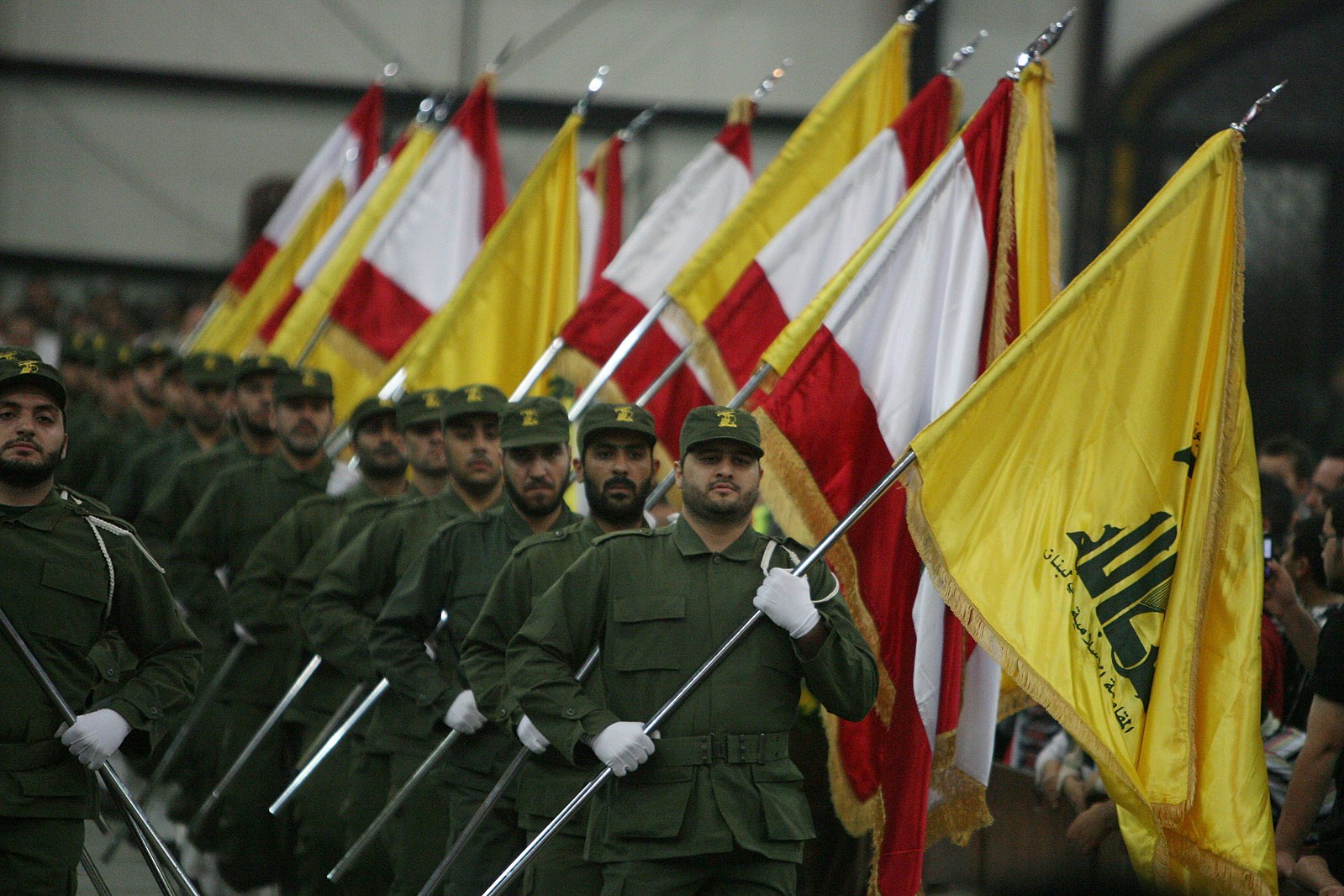
The Argentine government of far-right President Javier Milei announced that it has placed its borders on alert due to potential infiltration of operatives linked to Iran and Hezbollah. There have long been concerns about a Hezbollah presence in the Triborder Region where Argentina, Brazil and Paraguay meet. But Interior Minister Patricia Bullrich in making the announcement this time emphasized a supposed threat from Bolivia. Following years of closer ties, including security cooperation, Bolivia and Iran signed a formal defense pact in July 2023. The deal was said to inlcude an Iranian pledge to provide Bolivia with drones for narcotics enforcement, but the terms were secretive, with both Argentina and the Bolivian opposition demanding clarity on the details. (Photo: Khamenei.ir via Wikimedia Commons)

Southern Cone
AMIA

Hezbollah operative indicted in Buenos Aires bombing

The US District Court for the Southern District of New York unsealed an indictment filed against Hezbollah operative Samuel Salman El Reda for his alleged involvement in a bomb attack on a Jewish community center in Argentina three decades ago. The 20-page indictment concerns the 1994 bombing of the Asociación Mutual Israelita Argentina (AMIA) in Buenos Aires, which killed 85 people and caused hundreds of injuries. The US government claims El Reda collaborated with the Hezbollah-linked Islamic Jihad Organization (IJO) in the attack.

Southern Cone

Argentina: judge orders arrest of former president

An Argentine judge ordered the arrest of current senator and former president Cristina Fernandez de Kirchner for her alleged involvement in a cover-up of Iran’s participation in a 1994 bombing of a Buenos Aires Jewish center that left 85 people dead. Kirchner is alleged to have signed a deal with the Iranian government that would allow for Argentine magistrates to interview the officials suspected of ordering the attack in Tehran rather than in Buenos Aires in an attempt to impede the investigation.

The Andes

Venezuela drops petro-dollar: how meaningful?

Venezuela, under growing pressure from US sanctions, has told oil traders that it is dropping petro-dollars for petro-euros and petro-yuans. Despite the instinct to cheer the decline of US world domination, will this make any real difference—either to Venezuela, still dependent on oil exports in a world of depressed prices, or to Planet Earth, facing biosphere collapse as a result of burning hydrocarbons?

North America

Trump: drug war general to Homeland Security

Gen. John Kelly, Trump's choice for Homeland Security secretary, is ex-chief of the Pentagon's Southern Command who clashed with Obama over his hardline views.

Southern Cone

Argentine judge demands Iraq arrest Iran diplomat

An Argentine federal judge called upon authorities in Iraq to arrest Iranian diplomat Ali Akbar Velayati, accused intellectual author of the 1994 bombing of Buenos Aires' Jewish center.

Southern Cone

Argentina: golpe or auto-golpe?

As charges were dropped against President Cristina Fernández, the intelligence service dissolved and cabinet purged, opposition lawmakers said a "self-coup" is in the works.

Southern Cone

Argentina and Iran in oil-for-terror deal?

Did Argentina's President Cristina Fernández de Kirchner strike a secret deal with Tehran to cover up Iran's role in a terror attack in exchange for guarantees of oil imports?