Africa
Fano

Ethiopia: Amhara militia in new clashes with army

Ethiopia’s government declared a state of emergency in Amhara state over ongoing clashes between the federal army and local Amhara Fano militiamen. The Ethiopian army and the Fano militia were allies in the two-year war in the northern Tigray region. Their relationship later deteriorated, in part over recent efforts by federal authorities to disband regional paramilitary groups. (Photo via Facebook)

Greater Middle East
Sahrawis

Podcast: from the West Bank to Western Sahara

In Episode 184 of the CounterVortex podcast, Bill Weinberg notes that Israeli President Isaac Herzog’s address to Congress was happily boycotted by members of the “Squad,” and comes as even establishment voices are calling for a cut-off of US aid in light of the deep political crisis in Israel. Unhappily, Rep. Pramila Jayapal was forced to issue an apology for having called Israel a “racist state”—which is a mere statement of political reality. In contrast, Ron DeSantis was not forced to issue any such apology for openly embracing Israel’s illegal annexationist designs on the West Bank—even as they are protested by UN international law experts. All this comes as Israel has joined the US as the only countries on Earth to recognize Moroccan annexation of Western Sahara, a condition of the so-called Abraham Accords. Listen on SoundCloud or via Patreon. (Photo: Kirby Gookin/Western Sahara Resource Center)

North Africa
SADR

Abraham Accords’ betrayal of Sahrawi consolidated

Israel announced that it has formally recognized Moroccan sovereignty over the disputed territory of Western Sahara. The US in 2021 became the first nation to recognize Morocco’s claim to the territory—an open quid pro quo for Moroccan recognition of Israel as a part of the so-called Abraham Accords. Israeli recognition of Morocco’s claim was promised at that time. However, much of the territory is controlled by the Polisario Front, independence movement of the Sahrawi Arab people. Some 45 countries around the world recognize Polisario’s declared Sahrawi Arab Democratic Republic (SADR); the US and Israel are alone in recognizing Rabat’s rule over the territory. (Image: Wikimedia Commons)

South Asia
Kuki

Manipur tribal leaders reject ‘dialogue’

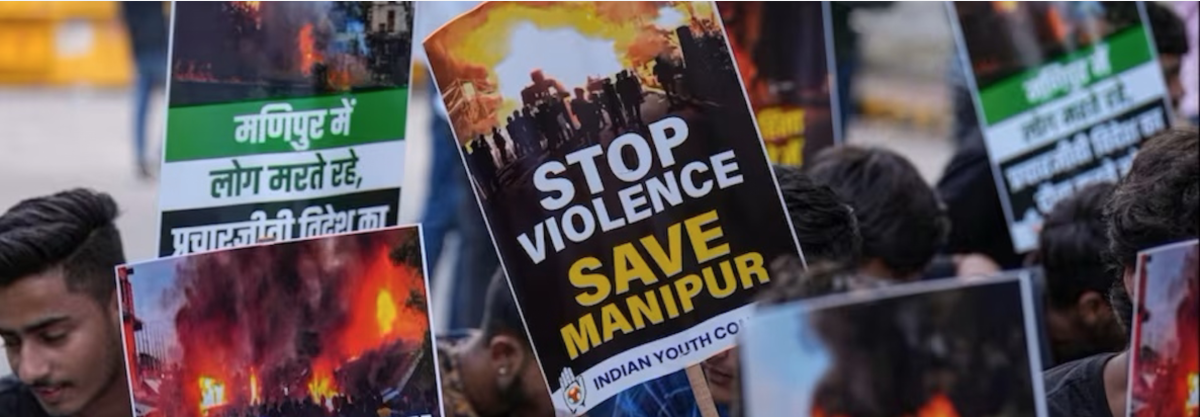
The Indigenous Tribal Leaders Forum in India’s northeast state of Manipur announced that it has rejected “any offer of dialogue” with the state’s Chief Minister N. Biren Singh. The ITLF said the chief minister’s stated intention of reaching out to stakeholders following a meeting with India’s Home Minister Amit Shah “comes too late after the loss of so many innocent lives and properties and the untold hardships faced by the Kuki-Zo tribals; there is no point in talking about peace without a political solution.” Singh, of India’s ruling Hindu-nationalist BJP, is accused of inaction or outright collaboration in attacks during weeks of violence between the Hindu Meitei community and the mostly Christian and animist Kuki and Naga peoples. (Photo: Kuki-Zo warriors march in Lamka (Churachandpur), via Twitter)

Planet Watch
#FreeRussia

Podcast: free Puerto Rico, free Russia

In Episode 180 of the CounterVortex podcast, Bill Weinberg compares two demonstrations outside the UN on the same day—one in support of Puerto Rican independence, timed for the meeting of the Special Committee on Decolonization, and one in support of Russian anti-war dissidents, LGBTQ people and indigenous peoples, now all facing harsh repression. The police state tactics seen in Putin’s consolidating dictatorship mirror many of those US colonialism has used in Puerto Rico. And Russia’s indigenous peoples have been denied self-determination as surely as the Puerto Ricans. Yet the presence of “tankies“—pseudo-leftists in the camp of Russian imperialism—at the independentista rally illustrates how those who support freedom in Puerto Rico and in Russia have been pitted against each other. Yet another example of how a global divide-and-rule racket is the essence of the state system. Listen on SoundCloud or via Patreon. (Photo: CounterVortex)

Africa
Masalit

Thousands killed in new Darfur ‘genocide’

Clashes, artillery fire and air-strikes rock Sudan’s capital, as the conflict between rival factions that has displaced 2.5 million people and caused a humanitarian crisis enters its 11th week. But with world media focusing on the fighting in Khartoum, the UN High Commissioner for Human Rights is raising the alarm about a dramatic escalation in western Darfur region, where members of the Masalit ethnic group are targeted by Arab militias aligned with the Rapid Support Forces (RSF). Authorities from the autonomous Sultanate of Dar Masalit report that more than 5,000 have been killed in such attacks in and around West Darfur state capital El Geneina over the past weeks. The Sultanate describes the continuing attacks as “ethnic cleansing” and “genocide.” (Photo of displaced Masalit children: Radio Dabanga)

South Asia
Manipur

Podcast: from Manipur to the West Bank

In Episode 179 of the CounterVortex podcast, Bill Weinberg compares the military and settler attacks on Palestinian towns in the West Bank with the eruption of ethnic violence in Northeast India’s state of Manipur—and uncovers the unlikely connection between the two. The Kuki indigenous people now targeted in Manipur includes a sub-group, the Bnei Menashe, who claim descent from one of the Lost Tribes of Israel, and practice an ancient form of Judaism. Israeli NGOs are raising the alarm about the violence in Manipur, but also exploiting it, luring Bnei Menashe to emigrate to Israel—with some settled on the West Bank, serving as demographic cannon fodder for the Zionist project. The Kuki and Palestinians, both land-rooted peoples usurped of their traditional territory, are pitted against each other—despite the convergence of their enemies in a Hindutva-Zionist alliance. Listen on SoundCloud or via Patreon. (Photo: E-PAO)

South Asia
Nagas

Podcast: the struggle in Northeast India

In Episode 178 of the CounterVortex podcast, Bill Weinberg notes the new eruption of ethnic violence in Northeast India’s state of Manipur, which was the scene of far deadlier inter-communal clashes last month. The spark was the current bid by the Meitei people to become a “scheduled tribe,” granting them access to resource-rich forestlands. This is opposed by the Kuki and Naga peoples, whose tribes are already “scheduled”—but are nonetheless being targeted for eviction from Manipur’s forestlands under the guise of a crackdown on opium cultivation. The Kuki and Naga leadership perceive a land-grab for their ancestral forest territory by the Meitei—the dominant group in Manipur, who already control the best agricultural land in the state’s central Imphal Valley. The Kuki (including their Jewish sub-group, the Bnei Menashe) and Naga have long waged insurgencies seeking territorial autonomy, or even independence from India. And both their traditional territories extend across the border into Burma (where the Kuki are known as the Chin), pointing to potential convergence of the armed conflicts either side of the international line. Listen on SoundCloud or via Patreon. (Photo of Naga festival: Yves Picq via Wikimedia Commons)

South Asia
Amritpal Singh

Sikh separatist arrested in India after manhunt

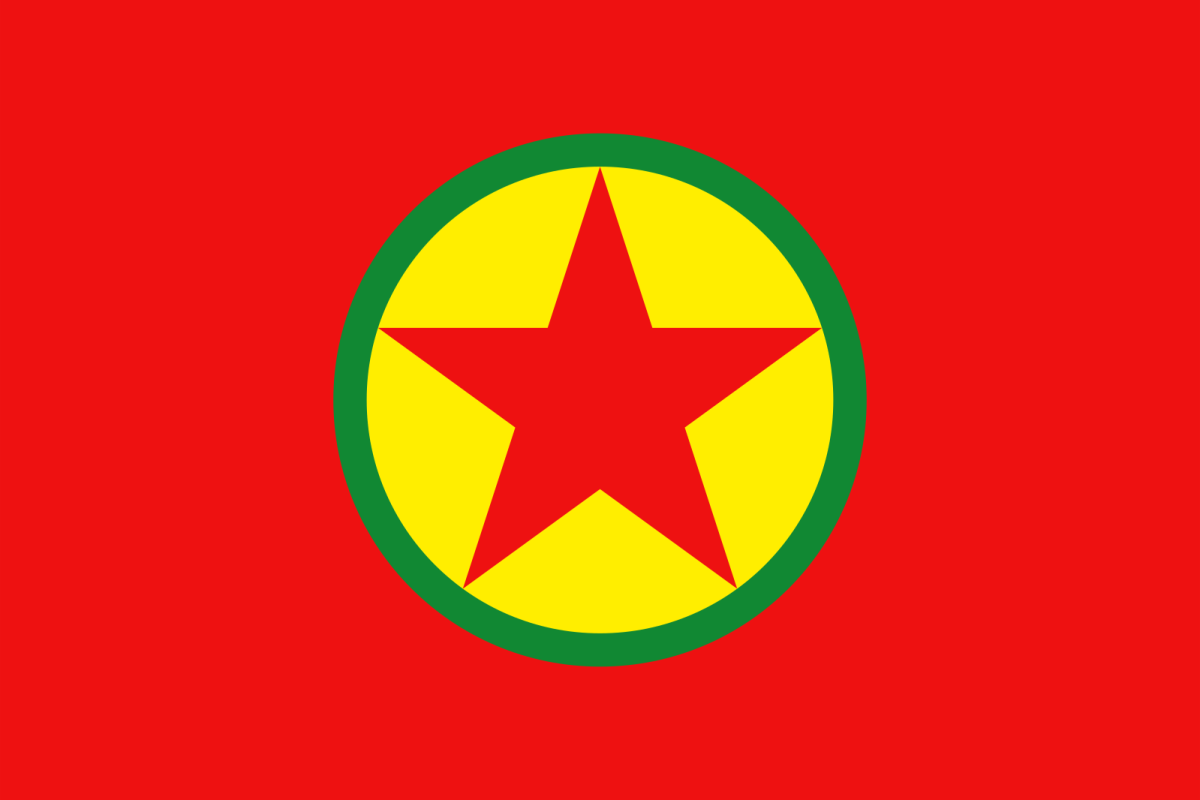
Indian police arrested Sikh separatist leader Amritpal Singh after a month-long manhunt. Singh gained notoriety for supporting the Khalistan movement, which calls for an independent Sikh homeland in the northwest state of Punjab. He was taken into custody in the gurdwara (Sikh temple) of a Punjab village. He is charged with attempted murder, obstructing law enforcement, and disturbing the peace under terms of the harsh National Security Act. The charges concern a February incident in which hundreds of followers of Singh’s organization Waris Punjab De (Heirs of Punjab) stormed a police station in Amritsar with sticks, swords and firearms, demanding the release of a detained member of the group. During the manhunt for Singh, authorities cut off internet access to all Punjab, a state of nearly 30 million. (Images of Amritpal Singh, Khalistan flag: Wikimedia Commons. Collage: Jurist)

Mexico
Chimalapas

Mexico border change leaves locals ‘stateless’

The Oaxaca state congress voted to modify the border with neighboring Chiapas state, complying with a March 2022 order from Mexico’s Supreme Court of Justice (SCJN). A 162,000-hectare territory of montane forest known as the Chimalapas is ostensibly to be returned to Zoque indigenous communities of Oaxaca, who have protested to demand that the state comply with the SCJN ruling. The decision came as the result of a decades-long campaign by the Zoque communities, who filed a case with the SCJN in 2012, arguing that their rightful lands had been invaded by ranchers and loggers from Chiapas with approval of that state’s government. However, the border change also impacts campesino communities that have since settled in the area from the Chiapas side. Mexico’s National Electoral Institute has stopped issuing credentials to 20,000 residents of these settlements until it is determined whether they are legally citizens of Oaxaca or Chiapas. (Map via Wikimedia Commons)

Africa
Bawku

Ghana’s northern borderlands militarized

The government of Ghana is rushing hundreds of troops to the northern town of Bawku, where a long-simmering conflict between two ethnic groups over control of the local chieftaincy has exploded into open warfare. The fighting began in December, when members of the Mamprugu people installed a “parallel” chief, refusing to recognize the incumbent from the Kusasi ethnicity. Since then, some 30 local residents have been slain—many civilians killed in ethnically targeted attacks. The town lies just south of the border with violence-torn Burkina Faso, and authorities are concerned that jihadist insurgents will exploit the chaos in the zone to infiltrate into Ghana. Bawku is already swollen with some 6,000 refugees who have fled terror attacks by militants in Burkina Faso. (Photo via Africa Fest GH)

Europe
moldova

Moldova drops ‘Moldovan’ language; Russia irked

The parliament of Moldova voted to remove references to the “Moldovan” language from the country’s constitution and enshrine Romanian as the official language for all legislation. Lawmakers asserted that “Moldovan” is actually indistinguishable from Romanian, and that the notion that it is a separate language is a product of Soviet propaganda. The vote was applauded by Romania, whose foreign minister Bogdan Aurescu stated that the Moldovan language is an “artificial construct.” But pro-Russian Moldovan lawmakers assailed the move—as did the Russian Foreign Ministry, which issued a statement snarkily suggesting that Aurescu is an “artificial construct.” Moscow claimed that Moldovan is a distinct and older form of Romanian, which is now “officially preserved only in Transnistria,” the breakaway region of Moldova hosting Russian troops. (Image: Nicolas Raymond via Flcikr)