Syria

Kurdish forces turn Manbij over to Assad: report

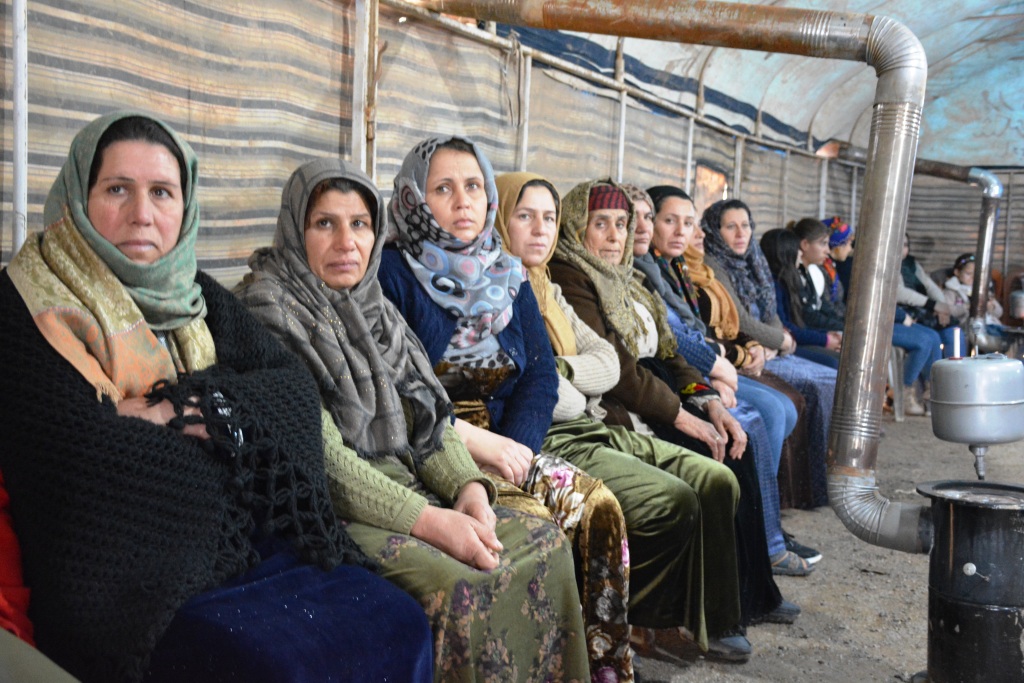
Following the announcement of a US withdrawal of its troops embedded with Kurdish forces in Syria, the Kurds are again making overtures for a separate peace with the Assad regime. Kurdish fighters of the People’s Protection Units (YPG) are reported to have turned over the flashpoint town of Manbij to regime forces—marking the first time that the Assad regime’s flag has flown over the northern town for more than six years. “The aim is to ward off a Turkish offensive,” said Ilham Ahmed, an official of the Kurdish autonomous administration. “If the Turks’ excuse is the [YPG], they will leave their posts to the government.” However, a Kurdish deal with Assad could cement the split between the Syrian rebels and the YPG, and holds risk of opening an Arab-Kurdish ethnic war in northern Syria. (Photo via Kurdistan24)

Syria

Turkey preparing assault on Rojava

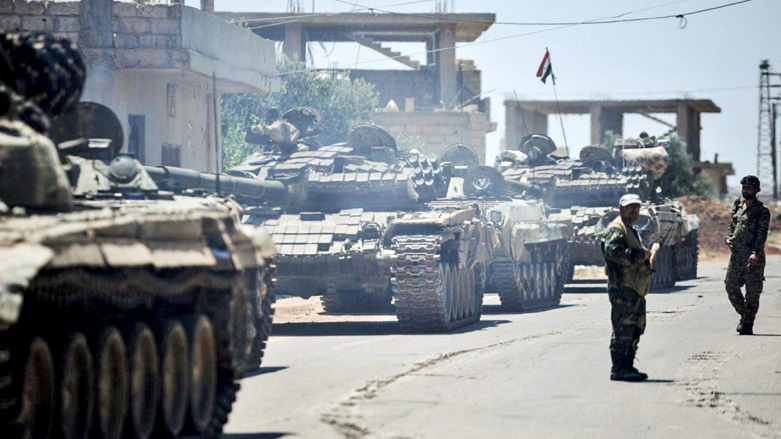
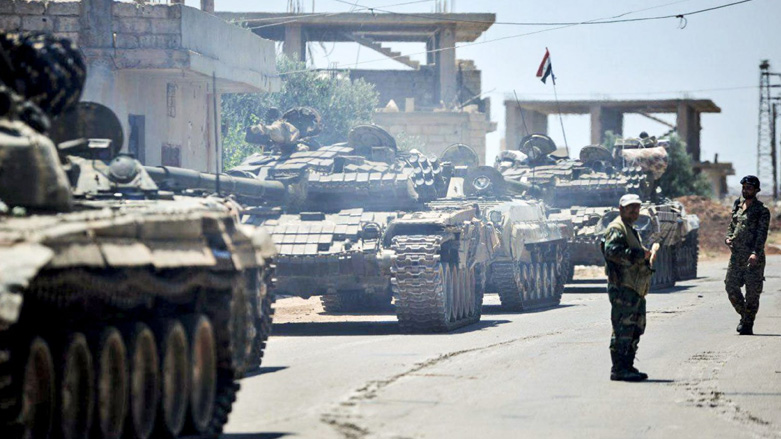
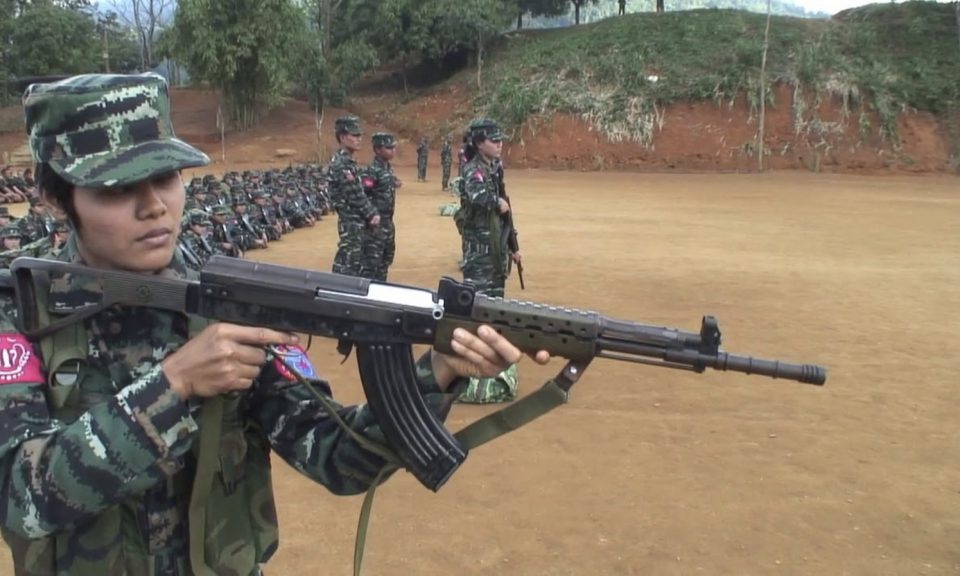
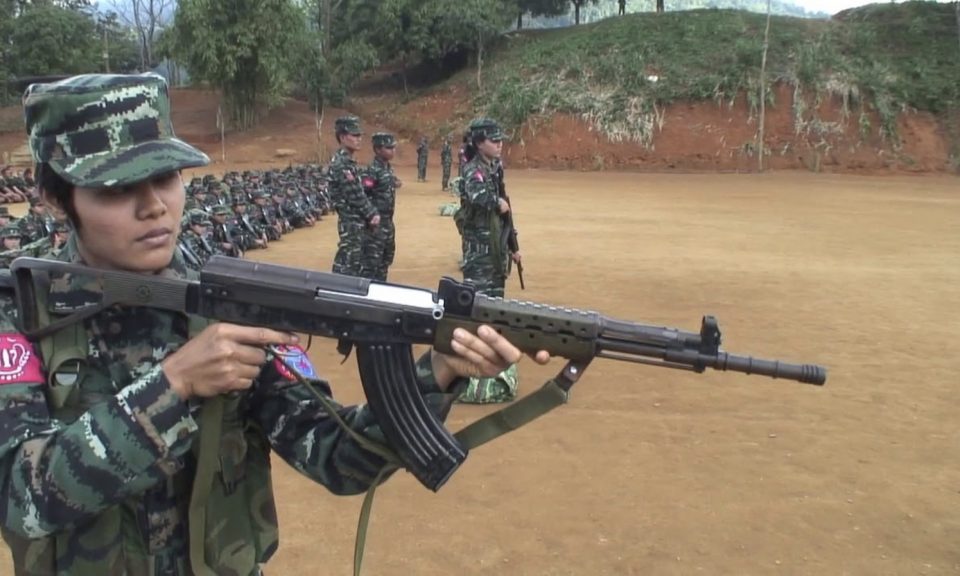
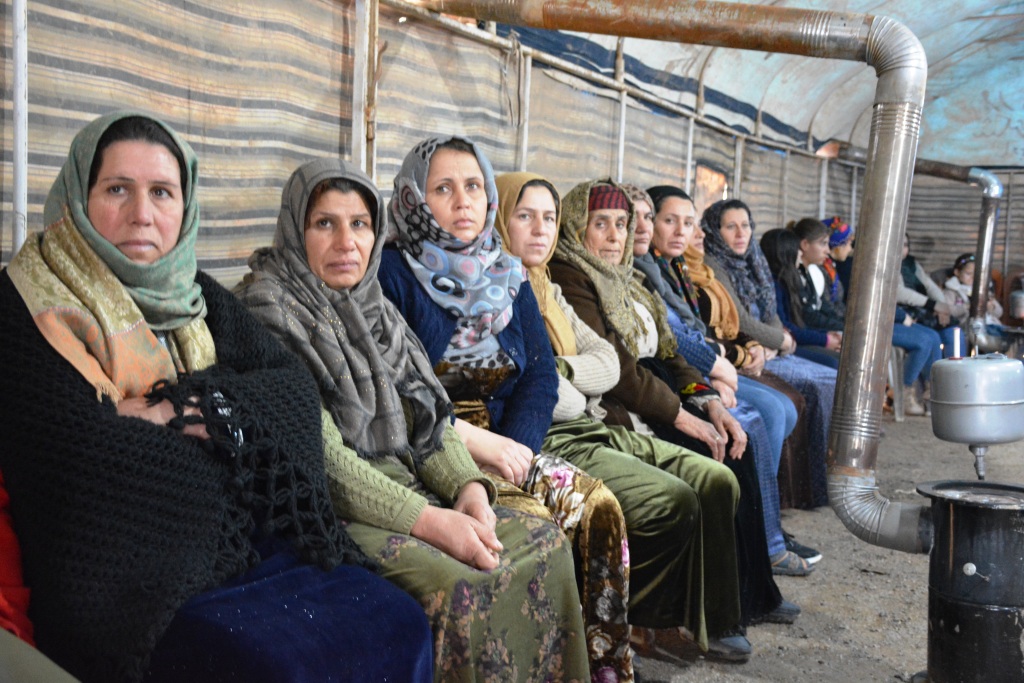
Days after Trump’s announced imminent withdrawal of US troops from Syria, Turkey has started massing tanks and troop carriers on its southern border, preparing to move into the Kurdish autonomous zone of Rojava once American soldiers have left. Turkish forces are reported arriving in the border towns of Kilis and al-Rai, after Ankara’s foreign minister said they will push into Syria as soon as possible. Mevlut Çavusoglu told reporters that “if Turkey says it will enter, it will.” He said the government of Recep Tayyip Erdogan is “determined” to move against the People’s Protection Units (YPG), the Kurdish militia that is the central pillar of the (heretofore) US-backed Syrian Democratic Forces (SDF). (Photo: ANF)

Syria

Podcast: Solidarity with Idlib and Rojava

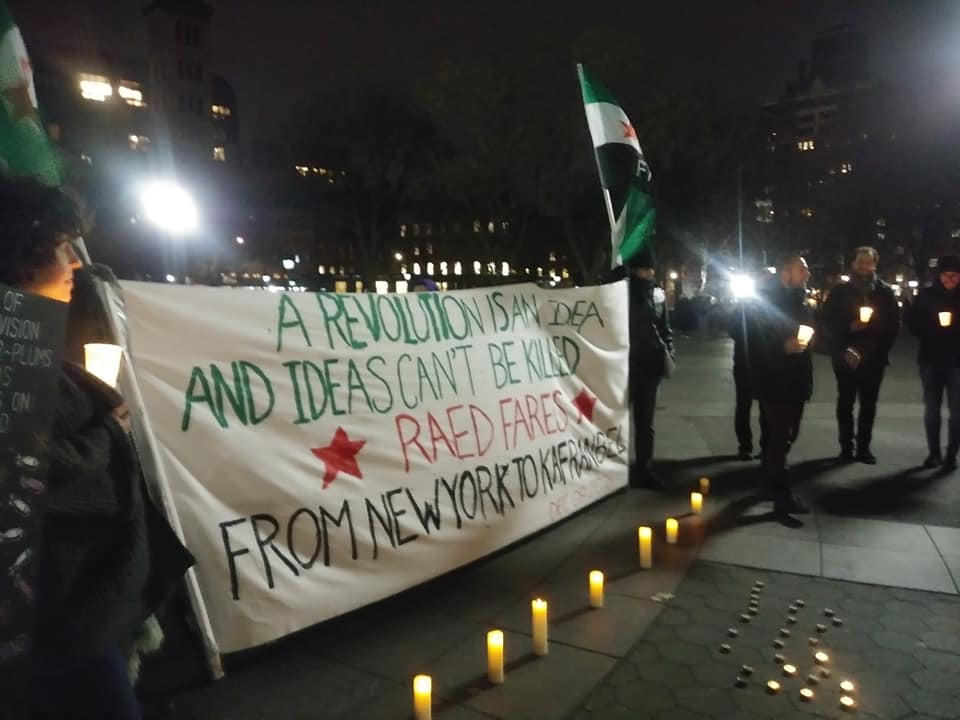
In Episode 23 of the CounterVortex podcast, Bill Weinberg notes the assassination of Raed Fares, a courageous voice of the civil resistance in besieged Idlib province, last remaining stronghold of the Syrian Revolution. The resistance in Idlib, which liberated the territory from the Bashar Assad regime in popular uprisings seven years ago, is now also resisting the jihadist forces in the province, expelling them from their self-governing towns and villages. Their hard-won zones of popular democracy face extermination if this last stronghold is invaded by Assad and his Russian backers. As Assad and Putin threaten Idlib, Trump’s announced withdrawal of the 2,000 US troops embedded with Kurdish forces in Syria’s northeast is a “green light” to Turkey to attack Rojava, the anarchist-inspired Kurdish autonomous zone. The two last zones of democratic self-rule in Syria are each now gravely threatened. Yet with Turkey posing as protector of Idlib, the Arab revolutionary forces there have been pitted against the Kurds. The Free Syrian Army and Rojava Kurds were briefly allied against ISIS and Assad alike four years ago, before they were played against each other by imperial intrigues. Can this alliance be rebuilt, in repudiation of the foreign powers now seeking to carve up Syria? Or will the US withdrawal merely spark an Arab-Kurdish ethnic war in northern Syria? Weinberg calls for activists in the West to repudiate the imperial divide-and-rule stratagems, and demand survival of liberated Idlib and Rojava alike. Listen on SoundCloud, and support our podcast via Patreon. (Photo: NYC Syria Peace Vigil Group)

North Africa
Sharara

Force majeure at Libya’s top oil-field —again

Libya’s National Oil Company (NOC) declared force majeure at the country’s largest oilfield, a week after announcing a contractual waiver on exports from the 315,000-bpd Sharara field following its seizure by armed militants. The Sharara facility was seized by a force of desert tribesmen under the banner or the Fezzan Anger Movement, which is demanding better living conditions for the remote and impoversihed southern region of the country. Sharara is located in the Fezzan region, which produces most of Libya’s oil but lacks basic services such as electricity and hospitals. The Fezzan militants were actually joined by members of the Petroleum Facilities Guard, demanding back wages be paid by the UN-backed Government of National Accord. Oil production in Libya has been repeatedly paralyzed by unrest, and the NOC is still struggling to restore output to pre-2011 levels. (Photo: Libya Observer)

Syria

Trump’s Syria withdrawal: bad news for Kurds

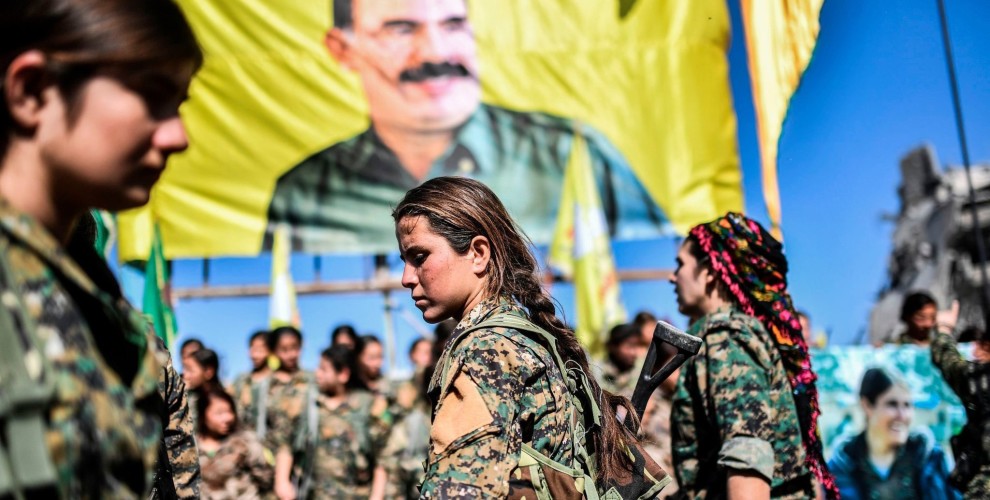
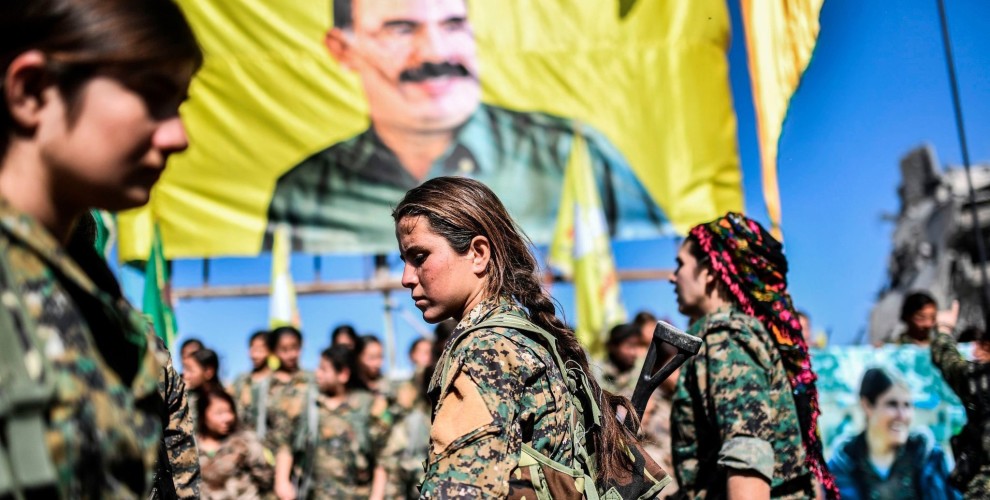
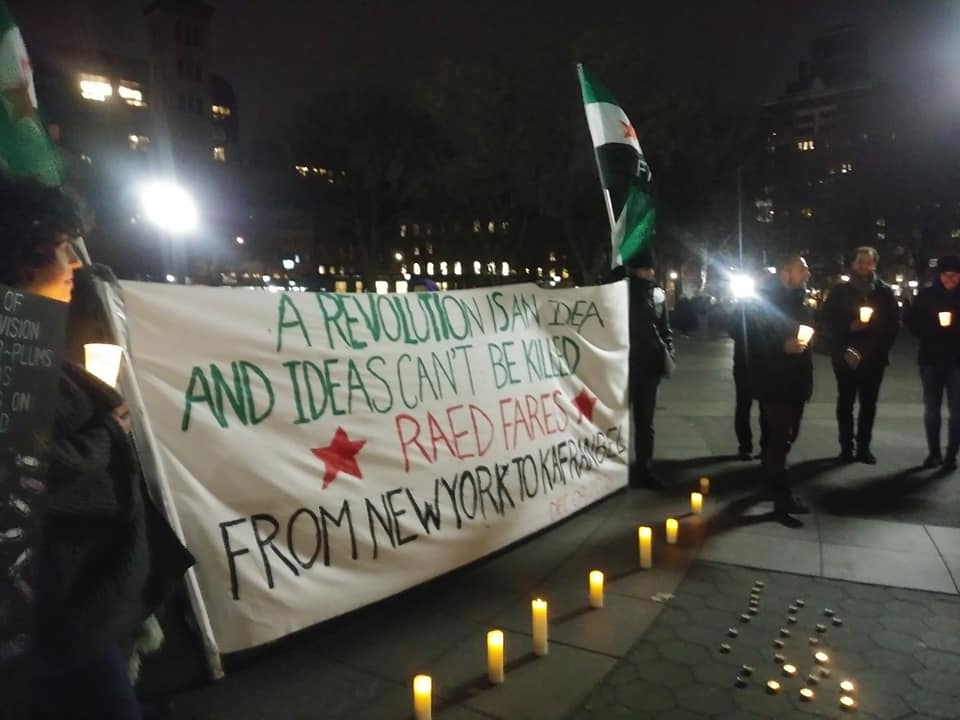
President Trump has ordered a rapid withdrawal of all 2,000 United States ground troops from Syria within 30 days. Hardly coincidentally, this comes just as the Kurdish-led Syrian Democratic Forces (SDF), the Pentagon’s main partner on the ground, are on the brink of capturing the last town in Syria still under ISIS—Hajin, on the banks of the Euphrates River. Also not coincidentally, Turkish President Recep Tayyip Erdogan just days earlier warned of an imminent offensive against the People’s Protection Units (YPG), the Kurdish militia that makes up the core of the SDF. Erdogan said that Turkey will launch an operation against the YPG “in a few days,” adding that it is “time to realize our decision to wipe out terror groups east of the Euphrates.” The Euphrates River has until now served as a border between Turkey’s “buffer zone”in northern Syria and areas still under Kurdish control. Turkey is now preparing to cross it—with evident US connivance. (Image of SDF fighters via Rudaw)

Iraq
Iraq pipeline

Iraq: Baghdad and KRG in Kirkuk pipeline pact

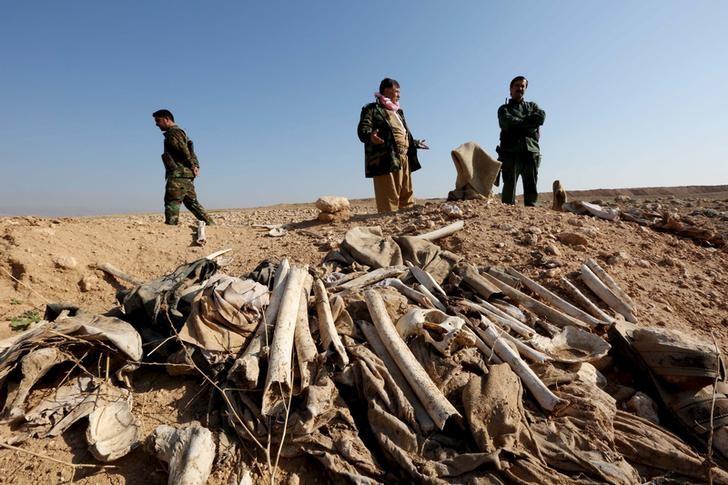
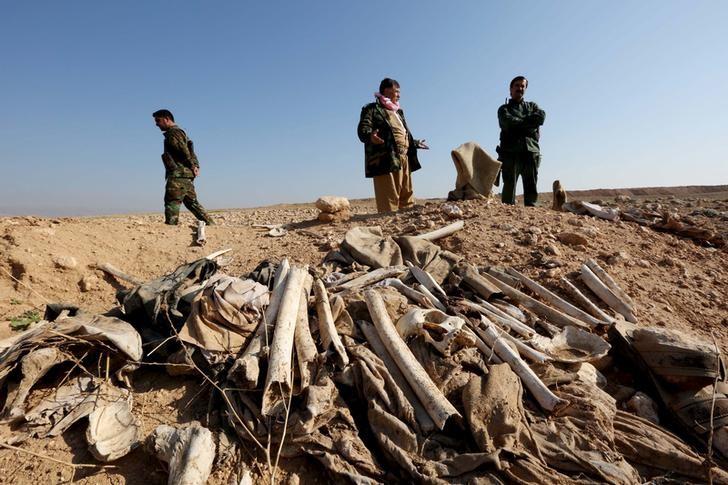
The export of oil from northern Iraq's contested enclave of Kirkuk is to resume under a deal struck between Baghdad and the Kurdistan Regional Government (KRG), Iraq's Ministry of Oil announced. With Baghdad's Kirkuk-Ceyhan pipeline disabled during fighting with ISIS, the so-called KRG pipeline is currently the only method of delivering Kirkuk oil to foreign markets other than through Iran. That route has now also been cut off by the resumption of US sanctions against the Islamic Republic. But Baghdad and the KRG have long been at odds over terms, and the situation was worsened with the central government's seizure last year of Kirkuk and its oil-fields, which had been in Kurdish hands since the KRG routed ISIS from the enclave in 2014. US National Security Advisor John Bolton welcomed the agreement between Baghdad and the KRG as a "promising first step to return to 2017 levels." The KRG pipeline is jointly owned by the Erbil-based KRG, BP and Russia's Rosneft. (Photo via Iraqi News Agency)

Oceania

New Caledonia voters reject independence —for now

In an independence referendum that drew record numbers to the polls, voters in the South Pacific archipelago of New Caledonia voted 56 to 44 percent to remain a French territory. The referendum was the fruit of a 1988 peace accord with the armed Kanak Socialist National Liberation Front (FLNKS). However, the referendum was repeatedly postponed amid controversies over whether only native residents or also French colonists and their descendants would get to vote. Under terms of the 1998 Noumea Accord, only French colonists and descendants already in the territory by that point would be eligible. The indigenous Kanaks now represent only 40% of the territory's population. However, the future of the archipelago is still uncertain. French law allows for a possible second or third vote if the first goes against independence. (Photo: NurPhoto/Getty via SBS News)

The Amazon

Brazil: Bolsonaro threatens genocide —openly

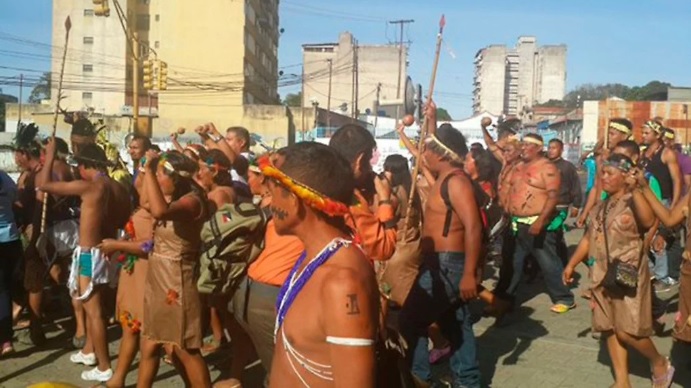
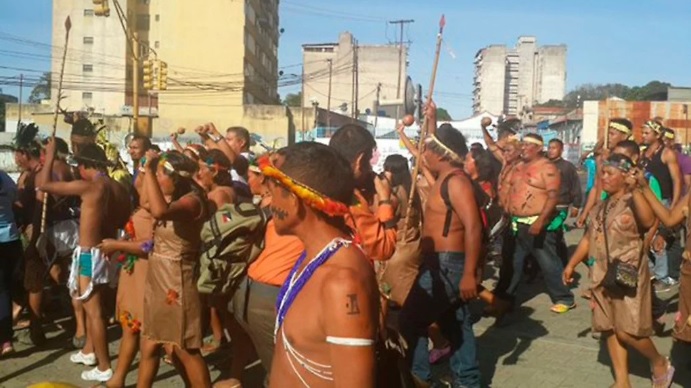
Brazil's far-right Jair Bolsonaro campaigned on a plan to privatize vast swaths of the Amazon rainforest, turning it over to agribusiness and mining. In addition, he seeks to expand hydro-power and other energy mega-projects the region. Since his election, Bolsonaro's team has announced that his administration will merge the ministries of agriculture and the environment into a new "super ministry" to oversee the plan. Brazil has some 720 indigenous reserves, ranging from a single hectare to nearly ten million hectares. Bolsonaro says he wants to put all of those lands—13% of Brazil's territory—on the auction block. "Minorities have to adapt to the majority, or simply disappear," he said on the campaign trail, adding that under his administration, "not one square centimeter" of Brazil will be reserved for the country's indigenous peoples. (Photo: Kayapo women in Brazilian Amazon, via FUNAI)

North America

Native Americans unite against ‘termination’ threat

At its annual convention in Denver, the National Congress of American Indians spoke strongly against the Trump administration’s decision to halt the restoration of ancestral lands to the Mashpee Wampanoag tribe of Massachusetts, invoking a return to the disastrous policies of the “termination era.” At issue are 321 acres where the Wampanoag sought to build a casino. The US Interior Department issued a decision in 2015 to take the lands into trust for the trib, and ground was broken on the casino the following year. But opponents challenged the land transfer in the courts. In April 2016, a federal judge found the Interior decision had bypassed the Supreme Court’s 2009 ruling in Carcieri v Salazar, concerning a land recovery effort by the Narragansett Indian Nation of Rhode Island. In the Carcieri case, the high court ruled that the federal government had no power to grant land in trust for tribes recognized after passage of the Indian Reorganization Act of 1934. In September of this year, the Interior decision was reversed by Tara Sweeney, the new assistant secretary for Indian Affairs. Sweeney determined that the Mashpee Wampanoag-—whose ancestors welcomed some of the first settlers to the Americas more than 300 years ago—could not have their homelands restored because they were only federally recognized in 2007. (Photo: Indianz.com)

Mexico

Tarahumara leader assassinated in Chihuahua

Julián Carrillo Martínez, a Tarahumara indigenous leader at the community of Coloradas de la Virgen, Guadalupe y Calvo municipality, in northern Mexico's Chihuahua state, was assassinated by unknown assailants, according to local advocacy group Alianza Sierra Madre. Carrillo Martínez was leading an effort by Coloradas de la Virgen to recover usurped traditional lands, with a case pending before the Agrarian Tribunal for the local district 5. Community residents were also petitioning Mexico's Secretariat of the Environment and Natural Resources (SEMARNAT) to halt logging operations in forested areas of the disputed lands. Several community residents have been assassinated in Coloradas de la Virgen since the community began its land recovery effort. (Photo: Amnesty International)

Planet Watch

Podcast: Libertarian Socialism—not an oxymoron

In Episode 20 of the CounterVortex podcast, Bill Weinberg discusses the forgotten legacy of libertarian socialism—considered by many today a contradiction in terms. While the word “socialism” is suddenly viewed as legitimate in American political discourse again for the first time in generations, the word “libertarian” continues to be associated with the free-market right—despite its origins on the anarchist left. Weinberg discusses his own involvement in New York’s Libertarian Book Club—founded by anarchist exiles from Europe in the 1940s, to keep alive their ideals and pass the torch to a new generation. Libertarian socialists seek inspiration in such historical episodes as the Zapatistas in Mexico (1910-19), Makhnovists in Ukraine (1917-21), Spanish anarchists in Catalonia (1936-7), and Zapatistas in Mexico again (1994-date)—peasants and workers who took back the land and the factories, building socialism from below, without commissars or politburos. Other movements inspired by this vision on the world stage today include anarchist-influenced elements of Syria’s civil resistance, and the autonomous zone of northern Syria’s Rojava Kurds. Far from being an irrelevant anachronism, a libertarian socialist vision is neccessary for human survival. Listen on SoundCloud, and support our podcast via Patreon. (Image: Dissent! Sans Frontières)

The Andes

Peru: Aymara protest leader elected regional gov

Aymara leader Walter Aduviri was elected governor of Peru's Puno region—just two days after the country's Supreme Court declared void a seven-year prison term against him for "disturbing public order" during a 2011 protest wave in which he was the principal leader. Aduviri had carried out his campaign from hiding, and only emerged from clandestinity with announcement of the high court ruling. He will now face a new trial on the charges related to the so-called "Aymarazo"—an Aymara uprising against an unpopular mineral development project, which was ultimately suspended. His Mi Casita Movement for Regional Integration and Development won 48% of the vote in the race, ahead of the other candidates. It also took several municipal races in Puno region. (Photo: Diario Uno)