


The UN Human Rights Council’s Commission of Inquiry on Syria (COI) announced March 6 that it has completed an in-country mission to Damascus as it prepares to brief the Council in Geneva this week. The Commission said it pressed Syria’s transitional authorities on accountability, institutional reform, and protections for civil society amid renewed regional volatility.
Commissioners Monia Ammar and Fionnuala Ní Aoláin met with senior Syrian officials and various stakeholders to emphasize the importance of “transparency, accountability, security sector reform, and engagement with impacted communities” as core implementation priorities for the transition. The COI also called for a “legal system capable of fairly addressing the past” while also addressing “more recent violations,” underscoring that the transition must be defined by “equal protection” of civil, political, economic, social and cultural rights.
The commissioners said they were encouraged by the growth of Syrian civil society organizations, including groups returning from exile. Still, they noted continued barriers and fears, and urged conditions that would allow civil society to operate “without restriction.” There remain legal questions about whether and to what degree authorities will tolerate independent documentation, advocacy, and victim participation, which are needed elements for credible truth-seeking, reparations design, and institutional vetting.
The COI was created by the Human Rights Council in 2011 to investigate violations of international human rights law in Syria since March 2011, to document facts and circumstances that may amount to crimes, and, where possible, to identify responsible actors to advance accountability. Its mandate also includes recommending reforms, international responses, and pathways to justice.
The COI statement explicitly linked transitional legitimacy to enabling civil society to operate “without restriction,” reflecting the reality that effective accountability depends on the safety and independence of non-state actors, especially where victims and witnesses may face retaliation.
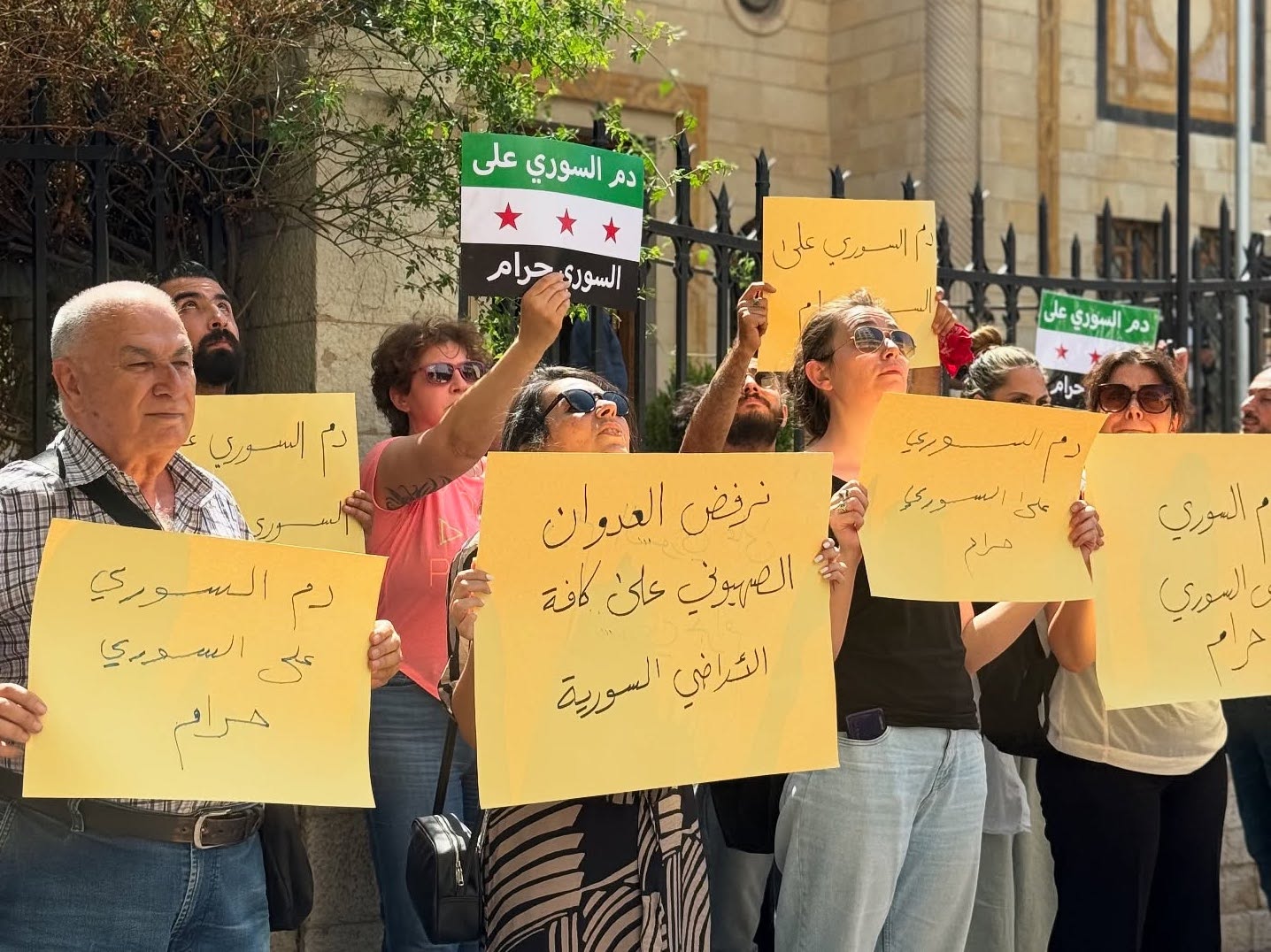
The COI described spillover effects on Syria from the regional escalation following the joint US-Israeli strikes on Iran, including civilian casualties from falling debris from intercepted rockets, and raised concerns about “direct Israeli activity in southern Syria” interrupting internal stabilization efforts.
The statement emphasized core protection duties under international law, such as the obligation to protect civilians and to investigate potentially unlawful harm.
From JURIST, March 8. Used with permission.
See our last report on the transition process in Syria
Image: Damascus protest against Israeli intervention in Syria. Credit: The Syria Campaign via Facebook

