


Greater Middle East
Iran

Air-strikes target Iraqi paramilitary force

Air-strikes on an Iraqi military base killed seven and wounded 13, ramping up diplomatic tension between Baghdad and Washington. The Popular Mobilization Forces (PMF)—a network of militias that are officially part of Iraq’s military structure but including groups with strong links to Iran—said the US was responsible for the first strike on Habbaniyah airbase in Anbar province. Iraq’s Defense Ministry said the second strike hit a medical clinic on the base, which is shared with PMF units. (Image: Pixabay)

The Amazon
Camisea

Peru: pipeline failure triggers nationwide gas shortage

Peru has been hit with a shortage of liquefied petroleum gas (GLP) and compressed natural gas (GNV) following a “deflagration” on the Camisea pipeline in Megantoni district of Cuzco department. The explosion and fire caused major property damage in the rainforest settlement of Megantoni, according to Transportadora de Gas del Perú (TGP), the company responsible for the pipeline connecting the Camisea gasfields to a processing plant at Pisco on the coast. The incident resulted in an immediate rise of GNV and GLP prices, in turn leading to an internal energy crisis, with citizens nationwide standing in endless lines for a gas cylinder or a gallon of fuel. Taxi drivers and urban transport operators have raised fares and threatened a nationwide strike, demanding a government subsidy to continue working. (Photo: Ministerio de Defensa del Perú via Wikipedia)

Europe
migrants

‘Invisible’ shipwrecks hide Mediterranean death toll

Italy, Tunisia and Malta are withholding information about the true death toll from stricken vessels carrying migrants in the central Mediterranean, according to an AP report. The beginning of 2026 has been the deadliest start to a year in the Mediterranean since the UN began keeping track in 2014, with nearly 700 lives lost to date. But phone calls from people looking for missing relatives, bodies washing ashore, and other clues suggest there have been numerous “invisible” shipwrecks, and the true toll is significantly higher. (Photo: US Navy via Wikimedia Commons)

Africa
Sudan

RSF border attacks bring Sudan’s war to Chad

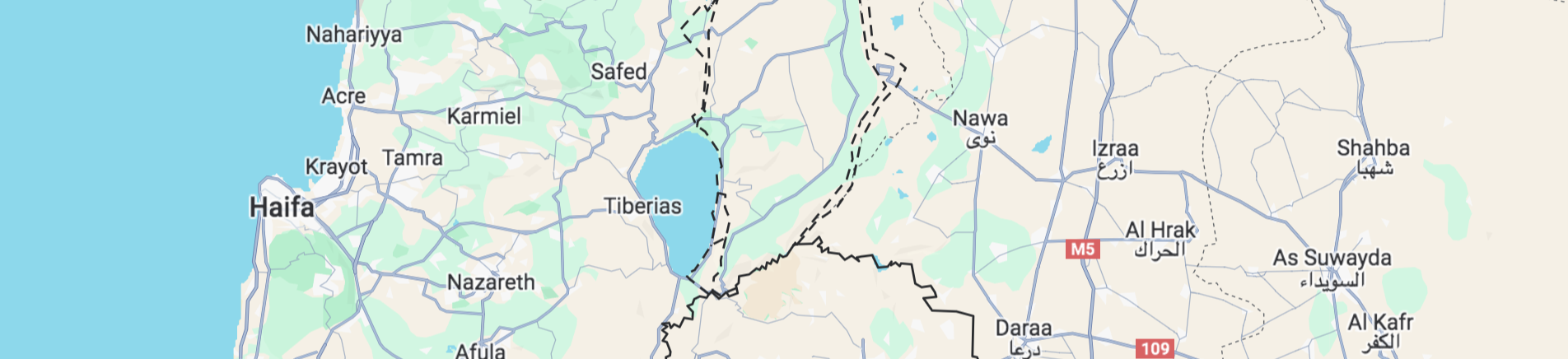
Sudan’s paramilitary-turned-rebel Rapid Support Forces (RSF) have repeatedly attacked the Darfur border town of Tina, with more than 123 injured people arriving at a hospital supported by Médecins Sans Frontières near the Chad frontier. A drone strike—with responsibility still unclear—also killed 17 people on the Chadian side of the border. Tina has been hosting large numbers of displaced Darfuris fleeing RSF attacks elsewhere. (Map: PCL)

Africa
ISWAP

Nigeria: ISIS franchise steps up insurgency

At least 65 soldiers—including three senior officers—have been killed in jihadist raids on military garrisons in Nigeria’s northeast this month. Five bases were overrun by the Islamic State West Africa Province (ISWAP)—four of them in a single night, showing a notable level of coordination. Military equipment was also torched or captured, including armored vehicles. ISWAP’s “Burn the Camps” offensive began last year, and is accelerating against an overstretched military. (Photo via TNH)

cislunar orbit

ORBITAL DATA CENTERS IN LEGAL VACUUM

With a landmark filing to the Federal Communications Commission, SpaceX proposed a network of one million solar-powered satellites designed not for communication, but for computation. This “Orbital Data Center” system, bolstered by the recent SpaceX-xAI merger, aims to place massive AI server farms into outer space—opening a jurisdictional dilemma. We are witnessing the birth of “Digital Soil,” a new form of territory where power is exercised not by planting flags, but by controlling space-based data processing. For emerging economies and Global South democracies, the implications are severe. If orbital infrastructure becomes the backbone of global AI, exclusion from its governance will translate directly into a new form of digital dependency. In a commentary for JURIST website, Vishal Sharma of NALSAR University in Hyderabad argues that the United Nations must designate orbital strata as “International Data Commons” to ensure that the “Digital Soil” of our future remains a global public good.

Continue ReadingORBITAL DATA CENTERS IN LEGAL VACUUM 
USS Spruance

TRUMP’S IRAN WAR: NO AUTHORIZATION, NO IMMINENCE, NO PLAN

Given the absence of congressional authorization, UN Security Council approval, or any credible showing of imminence, the Trump administration’s strikes on Iran constitute violations of both US constitutional law and foundational international norms, setting a dangerous precedent for unchecked executive war-making. Mohamed Arafa, professor of law at Egypt’s Alexandria University, makes the case in a commentary for JURIST.

Continue ReadingTRUMP’S IRAN WAR: NO AUTHORIZATION, NO IMMINENCE, NO PLAN 
Africa
Sudan

Ethiopia accused of backing Sudan’s RSF

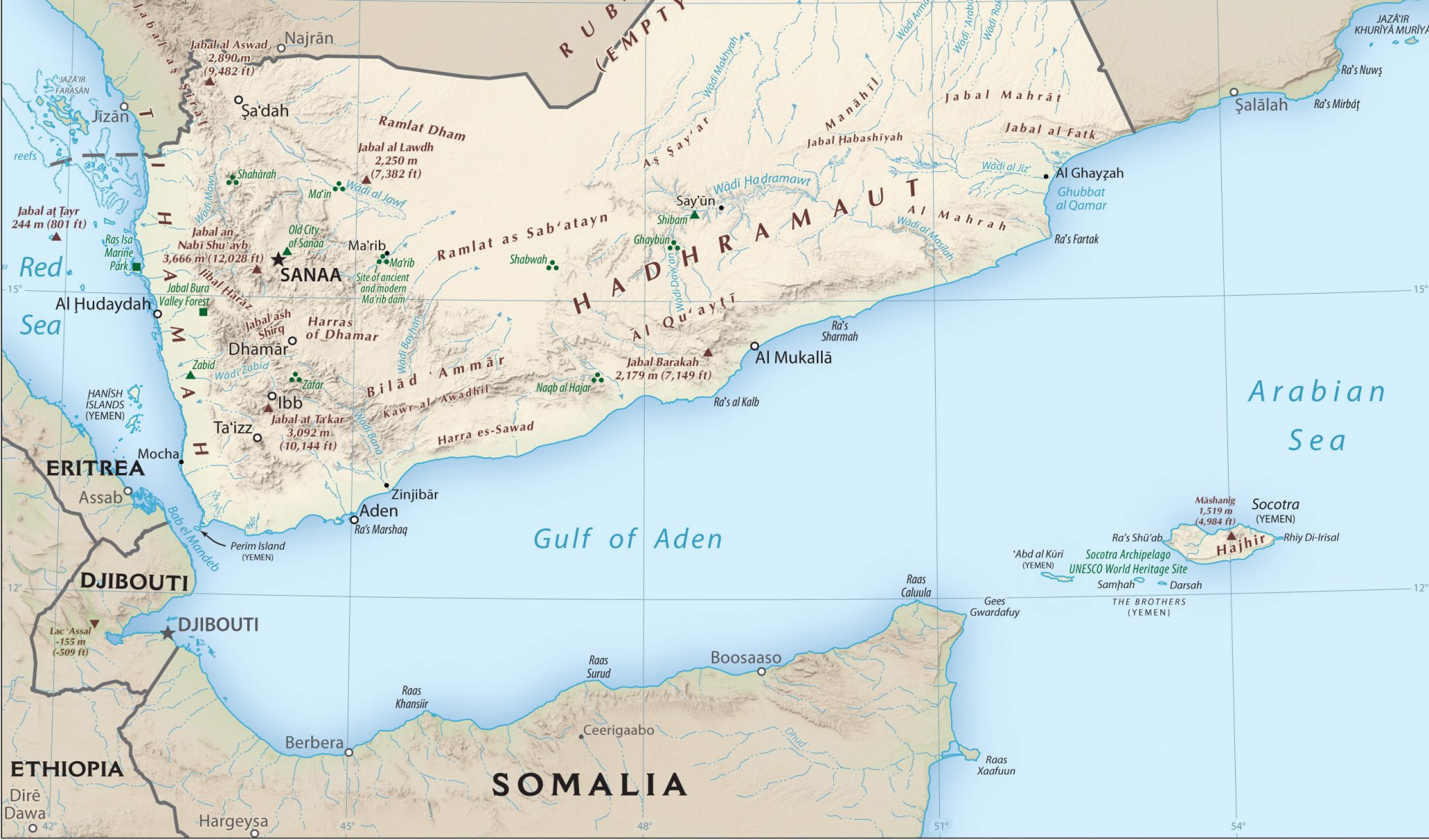
Sudan has accused Ethiopia of allowing drones to be launched from its territory to carry out attacks against Sudanese government forces. This marks the first time Sudan has directly accused its neighbor of involvement in the three-year civil war against the paramilitary Rapid Support Forces (RSF). In a statement, Sudan’s Foreign Ministry warned of unspecified consequences. The drone accusation follows reports of the construction of an RSF training base in northwest Ethiopia, paid for by the United Arab Emirates. (Map: PCL)

Southern Cone
Ushuaia

Argentina: Milei offers Trump part of Tierra del Fuego?

In a move sparking outrage from the country’s opposition, Argentina’s central government under President Javier Milei has taken control of the port of Ushuaia—the country’s southernmost seaport and a key gateway to Antarctica. Milei’s move places operation and administration of the port under his executive control for one year—over the objections of the Tierra del Fuego provincial government. The takeover came just days before a US Air Force jet landed at Ushuaia, bringing in a delegation of US lawmakers from the House of Representatives’ Energy & Commerce Committee. Milei, in power since December 2023, has already received two heads of the US Southern Command in Ushuaia. Both visited the Ushuaia Integrated Naval Base, which Argentina has been building since 2022. While Milei insists the base will be under full Argentine control, the country’s opposition press is full of speculation that on the sidelines of the Davos summit, Milei offered the base and all of Ushuaia to the US in exchange for an invitation to join the “Board of Peace” being touted by Trump as an alternative to the United Nations. (Photo: Wikipedia)

Central America
Costa Rica

Costa Rica emulates Salvador police state model

The right-wing populist Laura Fernández will be Costa Rica’s next president, securing nearly 50% of the vote in last week’s election. She is the first candidate in more than a decade to clear the threshold needed to win outright in the first round. She did so by promising to respond forcefully to the country’s exaggerated yet real insecurity crisis linked to the drug trade—the overwhelming concern for most voters. On the campaign trail, Fernández drew openly from the playbook of Salvadoran President Nayib Bukele, whose brutal anti-gang crackdown has inspired conservatives across the region. She called for a “state of exception” to combat crime, promised to complete the construction of a massive Bukele-inspired prison, and spoke with Bukele before any other foreign leader after her win. (Image: Grunge Love)

moon

THE LUNAR JURISDICTIONAL TRAP

The recent unveiling of Russia’s Selena project, a nuclear power plant slated for the lunar surface by 2035 under the joint Russo-Chinese International Lunar Research Station program, has been hailed as an unprecedented ambition of engineering. But beneath the proposed cooling towers lies a volatile reality. We are about to place the highest-stakes technologies of the 21st century—autonomous artificial intelligence (AI) and nuclear fission—on a legal foundation that has been frozen since the Cold War. In a commentary for JURIST website, Vishal Sharma of NALSAR University in Hyderabad argues that we need a new Lex Spacialis to fill the vacuum of space before it is filled by the strongest unaccountable power, with no human oversight.

Continue ReadingTHE LUNAR JURISDICTIONAL TRAP 
Planet Watch
doomsday

Doomsday Clock moves: 85 seconds to midnight

The Science & Security Board of the The Bulletin of the Atomic Scientists moved the symbolic hands of the Doomsday Clock to an unprecedented 85 seconds to midnight. The decision came a year after the clock was set to an also unprecedented 89 seconds to midnight—and three years after it was moved to 90 seconds to midnight. Each increment since 2017, when it was set at 2.5 minutes of midnight, has brought the Clock closer to doomsday than ever before. This year’s statement reads: “A year ago, we warned that the world was perilously close to global disaster and that any delay in reversing course increased the probability of catastrophe. Rather than heed this warning, Russia, China, the United States, and other major countries have instead become increasingly aggressive, adversarial, and nationalistic. Hard-won global understandings are collapsing, accelerating a winner-takes-all great power competition and undermining the international cooperation critical to reducing the risks of nuclear war, climate change, the misuse of biotechnology, the potential threat of artificial intelligence, and other apocalyptic dangers.” (Image: misucell.com)