


UN human rights experts on July 29 raised alarm over reports of torture, enforced disappearances and arbitrary detention of members of Iran’s Bahá’í religious minority amid the ongoing US-Iran war.
The UN experts say that approximately 57 Bahá’ís are currently detained or imprisoned in Iran. They report claims of arbitrary and incommunicado detention, physical and psychological abuse, and coerced confessions. Some detainees were reportedly subjected to mock executions to pressure them into making confessions that were subsequently broadcast throughout Iranian state media.
The prosecutions have reportedly focused on national-security charges, including “propaganda against the state,” “acting against national security,” and espionage. Human rights groups and Bahá’í representatives say that peaceful religious and community activities are being treated as security offenses, which allows criminal law to become a tool of religious repression.
The EU Agency for Asylum finds that risk varies among Bahá’ís depending on their circumstances. Those who participate in protests, publicly identify as Bahá’í, hold community leadership roles, or have previously been targeted may face heightened risk.
The allegations may constitute violations of Iran’s obligations under the International Covenant on Civil and Political Rights (ICCPR), to which the Islamic Republic is a party. The ICCPR protects freedom of religion and belief, due process and fair trial rights, and freedom from torture and other cruel, inhuman or degrading treatment.
The current allegations form part of a much longer pattern; under the Pahlavi dynasty (1925–1979), Bahá’ís faced state-backed discrimination, including bans on religious literature, closure of Bahá’í schools, and exclusion from public-sector employment. In the years following the 1979 Islamic Revolution, more than 200 Bahá’ís were reportedly killed or executed, and thousands faced imprisonment, torture and exclusion from education and employment.
By the 1990s, persecution had shifted toward systematic exclusion. A 1991 government memorandum has been cited by Bahá’í organizations as evidence of a state policy intended to prevent the community from developing as a “viable entity” in Iran. Restrictions have since reportedly extended to university education, employment, businesses, religious gatherings, and burial sites.
The latest UN warning follows reports by the Bahá’í International Community and Human Rights Watch of more than 750 incidents involving arrests, home raids and imprisonment between June and November 2025.
From JURIST, July 31. Used with permission.
See our last report on persecution of the Baha’i.
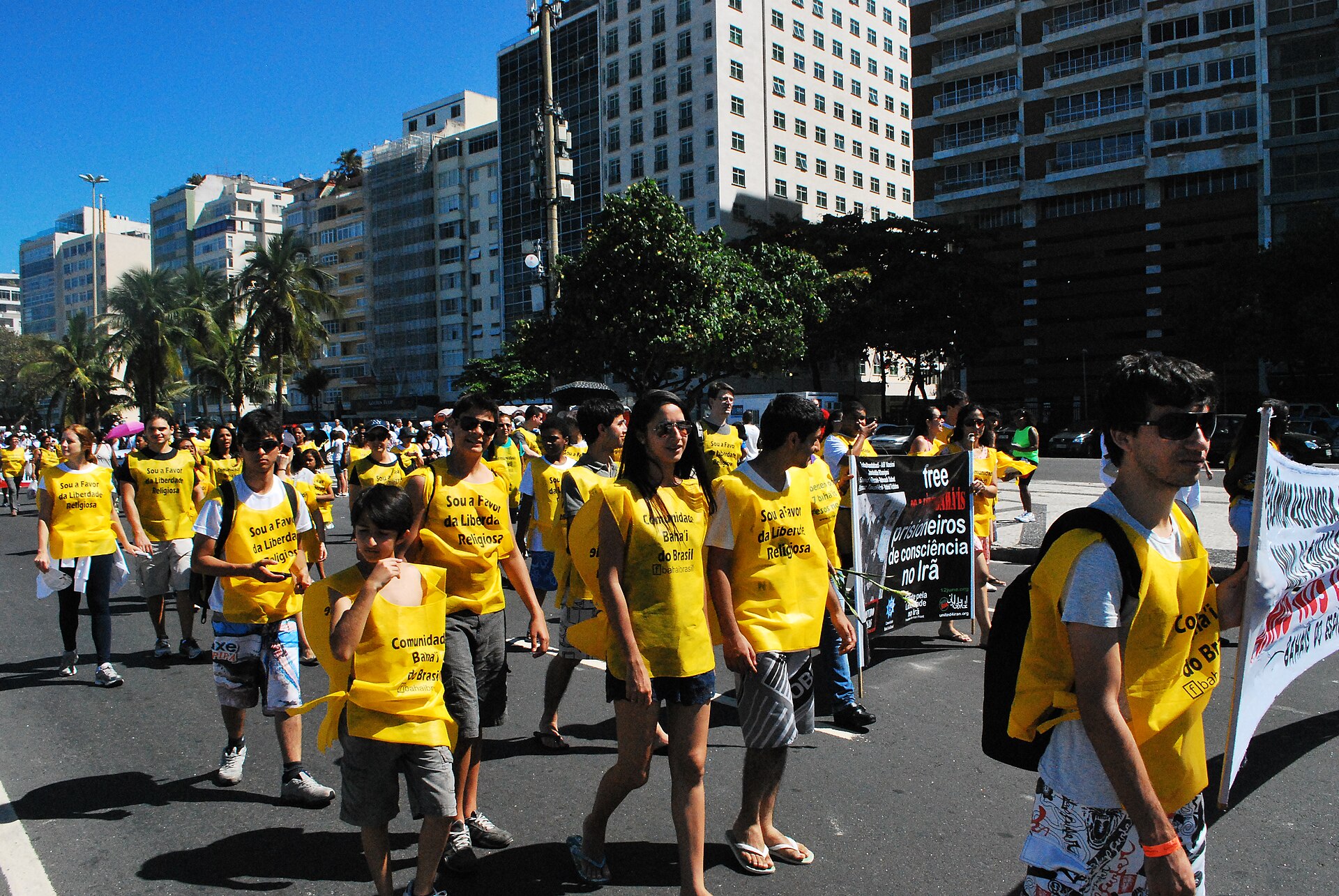
Photo: Baha’i followers in Brazil protest repression in Iran. Via Wikimedia Commons
.jpg)

