Iran
ahwaz women

Iran: sweeps target Ahwazi women activists

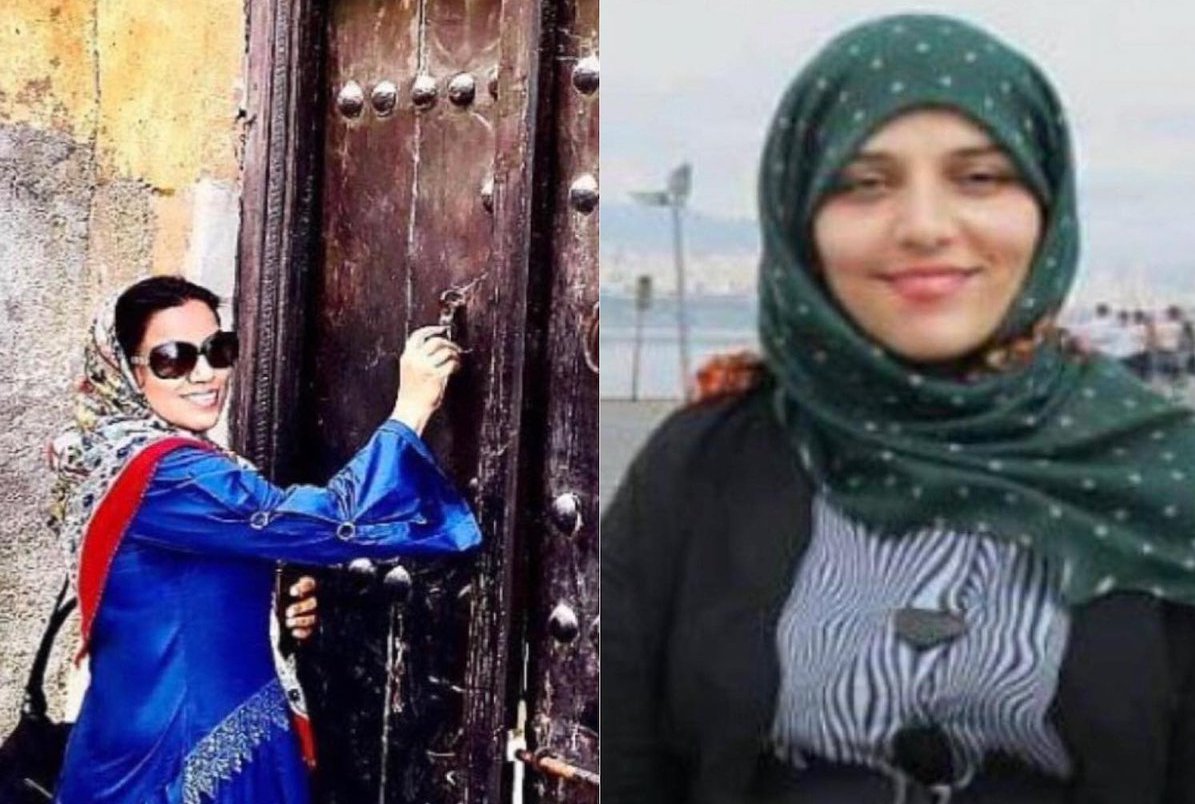
Rights advocates in Iran’s Khuzestan province, homeland of the marginalized Ahwazi Arab people, report another wave of sweeps and incommunicado detention of local activists. Among those detained in raids by the Islamic Revolutionary Guards Corps (IRGC) are Zeinab Sawari, a teacher and prominent Ahwazi advocate for women’s and children’s rights, who had recently been involved in fundraising for victims of the severe flooding that devastated the region this year. Also detained by IRGC agents were Maryam Ameri and Fatema Tamimi, whose homes were searched and ransacked, with computers and extensive archival material confiscated. Maryam and Fatema had worked on Ahwazi cultural programs together, cataloguing traditional folk songs and producing short documentaries about Ahwazi music, lore and history. Azhar Alboghbiesh, a young activist volunteer for the project, was likewise arrested in a raid on her home, in which agents reportedly fired in the air to intimidate her family. All remain in detention at undisclosed locations. (Photo of Azhar Alboghbiesh and Maryam Ameri via Dur Untash Studies Center)
Europe
paris protest

France: mass protests over new security law

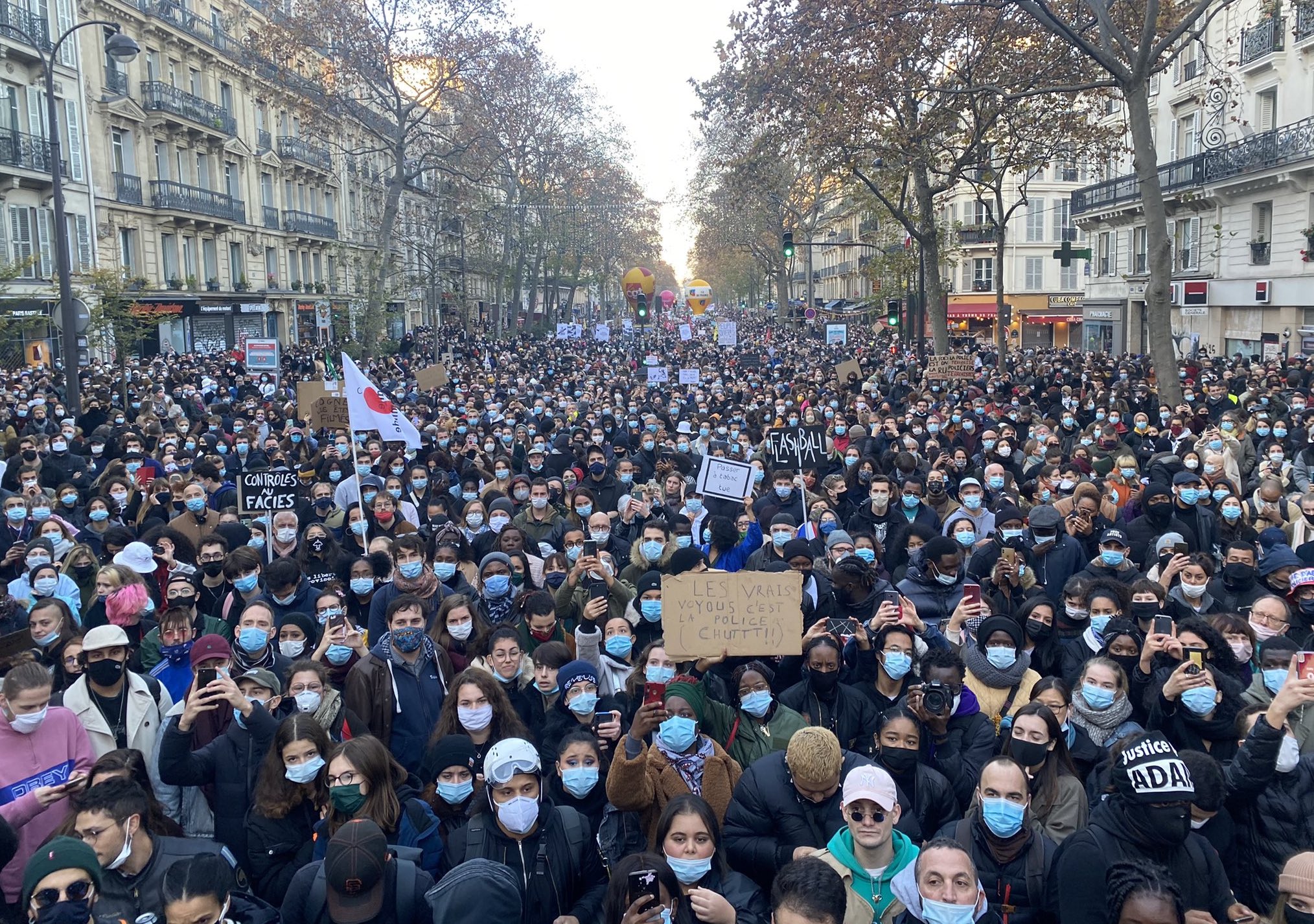
Police and demonstrators clashed in Paris as some 45,000 filled the streets to protest a new security law, with large mobilizations also seen in Bordeaux, Lille, Montpellier and Nantes. The new law would severely restrict publishing of the images of police officers. The issue was given greater urgency by video footage of Paris police savagely beating local Black music producer Michel Zecler days earlier. President Emmanuel Macron said the images “shame us,” but critics point out that their release could have been barred if his new security law had already been in force. (Photo: @T_Bouhafs)

The Caribbean
san isidro movement

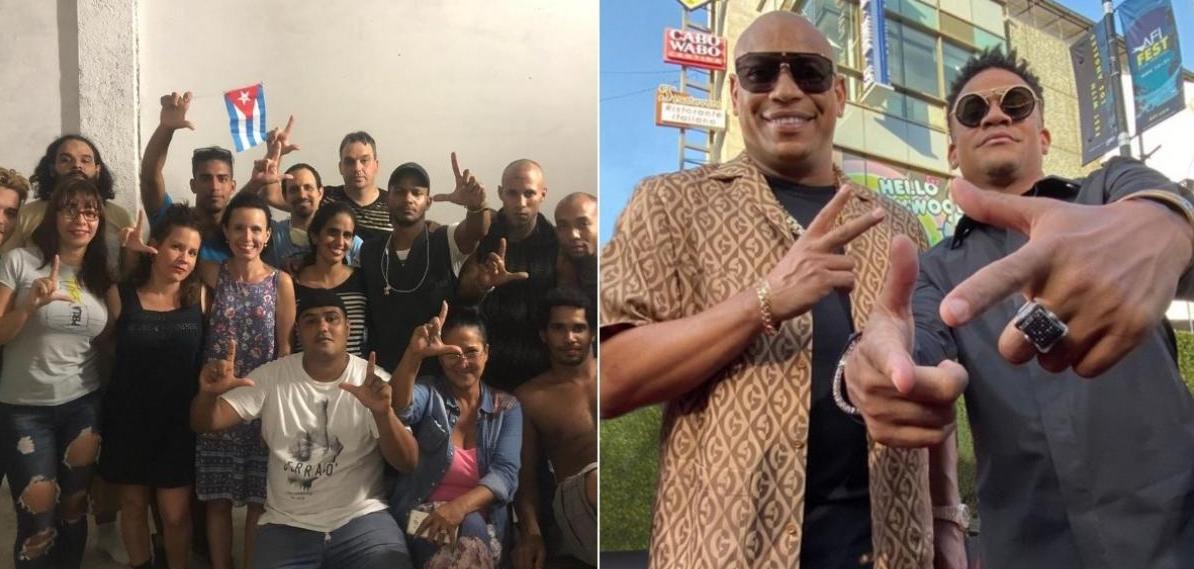
Havana: dissident hunger-strikers arrested

Cuban police agents raided the headquarters of the dissident San Isidro Movement (MSI) in Old Havana and arrested the 14 activists who were inside the building, several of whom had been on hunger strike for the past week. Simultaneously, authorities cut off access to Facebook and Instagram across the island, in an apparent attempt to prevent images and reports of the raid from being disseminated. A tweet from MSI stated: “Agents of the dictatorship broke into our headquarters, savagely beat our compañeros, took them away and we do not know their whereabouts. We fear for their physical integrity.” Cuban authorities said the raid was carried out over a violation of pandemic restrictions. (Image via CiberCuba)

Central America
Guatemala congress

Guatemala: protesters set fire to Congress building

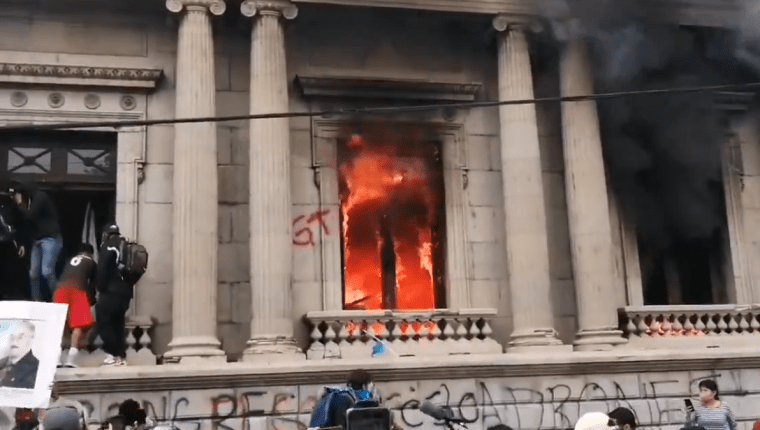
Thousands protested in Guatemala’s capital against a newly approved 2021 national budget that imposes deep cuts in funding for health care, education and programs to combat malnutrition—at a time when the country is hit hard by natural disasters and COVID-19. One breakaway group of protesters hurled improvised incendiary devices at the Congress building, setting it on fire. Police used batons and tear-gas to push protesters back, attacking not only the some 1,000 in front of Congress but also a much larger demonstration in front of the National Palace. The Inter-American Commission on Human Rights condemned what it called an “excessive use of force” by the National Civil Police, while the government of President Alejandro Giammattei accused the protesters of “terrorist acts” that will be “punished with the full force of the law.” (Photo via Prensa Libre)

The Andes
peru protester

Peru: after deadly repression, protesters win a round

Following an outburst of angry protest across the country, Peru’s third president in less than a week was sworn in, with a coalition cabinet aimed at bringing the country back from the brink of chaos. The crisis was set off by the impeachment of President Martín Vizcarra, who had been investigating corruption by the hard-right Fujimorista bloc in Congress—and whose removal was assailed as a “legislative coup.” The new interim president, former Congressional leader Manuel Merino, was perceived as a pawn of the hard right; demonstrators flooded the streets of Lima and other cities after his inauguration. In two days of repression by the National Police, two young protesters were killed, more than 200 injured, and two more listed as “disappeared.” Merino and his cabinet stepped down, leaving the country without a president for nearly 24 hours before Congress finally agreed to approve a replacement. This is Francisco Rafael Sagasti, a first-term congressman representing Lima. Although Sagasti is from the center-right Partido Morado, his installation is being seen as a victory for the protesters. He took office with an homage to the slain demonstrators, praising them for having “marched to defend democracy. (Photo: Revista Ojozurdo)

North America
federal police

Trump preparing post-election coup: deal with it

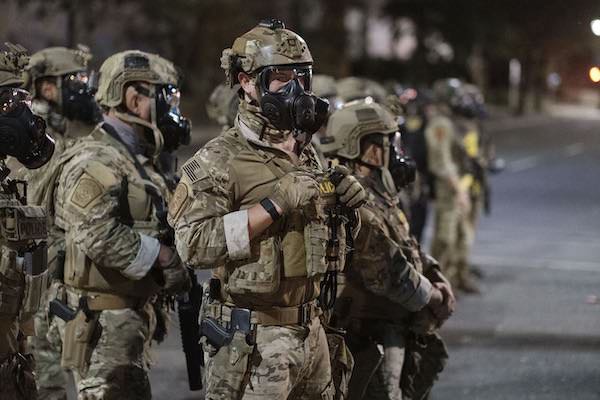
Ten days after the Associated Press called the election for Biden, cracks are finally beginning to emerge in the consensus that he will be allowed to take office without a fight. Trump, refusing to concede and incessantly tweeting about how he “WON THE ELECTION,” still controls the state apparatus—and, in league with the more sophisticated minds of Attorney General William Barr and Secretary of State Mike Pompeo, is clearly preparing it to resist a transfer of power. Despite Biden’s own seeming denialism about this reality, the odds that he will actually be inaugurated on Jan. 20 are diminishing each day. (Photo via CrimethInc)

Africa
tanzania

Post-electoral repression in Tanzania

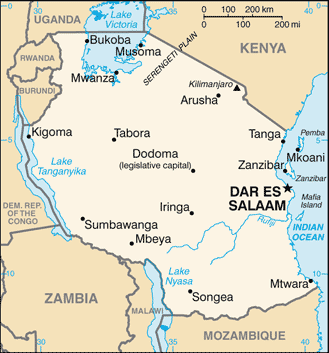
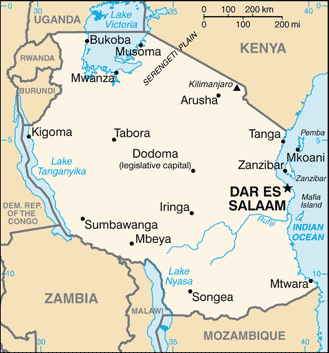
Opposition presidential candidate Tundu Lissu was arrested two days after disputed presidential elections in Tanzania. Incumbent John Magufuli won the election by a landslide according to official results following a contest dismissed by the opposition as a “travesty” because of widespread irregularities. Lissu joins a growing list of opposition leaders who have been rounded up since the results came in, as authorities move to head off post-election demonstrations. Lissu’s center-right Chadema party and the left-wing ACT Wazalendo have jointly issued a call for people to take to the streets and demand fresh polls. They accuse Magufuli and his long-ruling Revolutionary Party, or Chama Cha Mapinduzi, of seeking to establish a “one-party system.” (Map: Perry-Castañeda Library)

Africa
#EndSARS

Anti-police uprising rocks Nigeria

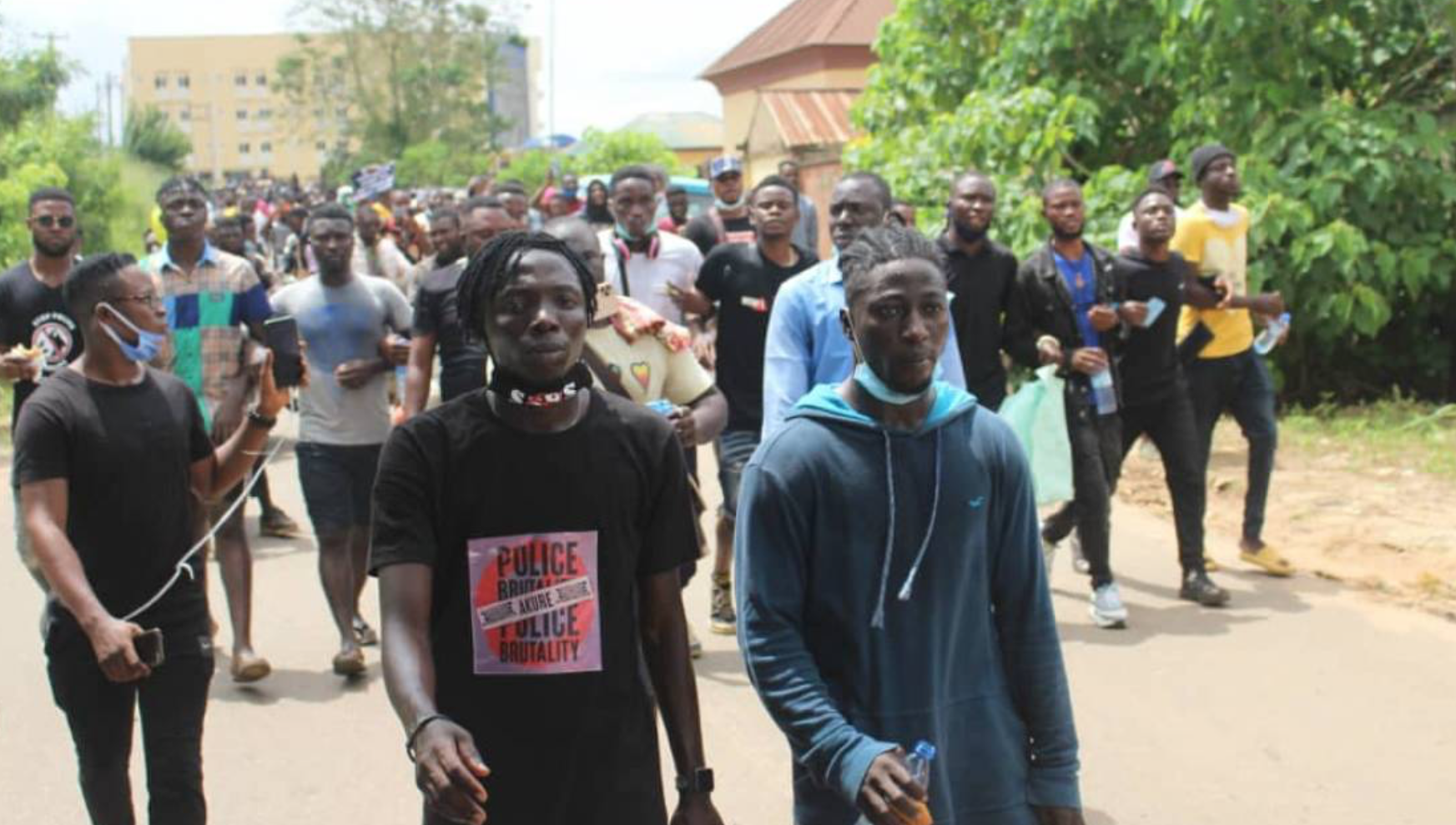
Protesters continue to fill the streets of Lagos in defiance of a round-the-clock curfew imposed after the Lekki Massacre, when soldiers and police fired on demonstrators who were occupying a toll bridge. Authorities initially dismissed the massacre as “fake news,” but now acknowledge that at least 38 were killed by security forces. The massacre only succeeded in escalating what had been a peaceful protest campaign against police brutality into a general uprising. Several buildings were set on fire or ransacked, including banks, the television headquarters, port facilities, and the palace of the Oba of Lagos, the traditional ruler of the city. Protests have also spread to Akure and other cities. President Muhammadu Buhari appeared on TV to appeal for “understanding and calm,” but also admonished the international community to “know all the facts” before condemning his government. Nigerian netizens are dismissing his address as “12 minutes of nonsense.” (Photo: Sahara Reporters)

Watching the Shadows
Xinjiang

China elected to UN rights council: Orwellian irony

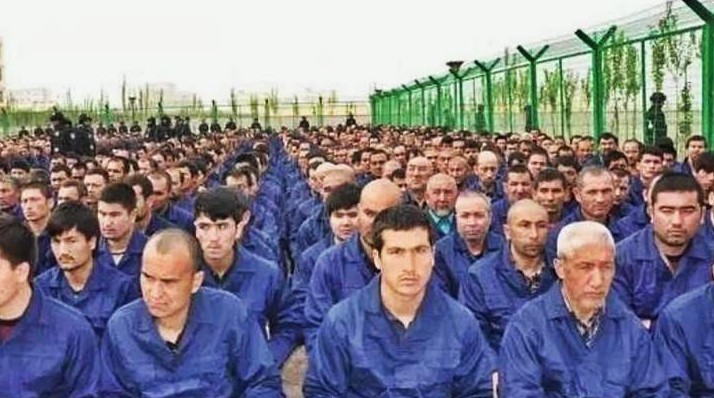
In another one to file under #OrwellWouldShit, the UN General Assembly elected China to the Human Rights Council—despite the country holding some one million Uighur Muslims in concentration camps. The General Assembly also elected Russia, Cuba, Uzbekistan and Pakistan—all similarly accused of human rights violations, if not quite such ambitious ones. US Secretary of State Mike Pompeo criticized the election of countries with “abhorrent human rights records.” A week before the General Assembly vote, China’s UN ambassador Zhang Jun read a statement before the body, denouncing the US for “systematic racial discrimination and violence,” which was endorsed by 25 other nations—including Russia, Iran and North Korea. Of course the perverse irony of this is that Pompeo and Zhang are both correct. And therefore neither has any moral credibility to criticize the other. (Photo: Xinjiang Judicial Administration via The Diplomat)

Europe
Liebig34

One of Berlin’s last surviving squats evicted

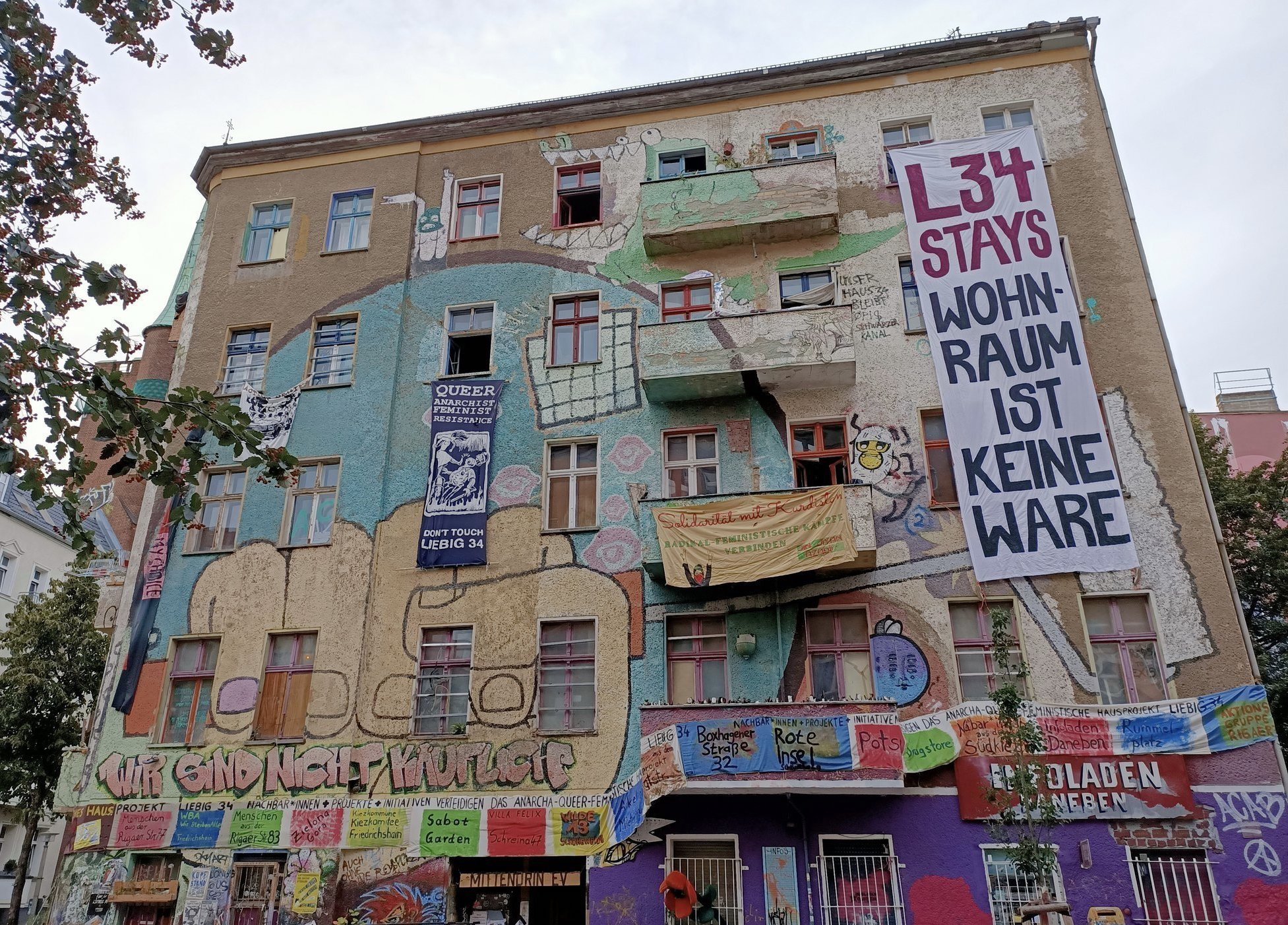
Hundreds of demonstrators confronted riot police in central Berlin to protest the eviction of one of the city’s few remaining squats, a symbol of the German capital’s once-thriving alternative scene. Hundreds of police were mobilized to remove residents of the Liebig34 squat in the hip and gentrifying Friedrichshain district of the former East Berlin. The eviction itself went off peacefully—but after dark, ranks of masked and black-clad protesters marched in a driving rain from the central Mitte shopping district with a banner: “Defend free spaces, remain on the offensive.” Shop windows were smashed and cars set ablaze. Police charges were met with barrages of pelted bottles. (Photo via CrimethInc)

New York City
Bronx

Human rights violations seen in NYPD repression

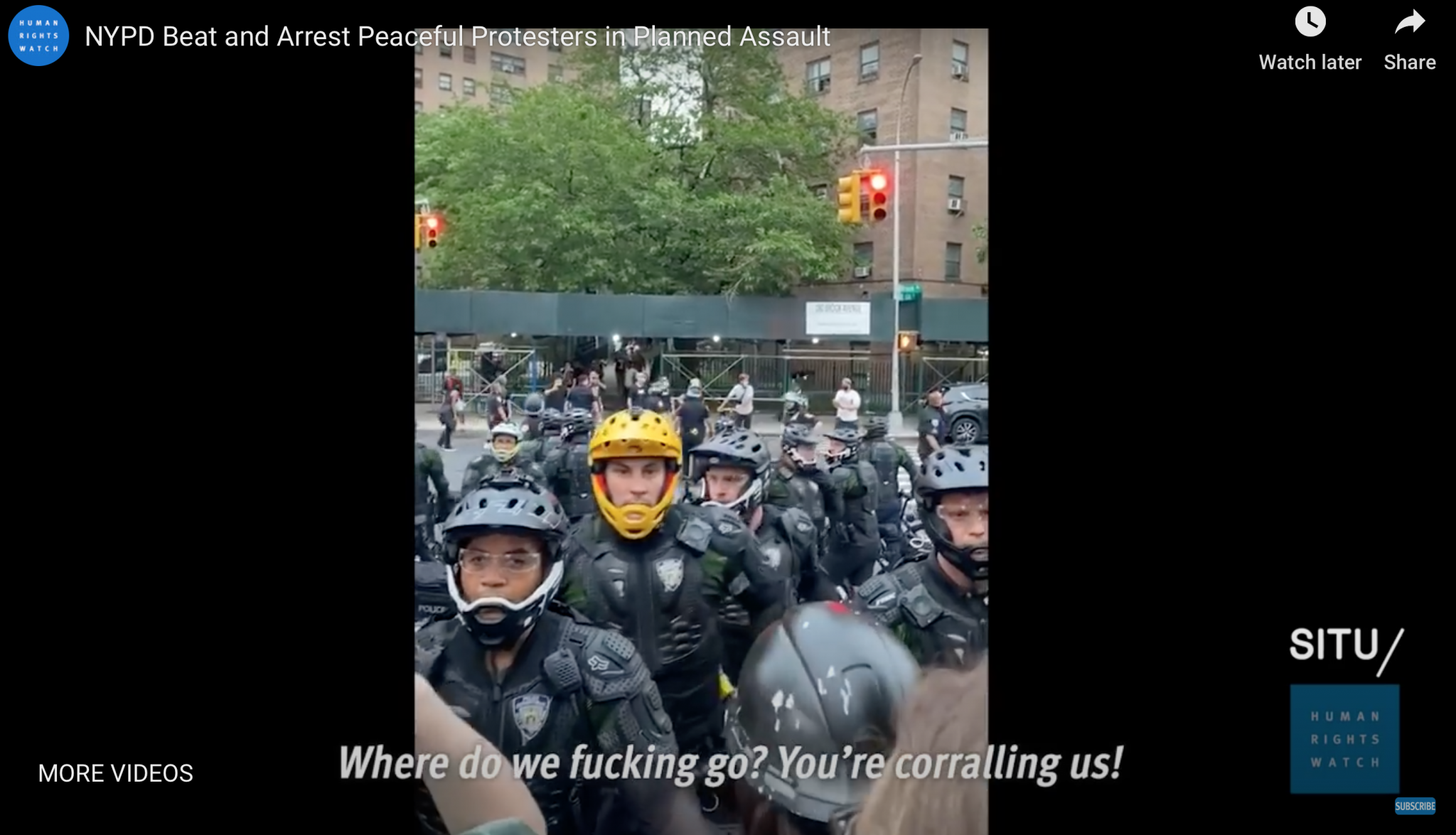
The NYPD’s violent mass arrest of peaceful protesters in the South Bronx violated international human rights law and will likely cost New York City taxpayers millions of dollars in lawsuits, according to a new investigation by Human Rights Watch. The in-depth report examines the June incident in the Mott Haven district, where hundreds of demonstrators were “kettled” behind barricades before being arrested. As riot police blocked protesters’ path minutes before Mayor Bill de Blasio’s 8 PM curfew, a second line of officers charged them from behind, “unprovoked and without warning, wielding batons, beating people from car tops, shoving them to the ground, and firing pepper spray into their faces before rounding up more than 250 people for arrest.” The report documents at least 61 cases of protesters, legal observers and bystanders who sustained injuries in the operation. HRW counts the incident as “among the most aggressive police responses to protests across the United States following the police killing of George Floyd in Minneapolis.” (Image: Human Rights Watch)

Mexico
Bloque Negro

Mexico City: militant protest for reproductive rights

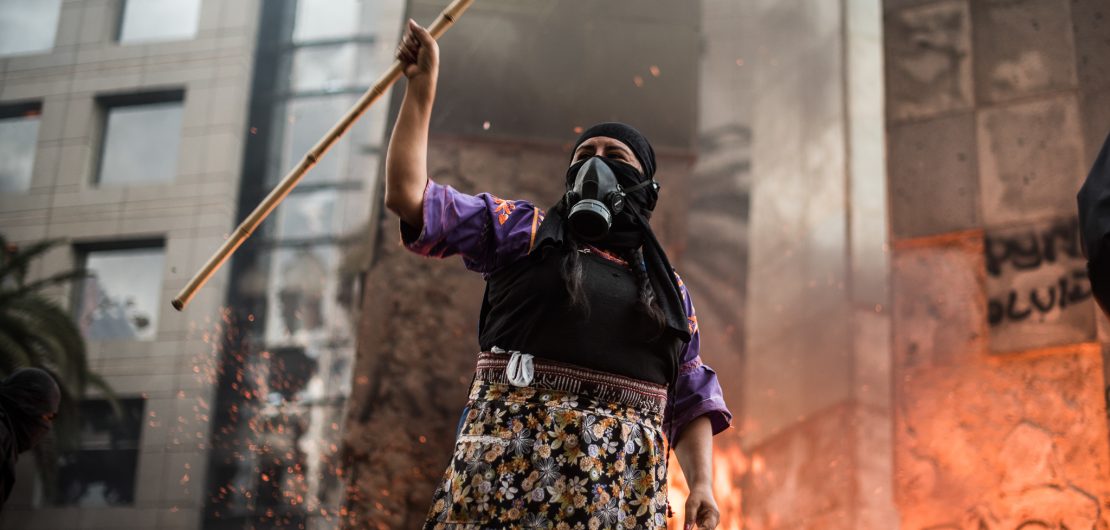
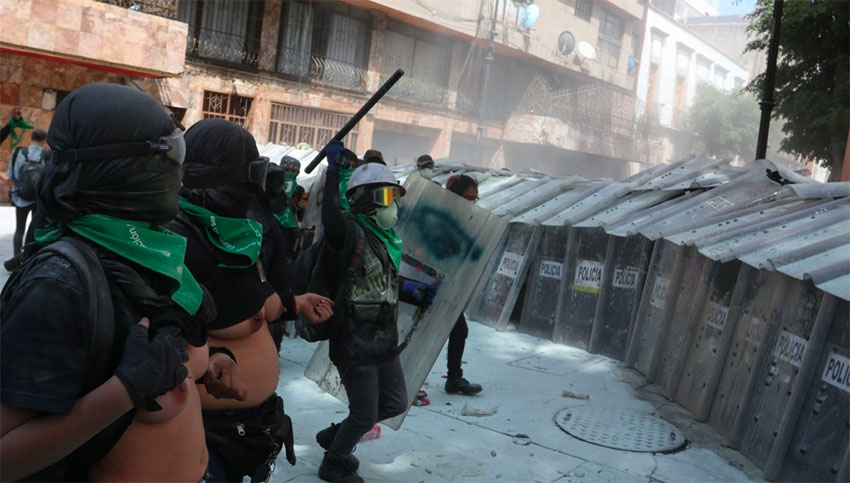
A march for abortion rights turned violent in Mexico City as a group of women wearing ski-masks and armed with hammers clashed with police. Members of the Bloque Negro feminist collective joined the protest after departing from the headquarters of the National Human Rights Commission (CNDH), which they had been occupying for weeks and had turned into a shelter for victims of gender violence. With their path to the city’s historic center blocked by riot police, some threw Molotov cocktails and charged the police lines. Some of the women also bared their breasts, even as they wore goggles and helmets. Authorities said 11 police were injured in the confrontation. The demonstration was part of a Day for Decriminalization of Abortion in Latin America & the Caribbean on the eve of International Safe Abortion Day. In Mexico, abortion is only legal in the Federal Distriact and southern state of Oaxaca during the first 12 weeks of pregnancy. In the rest of the country, it only permitted under limited circumstances, such as if a woman has been raped. (Photo via Mexico News Daily)