

GUANTÁNAMO DETAINEES: THE “OTHER” VICTIMS OF 9-11

by David Frakt, JURIST Forum

On September 11, 2012, as the nation remembered those who lost their lives in the horrific and senseless attacks of 9-11, the government released information about the death of GuantĂĄnamo detainee Adnan Farhan Abdul Latif. His story exemplifies how many of the detainees are also victims, not of terrorism, but of the war on terror.

As a result of the Bush administration’s overreaction to the actions of a small terrorist network, 787 men have been detained at GuantĂĄnamo Bay since it opened in January 2002—only a handful with any connection to the attacks on September 11, 2001. Many detainees, including several later proven to be innocent, have been subjected to torture. Most were subjected at least to inhumanity and abuse, especially during the early years when our government did not recognize that the Geneva Convention requirements of humane treatment applied to detainees. Of the over 600 detainees released, none have ever received compensation of any kind from the US government, or even so much as an apology or acknowledgment that they were wrongfully imprisoned.

Continue ReadingGUANTÁNAMO DETAINEES: THE “OTHER” VICTIMS OF 9-11 

YEAR TWO OF THE ARAB REVOLUTIONS

by Kevin Anderson, US Marxist-Humanists

Beset by the twin dangers of Islamism and nominally secular authoritarianism, the Arab revolutions continue to shake up the region as they move through their second year. This essay, which first appeared in Logos, Vol. 11, Issues 1-2 (Spring-Summer 2012), is based upon a presentation to a Convention of the International Marxist-Humanist Organization in Chicago on July 14, 2012 — Editors

Continue ReadingYEAR TWO OF THE ARAB REVOLUTIONS 

MEXICAN PEACE CARAVAN OCCUPIES WALL STREET

Opposing the “Drug War” on Both Sides of the Border
 
by David L. Wilson, New York Indymedia
 
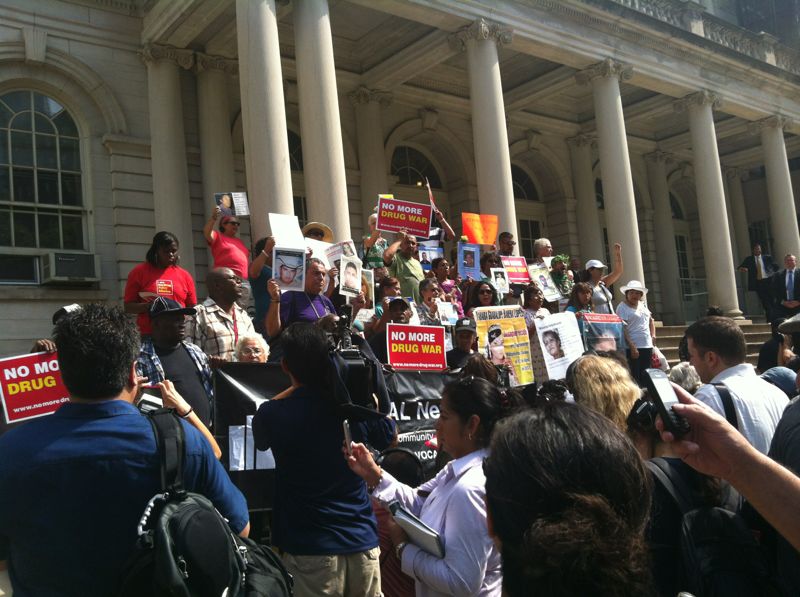
The well-known Mexican poet and author Javier Sicilia stood on the steps of New York’s Federal Hall a few feet from George Washington’s statue on a hot, humid Friday afternoon and pointed across Wall Street to the Stock Exchange. “That building,” he called out in Spanish, “is a symbol of the finance capital that launders money.”
 
Surprised tourists, office workers returning from lunch, and a contingent of police on motor scooters watched from the street below. “That building,” Sicilia went on, in the low-key style of someone more accustomed to poetry readings than to political speeches, “is a symbol of the finance capital that profits off narco-trafficking.”

Continue ReadingMEXICAN PEACE CARAVAN OCCUPIES WALL STREET 

GOLDCORP ON TRIAL

First International People’s Health Tribunal Held in Guatemala

by Beth Geglia and Cyril Mychalejko, Toward Freedom

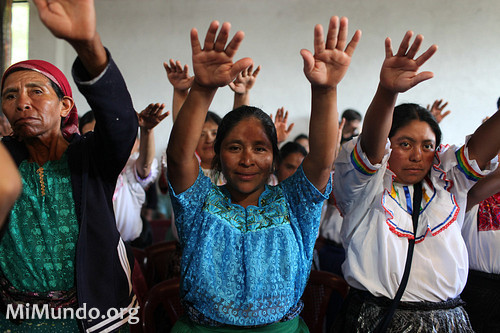
“A few years ago, our people, the people you can see around you, we began to realize what was happening,” Maudilia LĂłpez told the hundreds gathered to attend the first ever People’s Health Tribunal in San Miguel IxtahuacĂĄn, Guatemala. The event was packed, even as some attendees spilled out of the entrance of the crowded room, others shuffled to find a spot.

The International Peoples’ Health Tribunal (IPHT) took place on the second floor of the parish hall of San Miguel IxtahuacĂĄn, a municipality in Guatemala’s western Highlands of roughly 60,000 people, a majority of whom are Maya-Mam. San Miguel IxtahuacĂĄn is the main site of the Marlin mine, an open-pit gold mine that is one of the most important projects of Canadian mining giant Goldcorp Inc.

Continue ReadingGOLDCORP ON TRIAL 

THE BABAR AHMAD CASE: DO U.S. PRISONS VIOLATE EUROPEAN HUMAN RIGHTS LAW?

An interview with Hamja Ahsan and Aviva Stahl

by Angola 3 News

On April 10, the European Court of Human Rights (ECHR) issued judgement in the case of Babar Ahmad and Others v The United Kingdom, making a landmark ruling on the legitimacy of solitary confinement, extreme isolation and life without parole in US supermax prisons. The ECHR denied the appeal filed jointly by six appellants, consisting of four British nationals (Babar Ahmad, Haroon Rashid Aswat, Syed Talha Ahsan, and Mustafa Kamal Mustafa AKA Abu Hamza), an Egyptian national (Adel Abdul Bary) and a Saudi Arabian national (Khaled Al-Fawwaz), who have been imprisoned in the United Kingdom, pending extradition to the United States for alleged terrorism-related activities.


Continue ReadingTHE BABAR AHMAD CASE: DO U.S. PRISONS VIOLATE EUROPEAN HUMAN RIGHTS LAW? 

BOLIVIA’S AYMARA DISSIDENTS

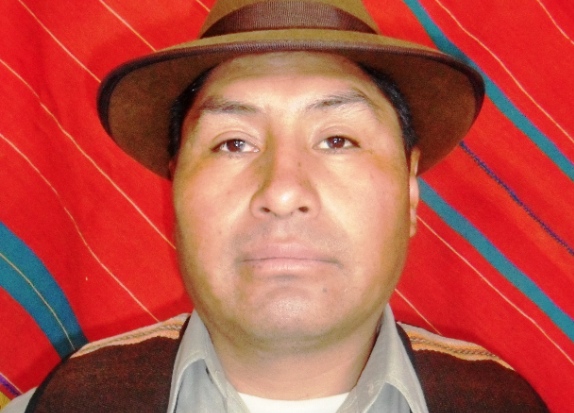
An Interview with DavĂ­d Benigno Crispin Espinoza of the National Council of Ayllus and Markas of Qullasuyu (CONAMAQ)

by Bill Weinberg, Indian Country Today
 
With a second cross-country protest march by indigenous rainforest dwellers and their allies now advancing on La Paz, it is clear that Bolivia’s indigenous peoples are divided in their positions on President Evo Morales, a populist and declared socialist of pure Aymara descent. The first march called to protest the controversial new highway slated to cut through the Isiboro SĂ©cure National Park Indigenous Territory (TIPNIS) in October saw police repression and counter-protests by supporters of the road project. Then, in January, pro-highway marchers—also mostly indigenous—held their own, smaller, march on La Paz. The government claimed this march as a mandate for the highway, and passed a law establishing norms for “prior consultation” with indigenous peoples in the project. The new march against the road is a clear rejection of this law.  

Continue ReadingBOLIVIA’S AYMARA DISSIDENTS 

INDIGENOUS NASA RESIST MILITARIZATION IN CAUCA, COLOMBIA

by Gina Spigarelli, FOR Colombia

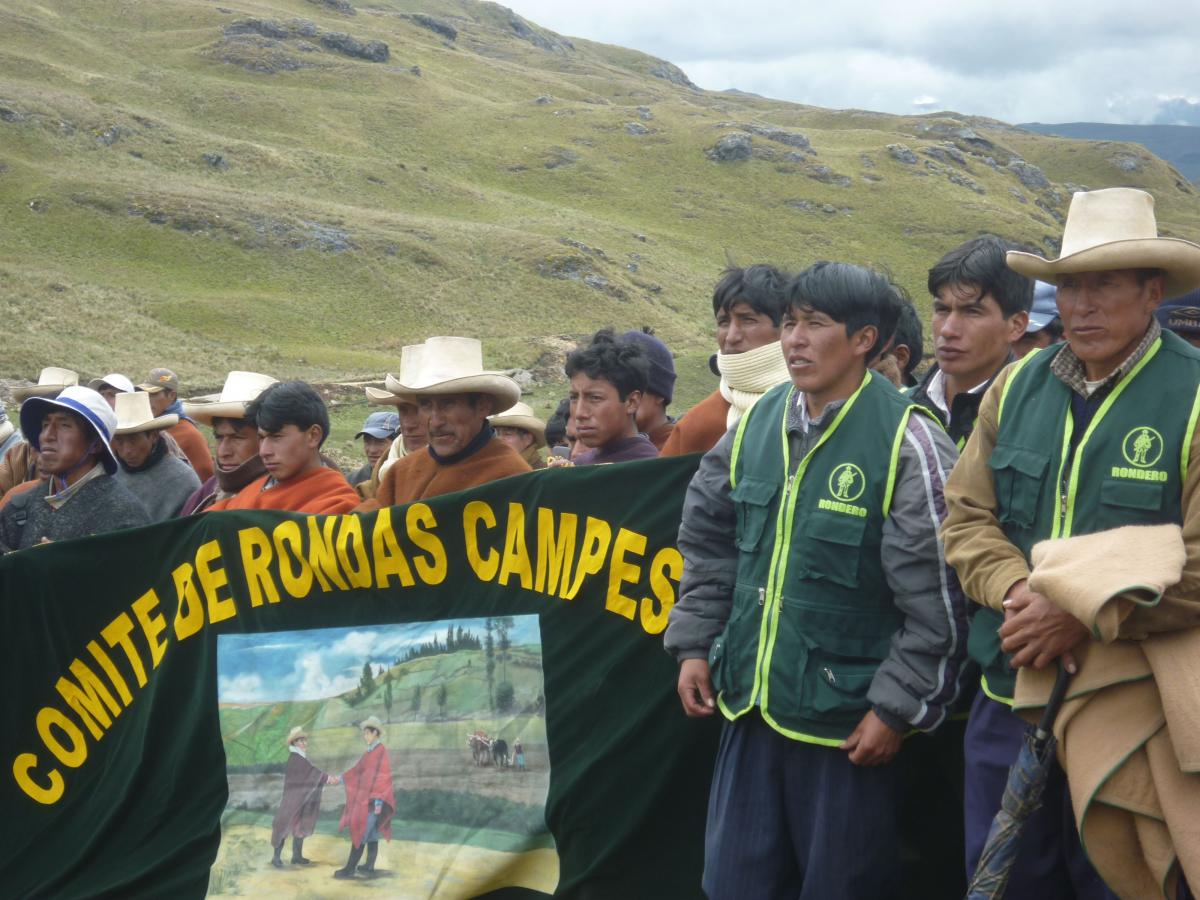
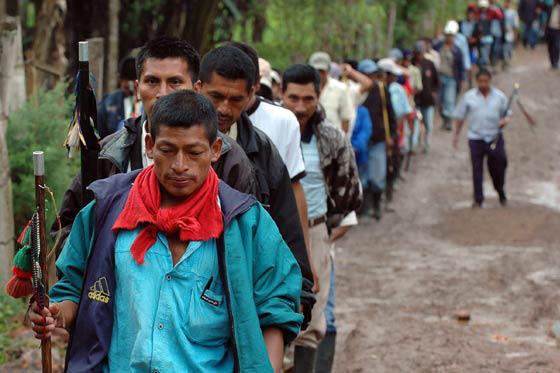
On July 11, the indigenous Nasa of Cauca, Colombia began confronting armed groups face to face and peacefully asking them to leave Nasa territories. They removed police trenches from the urban center and disassembled homemade FARC missiles found on their lands. Four hundred Nasa members occupied and observed army soldiers on the sacred indigenous site of El Berlin outside of Toribío, where the army is protecting private cell phone company towers.

On July 16, when the military had yet to retreat from indigenous lands by the proposed deadline of the previous day, the Nasa forcibly removed troops from El Berlin’s mountaintop base. Dramatic photos of the event splashed across national and international news, some featuring members of the Nasa indigenous community surrounding several soldiers, picking them up, and moving them away from their posts and others featuring crying Colombian officer Sergeant Garcia, retreating from the encampment.

Continue ReadingINDIGENOUS NASA RESIST MILITARIZATION IN CAUCA, COLOMBIA 

THE WAL-MART CORRUPTION CASE: INNOCENTS ABROAD?

by David L. Wilson, World War 4 Report

On April 22 the New York Times ran a major article by reporter David Barstow revealing that Wal-Mart’s Mexican subsidiary paid more than $24 million in bribes to fuel the remarkable growth of its stores—and that top Wal-Mart executives in the United States tried to cover up the criminal activity.

The US media were quick to provide “context” for the scandal. Corruption is endemic in Latin America, we were told; Transparency International rated Mexico number 100 out of 183 countries in its 2011 index on perceived levels of corruption. “The scandal tells you that doing business in the world’s fastest-growing markets can be fraught with peril,” Time magazine wrote. “[G]raft is not necessarily perceived as a serious crime in some places. It’s more a way of doing business.” The Times downplayed its own excellent investigative reporting by explaining that in Mexico “bribery and other forms of corruption are taken in stride.”

Continue ReadingTHE WAL-MART CORRUPTION CASE: INNOCENTS ABROAD? 

TIBET & ASSAM: PAWNS IN INDIA-CHINA GAME

by Nava Thakuria, World War 4 Report

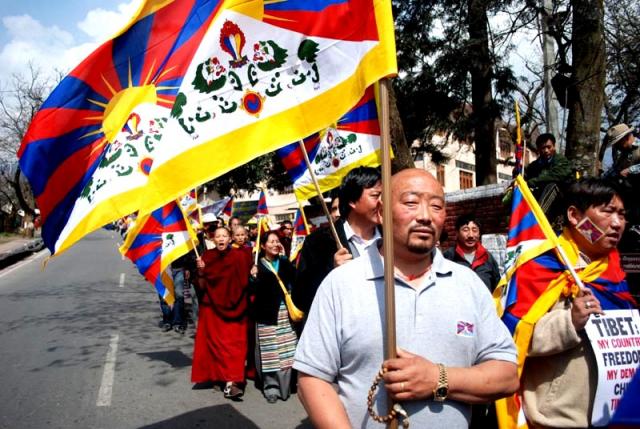
Tibetan exiles in India’s restive northeast have become increasingly vocal, with a series of recent public meetings and protests in Assam state, demanding liberation for their homeland just across the Sino-Indian border to the north. But Assam itself is home to a separatist movement, with the United Liberation Front of Asom (ULFA) waging a sporadic insurgency that has brought waves of harsh repression from New Delhi over the years. While the Tibetan exile leadership remain silent on Delhi’s crackdowns in Assam, the ULFA increasingly looks to China as a patron and supports Beijing’s position on Tibet—with movements for autonomy across the disputed border pitted against each other.


Continue ReadingTIBET & ASSAM: PAWNS IN INDIA-CHINA GAME 

DIVIDE AND RULE IN THE LAND OF GOLD

by Frauke Decoodt

In San Miguel IxtahuacĂĄn, Guatemala, the Mina Marlin gold mine, operated by Canadian giant Goldcorp, has divided indigenous communities through gifts, benefits, and violence. The mine has caused a lot of damage. It has not only had a profound impact on the environment but also on the social cohesion of communities and families in the area, and on their cultural ties with the land.

Continue ReadingDIVIDE AND RULE IN THE LAND OF GOLD 

THE DARK SIDE OF WIKILEAKS?

by Bill Weinberg, World War 3 Illustrated

The case of Bradley Manning is a morally stark one. Even the UN Special Rapporteur on Torture has censured the United States for its harsh measures against the young man who blew the cover on US atrocities in Iraq through WikiLeaks.

But the voluminous trove of classified diplomatic cables released by WikiLeaks goes far beyond the “Collateral Murder” incident in Iraq. The release of most of this information can be justified in the name of the public’s right to know.

However, rights advocates have raised fears that some of the revelations may have placed pro-democracy dissidents at risk in authoritarian regimes. Worse, a WikiLeaks “accredited journalist” is accused of actively collaborating with a dictator. WikiLeaks has failed to meaningfully respond to charges of complicity with grave human rights abuses in Belarus, the country dubbed “Europe’s last dictatorship.”

Continue ReadingTHE DARK SIDE OF WIKILEAKS? 

SYRIA: THE MYTH OF PALESTINIAN NEUTRALITY

by Budour Hassan, Ma’an News Agency

On July 14, thousands of Palestinian refugees marched in a funeral procession for 11 unarmed protesters shot dead by Syrian security forces in the al-Yarmouk refugee camp. Raucous and seething with rage, mourners chanted for Syria and Palestine, called for the downfall of Bashar Assad’s regime, and sang for freedom.

Whether this burgeoning civil disobedience movement will grow into an open, durable rebellion remains to be seen, but the significance and the potential influence of the latest wave of protests that has swept Syria’s largest Palestinian camp cannot be overlooked.


Continue ReadingSYRIA: THE MYTH OF PALESTINIAN NEUTRALITY