SERVING THE ‘NATIONAL INTEREST’?

Tribal Rights and Federal Obligations from Dakota Access to Keystone XL

by Monte Mills, Jurist

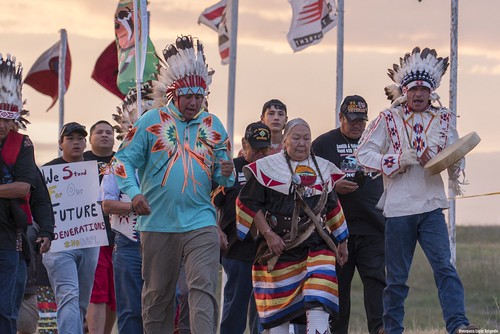
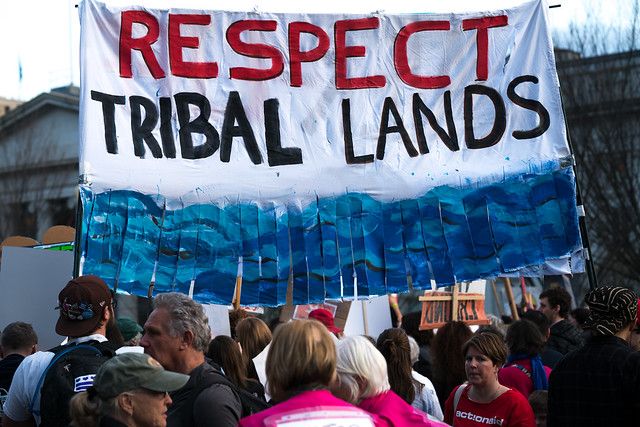
On March 23, Thomas A. Shannon, Jr., the Under Secretary of State for Political Affairs, determined (PDF) that issuing a permit to authorize the Keystone XL pipeline (KXL) “would serve the national interest.” In doing so, Under Secretary Shannon admitted that, from an environmental justice perspective, the 875 miles of the KXL traversing portions of Montana, South Dakota, and Nebraska, “could…disproportionally affect[ ]” Indian tribes in the region “should an oil release occur.”

The State Department’s national interest determination relied upon environmental reviews completed in 2014, but the legal, cultural, and social protests brought last year by the Standing Rock Sioux and other tribes to the Dakota Access Pipeline prompted a distinct shift in the world’s consciousness of tribal rights. Although the water protectors have been evicted from their camps and oil can now flow beneath Lake Oahe, Standing Rock’s legal challenge to the pipeline is yet to be resolved. As lawsuits over the State Department’s KXL decision begin to mount, the pending outcome of Standing Rock’s case may give tribes new grounds on which to challenge the State Department’s decision by properly protecting tribal treaty rights and the federal government’s trust responsibility to tribes.

Continue ReadingSERVING THE ‘NATIONAL INTEREST’? 
COMMUNITY POWER AGAINST MEGA-MINING

The Municipal Resistance in El Salvador

by Sandra Cuffe, Waging Nonviolence

Communities and organizations in northern El Salvador continue to organize referendums in an effort to keep their territories free of mining.

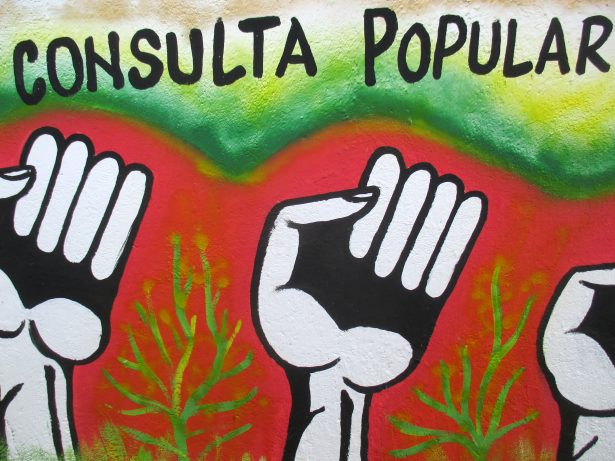
Established by the country’s Municipal Code as a mechanism for community participation, the consulta popular is an official municipal-level referendum on an issue of local concern that can be invoked by petition if residents are able to gather signatures from 40 percent of registered voters. On the books for years, the mechanism had never been used, but it now plays an important strategic role in the country’s movement against metallic mining.

The most recent referendum took place on February 26, when more than half of all registered voters in the municipality of Cinquera flocked to polling stations in four communities. The final tally was along the lines of the four previous referendums on the issue: 98.1 percent of participating registered voters in Cinquera cast a ballot opposing metallic mining exploration and exploitation. The local government will now draw up an official municipal ordinance prohibiting mining in its jurisdiction.

Continue ReadingCOMMUNITY POWER AGAINST MEGA-MINING 

BURMA: SCRIBE’S MURDER TESTS DEMOCRACY

by Nava Thakuria, CounterVortex

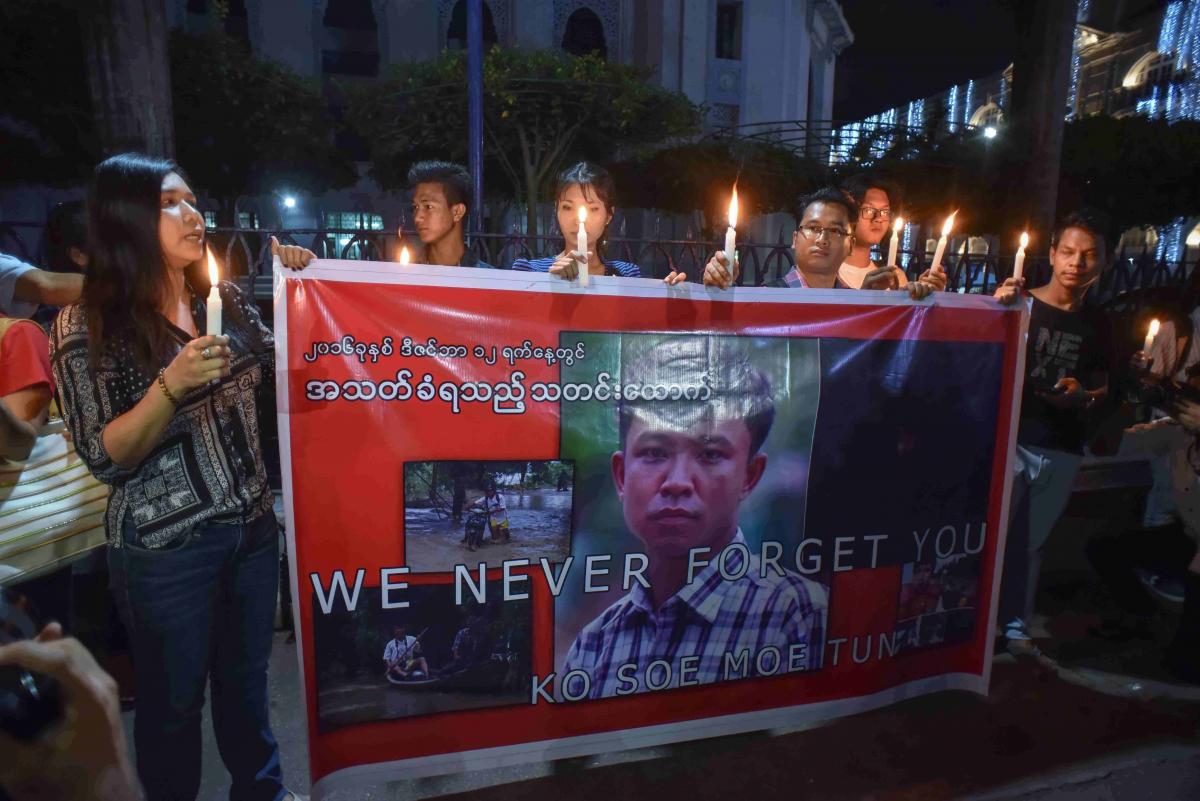
Killings of media workers on the Indian subcontinent are nothing unusual. The subcontinent annually losses around 10 journalists to assassins. India, Pakistan and Afghanistan often top the list of victims, with additional inputs from Bangladesh and Burma. Despite its still-tentative democratic opening after generations of dictatorship, Burma (also known as Myanmar or Brahmadesh) as a whole witnesses fewer incidents of journo-killing, with only five regsitered over the past one-and-a-half decades. But the recent murder of a young reporter in Burma’s northwestern region, adjacent to India’s conflicted states of Nagaland and Manipur, exposes the vulnerability of writers who dare to cover critical issues—in this case threats to the environment by rampant resource exploitation in the region.

Ko Soe Moe Tun, 35, of Monywa, a town in northern Sagaing region, was found dead near his home on December 13—clearly targeted for his extensive investigations and reportage on timber-smuggling and illegal logging and mining in northwest Burma. The reporter, employed by national newspaper Daily Eleven, also posted few details on his Facebook page about the figures involved in the illegal timber trades. The autopsy report revealed that Soe’s skull was fractured. He leaves behind a young wife and a son. The family source claimed that he was popular in his locality, with no enmity toward anyone.

Continue ReadingBURMA: SCRIBE’S MURDER TESTS DEMOCRACY 

CLIMATE CHANGE & BOLIVIA’S CRISIS DROUGHT

by Amy Booth, IRIN

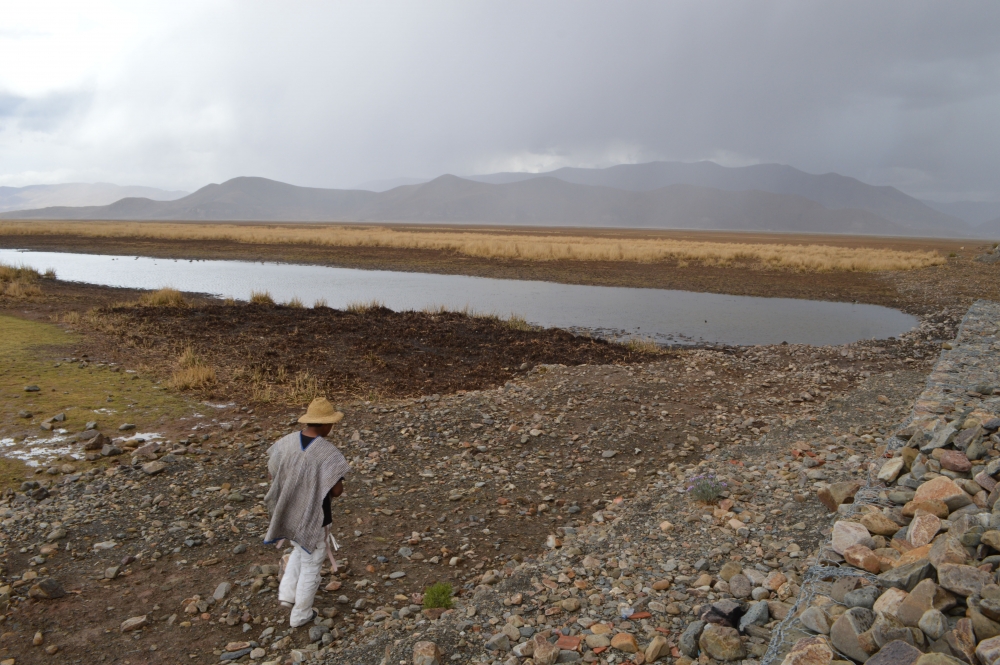
"This should be tremendous, deep. There should be karachi fish and silverside in here," says Abdon Choque Flores, pointing to a shoulder-high tide mark on the long road bridge that crosses the Desaguadero River in Bolivia’s drought-hit Oruro department.

High on the Andean plateau, the Desaguadero used to connect vast Lake Titicaca with smaller Lake Poopó. But the second lake dried up in late 2015 and there is now so little water in the river that the stretch beneath the bridge is completely dry.

Flores lives in nearby Puñaka, a community of Uru people who traditionally made their living on Lake Poopó, fishing and hunting water birds for their meat and eggs. Now, the village looks across an expansive, white plain that stretches as far as the eye can see.

With the Urus’ main source of food gone, along with the lake, many in the community have been forced to leave to find work in nearby towns. The government is providing those left behind with food aid, but it doesn’t come close to plugging the gap. Flores says they chew coca to suppress their appetite.

Lake Poopó was once Bolivia’s second largest lake, after Titicaca. Climate change has melted the Andean glaciers that fed the lake. Water from its tributaries has been diverted for mining and agriculture. But it was the country’s worst drought in 25 years that dried it up completely.

Continue ReadingCLIMATE CHANGE & BOLIVIA’S CRISIS DROUGHT 

COUNTER-REVOLUTION CRUSHES ALEPPO

by Ashley Smith, Socialist Worker

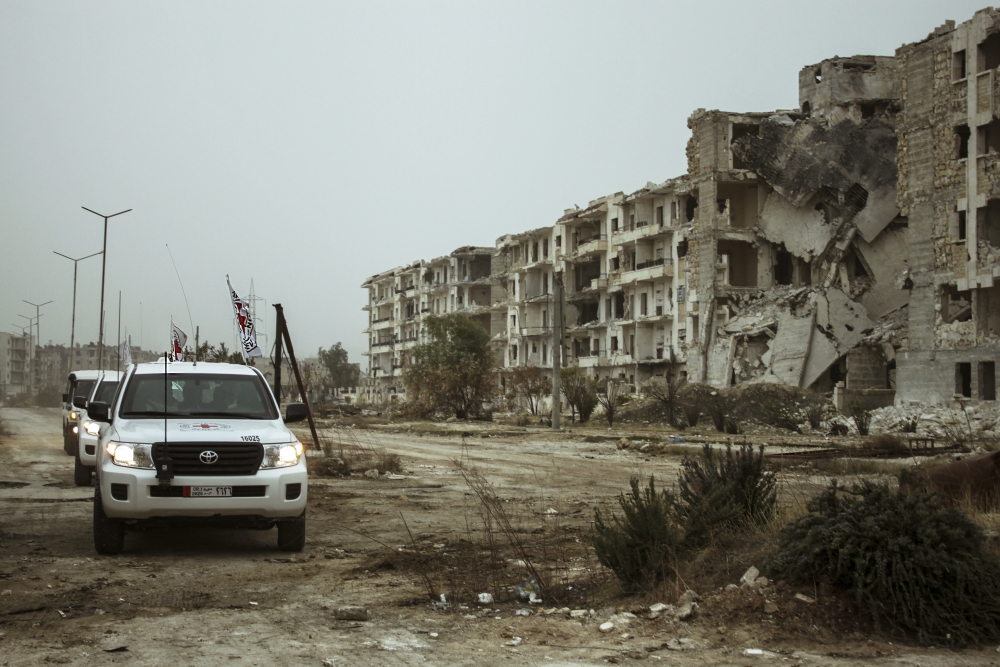
The combined forces of Bashar al-Assad’s regime, Russian air power and Iranian-backed Shia death squads are reconquering Eastern Aleppo, according to reports—and with it, the last of the major cities liberated by the Syrian Revolution since 2011.

“Aleppo is being destroyed and burned completely,” Mohammad Abu Rajab, a doctor in Aleppo, said in a voice message quoted by the Guardian. “This is a final distress call to the world. Save the lives of these children and women and old men. Save them. Nobody is left. You might not hear our voice after this. It is the last call, the last call to every free person in this world. Save the city of Aleppo.”

After it was freed from regime control in 2012, Aleppo was “a symbol of the democratic alternative that could be Syria,” as Syrian revolutionary Joseph Daher put it.

That’s why Assad and his Russian and Iranian allies declared unremitting war against it. They subjected Eastern Aleppo to a siege to starve its people and force them to flee.

Continue ReadingCOUNTER-REVOLUTION CRUSHES ALEPPO 

TRUMP’S VICTORY AND MIGRATION


by Kristy Siegfried, IRIN

Note: This story ran on the eve of Election Day, on IRIN news service. —CounterVortex

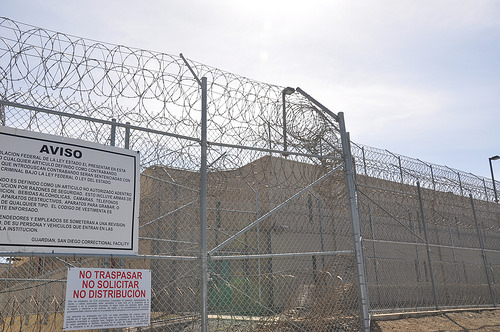
Immigration has dominated the US presidential campaign like never before. Donald Trump’s oft-repeated promise that, if elected, he will build a “big, beautiful” wall at the US-Mexico border helped secure him the Republican nomination, and his rhetoric about illegal immigration appears to have struck a chord with many working-class Americans.

But how many of his election promises on immigration are implementable? And what threat does a Trump presidency pose to migrant and refugee rights in the US and beyond?

Continue ReadingTRUMP’S VICTORY AND MIGRATION 

DANES WHO STAND WITH REFUGEES

Activists Revive Heroic WWII-era Practice of Smuggling to Safety

by Phil Wilomt, Waging Nonviolence

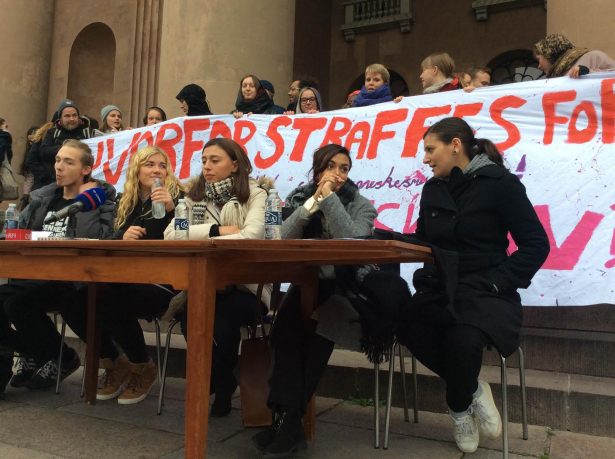
About 100 Danes, young and old, stood outside Copenhagen City Court in the chilly seaside winds last week to show their solidarity with four activists alleged to have illegally assisted refugees in their trek across the waters from Denmark to Sweden.

While only two of the accused are Danish citizens, all are members of MedMenneskeSmuglerne, or “Those who smuggle thy neighbor”—an outgrowth of the more broad-based initiative Welcome to Denmark, which welcomes migrants and refugees into the country.

Last year, over one million migrants and refugees from Syria, Afghanistan, Eritrea and other unstable nations endured the risks of exodus to Denmark and other parts of Europe. Many died during the journey or ended up in refugee camps for prolonged periods. This migration wave correlates directly to the growing xenophobia and shift to the right in many European countries, including Denmark.

“Pretty much all leftist organizations in Europe neglected to consider the refugee influx on their agendas,” said Mimoza Murati, one of the non-Danish activists facing criminal charges that day. “We should have been prepared because we know the political landscape.”

Continue ReadingDANES WHO STAND WITH REFUGEES 
Native protestors

THE DAKOTA ACCESS PIPELINE

A Legal Environmental Justice Perspective

by Dayna Jones, Jurist

The largest multi-tribal gathering of indigenous peoples in North America in over a century is happening now at the Sacred Stone Camp in North Dakota. Leading the cause is the Standing Rock Sioux Nation. The Standing Rock Sioux and their allies are standing against construction of the “black snake” Dakota Access Pipeline (DAPL), slated to run under the Missouri River and through their historically sacred tribal sites. The tribe states it had not been properly consulted prior to construction of the DAPL, a requirement legally mandated by Executive Order 13175 (PDF). The order stipulates that: “[e]ach agency shall have an accountable process to ensure meaningful and timely input by tribal officials in the development of regulatory policies that have tribal implications.”

The Standing Rock Sioux Nation’s assertion that the Army Corps of Engineers, an executive agency charged with overseeing and granting pipeline permits, has failed to meet the clearly-enunciated requirement of meaningful consultation, makes this case one of the strongest Native American environmental justice legal claims in history. Environmental justice, a paradigm born of a merger between the civil rights and environmental movements, is unique in Native American communities. This unique status stems from the legal classification of tribes as domestic dependent nations, sovereign as political entities, yet still under the plenary authority of Congress, as per Article 1, Section 8 of the Constitution. The plenary authority of Congress over the tribes is a stretch at best, as Native Americans predate the Constitution. Nonetheless, the Supreme Court has established a solid judicial body of law giving Congress, and only Congress, the ability to act in good faith as wards over the affairs of Indian Country, such as the 1886 case of US v. Kagama.

Continue ReadingTHE DAKOTA ACCESS PIPELINE 

ANOTHER WEEK CLOSER TO FASCISM

?Putin Shows What Trump Has in Store for America

by Michael I. Niman, The Public

It might seem like I’m writing a lot about fascism lately. It’s just the drought of journalists using the F-word that makes any use of the word stand out—this as a bona fide fascist is within striking distance of the White House.

In case you were on the fence and reluctant to believe that the Republican candidate for president—the one who claimed he could shoot a man in the middle of Fifth Avenue without losing steam among his supporters—is a fascist, this week’s pronouncements by him and his allegedly more palatable running mate reiterate the point.

As he climbs back up to a statistical dead heat in the polls, Trump complimented Vladimir Putin for his leadership style. Media criticism focused on the fact that Putin ordered the invasion and occupation of Ukraine’s Crimean peninsula. Others dusted off Cold War tropes to remind us that we hate the Russians. All of this misses the point that Trump zeroed in on Putin’s leadership style. This demands that we look at how he treats his own people—how he leads his own nation.

Continue ReadingANOTHER WEEK CLOSER TO FASCISM 

THE FALL OF DARAYA

From Roses to Evacuation

by Leila Al Shami

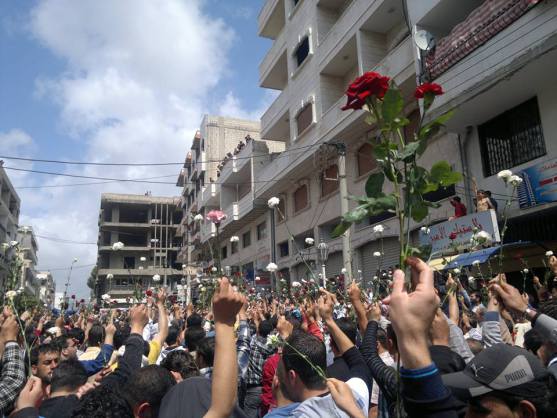
Four years following its liberation, the predominantly agricultural town of Daraya, strategically located near Syria’s capital, has fallen to the regime. A deal was reached to evacuate the 4,000-8,000 civilians remaining from a pre-uprising population of 300,000. The local fighters who defended their town so courageously will go to Idlib and join the resistance there.

Daraya’s residents know that they may never return to their homes. Photos circulated on social media showed residents gathered at the graves of loved ones to say goodbye. Fears abound of a plan to cleanse opposition strongholds permanently; and in previous evacuation deals, even those carried out under UN auspices, many were detained by the regime, never to be seen again.

Continue ReadingTHE FALL OF DARAYA 

PERU’S NEW GOVERNMENT WANTS MORE CHINA


by Nelly Luna Amancio, Diálogo Chino

Peru’s new president, Pedro Pablo Kuczynski (known as PPK), intends to stimulate the country’s economy by processing and refining minerals, in addition to simply exporting them. Since his victory in the runoff election on June 5, Kuczynski has declared the need for Peru to prioritize both mineral extraction and trade relations with China.

China is Peru’s biggest investor. With this in mind, Kuczynski—who will replace the outgoing President, Ollanta Humala, at the end of July—described as “necessary” a trip to China ahead of the Asia-Pacific Economic Cooperation (APEC) forum in Lima in November, his first official visit overseas. “China is our number one trading partner and they are the ones who purchase our minerals,” he said.

“We are an economy with enormous natural resources, but we have to industrialize and that is no easy task. So, we will have to work with those who buy significant amounts of our exports, which means, to a large extent, China,” Kuczynski insisted during the Eleventh Business Summit of the Pacific Alliance in Lima in June.


Continue ReadingPERU’S NEW GOVERNMENT WANTS MORE CHINA 

GREEN PARTY, WHITE PRIVILEGE

by Michael I. Niman, The Public

This might be a great year for the Green Party, which some polls are predicting could score a record-shattering five percent or more of the popular vote in the upcoming presidential election. Hillary Clinton is a tool of Wall Street and corporate interests such as Wal Mart, on whose board she once served. And Donald Trump, of course, is a fascist. The Libertarians want to do away with environmental and labor protections and open the door further for corporate pillage. This leaves opportunity for a strong Green Party run with the comparatively benign Jill Stein, who wants to grab the crown off Bernie Sanders’ head and hijack the movement his candidacy created.

The Green theme is generally the same as it was when I was an elector for Ralph Nader 16 years ago—vote “your hopes, not your fears,” only now it’s “vote your conscience.” George W. Bush, however, despite arguments that he was “the worst president in history,” and the reality that his foreign policy birthed endless wars and ISIS, never posed the level of threat that Trump presents. Trump is a bona fide fascist who assembled a following based on a cult of personality. Delegates at his Republican Convention, the whitest GOP soiree in over a century, regularly chanted for his political opponent to be jailed, presumably after his coronation. One campaign insider called for her execution.

Continue ReadingGREEN PARTY, WHITE PRIVILEGE