Africa
INPACT

Africa pushes back against Russian military recruitment

Facing a manpower shortage in its war with Ukraine, Russia is increasingly turning to recruitment networks in the Global South—especially Africa—to help fill its ranks. Fast-track visas, the promise of good salaries as well as citizenship are the lures, in contrast to growing official immigration hostility in the rest of Europe. But the problem is surviving the front line. In a report released this week, the investigative collective INPACT obtained a single list of 1,417 Africans hired by Russia and found a death rate of over 20%. Those killed lasted an average of just six months. There are also reports of racism and brutality. While many young men volunteer, others are duped, promised work or scholarships, but then forcibly enlisted. Kenya and South Africa are two countries that have complained. Nairobi wants a ban on the conscription of Kenyans, while South Africa said Moscow had agreed to the return of 17 mentricked into serving in Ukraine. (Image: INPACT)

Africa
Cameroon

Post-electoral violence sweeps Cameroon

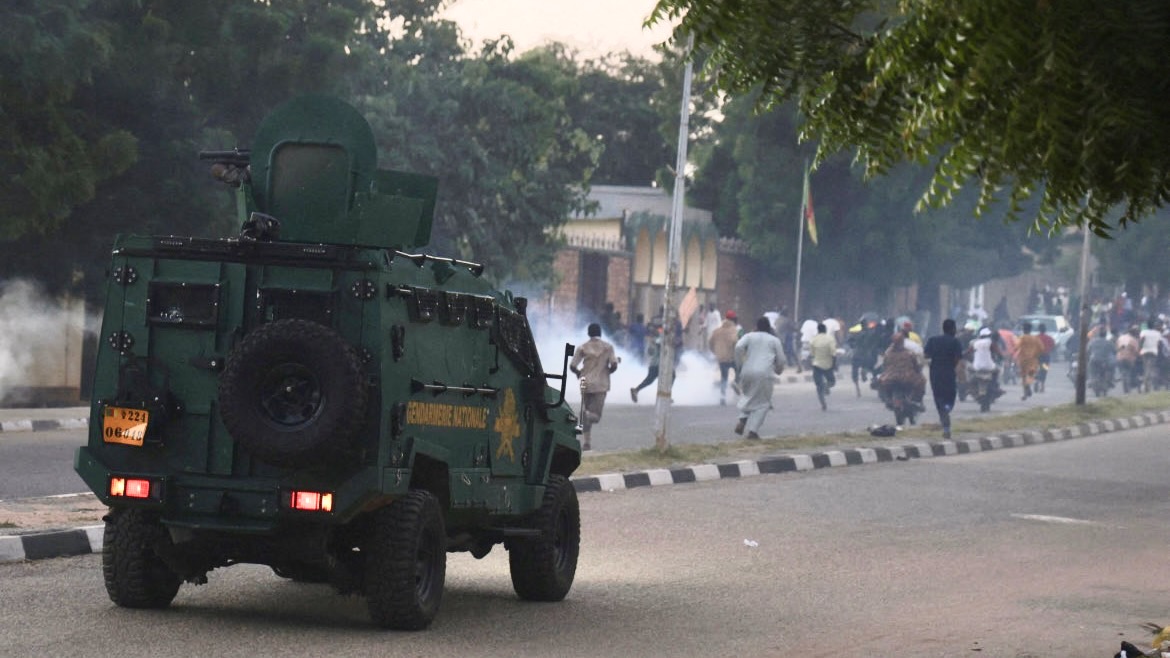
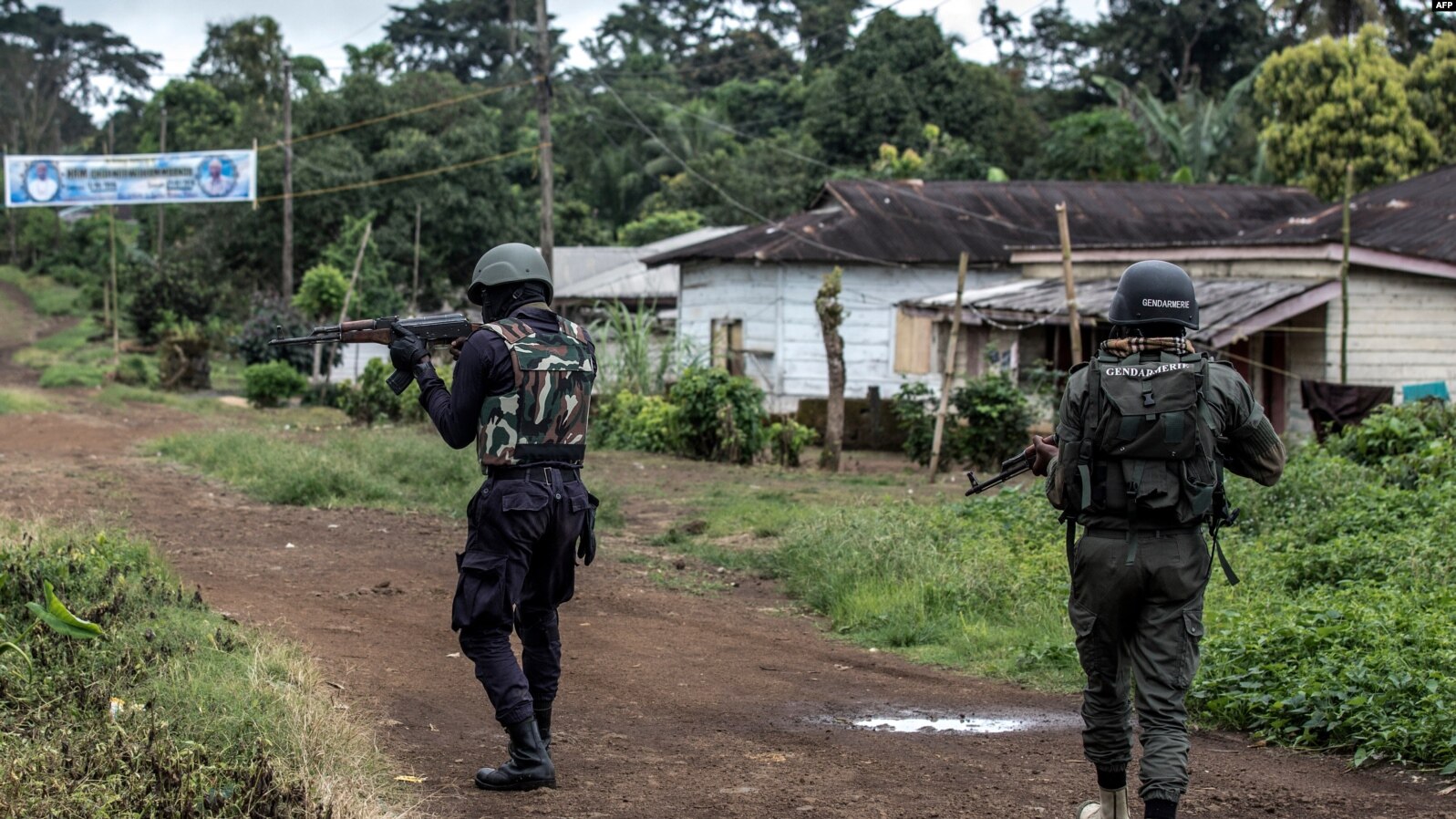
The Office of the UN High Commissioner for Human Rights expressed concern over the protests and repression that have swept Cameroon following contested presidential election results. Demonstrators immediately defied a ban on public gatherings to support the opposition after the election, but the situation escalated after the Constitutional Council announced five days later that long-ruling President Paul Biya had won. The opposition rejected the results and proclaimed their candidate, Issa Tchirola Bakary, as the legitimate winner, urging citizens to demonstrate peacefully. Thousands took to the streets demanding recognition of an opposition victory, to be met with repression; clashes between protesters and security forces led to fatalities and numerous arrests. The protests have shaken the capital, YaoundĂ©; the economic capital, Douala; and the northern towns of Garoua and Maroua. Local jails are filled with opposition supporters who accuse Biya of rigging the polls. Biya is now to assume his eighth term in office as the world’s oldest president at age 92, having ruled Cameroon for 43 years. (Photo: Twitter via Peoples Dispatch)
Africa
deportees

West Africans deported by US sue Ghana government

Eleven individuals deported from the US to Ghana filed a lawsuit against the Ghana government, charging that they were illegally held in a military detention camp. The legal action reflects the chaotic fallout following the deportations, which have resulted in deportees being scattered and “dumped” into neighboring African countries. The deportees are of multiple West African nationalities, none of which is Ghanaian. The deportations arose from a “third country deportation” agreement between the US and Ghana earlier this year. Ghana’s parliamentary minority bloc has now called for its suspension, as leaders claim the government entered into the agreement without proper legislative approval. (Photo: Venezuelan deportees in Honduras. Credit: ICE via Wikimedia Commons)

Africa
Cameroon

France admits legacy of colonial violence in Cameroon

French President Emmanuel Macron sent a letter to Cameroonian President Paul Biya, in which he officially acknowledged his country’s use of repressive violence before, during and after Cameroon’s struggle for independence. Macron stated that the historians of the Franco-Cameroonian Commission studied the war that began in 1956, finding that colonial authorities and the French army carried out a campaign of attacks against the Cameroonian populace. He added that the war continued after Cameroonian independence in 1960, with France supporting state repression in a post-independence power struggle that lasted through 1971. This comes in sharp contrast to France’s previous denial of its atrocities during the Cameroon war, despite established historical consensus. Macron has also acknowledged French responsibility in the Rwandan Genocide and war crimes during the Algerian War, making this most recent acknowledgment the latest chapter in a careful and calculated move toward admission of France’s violent colonial and neo-colonia history in Africa. (Image: Wikipedia)

Africa
Cameroon

Cameroon: peace activist sentenced to life term

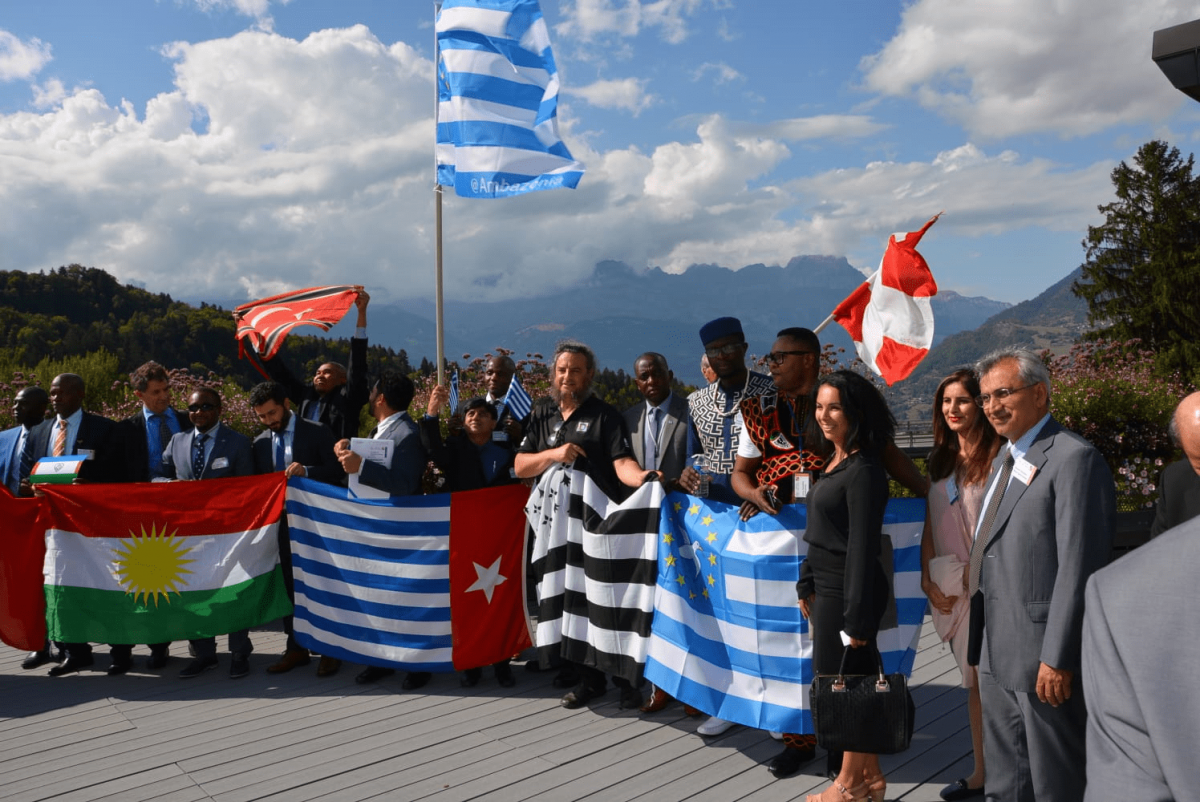
Amnesty International condemned the life sentence handed down by a military court in Cameroon against activist Abdu Karim Ali, calling it an “affront to justice” and demanding his immediate and unconditional release. According to Amnesty, Ali was arrested without a warrant and arbitrarily detained after he produced a video exposing torture carried out by the leader of a pro-government militia in Cameroon’s conflicted Southwest Region. Cameroon’s Southwest and Northwest regions have been experiencing an armed conflict since 2016 in what is known as the Anglophone crisis. Demonstrations for greater linguistic rights in the Anglophone regions were met with repression by the Francophone central authorities, leading to an initiative to secede from Cameroon as the “Federal Republic of Ambazonia.” Ali had advocated for a Swiss-led mediation process to resolve the conflict. (Map: TNH)

Africa
Chad

Chad: military base overrun by Boko Haram faction

President Mahamat DĂ©by has vowed vengeance for an attack by jihadists on an army base in Chad’s Lake region that killed at least 40 soldiers. The insurgents who managed to overrun the base are likely to be from Boko Haram’s “Bakura” faction, which is concentrated in the northern part of the region, on the Niger-Chad border. They’ve been involved in a long-running battle for supremacy in the region with the rival Islamic State in West Africa Province (ISWAP). Their commander, Ibrahim Bakura Doro, has resisted both peace overtures and demands for assimilation by the larger ISWAP group. The night-time attack on the Barkaram base, in which weapons and equipment were captured, follows a military sweep through the region by a joint force of Nigerian, Cameroonian and Chadian troops—which at the time was proclaimed a success. (Photo of Chadian troops via Presidency of Chad/Facebook)

Africa
DRC

Podcast: a cannabis coup in the Congo?

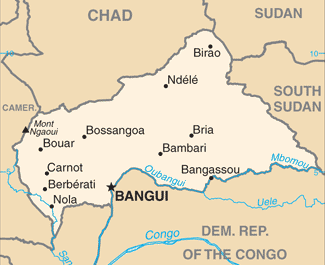
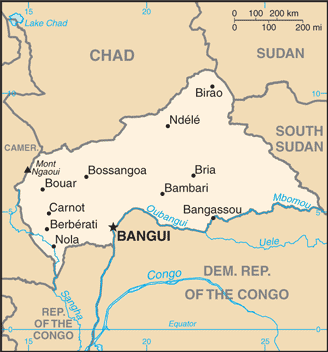
The attempted coup d’etat in the Democratic Republic of the Congo may or may not have been assisted by the CIA, but one of the Americans arrested in the affair is named as a “cannabis entrepreneur“—pointing to the possibility of legal cannabis playing the same destructive role in Central Africa that bananas have played in Central America. Yet while corporate power sees a lucrative new cash crop, lives (and especially Black lives) are still being ruined by cannabis prohibition in the United States. In Episode 228 of the CounterVortex podcast, Bill Weinberg argues that the old anarchist slogan “Neither your war nor your peace” can be updated as “Neither your prohibition nor your legalization!” Listen on SoundCloud or via Patreon. (Map: CIA)

Africa
Ambazonia

Fulani pitted against rebels in Cameroon conflict

Amnesty International urged Cameroon’s authorities to investigate human rights violations committed in the country’s conflicted Anglophone regions, the North-West and South-West. According to a new report, armed separatists and the military alike are responsible for killings, torture, rape and destruction of property. In the North-West in particular, long-standing conflicts between Mbororo Fulani herders and sedentary farmers have been fuelling armed violence. As the situation has deteriorated over the past years, militias, mainly composed of Mbororo Fulani and supported or tolerated by the authorities, have committed atrocities against civil populations. The official security forces have responded to this situation with further rights violations. (Photo: Moki Edwin Kindzeka/VOA via Wikimedia Commons)

Africa
Rift Valley

African dissent from biodiversity protocol

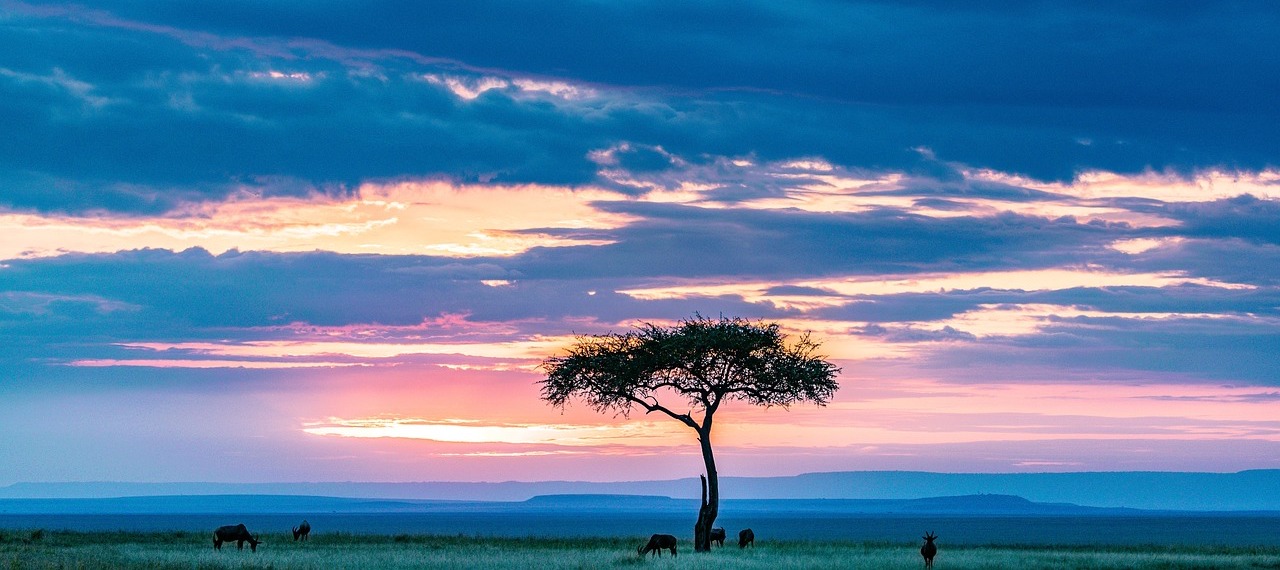
The UN Biodiversity Conference, or COP15, concluded in Montreal with what is being hailed as a landmark agreement to address the current unprecedented loss of species, now termed the planet’s sixth mass extinction. The centerpiece of the Kunming-Montreal Global Biodiversity Framework, conceived as a match to the Paris Agreement on climate change, is the so-called “30×30” pledge—with countries committing to protect 30% of their territory for habitat preservation by 2030. The deal earmarks $30 billion per year to flow from wealthy countries to poor ones to assist in conservation programs. But the financial commitments are not binding, and were assailed by countries in the developing world as inadequate. After an all-night session, the gavel was brought down on the deal minutes after the delegation from the Democratic Republic of Congo pressed outstanding criticisms. This was decried by the DRC, Uganda and other African delegations. A representative from Cameroon protested: “What we saw was a force of hand.” (Photo of Kenya’s Great Rift Valley via Pixabay)

Planet Watch
Chad

Podcast: climate change and the global struggle II

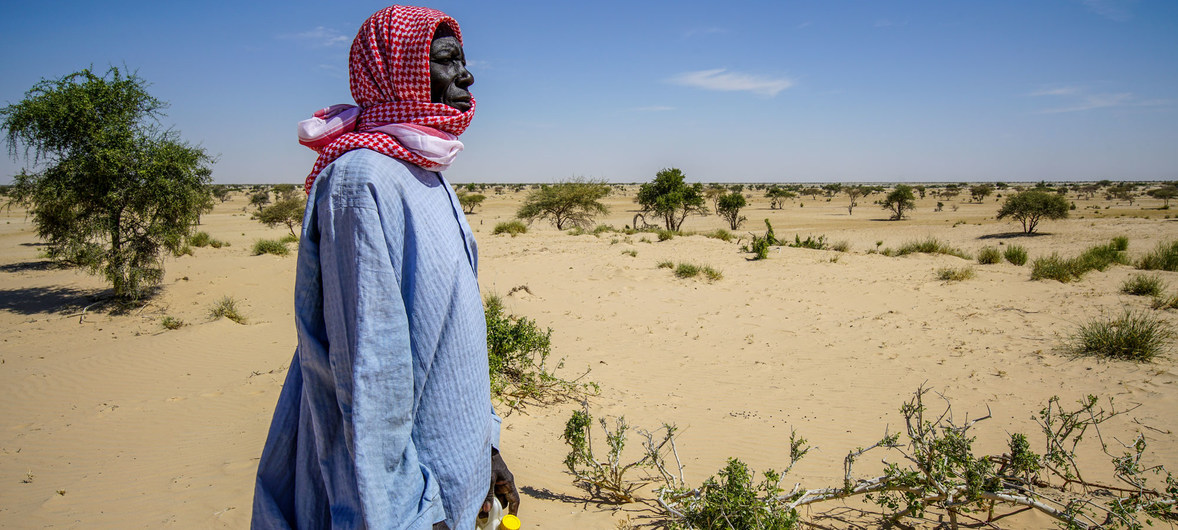
In Episode 147 of the CounterVortex podcast, Bill Weinberg notes the recent statement from the UN Environment Program that “only a root-and-branch transformation of our economies and societies can save us from accelerating climate disaster.” Studies from similarly prestigious global bodies have raised the prospect of imminent human extinction. An International Energy Agency report released last year warned that new fossil fuel exploration needed to halt by 2022 in order to keep warming within the limits set by the 2015 Paris Agreement. Adoption of new technologies and emissions standards does mean that CO2 emissions from energy generation (at least) are likely to peak by 2025. But the IEA finds that this would still lead to global temperatures rising by 2.5 C above pre-industrial levels by century’s end—exceeding the Paris Agreement limits, with catastrophic climate impacts. And the catastrophic impacts, already felt in places like Chad and Cameroon, win but scarce media coverage. Climate-related conflict has already escalated to genocide in Darfur. Climate protests in Europe—at oil terminals and car shows (as well as, less appropriately, museums)—do win some attention. But the ongoing resistance to oil mega-projects in places like Uganda and Tanzania are comparatively invisible to the outside world. The dire warnings from the UN and IEA raise the imperative for a globalized resistance with an explicitly anti-capitalist politics. Listen on SoundCloud or via Patreon. (Photo of Tantaverom region of Chad via UNDP)

Africa
Cameroon

Tentative peace talks for Ambazonia

After three years of conflict, a tentative peace process is underway between the Cameroon government and rebels demanding independence for the country’s western anglophone regions. Cameroon is majority francophone, and its Northwest and Southwest regions complain that they have been deliberately marginalized by the central government in Yaounde. What began as a protest movement calling for federalism degenerated into fighting and a demand for full independence after the government clamped down on the movement. The conflict has since killed more than 3,000 people, and forced over 900,000 from their homes. The security forces have been accused of widespread human right abuses—as have, to a lesser extent, the rebel forces fighting for an independent “Ambazonia.” (Map: TNH)

Africa
cameroon

Water scarcity sparks clashes in Cameroon’s North

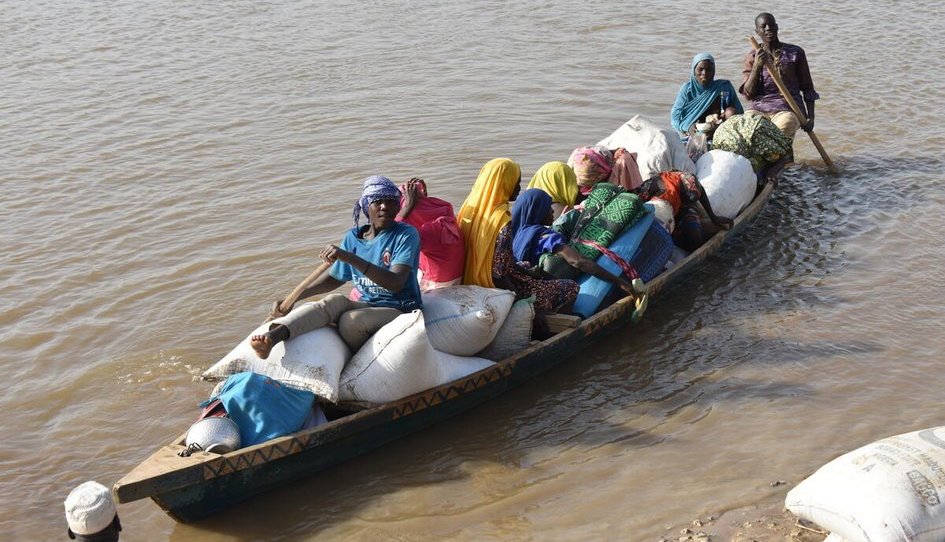
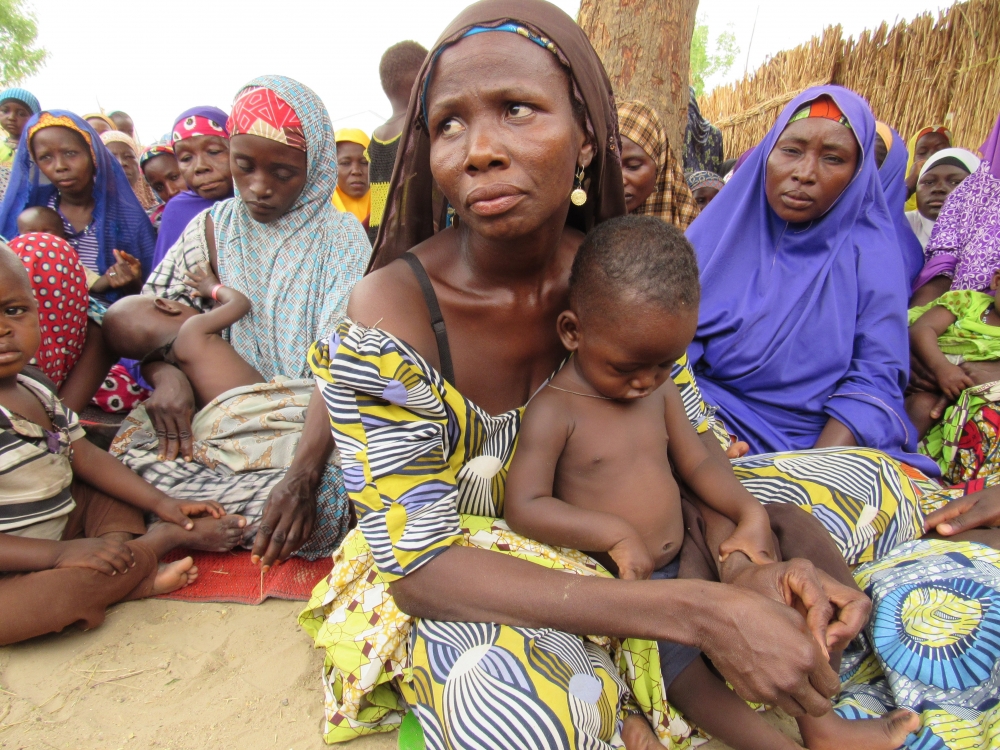
The UN Refugee Agency reports that “intercommunal clashes” in Cameroon’s Far North region have displaced thousands inside the country and forced more than 30,000 people to flee to neighboring Chad. At least 22 have been killed and 30 others injured. The fighting began in the border village of Ouloumsa following a dispute between herders, fishermen and farmers over dwindling water resources. Violence then spread to neighboring villages. Ten villages have been burned to the ground. The violence also reached Kousseri, Cameroon’s northern commercial hub, where the cattle market was destroyed and thousands forced to flee. (Photo: Aristophane Ngargoune/UNHCR)