

The Amazon
Ceibo

Ecuador: crackdown on indigenous, environmental groups

Ecuador’s financial crimes agency froze the bank accounts of several indigenous and environmental groups in an apparent effort to silence protests, Human Rights Watch said. The government’s Unidad de Análisis Financiero y EconĂłmico (UAFE) cited secret intelligence reports to justify the freezing of the funds. Among the groups affected is the indigenous organization Alianza Ceibo, representing the Waorani, Siekopai, A’i Cofán and Siona peoples, which has defended the economic, social, cultural and collective rights of these peoples for 10 years. Also targeted are groups protesting the decision to approve a mining project in the southern province of Azuay which threatens the fragile ecosystem in the region. (Photo: Alianza Ceibo)

Watching the Shadows
NSS

Trump Corollary: spheres of influence, white supremacy

Donald Trump’s new National Security Strategy instates a “Trump Corollary” to the Monroe Doctrine. Like the Roosevelt Corollary of 1904, which was used to justify the “gunboat diplomacy” of that era, this new corollary openly calls for dividing the world into spheres of influence—with the Western Hemisphere assigned to the US. Russia is obviously pleased as punch over this, as it implicitly gives Moscow a free hand in Ukraine—and Putin will likely consider this an acceptable pay-off for his betrayal of Venezuela. However, China is less likely to surrender its massive investments and mega-projects in Latin America in exchange for a free hand to take over Taiwan. The document’s text on Europe is even more sinister, revealing a white supremacist agenda that looks not to Washington’s traditional allies to counter Russia, but to the continent’s Russian-backed far-right movements to counter Washington’s traditional allies. In Episode 308 of the CounterVortex podcast, Bill Weinberg exposes the NSS as a further step toward consolidation of a Fascist World Order. (Image: White House)

Planet Watch
Sri Lanka

Triple-cyclone disaster crystalizes climate threat

A rare convergence of three tropical cyclones with the northeast monsoon has triggered the worst flooding to hit South and Southeast Asia in decades. More than 1,600 people have been killed, thousands remain unaccounted for, and whole villages have disappeared under mud and rising water. Roads, bridges, and other vital infrastructure have been torn apart, hampering rescue efforts as communities wait for help across Indonesia, Thailand, Sri Lanka, Vietnam and other affected countries. The scale of the disaster reflects a dangerous mix of climate pressures. Warmer oceans are intensifying storms, while a hotter atmosphere is capable of holding and releasing far more moisture. Environmental degradation has left many communities exposed: rivers once stabilized by forest cover burst their banks with little resistance. Humanitarian groups are urging governments to strengthen early-warning systems, invest in resilient infrastructure, and prioritize long-term adaptation—all of which makes the disappointing outcomes of this year’s UN climate summit even more worrying. (Photo: town in Sri Lanka after Cyclone Ditwah. Credit: UNICEF/InceptChange via UN News)

North America
Fort Bliss

Abuses at Fort Bliss ICE detention facility

A coalition of civil and human rights organizations is calling for the closure of a massive immigration detention facility at Fort Bliss, alleging guards have beaten detainees and threatened violence, criminal charges and imprisonment in attempts to coerce even non-Mexican migrants into crossing the border into Mexico. The groups, including the ACLU and Human Rights Watch, sent a letter to federal officials detailing the allegations based on interviews with more than 45 detainees. They describe guards using physical force, including abusive sexual contact, against immigrants who refused third-country deportations. The letter also alleges detainees face insufficient food, medical neglect, squalid conditions with sewage flooding living areas, and weeks without outdoor access. The tent facility, erected months ago on a former Japanese American internment camp site within the Fort Bliss complex, dubbed “Camp East Montana,” currently holds over 2,700 people. (Photo via Border Report)

Central America
Honduras

Post-electoral tension in Honduras

Honduras is on tenterhooks as the results of its presidential election have not yet been finalized, and Trump has threatened reprisals if his favored candidate fails to win. Since the voting, ex-president Juan Orlando Hernández—convicted in the US last year of drug trafficking and bribery—was pardoned by Trump and released from prison. Adding to the unease is the country’s deeply flawed vote-transmission system, which has crashed twice during the count. This has enabled politicians from across the spectrum—as well as Trump—to fuel the tension by raising allegations of fraud. (Map: Perry-Castañeda Library)

Watching the Shadows
USS Gerald Ford

US instates ‘Trump Corollary’ to Monroe Doctrine

President Donald Trump’s new National Security Strategy puts the Western Hemisphere at the center of US foreign policy and revives the Monroe Doctrine of 1823, appending it with a “Trump Corollary.” The document presents the Americas as the main line of defense for the US homeland and links that doctrine directly to ongoing military operations against suspected drug traffickers in Caribbean and Pacific waters. It places the Hemisphere as the top regional priority, above Europe, the Middle East and Indo-Pacific, and ties that status to controlling migration, drug flows, and foreign influence before they can reach US territory. It also states that the US will block “non-Hemispheric competitors” from owning or controlling “strategically vital assets” in the Americas, including ports, energy facilities, and telecommunications networks. (Photo: USS Gerald R. Ford. Credit: US Navy via Wikimedia Commons)

Watching the Shadows
Orwell

Podcast: Trump for War-is-Peace Prize III

Trump’s perverse ambition to win the Nobel Peace Prize was given a boost by his “winning” of the first “FIFA Peace Prize“—just as he is carrying out illegal deadly air-strikes in the Caribbean, and threatening Venezuela with war. “Secretary of War” Pete Hegseth is denying claims that he gave orders to “kill them all” in the strikes, but Congress is preparing an investigation. Regardless of whether this order was given, the strikes are clearly illegal under the international laws of war. Nonetheless, the Pentagon has opened an investigation into Sen. Mark Kelly for his video calling for troops to refuse illegal orders. Trump—who pardoned soldiers convicted of war crimes in his first term—has called for Kelly to be hanged for sedition. In Episode 307 of the CounterVortex podcast, Bill Weinberg continues to be flabbergasted by the Orwellian war-is-peace propaganda. (Image via Twitter)

Southeast Asia
Burma

UN: Burma election plans entrench repression

The UN Office of the High Commissioner for Human Rights (OHCHR) warned that the Burma military junta’s planned elections this month are a military-controlled process conducted in an environment “rife with threats and violence.” OHCHR stated: “Far from leading a political transition from crisis to stability or restoring democratic and civilian rule, this process will almost certainly deepen insecurity, fear, and polarization throughout the country.” (Photo: Burmese Border Guard officer with IDPs in Rakhine state. Credit: Daniel Schearf & Zinlat Aung/VOA via Wikimedia Commons)

Greater Middle East
Yemen

Yemen: Houthi authorities round up opposition

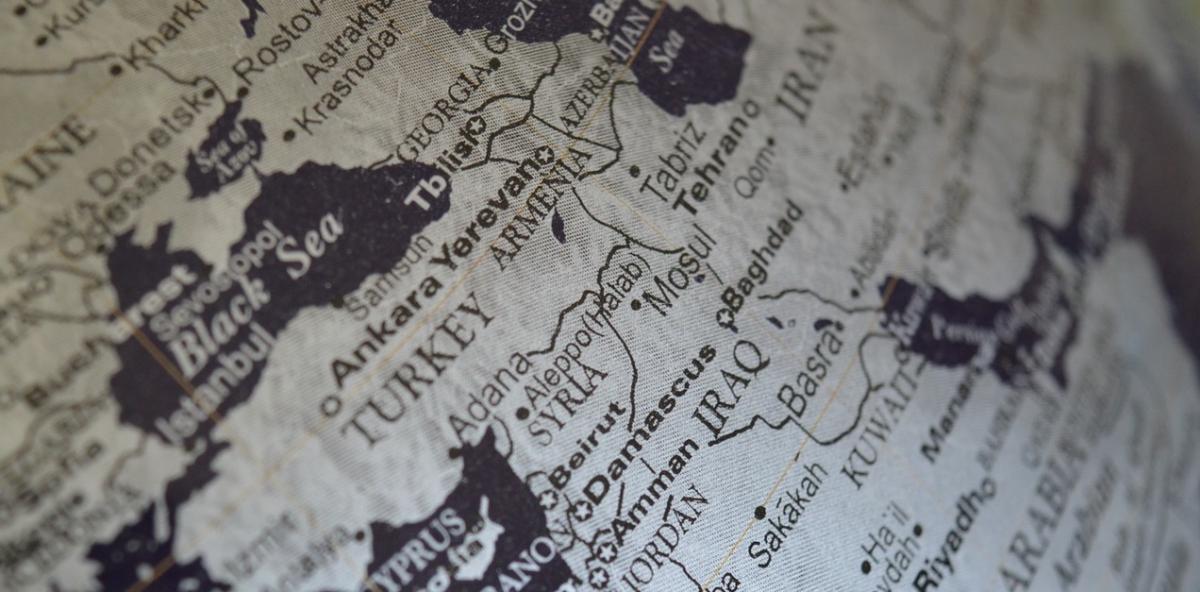
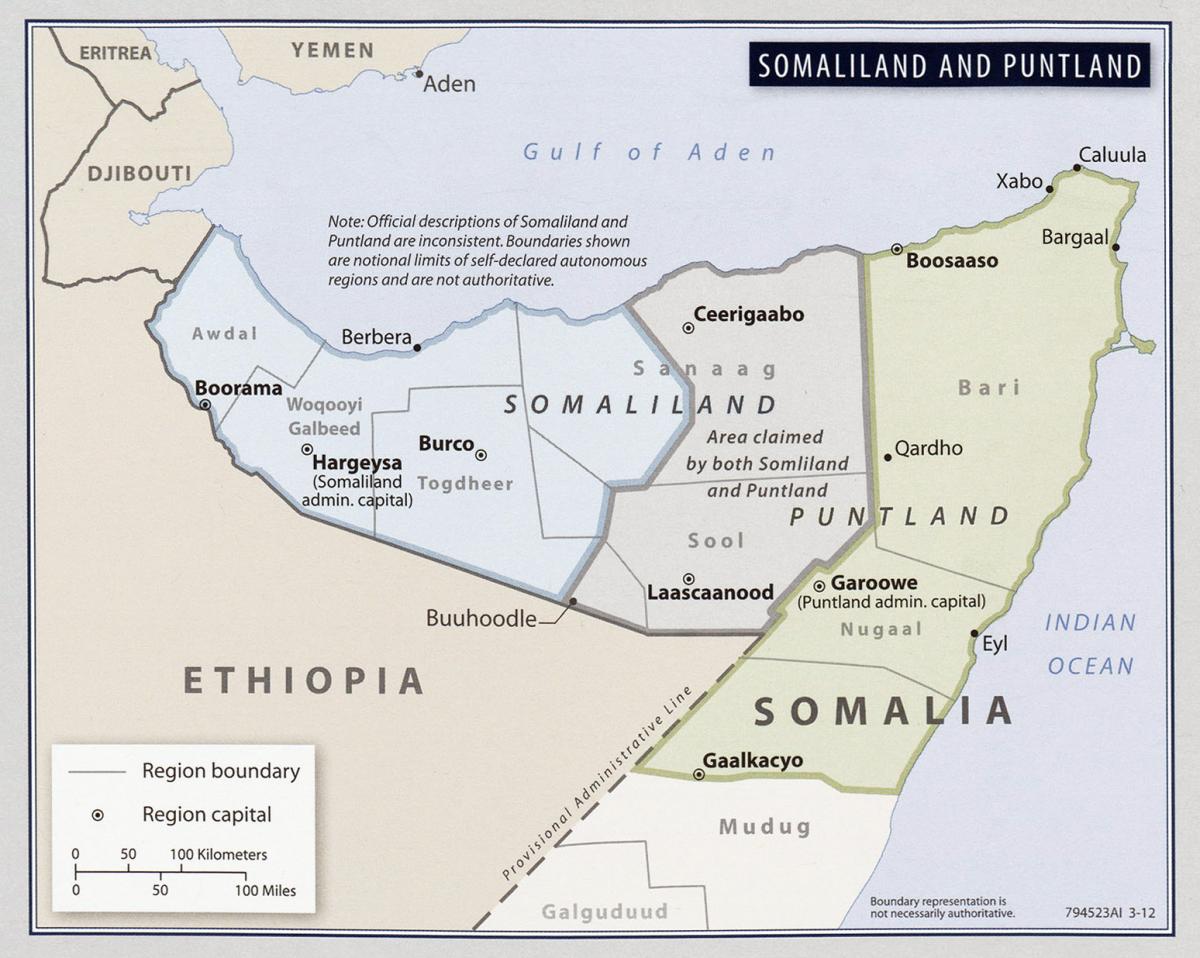
Houthi authorities in Yemen have detained dozens of political opponents since July, Human Rights Watch (HRW) reported. The rights group said that at least 70 people associated with the opposition party Yemeni Congregation for Reform, or Islah, were detained in Dhamar governorate. HRW noted that 21 of these individuals have been subject to an “unfair trial” on “dubious accusations of espionage,” with 17 sentenced to death by firing squad, and two sentenced to 10 years imprisonment. HRW emphasized that it is illegal under Yemeni law to make arrests without a warrant, and that detention without a legal basis or prompt charges and criminal proceedings violates both domestic and international law. (Map via PCL)

Africa
Tanzania

ICC asked to investigate Tanzania killings

A coalition of local and international human rights groups has asked the International Criminal Court to open a case against Tanzanian President Samia Hassan and senior members of her government over killings by the security forces during post-election unrest in October. How many people died in the protests over the “sham” elections is still unknown. Hassan’s government has remained silent on an official death toll, but the opposition—who were effectively barred from the polls—claims thousands were shot by the police and Ugandan special forces. Gruesome images were shared online of armed men firing indiscriminately into crowds, and of overflowing morgues. A CNN investigation found that satellite imagery suggests the existence of mass graves. (Photo: Tanzania Daily News via AllAfrica)

The Caribbean
CVN

UN protests as Trump threatens Venezuela

The United Nations urged all countries to respect international norms safeguarding civil aviation, following US President Donald Trump’s announcement of his intention to “completely shut down” Venezuelan airspace. The statement added that the Secretary-General is also “gravely concerned” about the strikes on Venezuelan civilian vessels at sea, which the US alleges were involved in drug trafficking. UN High Commissioner for Human Rights Volker TĂĽrk asserted that the strikes violate international human rights law, and called for transparent investigations into the attacks. TĂĽrk described the strikes as “extrajudicial killings,” emphasizing that “the intentional use of lethal force is only permissible as a last resort against individuals who pose an imminent threat to life.” (Photo: US Navy via Wikimedia Commons)

Africa
Guinea Bissau

Guinea-Bissau: narco-plot behind latest African coup?

UN Secretary-General AntĂłnio Guterres condemned the military coup in Guinea-Bissau that took place just days after national elections, saying that it gravely violates constitutional order and democratic principles. The African Union similarly condemned the coup, while the West African regional bloc ECOWAS suspended Guinea-Bissau until there is a full restoration of constitutional order. This latest military takeover reflects a pattern of instability in Guinea-Bissau since the country gained independence from Portugal in 1974, and follows a long string of coups and coup attempts. Guinea-Bissau also ranks first among African countries in the cocaine trade, a reality that looms ever larger over national politics. In his inaugural speech, transitional president Maj-Gen. Horta Nta Na Man justified the military takeover as necessary to thwart a plot by “narco-traffickers” to destabilize the country. Government efforts to crack down on the narco trade are believed to have prompted previous coups d’etatin Guinea-Bissau. (Map: PCL)