The Caribbean
Cherizier

US mercenaries to fight gangs in Haiti

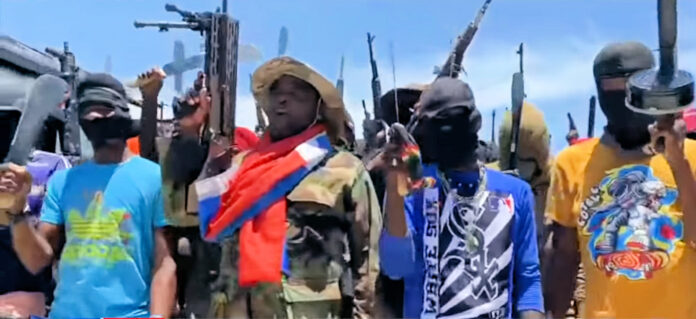
The US indicted Jimmy Chérizier AKA “Barbecue,” leader of the gang coalition in control of most of the Haitian capital Port-au-Prince, and offered a $5 million reward for information leading to his arrest. Chérizier and an alleged stateside collaborator, Bazile Richardson, are charged with sanctions violations related to arms sales. Meanwhile, private military contractor and Trump ally Erik Prince told Reuters he has signed a 10-year deal with the Haitian government to fight armed groups and help collect taxes—a move some observers fear could further weaken the Haitian security forces and lead to rights violations. Prince’s new security firm, Vectus Global, has been operating in Haiti since March. (Photo: Haiti Liberte)

Mexico
Michoacán

‘Blood avocados’ in the news amid Michoacán violence

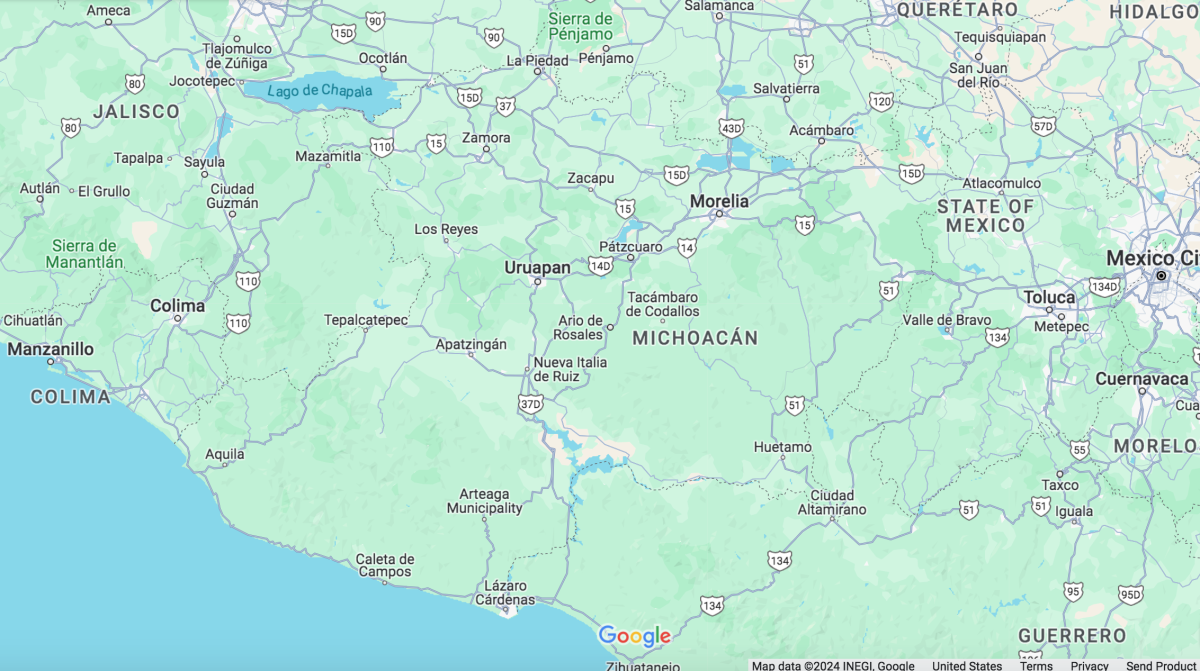
The US Department of Agriculture suspended inspections of avocados in the Mexican state of Michoacán due to security concerns, halting the top source of US imports. The move was taken after two agents of the USDA’s Animal & Plant Health Inspection Service (APHIS) were accosted during a protest in the town of Paracho, beaten and briefly detained. Michoacán is Mexico’s heartland of avocado production, but the trade has been notoriously co-opted by the local warring drug cartels to launder narco-profits, leading to charges of “blood avocados” in the violence-torn state. (Map: Google)

Africa
wagner group

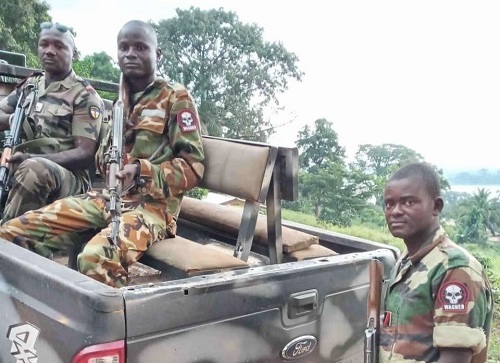
‘Blood gold,’ diamonds behind Russian war effort

Gold-mining operations in Africa under the control of the paramilitary Wagner Group are funneling money to the Kremlin for the Russian war effort in Ukraine, according to a new report by watchdog organizations. “The Blood Gold Report,” prepared by the Consumer Choice Center and Democracy 21, finds that Wagner has laundered some $2.5 billion in proceeds from its African operations since Russia’s full-scale invasion of Ukraine in 2022, helping Moscow to ride out international sanctions. In the Central African Republic, Wagner is said to have exclusive operational control over the country’s largest gold mine at Ndassima in return for its services in propping up the regime. The European Union meanwhile announced  sanctions on Russia’s state-owned diamond giant Alrosa and its CEO, citing their “long-standing partnership with the Russian Armed Forces.” (Photo of CAR army troops wearing the Wagner Group insignia via Corbeau News Centrafrique)

Europe
Kremlin

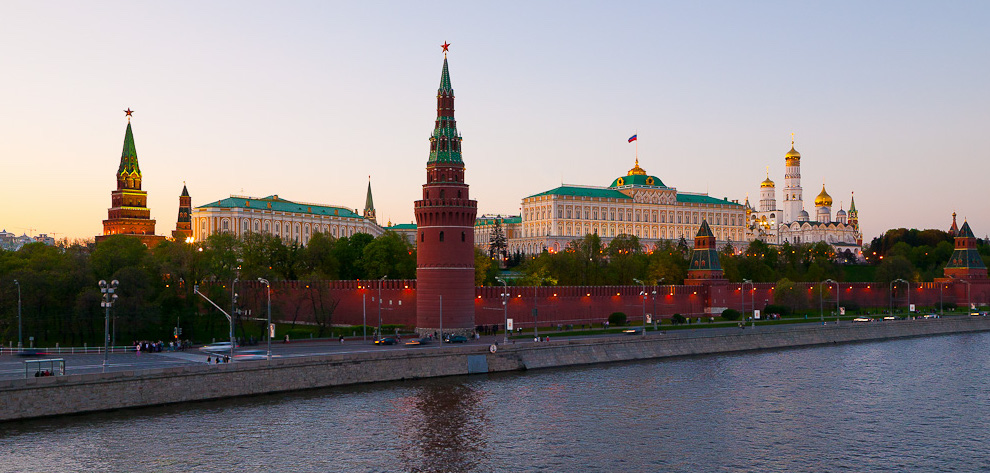
US to designate Wagner Group ‘transnational criminal organization’

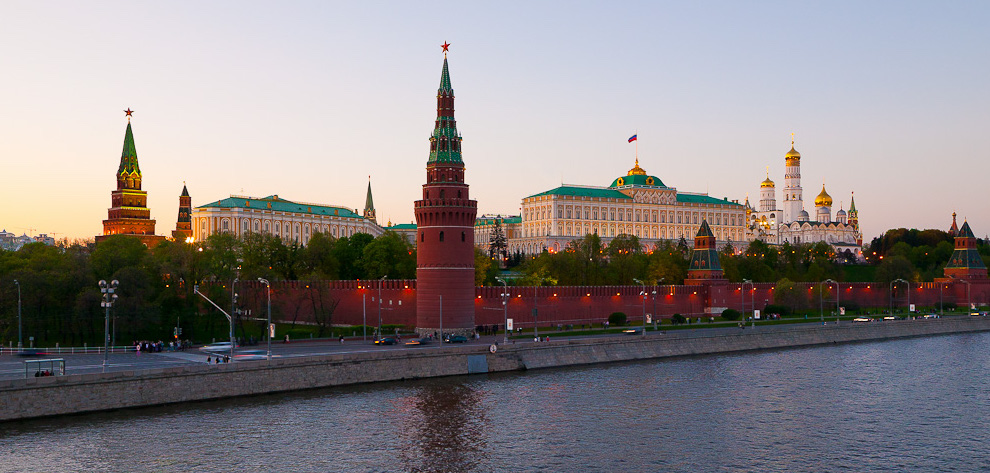
The US Treasury Department announced that it will designate the Russian mercenary organization Wagner Group as a “transnational criminal organization,” imposing further sanctions on the group’s financial activities. The Treasury Department press release on the move stated: “Wagner personnel have engaged in an ongoing pattern of serious criminal activity, including mass executions, rape, child abductions, and physical abuse in the Central African Republic (CAR) and Mali.” The Wagner Group is believed to have some 50,000 mercenaries fighting in Ukraine. (Photo: Wikipedia)

The Andes
Francia-Petro

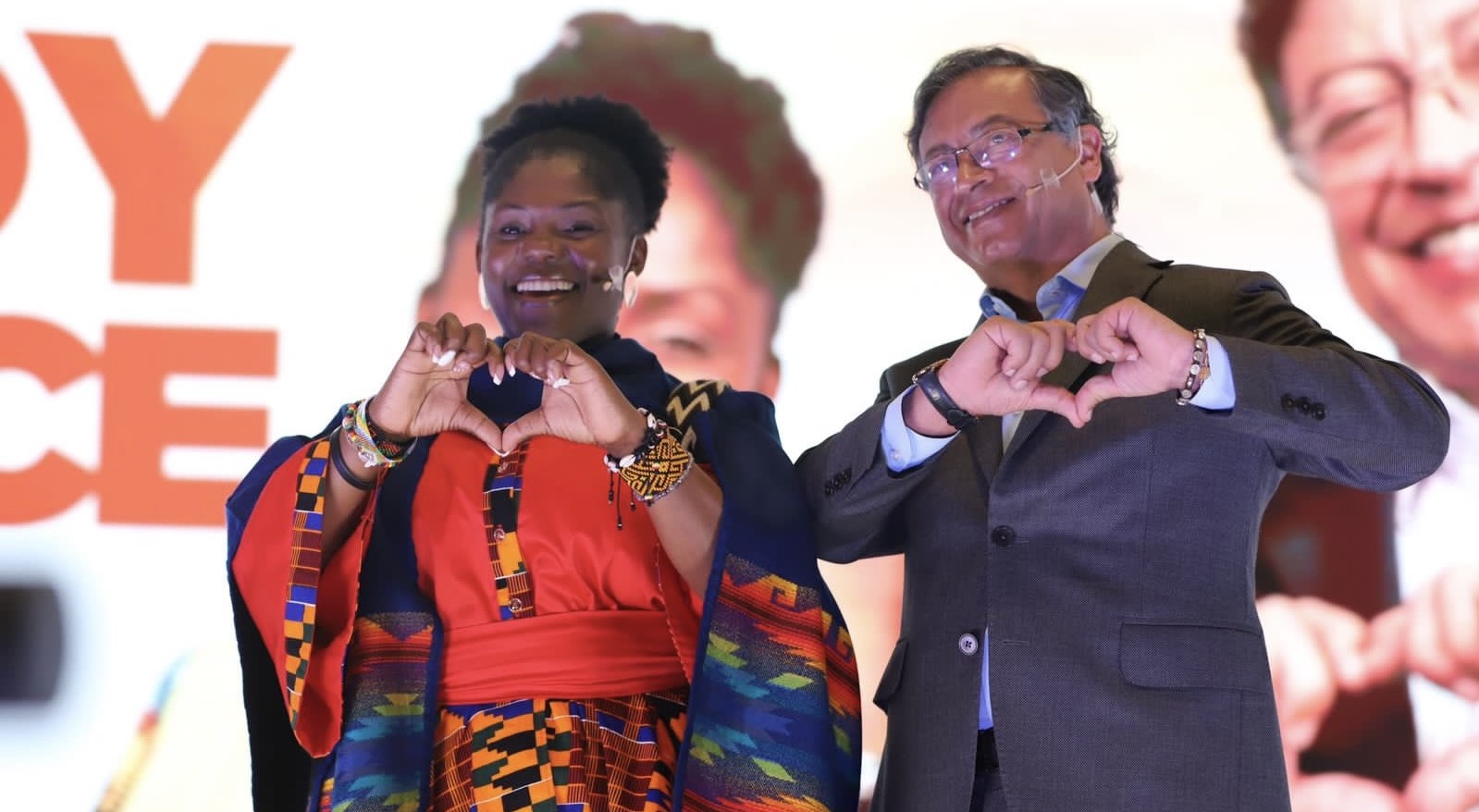
Colombia: pending presidency ‘between two populisms’

Following a first round of presidential elections, “between two populisms” is the catchphrase being used by Colombia’s media for an unprecedented moment. A pair of political “outsiders” are to face each other in the run-off: Gustavo Petro, a former guerilla leader and Colombia’s first leftist presidential contender, versus Rodolfo Hernández, a construction magnate whose pugnacious swagger inevitably invites comparison to Donald Trump. Hernández, an independent candidate and the former mayor of Bucaramanga, rose precipitously in an ostensibly anti-establishment campaign driven by social media, winning him the epithet “King of TikTok.” But Colombia’s political establishment is now lining up behind him to defeat Petro. The former mayor of Bogotá and a veteran of the demobilized M-19 guerillas, Petro is the candidate of a new progressive coalition, Colombia Humana, emphasizing multiculturalism and ecology as well as more traditional social justice demands. (Photo via Twitter)

North Africa
tarhouna_collage

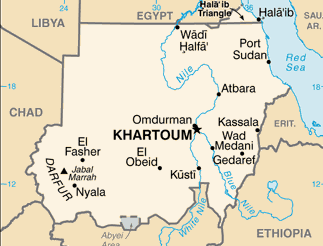
Libya: UK slaps sanctions on Haftar-aligned militia

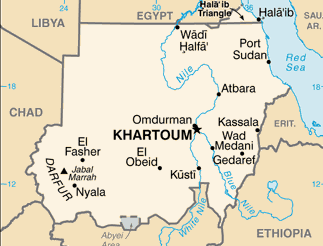
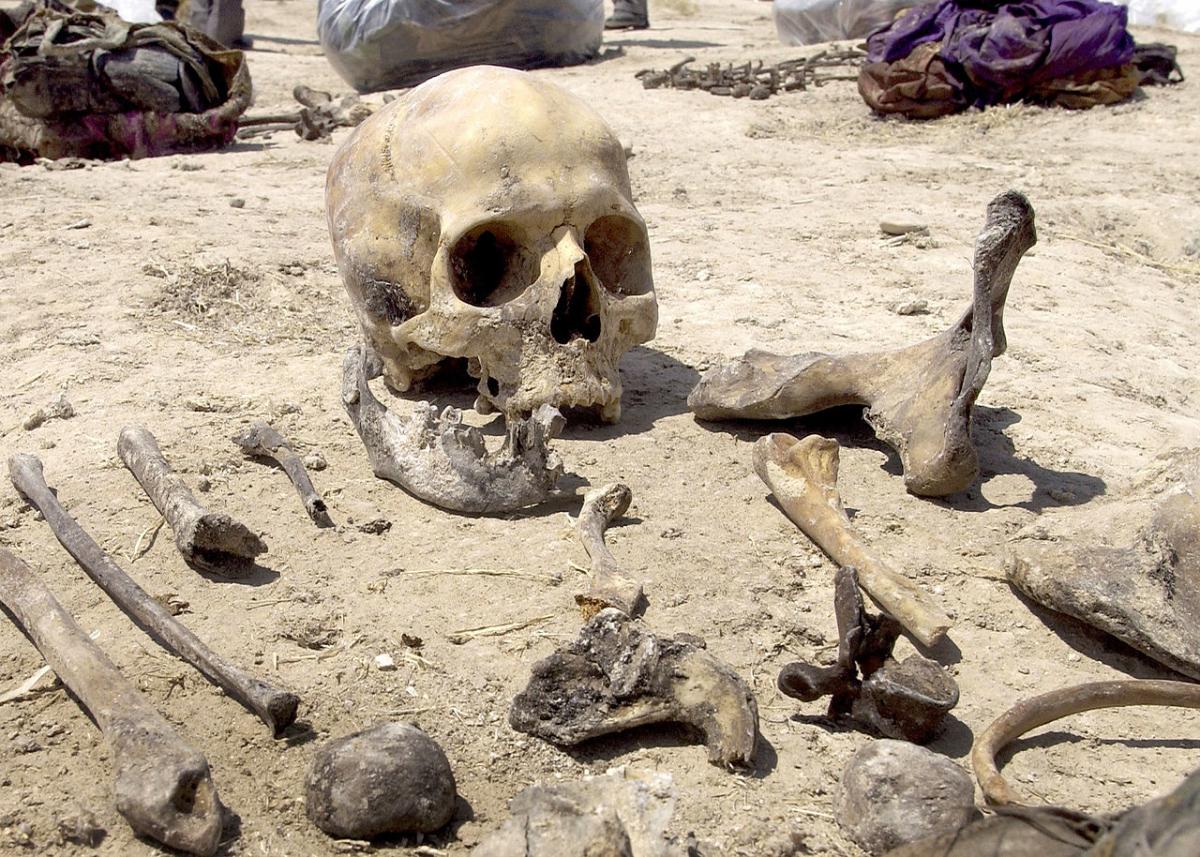
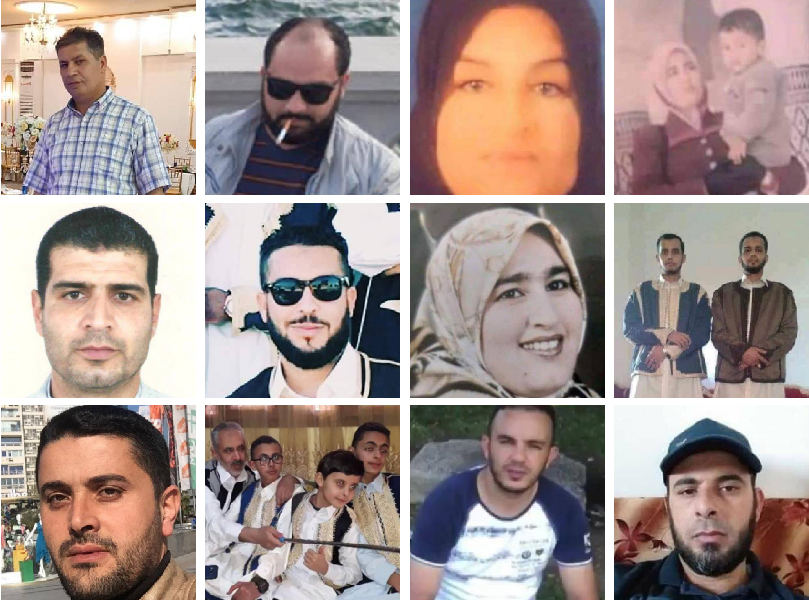
The UK government imposed sanctions on Libya’s al-Kaniyat militia and its leaders for violations of international law. The militia is reportedly responsible for 27 mass gravescontaining the remains of hundreds of residents reported missing in the Libyan town of Tarhuna, on the southern outskirts of Tripoli. The group, aligned with the forces of eastern warlord Khalifa Haftar, is additionally held responsible for atrocities such as torture, murder, arbitrary detention, and enforced disappearance. Of the five permanent members of the UN Security Council, the UK and the US are the two that have imposed sanctions on the militia. A Security Council resolution that would have placed international sanctions on the militia was blocked by Russia last November. (Map: CIA)

The Andes
peru protester

Peru: after deadly repression, protesters win a round

Following an outburst of angry protest across the country, Peru’s third president in less than a week was sworn in, with a coalition cabinet aimed at bringing the country back from the brink of chaos. The crisis was set off by the impeachment of President Martín Vizcarra, who had been investigating corruption by the hard-right Fujimorista bloc in Congress—and whose removal was assailed as a “legislative coup.” The new interim president, former Congressional leader Manuel Merino, was perceived as a pawn of the hard right; demonstrators flooded the streets of Lima and other cities after his inauguration. In two days of repression by the National Police, two young protesters were killed, more than 200 injured, and two more listed as “disappeared.” Merino and his cabinet stepped down, leaving the country without a president for nearly 24 hours before Congress finally agreed to approve a replacement. This is Francisco Rafael Sagasti, a first-term congressman representing Lima. Although Sagasti is from the center-right Partido Morado, his installation is being seen as a victory for the protesters. He took office with an homage to the slain demonstrators, praising them for having “marched to defend democracy. (Photo: Revista Ojozurdo)

The Andes
cartel de los soles

Venezuela: does the ‘Cartel of the Suns’ exist?

In a rare move, the US Department of Justice issued an indictment against Venezuelan President Nicolás Maduro, charging him and 14 officials with narco-terrorism, corruption, drug trafficking and other crimes. The DoJ alleges that Maduro conspired with Colombia’s FARC guerrilla army prior to becoming the president, and continued to do after assuming power. The indictment charges that this nexus has congealed under the name “Cartel of the Suns,” and that Maduro continues to collude with dissident factions of the FARC that remain in arms despite the Colombian peace accords. Attorney General William Barr said the aim of the conspiracy is “to flood the United States with cocaine.” (Image: DoJ)

Watching the Shadows
Ukraine

Trump’s phone call: the view from Ukraine

US Speaker of the House Nancy Pelosi has finally announced an official impeachment inquiry after reports surfaced that Donald Trump called on a foreign power to intervene in the upcoming election. Trump placed a hold on $391 million in aid to Ukraine just over a week before a July phone call in which he apparently urged Ukrainian President Volodymyr Zelensky to investigate Hunter Biden—the son of former US Vice President Joe Biden, Trump’s likely opponent in next year’s race. This pretty clearly constitutes use of military aid to Ukraine as a bargaining chip—or an outright bribe. This is not the first time Ukraine’s internal war has become a football in American politics. (Map via Perry-Castañeda Library Map Collection)

Central America

UN protests Nicaragua ‘anti-terrorism’ law

The UN Office of the High Commissioner for Human Rights expressed concern for a law approved in Nicaragua, ostensibly aimed at money-laundering, arms-trafficking and terrorism. The statement warned that the definition of "terrorism" under the law is dangerously "vague," and that it could be used to suppress opposition. The law defines as "terrorism" any damage to public or private property, punishable by up to 20 years in prison. Additionally, anyone found guilty of directly or indirectly financing or aiding so-called "terrorist operations" can also face up to 20 years. The law was introduced in April, just as Nicaragua's political crisis was breaking out. The OHCHR noted that the law was passed by a National Assembly "almost completely controlled" by the ruling Sandinista party. (Poto via Noticiias ONU)

Mexico

Mexico: fugitive narco-governors snared

Javier Duarte, the ex-governor of Mexico's Veracruz state, was detained by Interpol in Guatemala—the latest in a string of fugitive Mexican ex-governors to be arrested abroad.