Africa
Wagner

Russian mercs run opioid empire in CAR

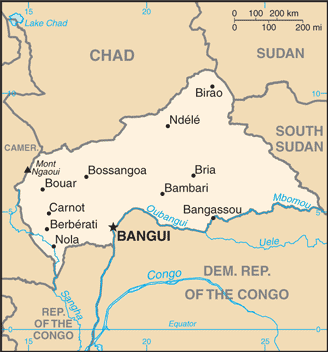
Remnants of the Russian mercenary group Wagner apparently not integrated into Moscow’s new Africa Corps have gone rogue in the Central African Republic, financing their operations through narco-trafficking. According to a Wall Street Journal report, the mercenaries are running an opioid empire, supplying tramadol to the national army, local militias, its own forces, and workers in gold mines the group operates. A painkiller in normal doses, tramadol acts as a stimulant in higher doses that can reduce fear, exhaustion, and hunger in users. Proceeds from tramadol distribution, including exports, have helped the Wagner remnants in CAR maintain independence from Moscow. (Photo: Russian mercenaries in the Central African Republic. Credit: Corbeau News Centrafrique via Wikimedia Commons)

Africa
Cameroon

Post-electoral violence sweeps Cameroon

The Office of the UN High Commissioner for Human Rights expressed concern over the protests and repression that have swept Cameroon following contested presidential election results. Demonstrators immediately defied a ban on public gatherings to support the opposition after the election, but the situation escalated after the Constitutional Council announced five days later that long-ruling President Paul Biya had won. The opposition rejected the results and proclaimed their candidate, Issa Tchirola Bakary, as the legitimate winner, urging citizens to demonstrate peacefully. Thousands took to the streets demanding recognition of an opposition victory, to be met with repression; clashes between protesters and security forces led to fatalities and numerous arrests. The protests have shaken the capital, Yaoundé; the economic capital, Douala; and the northern towns of Garoua and Maroua. Local jails are filled with opposition supporters who accuse Biya of rigging the polls. Biya is now to assume his eighth term in office as the world’s oldest president at age 92, having ruled Cameroon for 43 years. (Photo: Twitter via Peoples Dispatch)

Watching the Shadows
Orwell

Podcast: Trump for War-is-Peace Prize

In Donald Trump’s perverse ambition to win the Nobel Peace Prize, he is citing his supposed diplomatic victories in ending six conflicts: Armenia-Azerbaijan, Congo-Rwanda, Israel-Iran, India-Pakistan, Thailand-Cambodia and Egypt-Ethiopia. In Episode 292 of the CounterVortex podcast, Bill Weinberg examines each of these examples, and breaks down how claims to have won “peace” are either extremely overstated or (more often) total Orwellian jive. The implication that Russia-Ukraine will be next, as Putin escalates his aggression, puts a hideous crown on the irony. (Image via Twitter)

Africa
DRC

Trump prepares arms-for-minerals deal with DRC

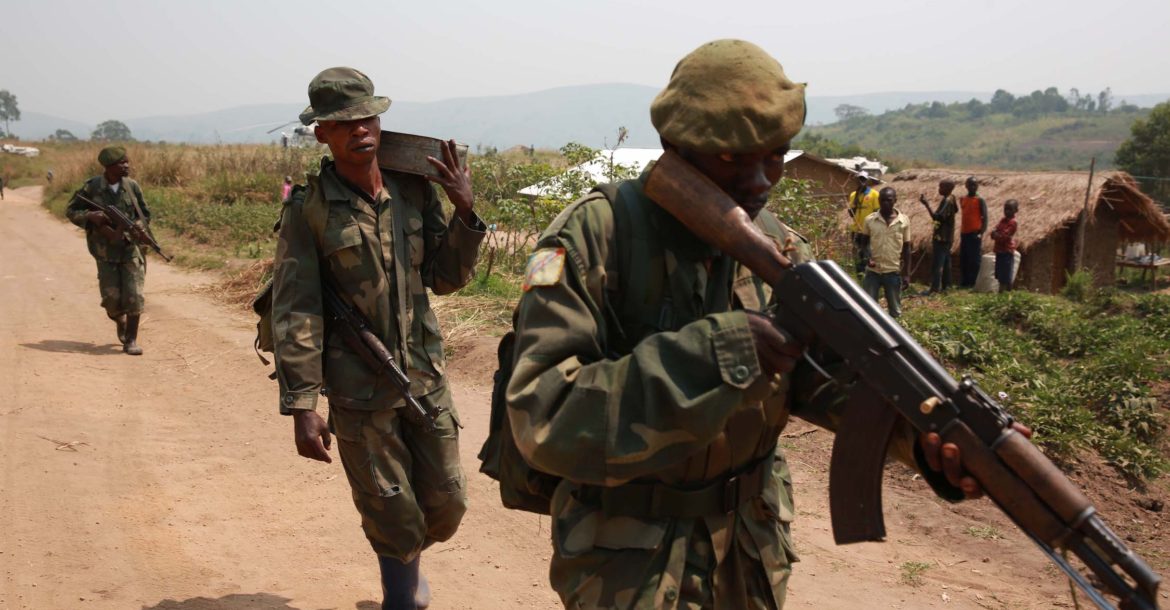
Former Blackwater CEO and and mercenary boss Erik Prince is to lead a team helping the Democratic Republic of Congo (DRC) secure and tax its extensive mineral wealth, news reports reveal. The deal, reached before the M23 rebels launched a major offensive in January, was just confirmed to Reuters by Congolese officials and diplomats. M23 has since January seized the eastern DRC’s two largest cities, Goma and Bukavu, and is threatening to march on Kinshasa, the capital. The Prince-led initiative runs parallel to a broader minerals-for-security deal being negotiated between the DRC and the Trump White House. (Photo: Abel Kavanagh/MONUSCO via Wikimedia Commons)

Africa
DRC

Chaos in Congo as M23 seize Goma

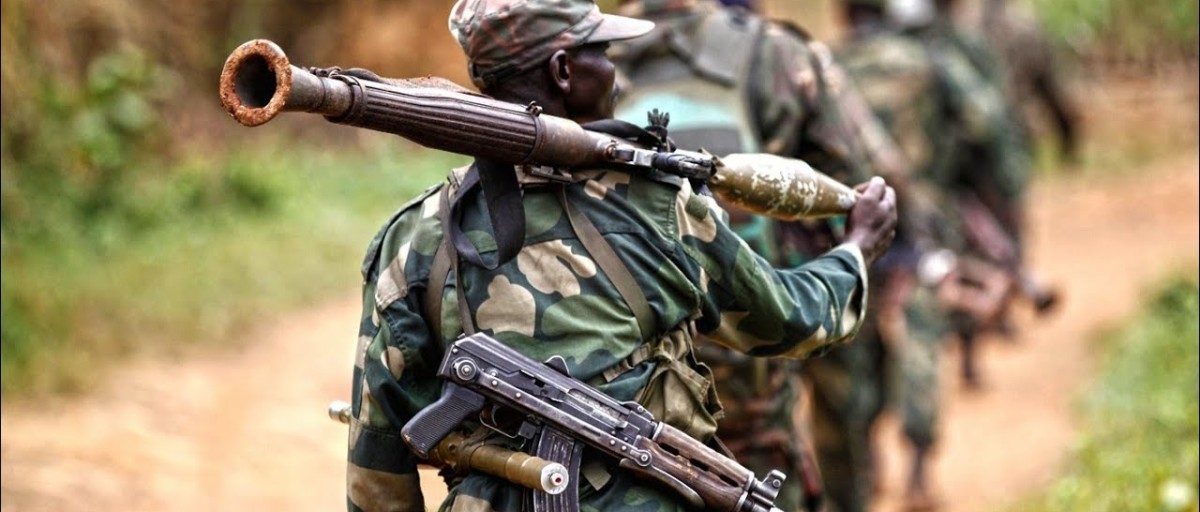
In a dramatic escalation of the ongoing conflict in eastern Democratic Republic of Congo (DRC), the M23 rebels seized Goma, the capital of North Kivu province on the Rwandan border. The UN Security Council held an emergency meeting to discuss the situation, with the DRC accusing Rwanda of sending hundreds of troops across the border to support the M23. The DRC is calling for an arms embargo on Rwanda, and sanctions on its mineral exports. The fall of Goma has sparked protests in the DRC capital, Kinshasa, with foreign embassies vandalized and set on fire, including those of Rwanda, South Africa, the US, Belgium and France. Amid the turmoil, President Felix Tshisekedi has promised a counter-offensive to retake Goma. The DRC’s reliance on foreign mercenaries in the war in the east has drawn sharp criticism. Reports indicate that around 2,000 mercenaries, mostly from Eastern European countries such as Romania, have been hired to fight the M23. (Map: PCL)

Planet Watch
Nairobi

World war or world revolution?

In Episode 239 of the CounterVortex podcast, Bill Weinberg provides an overview of the protest waves and uprisings going on across the planet—in Kenya, Uganda, Nigeria, Bangladesh, India, China, Serbia, Venezuela, and in Israel. This as worldwide protests in solidarity with the Palestinians of Gaza continue. Amid ongoing protests against Netanyahu in Israel, there have also been protests against Hamas in Gaza. Despite internal dangers and contradictions in all these upsurges, there is a sense that we could be approaching a revolutionary moment such as that seen in 2011—the year of the Arab Spring and Occupy Wall Street. And with the planet on an accelerating trajectory toward world war, the linking of these upsurges through conscious solidarity and the infusion of anti-war content to their demands is urgently mandated. Listen on SoundCloud or via Patreon. (Photo via Twitter)

Africa

Podcast: a cannabis coup in the Congo?

The attempted coup d’etat in the Democratic Republic of the Congo may or may not have been assisted by the CIA, but one of the Americans arrested in the affair is named as a “cannabis entrepreneur“—pointing to the possibility of legal cannabis playing the same destructive role in Central Africa that bananas have played in Central America. Yet while corporate power sees a lucrative new cash crop, lives (and especially Black lives) are still being ruined by cannabis prohibition in the United States. In Episode 228 of the CounterVortex podcast, Bill Weinberg argues that the old anarchist slogan “Neither your war nor your peace” can be updated as “Neither your prohibition nor your legalization!” Listen on SoundCloud or via Patreon. (Map: CIA)

Africa
wagner group

‘Blood gold,’ diamonds behind Russian war effort

Gold-mining operations in Africa under the control of the paramilitary Wagner Group are funneling money to the Kremlin for the Russian war effort in Ukraine, according to a new report by watchdog organizations. “The Blood Gold Report,” prepared by the Consumer Choice Center and Democracy 21, finds that Wagner has laundered some $2.5 billion in proceeds from its African operations since Russia’s full-scale invasion of Ukraine in 2022, helping Moscow to ride out international sanctions. In the Central African Republic, Wagner is said to have exclusive operational control over the country’s largest gold mine at Ndassima in return for its services in propping up the regime. The European Union meanwhile announced  sanctions on Russia’s state-owned diamond giant Alrosa and its CEO, citing their “long-standing partnership with the Russian Armed Forces.” (Photo of CAR army troops wearing the Wagner Group insignia via Corbeau News Centrafrique)

Africa
Gabon

Gabon coup: another blow to Françafrique

A group of soldiers in Gabon seized control of the country and canceled the results of its presidential election—just after incumbent President Ali Bongo, heir to a corrupt dynasty closely aligned with France, was declared the winner amid claims of electoral fraud. In scenes reminiscent of those in Niger after the recent coup there, crowds have poured into the streets of Gabon’s capital Libreville, expressing their support for the new junta—and animosity for both the ousted Bongo dynasty and France. The coup appears to mean a further reduction for the French influence sphere in Africa, known as Françafrique. Over the past three years, coups have ousted French-aligned regimes in Mali, Burkina Faso and Guinea as well as Niger. Russia appears eager to step into the erstwhile role of France in providing military assistance to these countries. The day after the Gabon putsch, a Russian delegation met with Burkina Faso’s interim regime to discuss stepped-up security cooperation. (Map: PCL)

Africa
Kivu

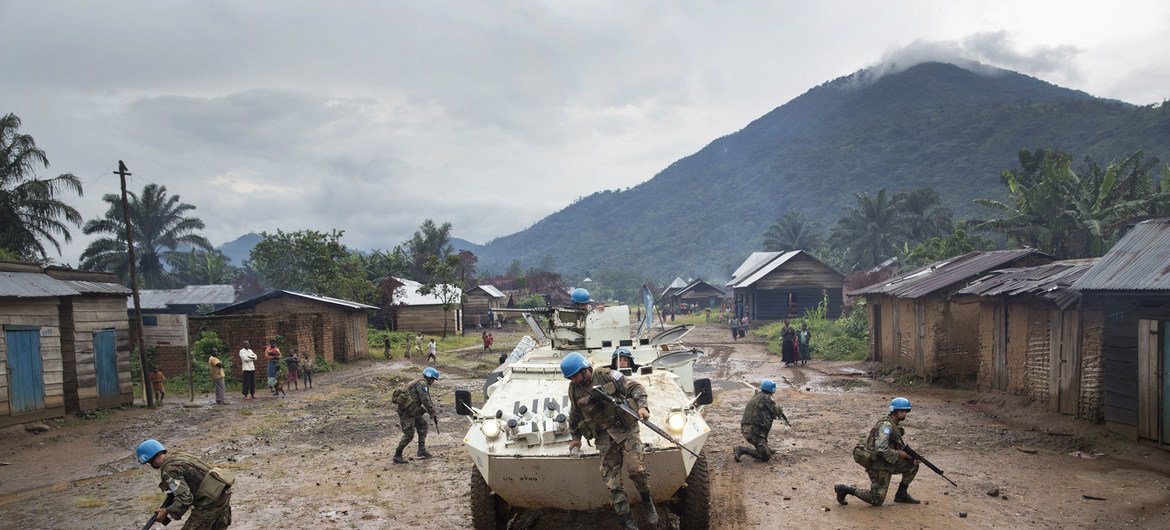
Anti-UN protesters massacred in DR Congo

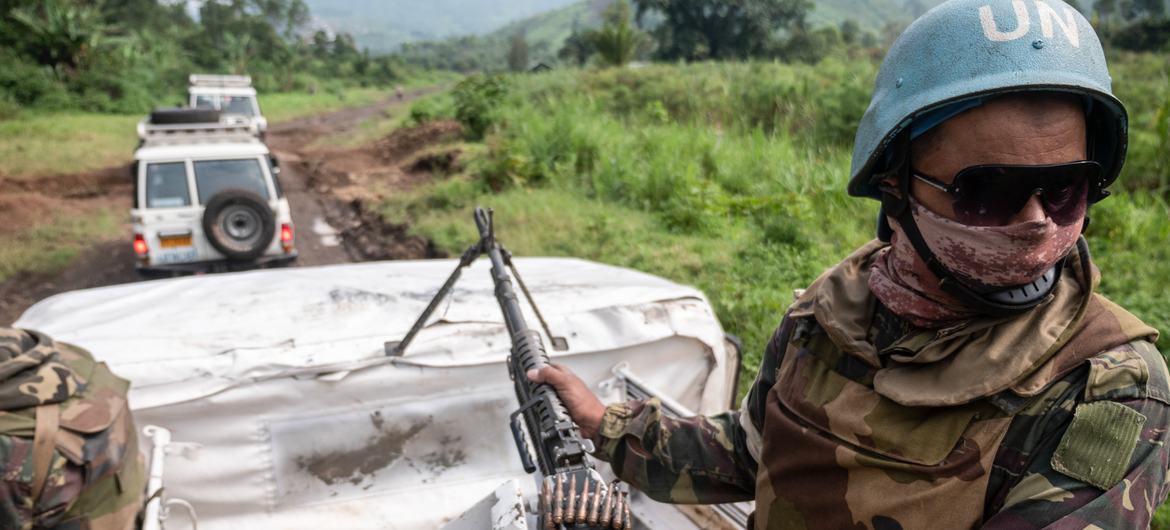
At least 43 people were killed as government troops fired on protesters in Goma, capital of conflicted North Kivu province in the eastern Democratic Republic of Congo. The protest against the the UN Stabilization Mission in the DRC (MONUSCO) was organized by a religious sect, the Natural Judaic & Messianic Faith Towards the Nations, also known as Wazalendo. MONUSCO “peacekeepers” have faced repeated protests from local residents over their failure to protect civilians amid ongoing inter-factional fighting. The UN is demanding an investigation into the Goma incident, which Human Rights Watch called an “apparent massacre.” (Photo: Sylvain Liechti via UN News)

Africa
Ambazonia

Fulani pitted against rebels in Cameroon conflict

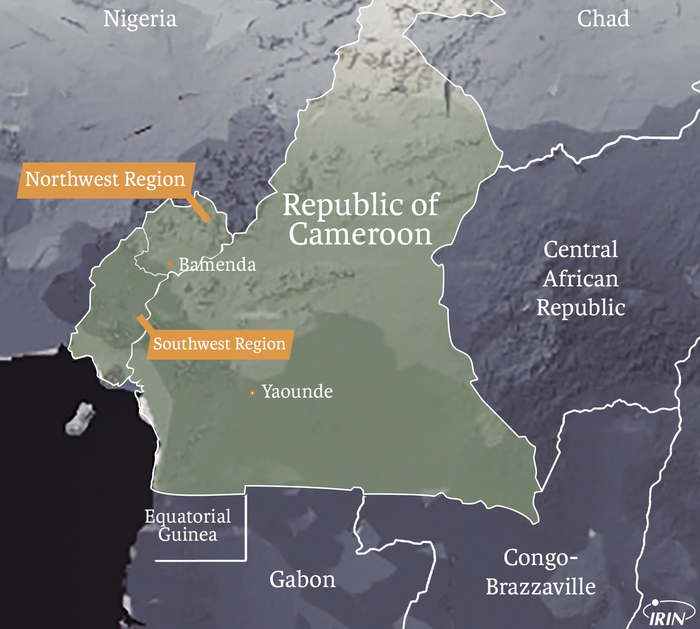
Amnesty International urged Cameroon’s authorities to investigate human rights violations committed in the country’s conflicted Anglophone regions, the North-West and South-West. According to a new report, armed separatists and the military alike are responsible for killings, torture, rape and destruction of property. In the North-West in particular, long-standing conflicts between Mbororo Fulani herders and sedentary farmers have been fuelling armed violence. As the situation has deteriorated over the past years, militias, mainly composed of Mbororo Fulani and supported or tolerated by the authorities, have committed atrocities against civil populations. The official security forces have responded to this situation with further rights violations. (Photo: Moki Edwin Kindzeka/VOA via Wikimedia Commons)

Africa
ICC

DRC files ICC complaint against Rwanda

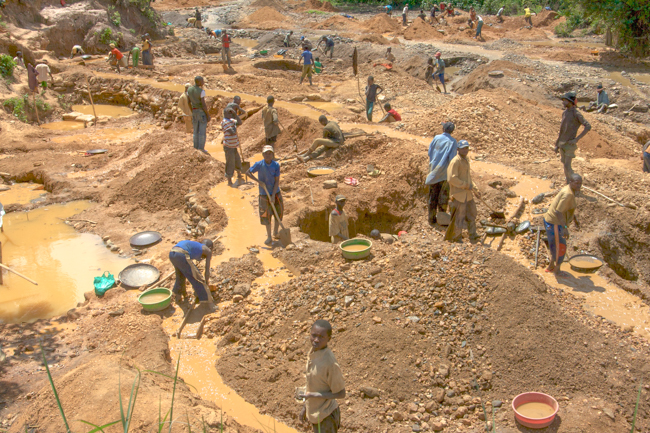
Democratic Republic of the Congo (DRC) Minister of Justice Rose Mutombo filed an International Criminal Court (ICC) complaint against Rwanda over its alleged involvement in the theft of natural resources in the DRC. The minister charged that the Rwanda Defense Forces (RDF) have been collaborating with the M23 rebel group, which has taken control of areas in Northern Kivu province near the DRC’s border with Rwanda. The complaint accuses the “RDF-M23 coalition” of “systematic and large-scale plundering of…natural resources” in the rebels’ zone of control. There has been an open ICC investigation into eastern DRC since 2004. (Photo: OSeveno/WikiMedia)