Africa
Mali

Mali: rising violence against civilians

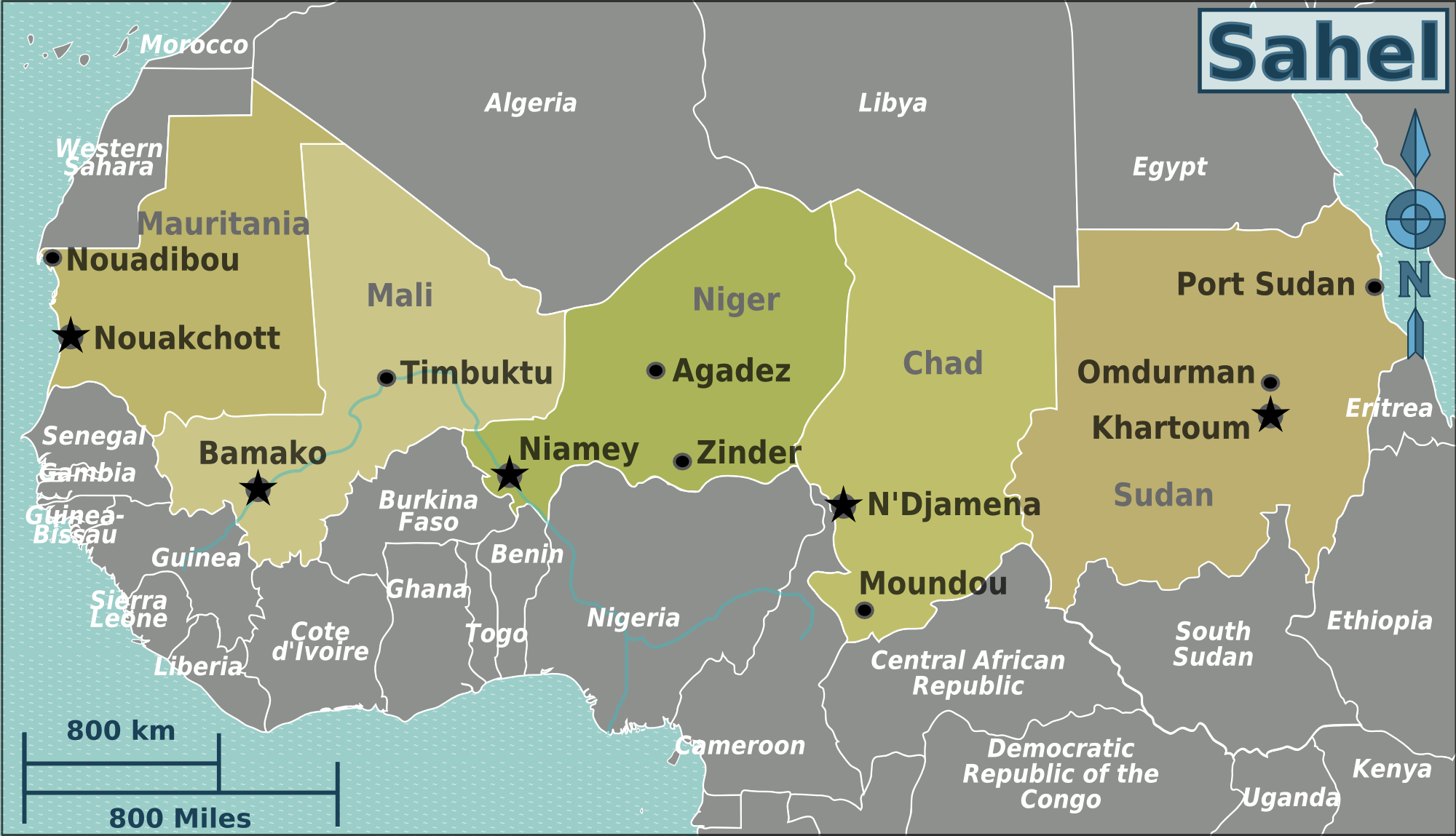
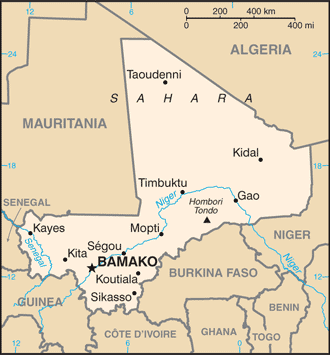
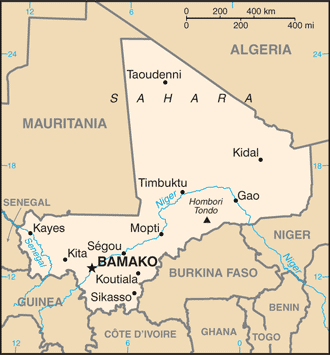
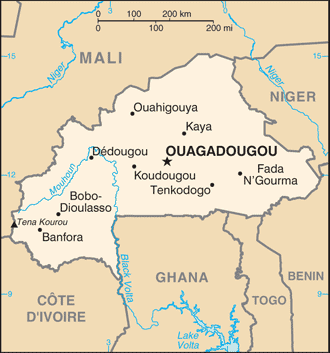
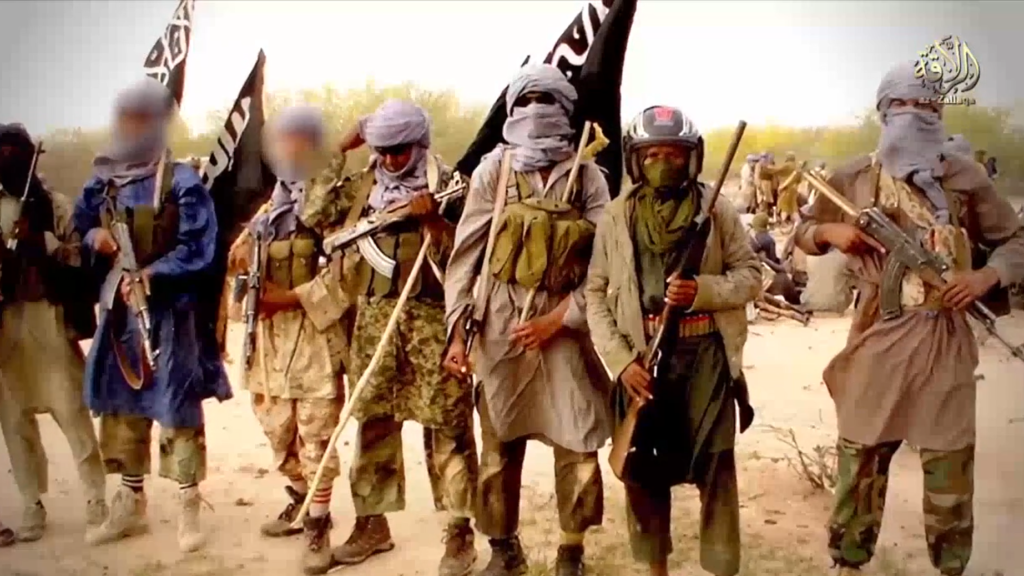
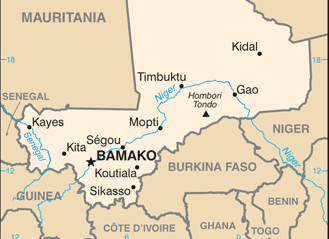
Human Rights Watch criticized insurgent armed groups, the Malian armed forces and allied militias, and Russian mercenaries, which have all committed “serious abuses of human rights against civilians” amid an internal conflict that has further fueled long-standing ethnic tensions in the country. A sudden intensification of violence ​began this April after the al-Qaeda-affiliated Group for the Support of Islam & Muslims (Jama’at Nusrat al-Islam wal-Muslimin, or JNIM) formed a pact with Tuareg fighters of the Azawad Liberation Front (FLA), a faction with which they have had a rocky relationship, to carry out attacks across Mali. The Malian armed forces have responded with drone strikes that resulted in multiple civilian fatalities. The armed forces and militia groups are also believed to have carried out reprisals against Fulani communities, who are stigmatized as JNIM collaborators. Russian fighters from the paramilitary Africa Corps have also participated in atrocities. (Map: PCL)

Syria
Syria

US strikes Uyghur militants in Syria

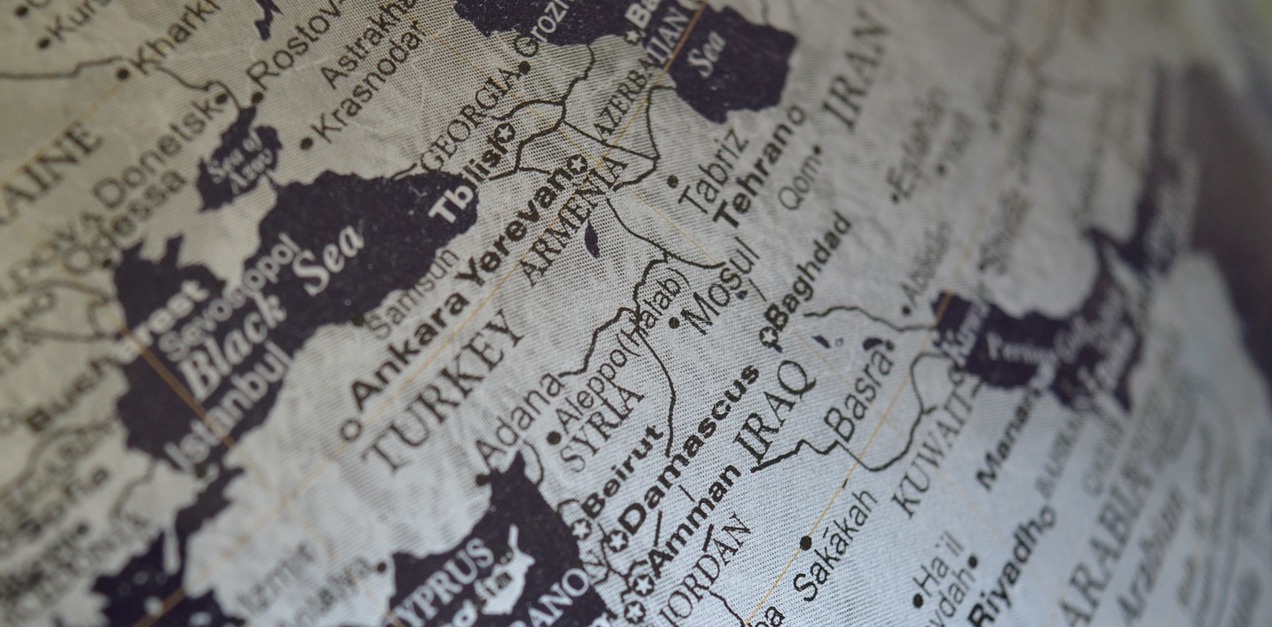
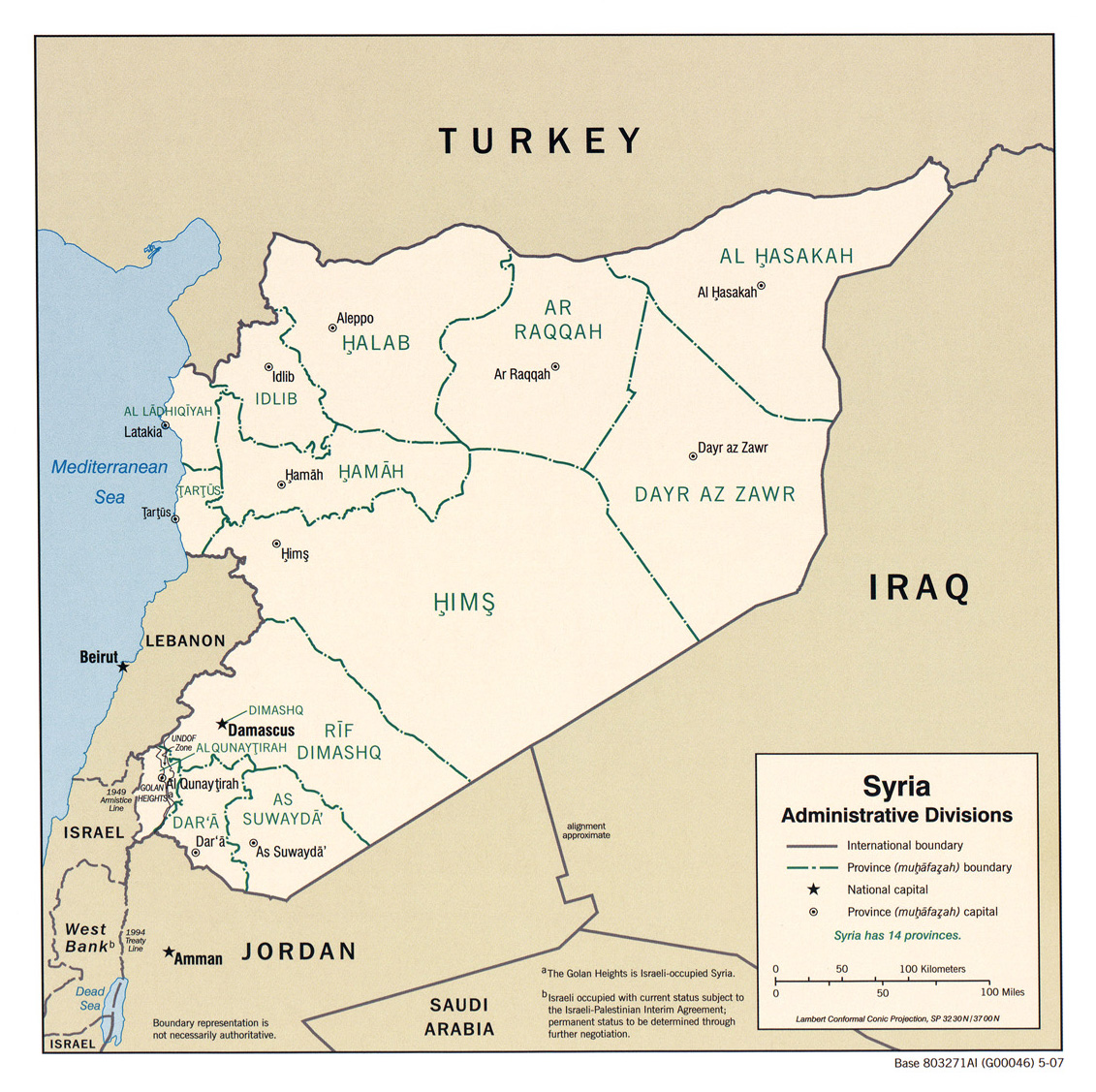
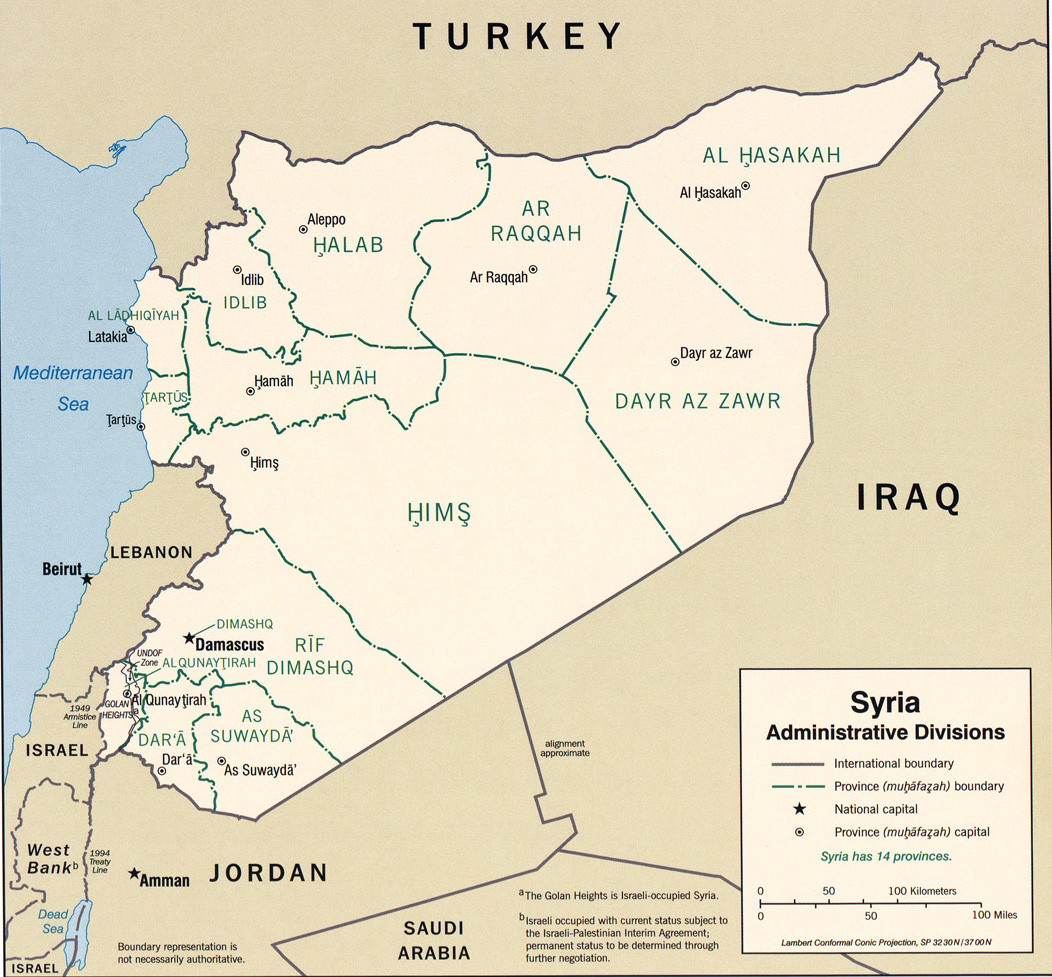
A suspected US-led coalition strike on a site used by Uyghur militants in Syria’s Idlib province has renewed debate over the future of foreign fighters under the country’s post-Assad government. Sources told The New Arab on that an aircraft targeted a compound used by a faction formerly known as the Turkistan Islamic Party, in al-Zainiya area near Jisr al-Shughourin western Idlib. While no confirmed information has emerged regarding casualties from the strike, preliminary reports suggested that a leader of Hurras al-Din, a former al-Qaeda affiliate which formally dissolved in January, may have been killed. (Map: PCL)
Africa
JNIM

Podcast: West Africa escalates toward genocide

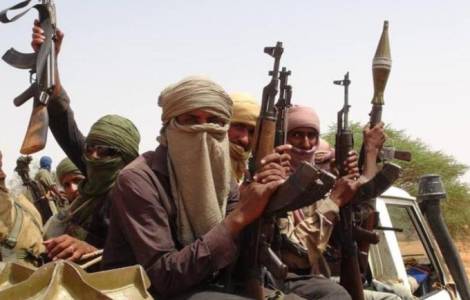
Alarming reports that Nigeria has established “concentration camps” for the Fulani ethnic minority cast an ironic light on Nigeria’s tension with the Sahel states of Niger, Mali and Burkina Faso to the north. These three regimes have broken from the Western imperial camp (to embrace the nascent Russian imperial camp)—but are likewise subjecting their Fulani minorities to persecution and massacre. With the recent shock rebel offensive in Mali, the “terrorist” stigma that attaches to the Fulani and Tuareg peoples across the imperial camps makes their position more precarious than ever. Meanwhile, prominent voices on the both the right and the (supposed) “left” are spreading propaganda about the struggle in West Africa that is alarmingly wrong, because it exclusively views the crisis through a campist lens. In Episode 327 of the CounterVortex podcast, Bill Weinberg tries to provide some clarity on these fast-escalating and grossly under-reported conflicts. (Photo: Az-Zallaqa via LWJ)

Africa
Timbuktu

ICC orders reparations for Timbuktu war crime victims

The International Criminal Court (ICC) delivered an order on reparations for the victims of war crimes and crimes against humanity perpetrated by Al Hassan Ag Abdoul Aziz in Timbuktu between April 2012 and January 2013, when the Malian city was occupied by jihadist forces. Al Hassan was convicted by the ICC in 2024, and sentenced to 10 years imprisonment. He is to bear financial liability for €7,250,000 in reparations to impacted communities and individuals. (Photo: WikiMedia Commons)

Africa
Mali

Shock rebel offensive driven back in Mali

Russia’s Africa Corps launched air-strikes and helicopter assaults to drive back a dramatic rebel advance on Mali’s capital Bamako. Former rival insurgent groups, the jihadist Jama’at Nusrat al-Islam wal-Muslimin (JNIM) and the Tuareg separatist Front de Libération de l’Azawad (FLA), came together for the joint offensive against the ruling military government, with simultaneous attacks on Mopti, Gao and Kidal as well as the capital. Mali’s defense minister, Lt. Gen. Sadio Camara, the key liaison between the army and Russian mercenary forces, was killed in an apparent suicide truck bombing on his residence outside Bamako. (Map: PCL)

Africa
Mali

Mali: al-Qaeda franchise in new ‘war crime’

Human Rights Watch confirmed that an al-Qaeda-linked armed group summarily executed 10 long-haul truck drivers and two teenage apprentices in late January in southwestern Mali as part of the group’s attack on a fuel convoy and deemed the acts “apparent war crimes.” Mali’s truck driver union staged a nationwide strike in response to the attack, demanding recovery of victims’ bodies to ensure their families can have proper burials. The group responsible for the attack was Jama’a Nusrat ul-Islam wa al-Muslimin (JNIM), which describes itself as the official branch of al-Qaeda in Mali. (Map: PCL)

Africa
Niger

War crime seen in Niger drone strike

A government drone strike in western Niger killed at least 17 civilians, including four children, and injured at least 13 others when it hit a crowded market, according to an investigation by Human Rights Watch (HRW). The afternoon strike in Kokoloko village in the Tillabéri region killed three Islamic State fighters but also devastated the market where hundreds of people had gathered, HRW reported. The organization said the attack violated laws-of-war prohibitions against indiscriminate attacks and may amount to a war crime. (Map: PCL)

Africa
Sahel summit

Sahel states launch new joint counter-insurgency force

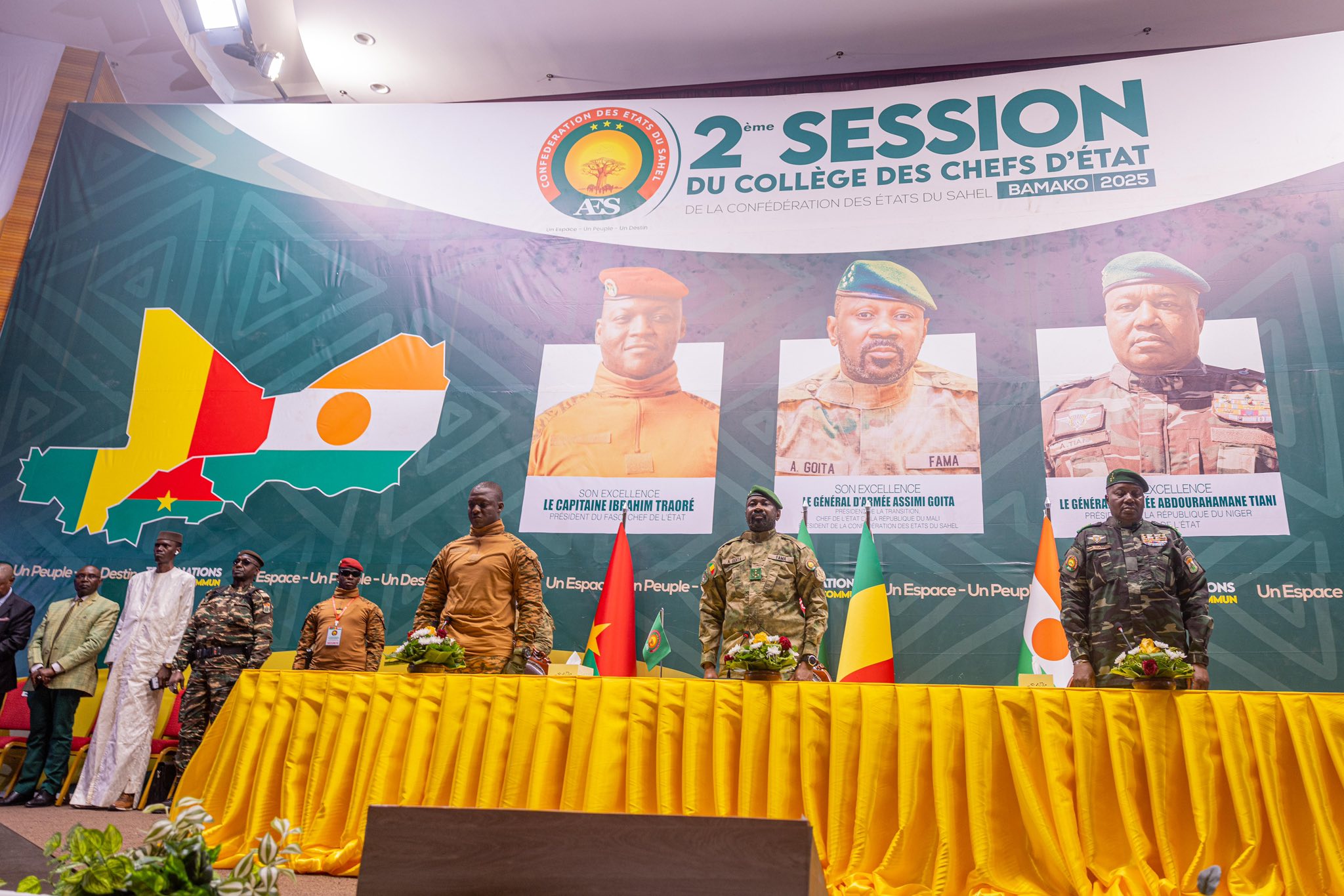
At an air base in Bamako, Mali’s military ruler Gen. Assimi Goita presided over a ceremony marking the launch of a unified force for three Sahel states to fight the rising tide of jihadist insurgency across their borders. The move comes after the three countries—Mali, Niger and Burkina Faso, all now ruled by military juntas—collectively withdrew from the West African regional bloc ECOWAS to form their own Alliance of Sahel States (AES). This new body has deepening ties to Russia, which has maintained paramilitary forces in the AES countries under the rubric of the Wagner Group or Africa Corps. These forces are increasingly accused of atrocities, with Malian refugees in Mauritania reporting rapes, beheadings and mutilation of civilians at the hands of Russian mercenaries. (Photo: Présidence de la République du Mali)

Syria
Iran

Podcast: the new Syria in the Great Game

Syrian interim president Ahmed al-Sharaa’s White House meeting with Donald Trump followed the removal of his Hayat Tahrir al-Sham (HTS) from the list of designated “terrorist organizations” both at the State Department and at the UN. It also coincided with raids against ISIS by his security forces, raising the prospect of his government being invited to join the US-led Global Coalition to Defeat ISIS. The Washington visit also came just a month after al-Sharaa’s similar trip to meet Vladimir Putin in Moscow, where a deal was brokered allowing Russia to keep its military bases in Syria. Amid all this, Syria continues to see forced disappearances and other abuses targetting Druze, Alawites and Kurds—pointing to the looming threat of an ethnic or sectarian internal war. The US troop presence in Syria is largely embedded among the Kurdish forces in the east. As al-Sharaa becomes a new “anti-terrorist” partner (or proxy) for the Great Powers, will these troops be withdrawn—providing a “green light” for Damascus to attack the Kurdish autonomous zone? In Episode 305 of the CounterVortex podcast, Bill Weinberg weighs the risks at this critical moment in Syria’s transition process, nearly one year after the fall of the Assad dictatorship. (Image: Pixabay)

Africa
Nigeria

Trump threatens Nigeria with military action, aid cut

US President Donald Trump said that he has ordered the Pentagon, or “Department of War,” to prepare contingency plans for potential military action in Nigeria. Trump alleged that the Nigerian government has failed to protect Christian communities from violent extremist attacks. The comments follow Trump’s declaration designating Nigeria as a “country of particular concern” (CPC) for religious-freedom violations, citing what he described as an “existential threat” to Christianity. (Map: PCL)

Africa
Sahel States

Mali, Niger, Burkina Faso announce withdrawal from ICC

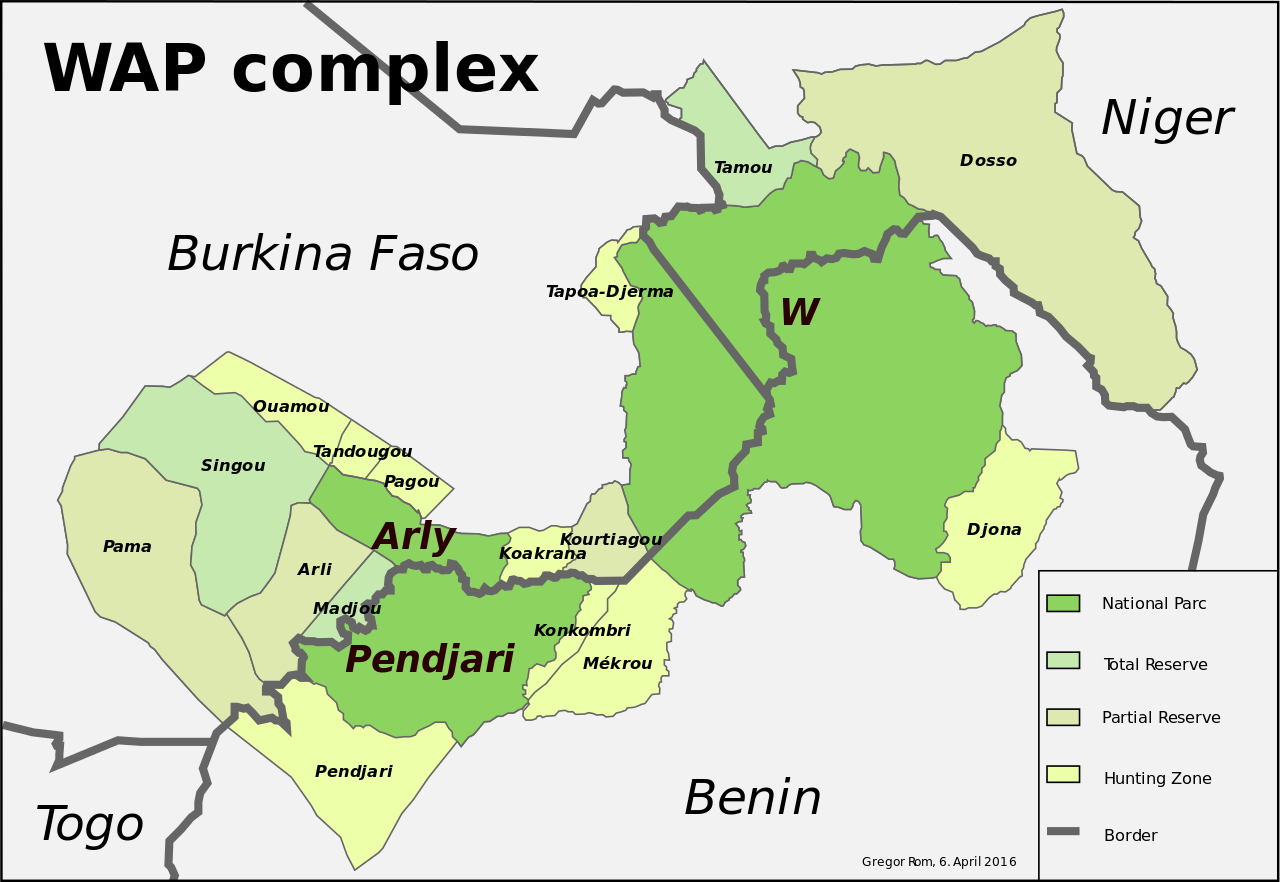
Mali, Niger and Burkina Faso announced that they will withdraw from the International Criminal Court (ICC), accusing the tribunal of serving “imperial” rather than African interests. The three countries, each governed by military juntas and members of the newly formed Alliance of Sahel States (AES), issued a joint declaration stating that they no longer recognize the ICC as a legitimate forum for justice, charging that it has become an “instrument of neo-colonialist repression.” The decision comes amid ongoing security crisis in the Sahel region, where armed groups linked to al-Qaeda and the Islamic State are waging brutal insurgencies, carrying out attacks against civilians as well as security forces. Human rights groups have accused state security forces of committing extrajudicial killings and other serious abuses in counter-terrorism operations. (Image: Wikipedia)

Africa
Fulani

Mali: Fulani face ‘disappearance,’ summary execution

Human Rights Watch (HRW) reported that Mali’s armed forces and allied Russian mercenaries have carried out numerous “summary executions and enforced disappearances of ethnic Fulani men.” HRW documented that since January the Malian army and Wagner Groupmercenaries have executed “at least a dozen Fulani men and forcibly disappeared at least 81” during joint operations targeting Islamist armed groups. The rights group said that the insurgents have focused their recruitment efforts on the Fulani, and that “successive Malian governments have conflated the Fulani community with Islamist fighters, putting them at grave risk.” (Photo of Fulani elder via IRIN)