


The Caribbean
USS Gerald Ford

Amnesty International condemns Trump’s attack on Venezuela

Amnesty International condemned both the January attack by the US military on Venezuela and the abuses committed by the ousted Maduro government. Amnesty said that the US capture of President Nicolás Maduro was an unlawful use of force and violated multiple articles of the UN Charter. Acknowledging the long legacy of grave abuses by the Maduro regime, Amnesty’s secretary general Agnès Callamard said: “Crimes against humanity do not end with Maduro’s removal… The fate and whereabouts of many people subjected to enforced disappearance remain unresolved. The state machinery responsible for those crimes is still firmly in place, now supported by the US authorities’ involvement… The US administration’s actions currently make the prospect of any potential justice proceedings concerning Nicolás Maduro much more challenging and complex.” (Photo: USS Gerald R. Ford. Credit: US Navy via Wikimedia Commons)

Europe
#NoWords

Danish veterans stage silent protest at US embassy

Hundreds of Danish veterans and supporters staged a silent march from the historic Kastellet fortress to the US Embassy in Copenhagen as part of a “No Words” mobilization to protest recent US rhetoric that organizers said demeans Denmark’s combat contributions alongside American forces. Organizers also linked the march to the status of Greenland, upholding the right of self-determination for the Danish island territory. Recent demands by President Donald Trump for US annexation of Greenland, and comments seeming to question the courage of Danish soldiers, have stirred a sense of betrayal for many in Denmark, particularly those who fought alongside US troops in Iraq and Afghanistan. (Image: No Words)

Planet Watch
doomsday

Doomsday Clock moves: 85 seconds to midnight

The Science & Security Board of the The Bulletin of the Atomic Scientists moved the symbolic hands of the Doomsday Clock to an unprecedented 85 seconds to midnight. The decision came a year after the clock was set to an also unprecedented 89 seconds to midnight—and three years after it was moved to 90 seconds to midnight. Each increment since 2017, when it was set at 2.5 minutes of midnight, has brought the Clock closer to doomsday than ever before. This year’s statement reads: “A year ago, we warned that the world was perilously close to global disaster and that any delay in reversing course increased the probability of catastrophe. Rather than heed this warning, Russia, China, the United States, and other major countries have instead become increasingly aggressive, adversarial, and nationalistic. Hard-won global understandings are collapsing, accelerating a winner-takes-all great power competition and undermining the international cooperation critical to reducing the risks of nuclear war, climate change, the misuse of biotechnology, the potential threat of artificial intelligence, and other apocalyptic dangers.” (Image: misucell.com)

Syria
Rojava solidarity

Podcast: twilight of Rojava?

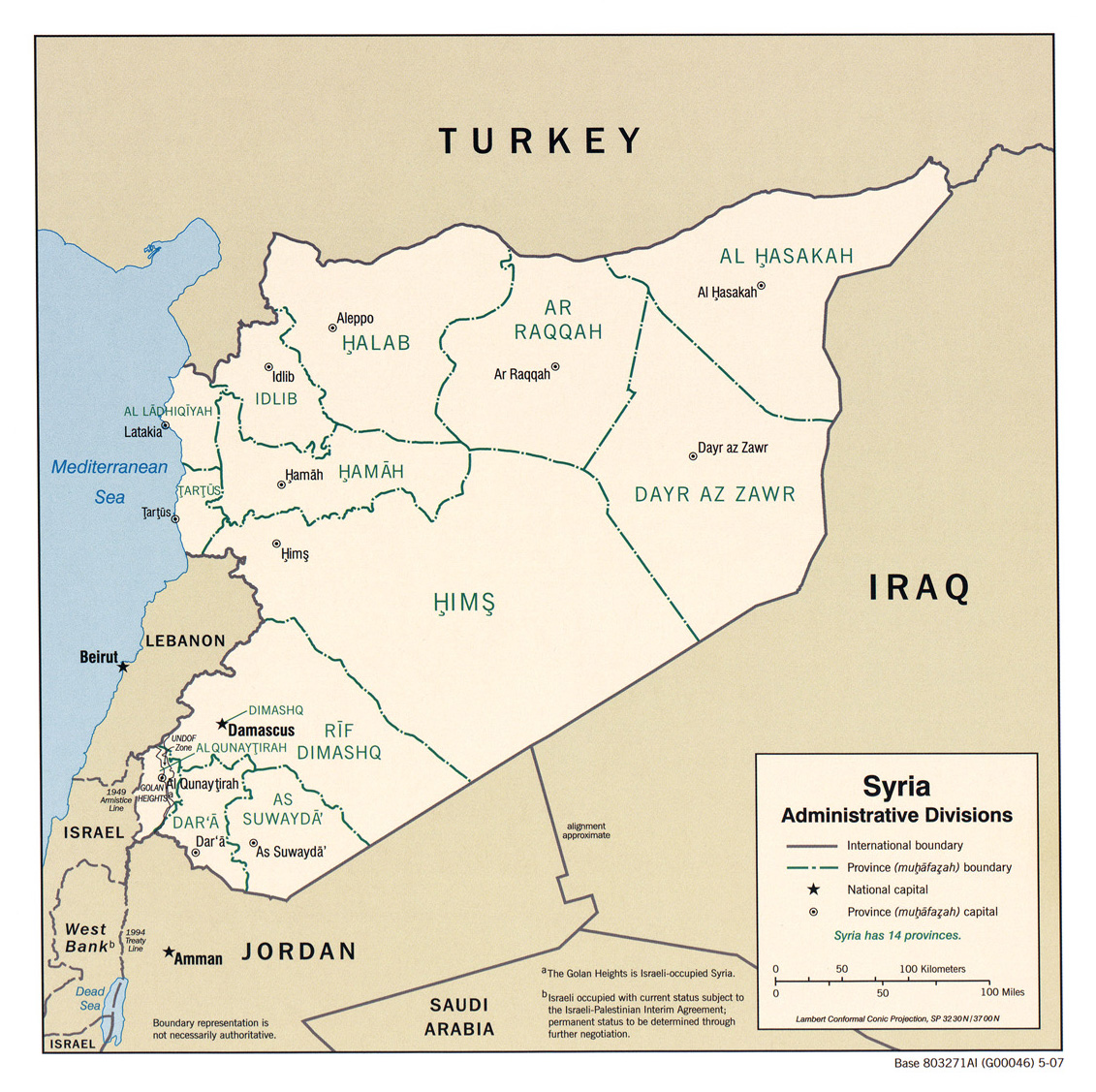
A last-minute “permanent ceasefire” may mean that northeast Syria is back from the brink of Arab-Kurdish ethnic war. But ceasefires have repeatedly broken down since fighting resumed earlier this year, with Damascus demanding disbandment of the Rojava autonomous zone, and the integration of its institutions—including its military wing, the Syrian Democratic Forces (SDF)—into the central government. While the new pact sets a more “gradual” pace for this integration, the Kurdish aspiration to regional autonomy and the central government’s insistence on centralization may prove a long-term obstacle to peace. In Episode 315 of the CounterVortex podcast, Bill Weinberg weighs the odds for avoiding a conflict that holds the potential for escalation to genocide, with the connivance of the Great Powers that so recently backed the SDF to fight ISIS. (Photo via Facebook)

Syria
SDF

Russia joins US in betraying Syrian Kurds

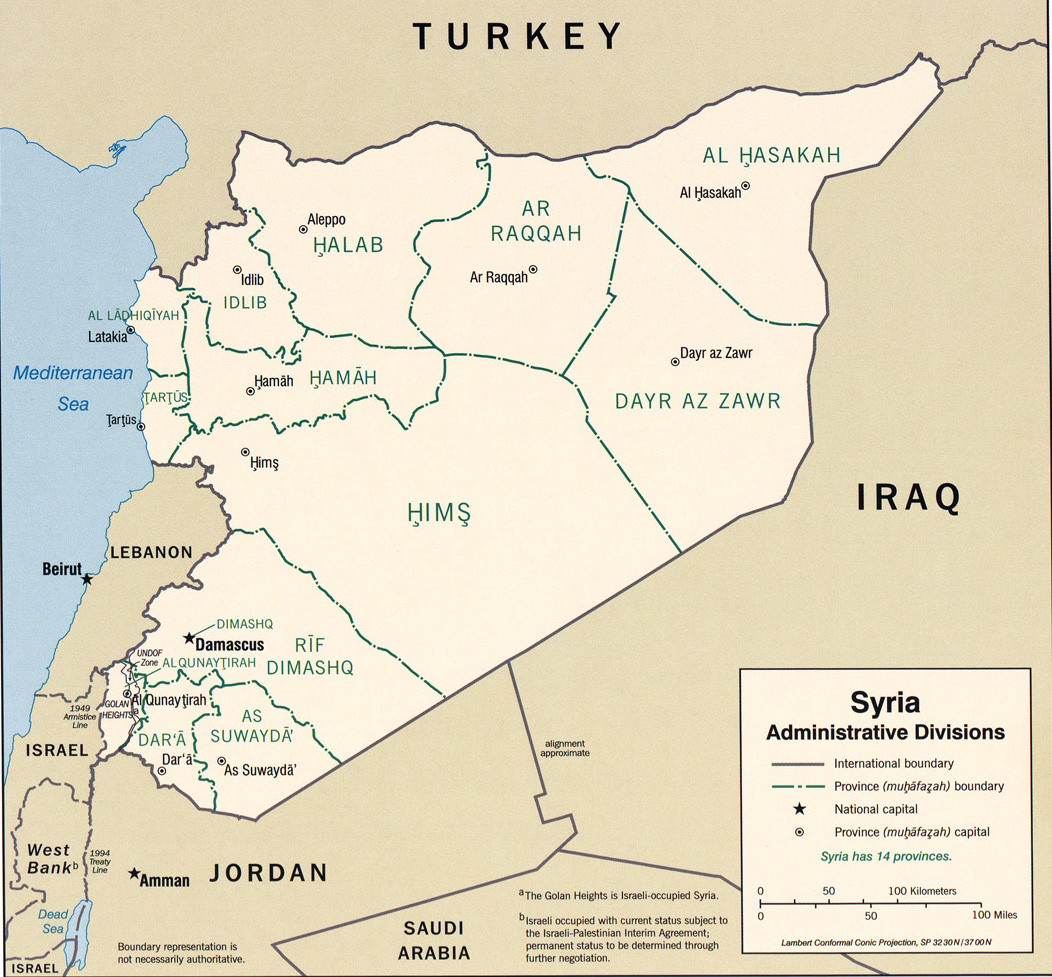
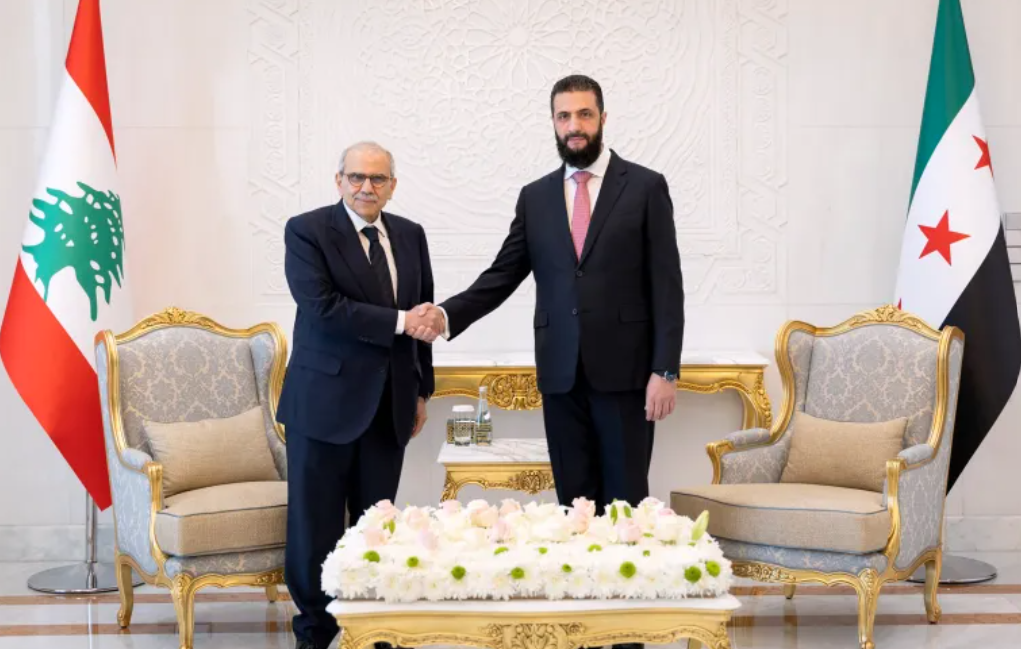
The Kurdish-held border town of Kobani in northern Syria is under siege again, as it was by ISIS in 2014—but this time by forces of the Syrian central government, which has cut off water and power to the town in the dead of winter, with snow on the ground. Since the start of the year, the Kurdish forces in northeastern Syria have lost almost all of the territory they controlled to a new offensive by the central government. Kobani with Hasakah and Qamishli are the last besieged strongholds of the reduced Rojava autonomous zone. And both the US and Russia, which have backed the Kurdish-led Syrian Democratic Forces (SDF) against ISIS, now appear to be cutting them loose—effectively green-lighting the government offensive against them. US special envoy for Syria Tom Barrack has already warned that US support for the SDF is coming to an end. And in the midst of the offensive, Russia has withdrawn its forces from Qamishli, its principal military outpost in Rojava. This came just as Syrian interim president Ahmed al-Sharaa was on his second trip to Moscow to meet with Vladimir Putin—pointing to a quid-pro-quo in which Russia will be allowed to maintain its two major military bases in Syria, on the Mediterranean coast at Khmeimim and Tartous. (Photo: SOHR)

Planet Watch
Greenland

Today Greenland, tomorrow the world

Trump’s Greenland annexation drive is only secondarily about the strategic minerals, but fundamentally driven by a geostrategic design to divide the planet with Putin. Even if his belated and equivocal disavowal of military force at the Davos summit is to be taken as real, the threat has likely achieved its intended effect—dividing and paralyzing NATO, so as to facilitate Putin’s military ambitions in Europe, even beyond Ukraine Also at Davos, Trump officially inaugurated his “Board of Peace,” seen as parallel body to the United Nations that can eventually displace it—dominated by Trump and Putin, in league with the world’s other authoritarians. In the Greenland gambit, the territory itself is a mere pawn in the drive to establish a Fascist World Order. In Episode 314 of the CounterVortex podcast, Bill Weinbergcalls for centering indigenous Inuit voices on the future of Greenland, and universal repudiation of annexationist designs. (Image: TruthSocial)

Planet Watch
Board of Peace

Trump’s global imperial court

When US President Donald Trump first proposed establishing a so-called “Board of Peace” to oversee governance of the Gaza Strip for a transitional period back in September, the idea was quickly likened to a form of colonial takeover. The UN nonetheless adopted a Security Council resolution in November giving its blessing to the board’s creation—a vote some member states may now regret. The board was just officially inaugurated in a ceremony in Davos, Switzerland, where Trump was attending the World Economic Forum. But Gaza seems almost incidental to its true mission, which appears to be creating a global strongmen’s club—led by Trump, potentially for life—to rival, if not replace, the UN itself. (Image via Wikipedia)

North America
anti-ICE

UN rights chief expresses alarm over deaths in ICE custody

US immigration enforcement faces mounting scrutiny from international officials as well as congressional Democrats following a detainee death ruled a homicide by a county medical examiner in Texas. The disturbing development comes amid a dramatic spike in deaths in Homeland Security custody. UN High Commissioner for Human Rights Volker Türk called on the US to ensure that its immigration policies comply with international law, citing reports of arbitrary detentions, family separations, and dehumanizing treatment. Democratic lawmakers meanwhile demanded that Homeland Security Secretary Kristi Noem answer for a growing death toll in immigration detention since President Donald Trump took office for his second term. (Photo: Paul Goyette in Chicago via Wikimedia Commons)

North America
Border Patrol

Rule of law under attack amid rising authoritarianism in US: Amnesty International

Amnesty International published a report warning of rising authoritarianism in the US and detailing numerous ways in which the rule of law and basic rights are being threatened. The report, entitled Ringing the Alarm Bells: Rising Authoritarian Practices and Erosion of Human Rights in the United States, ties these areas of concern largely to the policies of President Donald Trump. They range from threats to freedom of speech and protest, to the erosion of anti-discrimination protections. The report finds that a key test of democratic resilience will be the federal midterm elections of November 2026, with many early signals pointing to mounting threats to the right to vote. (Photo: Chad Davis)

Iran
ICE

Iran & Minneapolis: fearful symmetry

As ICE agents open fire on protesters in Minneapolis, Portland and Los Angeles, Trump frames his military threats against Iran in terms of human rights and democracy—an atypical nod back to the neocons. Following mass deadly repression, the protests in Iran appear to have abated—for now. In Minnesota, both Trump and protesters are turning up the heat. Trump’s blatant hypocrisy highlights the imperative of international solidarity. The challenge for stateside protesters is to repudiate the calumny that the Iran protests are CIA or Mossad astroturf, and recognize them as a genuine self-organized popular uprising. The challenge for Iranian protesters is to repudiate Trump’s bid to exploit them for his imperial ends, as well to reject the ambitions of the reactionary “crown prince” Reza Pahlavi to install himself as leader. In Episode 313 of the CounterVortex podcast, Bill Weinberg urges that explicit mutual support between the anti-authoritarian struggles in the US and Iran is what can move the historical process forward at this grim hour. (Photo: Chad Davis)

Planet Watch
Greenland

Climate change drives Trump’s Greenland gambit

European troops landed in Greenland amid tense talks between the country’s autonomous government, officials from Denmark, and the United States. President Trump has continued to insist the two-million-square-kilometer Arctic island should belong to the United States—despite pre-existing security agreements and a (previously) strong relationship with Denmark that grants the US significant military access to the territory. Beyond Trump’s ego, there are reasons related to climate change that explain why Greenland is becoming of political interest. The territory’s strategic location has become even more so in recent years as the Greenland ice sheet and surrounding sea ice have retreated significantly: The ice sheet lost 105 billion tonnes in 2024-25, according to scientists. This has disastrous implications—ice helps cool the planet, and its melt will lead to rising seas. But it also allows ships and submarines more freedom of movement, making military planners nervous. (Photo: Pixabay)

North America
FUCK ICE

Trump threatens to invoke Insurrection Act

President Donald Trump warned that he may invoke the Insurrection Act to deploy troops in Minnesota to quell protests over the massive deployment of Immigration & Customs Enforcement (ICE) agents to the Twin Cities. The Insurrection Ac, originally enacted in 1792, allows the president to “call into Federal service such of the militia of the other States” in order to suppress insurrection or rebellion. The Insurrection Act has not been significantly updated in over 150 years, and the last time a US president invoked the Act was in 1992, when President George HW Bush received a request from then-California Governor Pete Wilson to help address riots in Los Angeles. Trump has broached invoking the Act before, and has since met with reversals in the courts over his efforts to mobilize National Guard troops under the executive’s constitutional “authority to suppress rebellion.” (Photo: Chad Davis via Wikimedia Commons)