Planet Watch
Murujuga

Australia admits UN expert in LNG site challenge

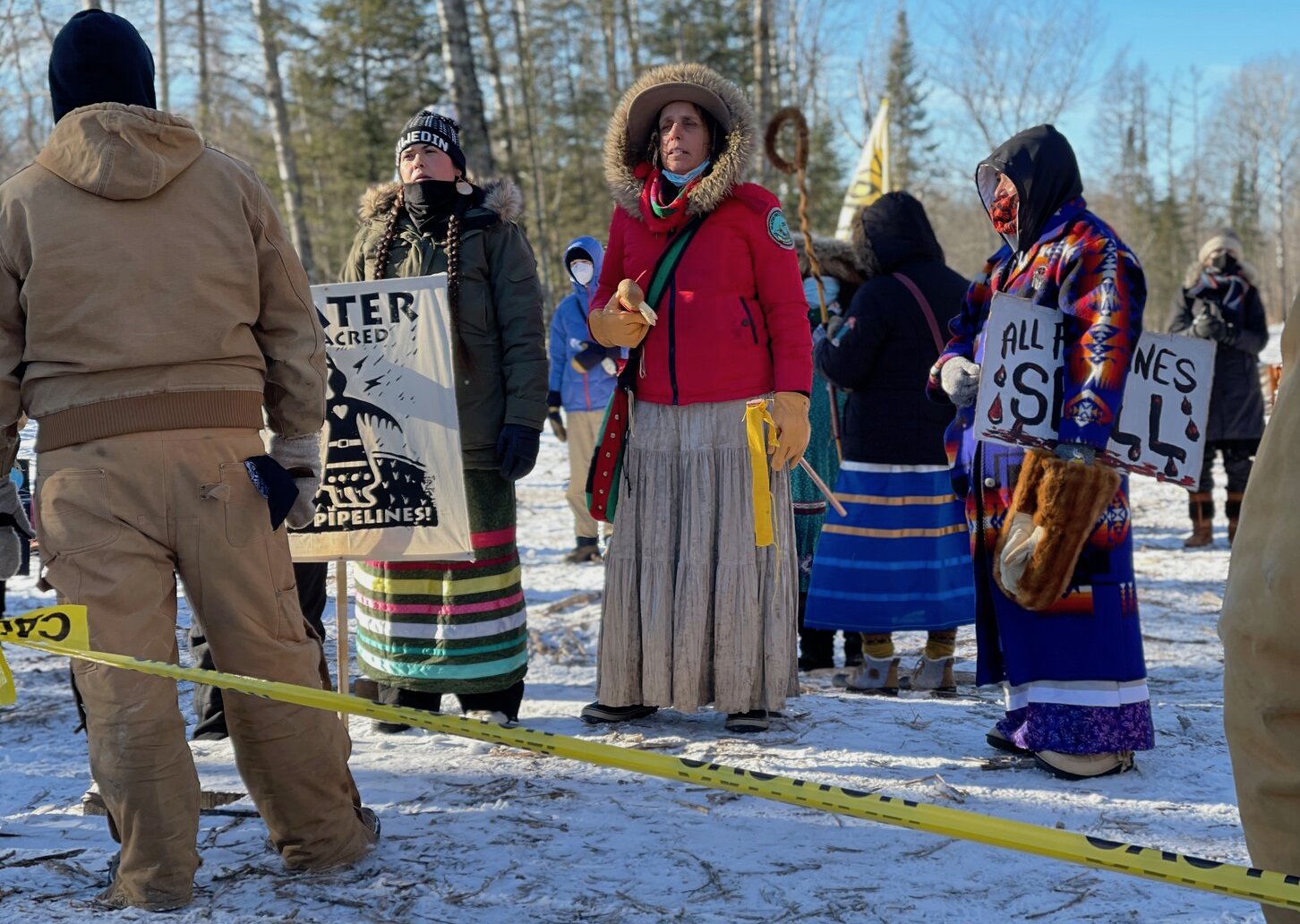
The Federal Court of Australia has admitted a UN special rapporteur on human rights and the environment as an intervenor in a judicial review concerning a liquefied natural gas (LNG) operation site. The admission marks the first time a national court has allowed a UN environmental expert to advise on international environmental law. Special Rapporteur Astrid Puentes Riaño is to intervene in light of the recent UN General Assembly resolution enshrining the duty of member states to protect the global climate system by reducing greenhouse gas emissions. (Photo: UNESCO)

Planet Watch
Earth

UNGA adopts resolution on state climate obligations

The UN General Assembly (UNGA) adopted a resolution enshrining the duty of member states to protect the global climate system by reducing greenhouse gas emissions. The resolution calls upon states to comply with the obligations set out by the International Court of Justice (ICJ), giving legal force to the non-binding advisory opinion issued by the UN high court in July 2025. Pursuant to the UNGA resolution, countries now have a duty under international law to take all possible steps to avoid contributing to climate change. Despite an overwhelming 141 votes to adopt the resolution, eight countries were in opposition, including three on the list of the 10 largest greenhouse gas emitters globally: the United States, Russia and Iran. (Photo: NASA via Flickr)

Planet Watch
Vanuatu

Vanuatu: UN member states must meet climate obligations

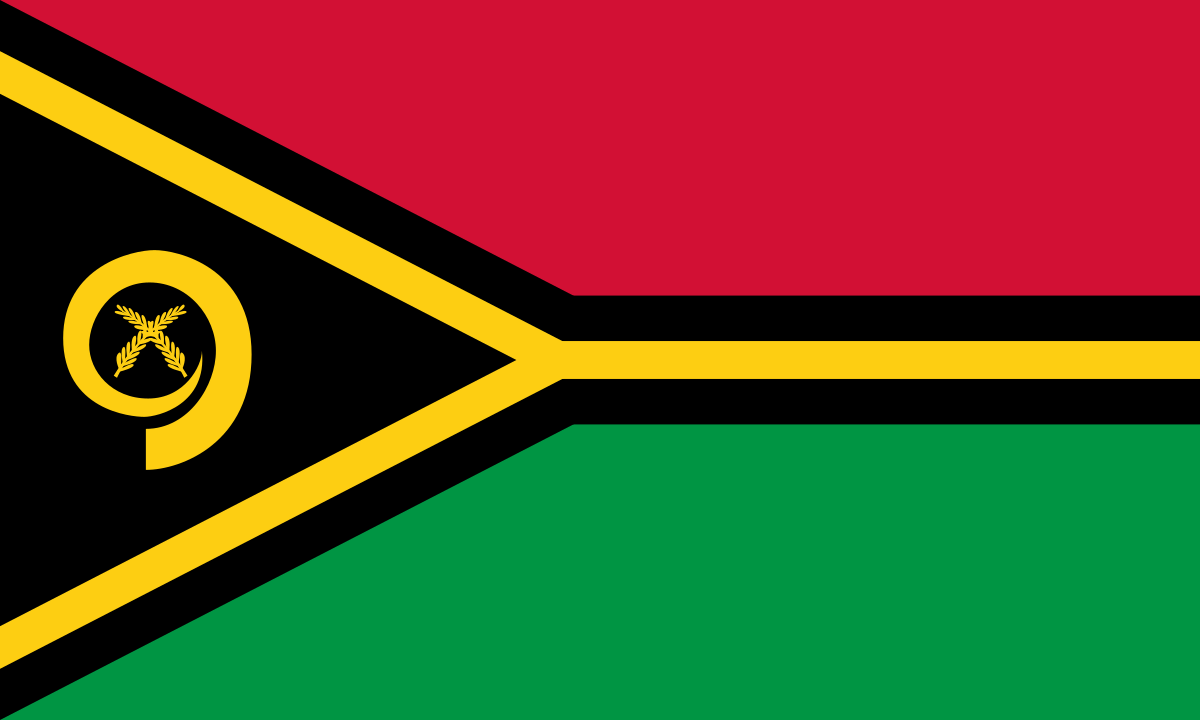
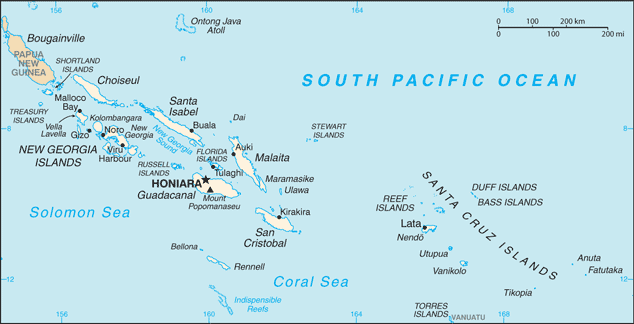
The Pacific island nation of Vanuatu is circulating a draft resolution to UN member states, urging all states to fulfil their obligations in regard to climate change, in line with the advisory opinion issued by the International Court of Justice last year. These include the adoption of nationally determined contributions of atmospheric carbon to meet the Paris Agreement goal of limiting the global average temperature increase to well below 1.5°C above pre-industrial levels. The draft resolution also calls on UN member states to phase out fossil fuels, and to protect communities subject to forced displacement induced by climate change. (Image: Wikimedia Commons)

Planet Watch
emissions

COP30 deal sidesteps fossil fuel transition

The world’s governments approved a new climate deal at the COP30 summit in Belém, Brazil, adopting the so‑called Belém Package, a bundle of decisions that calls for tripling outlays to help vulnerable countries adapt to intensifying climate impacts. The package references the Global Goal on Adaptation in the 2015 Paris Agreement, and an expanded “action agenda” to scale finance for locally led projects such as resilient agriculture and “nature‑based solutions.” However, efforts to secure a negotiated roadmap away from fossil fuels collapsed after days of deadlock. The final compromise text omits any explicit commitment to “transition away from” or “phase out” coal, oil and gas—despite sustained pressure from a large coalition of states and civil society groups to include such language. The major oil-producing countries resisted binding language on hydrocarbon reduction, while many developing countries tied their support for any resolution to assurances on finance and equity. (Photo: cwizner/Pixabay)

Planet Watch
climate

Podcast: Meanwhile, the planet is dying….

Two landmark rulings on the urgent responsibility of states to address the climate crisis are issued—by the Inter-American Court of Human Rights in a proceeding brought by Chile and Colombia, and by the World Court in a proceeding brought by the threatened Pacific Island nation of Vanuatu. Meanwhile in the USA, the Trump regime withdraws from the Paris Agreement, removes greenhouse gases from EPA oversight, drops subsidies for solar energy—and even destroys NASA’s climate-monitoring satellites! This as receding Arctic ice sheets and sea ice begin to destabilize the climate-regulating Atlantic Meridional Overturning Circulation (AMOC), melting glaciers unleash deluges from the Swiss Alps to the Himalayas of Nepal, wildfires rage from Canada to California to the Mediterranean, and ocean acidification crosses a “‘planetary boundary” that portends global biosphere collapse. In Episode 290 of the CounterVortex podcast, Bill Weinberg takes an unflinching look at the long odds for humanity’s future—even if we manage to avoid nuclear war. (Image: blende12/Pixabay)

Oceania
TPNPB-OPM

Fighting threatens indigenous civilians in West Papua

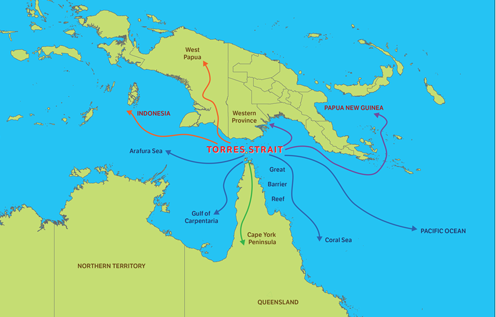
Escalating violence in Indonesia’s West Papua region is threatening the security of the largely indigenous population amid intensified clashes between Indonesian security forces and separatist rebels, Human Rights Watch warned. Military operations in the densely forested Central Highlands have resulted in the deaths and injuries of dozens of civilians due to drone strikes and the indiscriminate use of explosive munitions, forcing thousands of indigenous Papuans to flee their homes. (Photo: TPNPB-OPM via Tempo)

Planet Watch
ICJ

ICJ hearings on state climate obligations

The International Court of Justice (ICJ), the principal judicial organ of the United Nations, commenced hearings at The Hague on the obligations of states concerning climate change. The request for an advisory opinion from the ICJ was submitted in March 2023, following the unanimous adoption of Resolution 77/276 by the UN General Assembly. The resolution sought the court’s guidance on the obligations of sates to “ensure the protection of the climate system…for present and future generations,” and the legal implications of “acts and omissions [that] have caused significant harm to the climate system.” The call for the resolution began as a grassroots initiative in Vanuatu, and was taken up by Micronesia, Bangladesh and other states at most imminent threat from sea-level rise. (Photo: ICJ)

Oceania
Waitangi Day

New Zealand: plan to redefine founding document advances

The New Zealand government revealed its plans to move forward with drafting a controversial bill that would redefine the nation’s founding document, te Tiriti o Waitangi/the Treaty of Waitangi, despite official advice from the Ministry of Justice opposing the policy. If enacted, the Treaty Principles Bill would replace the existing principles of the Treaty, first established by New Zealand’s parliament in the Treaty of Waitangi Act 1975. Te Tiriti o Waitangi, signed in 1840 between the British Crown and Māori indigenous people, extended to the Crown a limited power of kāwanatanga (governance) over New Zealand’s quickly expanding British settler population while guaranteeing the Māori tino rangatiratanga (ultimate power and authority) over their lands, their villages and all their treasured possessions. Scholar Luke Fitzmaurice-Brown charges that the Treaty Principles Bill “will radically change the legal and constitutional status of te Tiriti o Waitangi, essentially erasing it.” (Photo: Waitangi Day celebrations, Feb. 6, 2006, at Waitangi, Paihia. Via Wikimedia Commons)

Planet Watch
ecocide

Progress on making ecocide an international crime

Three Pacific island nations have proposed that ecocide become a crime under international law, which would see the International Criminal Court (ICC) prosecute cases of environmental destruction alongside war crimes and genocide. The move by Vanuatu, Fiji, and Samoa is unlikely to see fast results but is expected to force ICC member states to at least consider the question. The initiative could one day lead to company leaders, or even nations, facing prosecution. However, ICC member states notably do not include China, Russia, India or the United States. (Photo: Stefan Müller via Wikimedia Commons)

Planet Watch
Vanuatu

Small Island States conference rebukes developed nations

The president of the Fourth International Conference of Small Island Developing States (SIDS), Gaston Alphonso Browne, accused wealthy nations of empty climate pledges, referring to a lack of financial help to developing countries, along with the inadequacy of carbon emission reduction efforts. The summit was hosted by Antigua & Barbuda, where Browne serves as prime minister. Browne blasted developed nations for failing to meet their “obligation to compensation” to the SIDS nations. This refers to the annual $100 billion that was agreed to under the 15th Conference of Parties (COP15) of the United Nations Framework Convention on Climate Change (UNFCCC) in 2009 and reiterated in the 2015 Paris Agreement. (Photo of Vanuatu: David Cobbin via NUPI)

Oceania
new caledonia

Podcast: New Caledonia in the Great Game

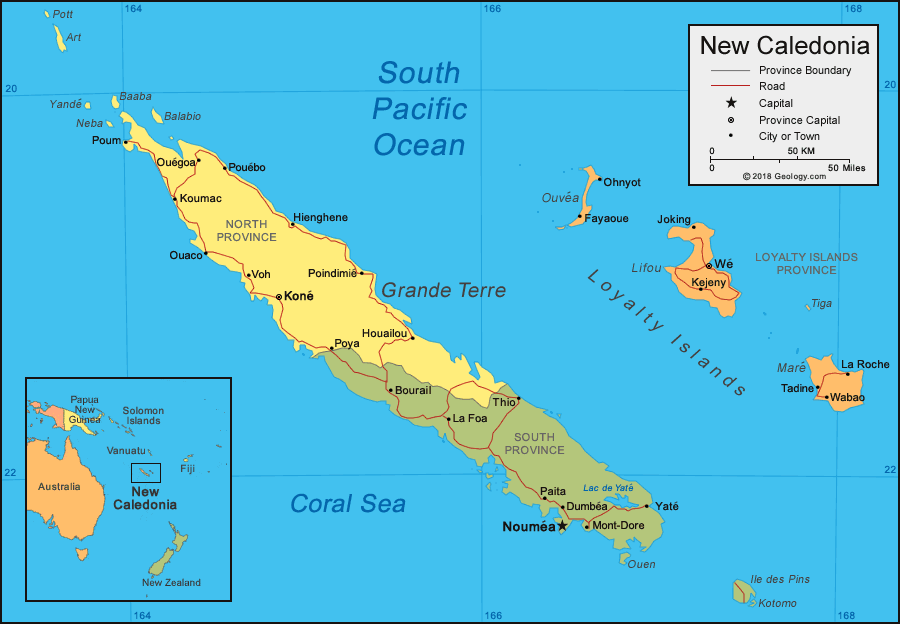
Azerbaijan, now facing accusations of genocide against Armenians, suddenly rallies to the defense of the Kanak indigenous people in the French overseas territory of New Caledonia, and accuses France of a legacy of “crimes against humanity” in its colonial holdings. This appears to be blatant retaliation for French support of Armenia in the conflict between the two Caucasus nations. The repression of the Kanak uprising in their colonized homeland and the cleansing of the Armenians from their usurped ancestral lands both demand our protest—but the propaganda game makes everything more complicated. Yet another example of how a global divide-and-rule racket is the essence of the state system. Bill Weinberg discusses in Episode 227 of the CounterVortex podcast. Listen on SoundCloud or via Patreon. (Flag image via Wikipedia)

Oceania
Kanak

France accuses Azerbaijan of interfering in New Caledonia

France accused Azerbaijan of interfering in the conflict in New Caledonia, and spreading anti-French propaganda on social media to enflame the unrest in the French overseas territory. The charge was based on a report published by the French state investigative agency Viginum, alleging that Azerbaijan has disseminated “manifestly inaccurate or misleading content…blaming France for its handling of the situation in New Caledonia in the context of the riots.” The report came one day after French Interior Minister Gerald Darmanin accused Azerbaijan of making an agreement with the New Caledonia independence leadership, implying that this was retaliation for French support of Armenia in the conflict between the two Caucasus nations. Darmanin further added that France will not cede to the violence, and that it maintains sovereignty over New Caledonia. (Photo: New Caledonia protesters fly flag of Azerbaijan alongside that of the independence movement. Credit: @BabakTaghvaee1)