Watching the Shadows
Honduras

‘Hondurasgate’ leaks reveal Israeli destabilization scheme

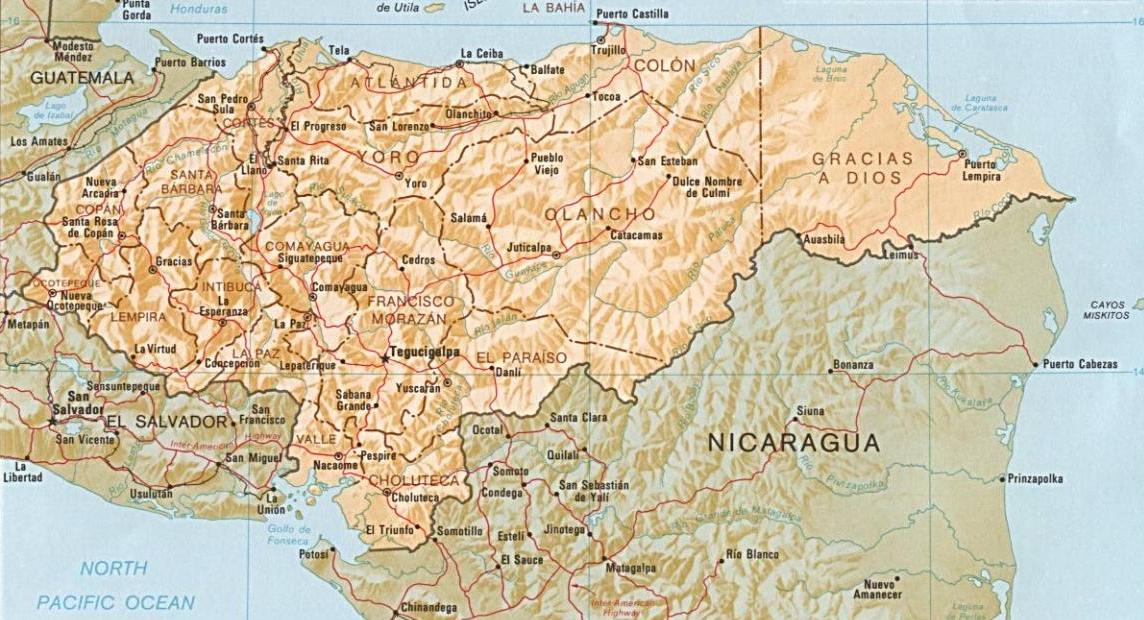
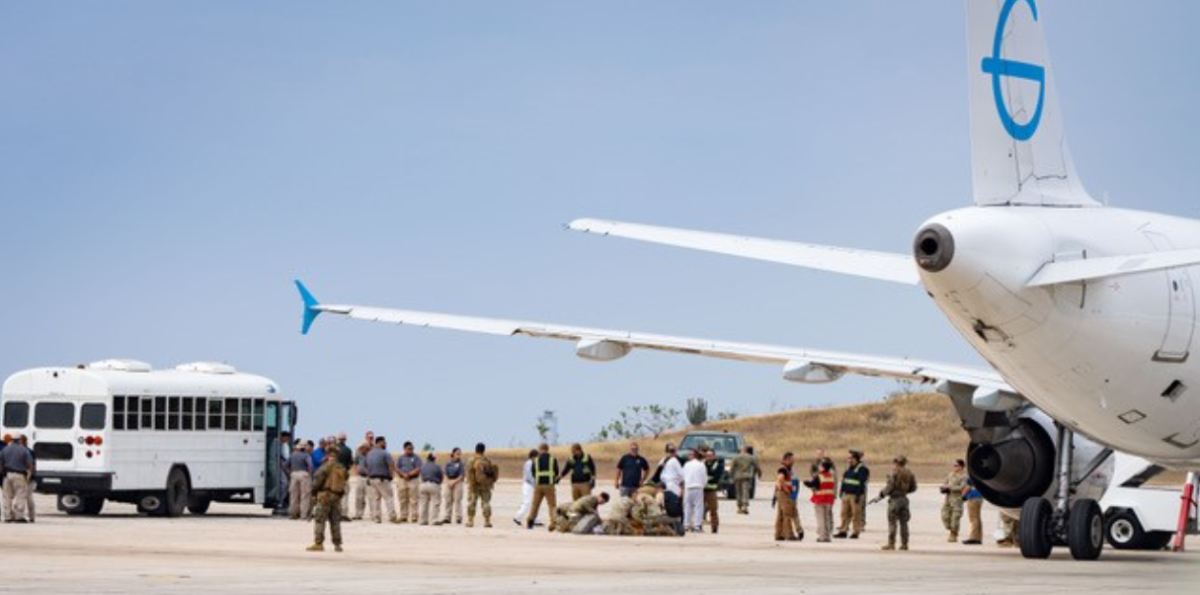
“Hondurasgate”—an alleged plot involving Israel, the United States, and former Honduran President Juan Orlando Hernández to destabilize Latin America’s progressive governments through disinformation—has thrust the region’s ties to Israel back into the spotlight. The scandal emerged ahead of a diplomatic visit by Israeli President Isaac Herzog to Central America as part of a push to consolidate alliances with the region’s newly ascendant right-wing leaders. (Map: Perry-Castañeda Library)

Central America
Honduras

Post-electoral tension in Honduras

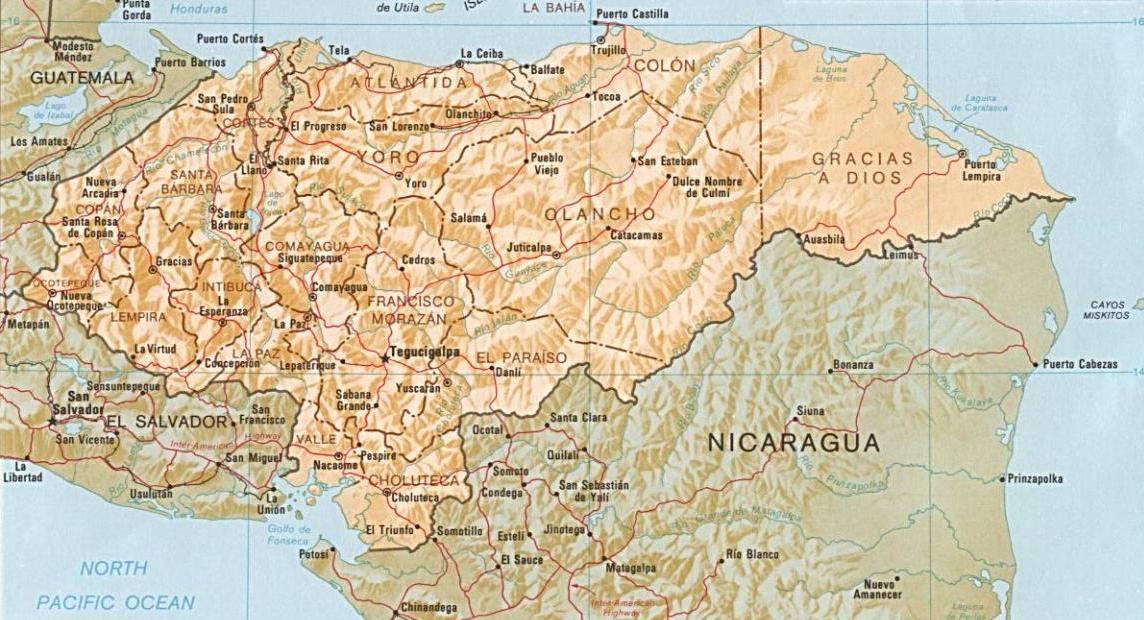
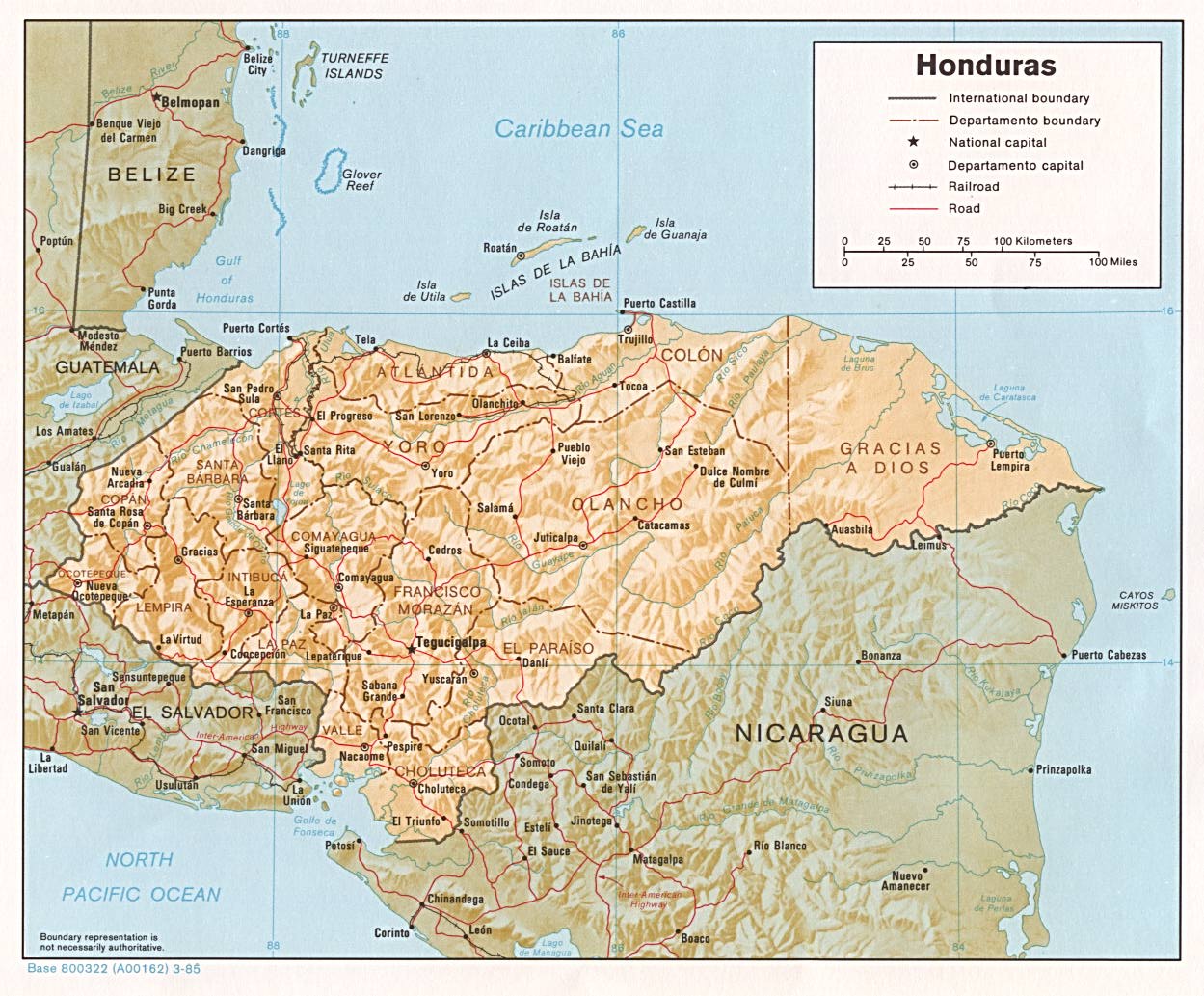
Honduras is on tenterhooks as the results of its presidential election have not yet been finalized, and Trump has threatened reprisals if his favored candidate fails to win. Since the voting, ex-president Juan Orlando Hernández—convicted in the US last year of drug trafficking and bribery—was pardoned by Trump and released from prison. Adding to the unease is the country’s deeply flawed vote-transmission system, which has crashed twice during the count. This has enabled politicians from across the spectrum—as well as Trump—to fuel the tension by raising allegations of fraud. (Map: Perry-Castañeda Library)

Watching the Shadows
Orwell

Podcast: Trump for War-is-Peace Prize III

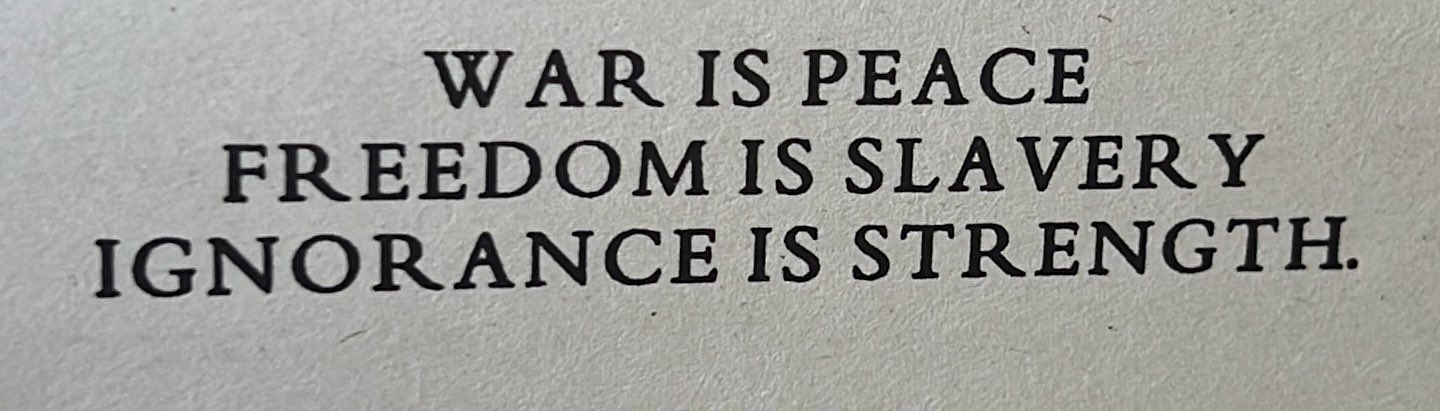
Trump’s perverse ambition to win the Nobel Peace Prize was given a boost by his “winning” of the first “FIFA Peace Prize“—just as he is carrying out illegal deadly air-strikes in the Caribbean, and threatening Venezuela with war. “Secretary of War” Pete Hegseth is denying claims that he gave orders to “kill them all” in the strikes, but Congress is preparing an investigation. Regardless of whether this order was given, the strikes are clearly illegal under the international laws of war. Nonetheless, the Pentagon has opened an investigation into Sen. Mark Kelly for his video calling for troops to refuse illegal orders. Trump—who pardoned soldiers convicted of war crimes in his first term—has called for Kelly to be hanged for sedition. In Episode 307 of the CounterVortex podcast, Bill Weinberg continues to be flabbergasted by the Orwellian war-is-peace propaganda. (Image via Twitter)

North America
Kilmar

MAGA-fascism, Orwell and the cannabis stigma

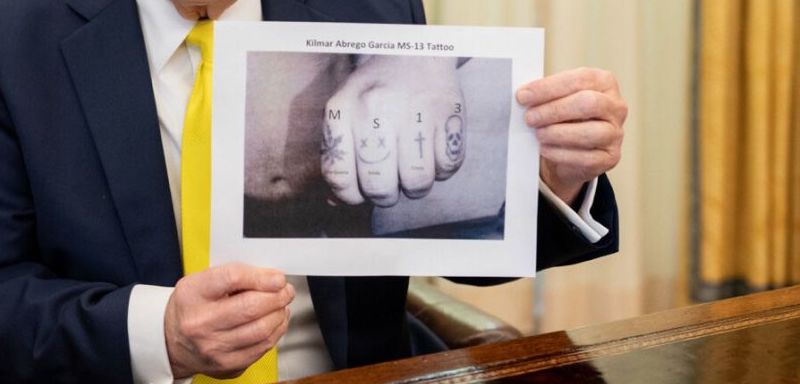
Trump is pointing to Kilmar Abrego Garcia’s tattoos to justify his indefinite detention without charge in the ultra-oppressive Salvadoran prison gulag. These notoriously include a cannabis leaf, demonstrating the continued propaganda utility of the “Reefer Madness” stigma, even as a multi-million dollar legal industry emerges. But the White House actually added the characters “MS13” (name of the notorious Salvadoran gang) to the shot of Abrego Garcia’s knuckles in a crude photoshop job—despite transparent denials from Trump. Lubricating the emerging transnational mass detention program with this Orwellian post-truth stratagem, the Trump regime meanwhile moves toward actual deportation of US citizens. Bill Weinberg raises the alarm in Episode 277 of the CounterVortex podcast. (Photo: Donald Trump/Truth Social as seen, e.g., on CNN)

Watching the Shadows
Salvador

Trump boasts 100 days of deportation and detention

At a Michigan rally to commemorate the first 100 days of his term, Donald Trump focused onhis border crackdown and deportations above all else. While he bragged in his speech of firing “unnecessary deep state bureaucrats,” his racist attacks on migrants took center stage. Those attacks accelerated and entered uncharted territory the following week: the administration launched massive immigration raids, targeted sanctuary cities in an executive order, prosecuted migrants for breaching a recently declared “military zone” near the border, separated families, and even deported US citizens. (Photo: WikiMedia via Jurist)

Central America
Salvador

‘Systematic’ human rights crisis in El Salvador

The UN Office of the High Commissioner for Human Rights (OHCHR) called for authorities in El Salvador to urgently address human rights concerns as the nation marked one year under a state of emergency. Authorities enacted the state of emergency on March 27, 2022 following a wave of gang-related murders. The measure was initially for 30 days but has been regularly renewed. Since March 2022, 65,000 people have been detained, and 90 people have died in custody. OHCHR spokesperson Marta Hurtado stated that 7,900 complaints of abuses against prisoners have been lodged with El Salvador’s national human rights body. According to the report, many detentions were arbitrary and founded on “poorly substantiated” investigations or “crude profiling.” Conditions in detention have also declined significantly, and the UN has received reports of prolonged solitary confinement and inmates being denied prescribed medications. (Photo: WikiMedia via Jurist)

North America

Biden admin to expand Title 42 expulsions

President Joe Biden announced that the US is to extend a parole program previously offered only to migrants from Venezuela to those from Cuba, Nicaragua and Haiti, allowing them to apply for residency—but reiterated that his administration will continue to enforce Title 42, in compliance with a recent order from the Supreme Court. In fact, under his new policy, Title 42 expulsions are to increase, with Mexico agreeing to accept expelled Cubans, Nicaraguans and Haitians. A provision of the Public Health Service Act allowing for summary expulsion of migrants at the southern border, Title 42 is in effect pursuant to a Centers for Disease Control order of March 2020 as a COVID-19 emergency measure. The policy shifts as litigation over Title 42 has been batted back and forth in the US courts has led to confusion in cities on both sides of the border. Squalid encampments have sprung up in Matamoros, Reynosa and other Mexican border towns as migrants await entry to the US. (Photo via FWS)

Central America
roe

El Salvador: warning for post-Roe US

The US Supreme Court decision overturning Roe v. Wade comes six weeks after a court in El Salvador sentenced a woman to 30 years in prison after she suffered an obstetric emergency that resulted in termination of her pregnancy, according to a local advocacy group that was assisting in her defense. The Citizen Group for the Decriminalization of Abortion (ACDATEE) denounced the sentence and said it would appeal the conviction. The woman, identified only as “Esme,” was held in pre-trial detention for two years following her arrest when she sought medical care at a hospital. She already had a seven-year-old daughter. (Photo: Debra Sweet/WikiMedia via Jurist)

Central America

Honduras transition in the New Cold War

Hondurans elected self-proclaimed “democratic socialist” Xiomara Castro to be the country’s first woman president. The wife of Manuel Zelaya, the populist president who was removed in a coup in 2009, Castro pledges to revive his program—and take it much further, instating far-reaching reforms. Castro also announced that she will “open diplomatic and commercial relations with continental China,” which was widely taken as meaning a switch of diplomatic recognition. Honduras is currently one of only 14 countries that recognize Taipei rather than Beijing.  It is tragic to see the Central American republics, in their struggle to break free of Washington’s orbit, acquiesce in Beijing’s design to incorporate Taiwan into its own orbit—or, more ambitiously, its national territory.  (Map: Perry-Castañeda Library)

Central America
Berta Caceres

Accused author of Berta Cáceres murder on trial

The trial of the alleged mastermind behind the March 2016 murder of environmentalist Berta Cáceres began in Honduras. Cáceres was slain when a squad of gunmen invaded her home at La Esperanza, Intibucá department. A visiting Mexican friend, Gustavo Castro, was also shot but survived. Cáceres had been campaigning against the Agua Zarca hydroelectric dam project, then under development by Desarrollos Energéticos (DESA). Four of eight defendants were each sentenced in December 2019 to 34 years in prison for the murder of Cáceres and 16 years for the attempted murder of Castro. Three others were sentenced to 30 years as co-conspirators in the crime. In the new trial that opened in a Tegucigalpa court, a former DESA president and military intelligence officer, Roberto David Castillo, is charged with being the “intellectual author” of the murder. (Photo by UN Environment via Wikimedia Commons)

Central America
Juan Carlos Cerros

Indigenous water protector slain in Honduras

On the eve of World Water Day, an indigenous activist who was leading the fight against construction of a hydroelectric dam was shot dead in front of his family in Honduras. Juan Carlos Cerros Escalante, a member of the Lenca indigenous people, was gunned down directly outside the church at the pueblo of Nueva Granada, in the Caribbean coast department of Cortés. He was on his way to visit his mother, and his children were beside him. Cerros Escalante led the local group Communities United, which was mobilizing residents along the Rio Ulúa to oppose El Tornillito hydro-dam. The pending project would displace 10 communities in the departments of Cortés and Santa Bárbara. (Photo: Radio Progreso)

Central America
Hurricane Eta

Villagers abandoned in Eta’s deadly aftermath

Some 150 are dead, with remote indigenous and campesino communities left stricken and without aid, a week after Hurricane Eta tore through Central America. Eta made landfall south of Puerto Cabezas, Nicaragua, as a Category 4 storm. Two güiriseros, or artisanal gold-miners, were among the first killed, as a landslide inundated the mining camp of Tigre Norte in Bonanza municipality of Nicargua’s North Caribbean Coast Autonomous Region. Far worse was follow in Guatemala, where officials have called off the search for dozens believed to have been buried when a mountainside collapsed, engulfing the hamlet of Queja. Ovidio Choc, mayor of San Cristobal Verapaz municipality, said the site of Queja will probably be declared a cemetery. Elsewhere in Guatemala’s Maya Highlands, villagers have had to mobilize their own rescue and recovery efforts, effectively abandoned by the government. (Map: National Hurricane Center)