The Caribbean
Cherizier

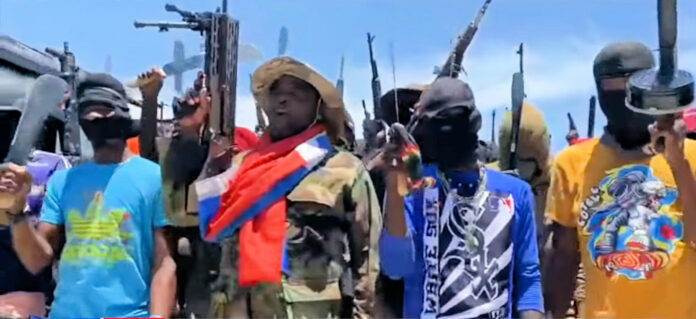
US mercenaries to fight gangs in Haiti

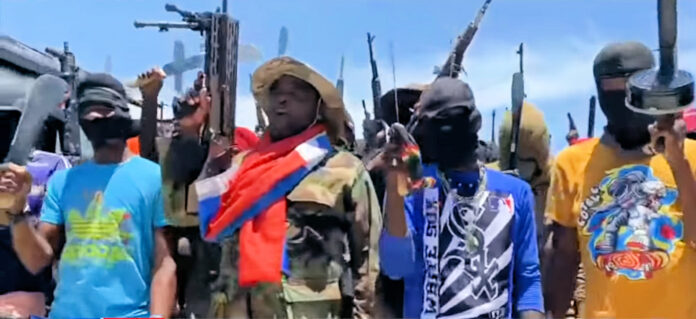
The US indicted Jimmy Chérizier AKA “Barbecue,” leader of the gang coalition in control of most of the Haitian capital Port-au-Prince, and offered a $5 million reward for information leading to his arrest. Chérizier and an alleged stateside collaborator, Bazile Richardson, are charged with sanctions violations related to arms sales. Meanwhile, private military contractor and Trump ally Erik Prince told Reuters he has signed a 10-year deal with the Haitian government to fight armed groups and help collect taxes—a move some observers fear could further weaken the Haitian security forces and lead to rights violations. Prince’s new security firm, Vectus Global, has been operating in Haiti since March. (Photo: Haiti Liberte)

Watching the Shadows
Salvador

Trump boasts 100 days of deportation and detention

At a Michigan rally to commemorate the first 100 days of his term, Donald Trump focused onhis border crackdown and deportations above all else. While he bragged in his speech of firing “unnecessary deep state bureaucrats,” his racist attacks on migrants took center stage. Those attacks accelerated and entered uncharted territory the following week: the administration launched massive immigration raids, targeted sanctuary cities in an executive order, prosecuted migrants for breaching a recently declared “military zone” near the border, separated families, and even deported US citizens. (Photo: WikiMedia via Jurist)

Watching the Shadows
Salvador

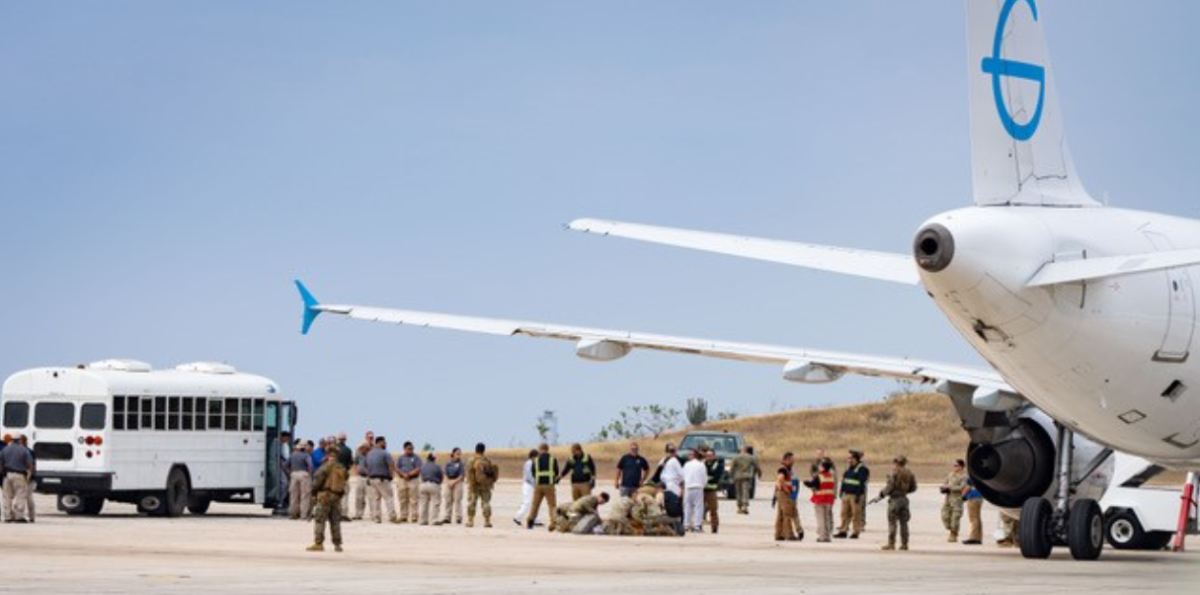
Trump-Bukele detention deal heads for clash with courts

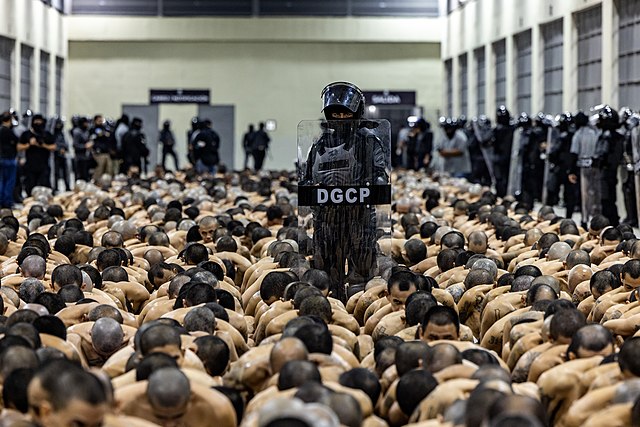
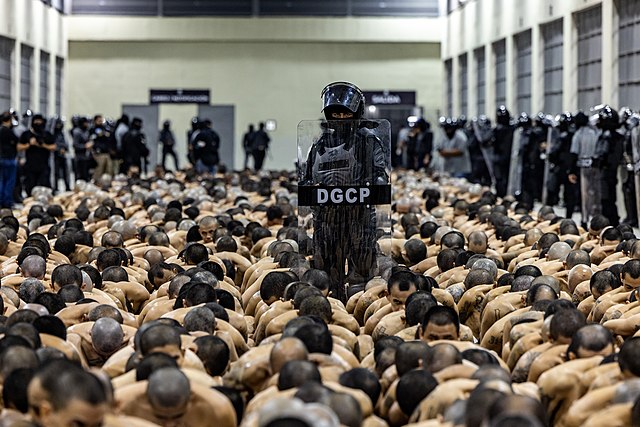
The Trump administration’s deportation policies took center stage this week as Salvadoran President Nayib Bukele visited the White House, courts continued challenging the legality of the deportations, and a Maryland senator travelled to El Salvador in an attempt to make contact with a man known to have been wrongfully deported. With Trump now openly defying the federal courts—and, in fact, seeking to expand indefinite detention of deportees in El Salvador’s prison system—the long-awaited showdown between the executive and judiciary appears to have arrived. (Photo: WikiMedia via Jurist)

Africa
Kenyan soilders

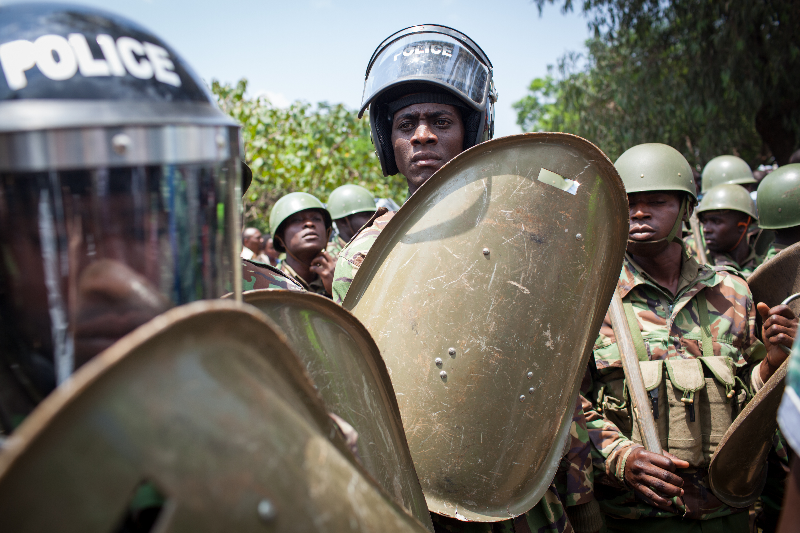
Kenya-led intervention force approved for Haiti

The UN Security Council voted to approve a multi-national armed force led by Kenya to combat violent gangs in Haiti—marking the first time in nearly 20 years that foreign forces are to be deployed to the Caribbean nation. Kenya’s foreign minister said that his country wants to go beyond tackling the gangs, helping to strengthen infrastructure and restore democracy in Haiti, where elections have been repeatedly postponed due to the violence. But many have voiced skepticism about deployment of the force, asking how it will work if Kenyan troops don’t speak French or Kreyol, and questioning the wisdom of sending personnel from a military criticized at home for human rights abuses. (Photo: Wikimedia Commons)

North America

Biden admin to expand Title 42 expulsions

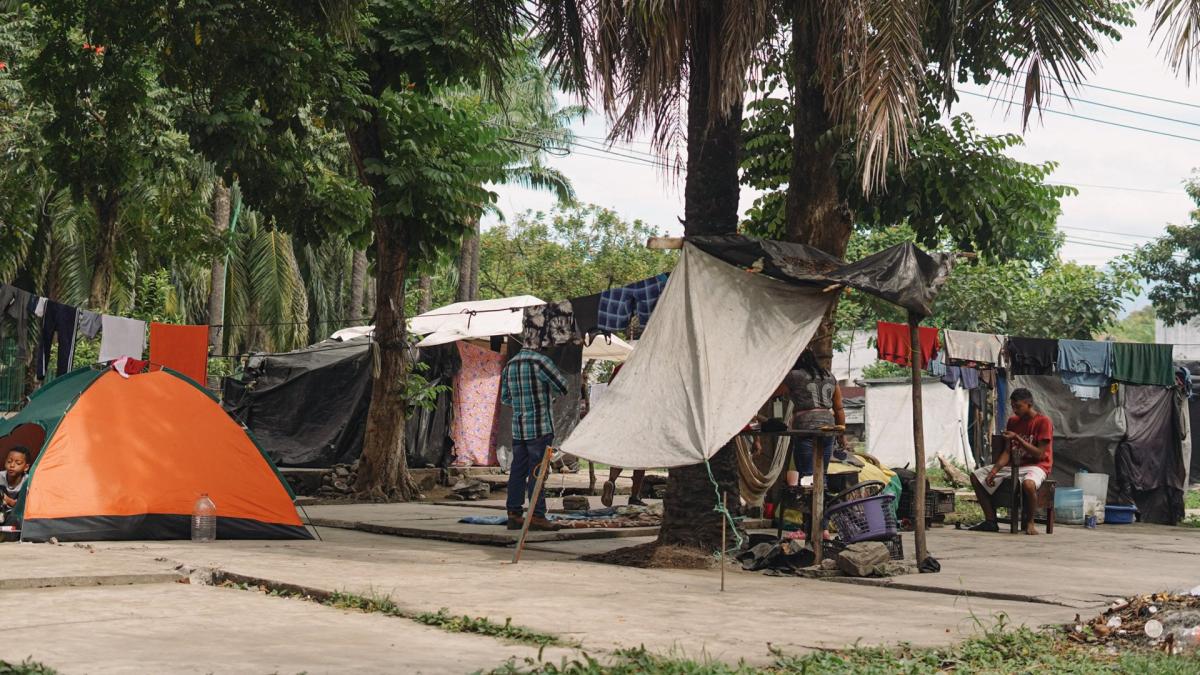
President Joe Biden announced that the US is to extend a parole program previously offered only to migrants from Venezuela to those from Cuba, Nicaragua and Haiti, allowing them to apply for residency—but reiterated that his administration will continue to enforce Title 42, in compliance with a recent order from the Supreme Court. In fact, under his new policy, Title 42 expulsions are to increase, with Mexico agreeing to accept expelled Cubans, Nicaraguans and Haitians. A provision of the Public Health Service Act allowing for summary expulsion of migrants at the southern border, Title 42 is in effect pursuant to a Centers for Disease Control order of March 2020 as a COVID-19 emergency measure. The policy shifts as litigation over Title 42 has been batted back and forth in the US courts has led to confusion in cities on both sides of the border. Squalid encampments have sprung up in Matamoros, Reynosa and other Mexican border towns as migrants await entry to the US. (Photo via FWS)

Central America
Darién

Danger grows on Darién Gap migrant route

The Darién Gap, a dangerous jungle route used by a growing number of migrants trying to reach the United States from South America, has become even deadlier, according to Panama’s Forensic Sciences Institute. It reports over 50 migrant deaths to date in 2021, although the figure is believed to be far higher. Towns on the Colombian side of the border are swelling with migrants waiting to cross the Gap—mostly Haitians, Cubans and Venezuelans, but some from as far as Afghanistan and Burkina Faso. Colombian authorities say 67,000 migrants have passed through the border zone so far this year, more than 15 times the number in 2020. Former paramilitaries operating in the area are now preying on the migrants, who face rape, armed violence and extortion. (Photo: David González/TNH)

The Caribbean
Cherizier

Haiti: president killed amid paramilitary strife

An apparent squad of mercenaries, arriving in nine brand-new Nissan Patrol vehicles, staged a night raid on the home of Haiti’s President Jovenel Moïse in the upscale Port-au-Prince suburb of Pèlerin, and shot him dead. His wife, Martine, was also gravely wounded. The seemingly professional hit job followed weeks of rapidly rising violence in Port-au-Prince. Days earlier, three gunmen on motorcycles killed 15 people in the Delmas 32 area. Shortly later, gunmen believed to be from the same group carried out the targeted assassinations of women’s rights activist Marie Antoinette “Netty” Duclaire and radio journalist Diego Charles, in the Christ-Roi neighborhood. A year-long truce between the city’s gangs was broken in early June, setting off neighborhood battles across the capital. (Photo: Haiti Liberte)

The Caribbean
Haitians in Dominican Republic

Dominican Republic to build wall on Haitian border

The Dominican Republic’s President Luis Abinador announced that work will begin this year on a wall along the country’s 376-kilometer border with Haiti. “Within two years we want to end the serious problems of illegal immigration, drug-trafficking and the transport of stolen vehicles that we’ve suffered from for two years,” said Abinader. Weeks earlier, Abinader and his Haitian counterpart Jovenel Moise signed an agreement that included a commitment to take measures against “the wave of illegal migration” and to “reinforce border security and vigilance.” Two years ago, Dominican authorities started erecting a section of fence along the border at El Carrizal, sparking angry protests by Haitian immigrants living in the area. (Photo: Movimiento Socialista de los Trabajadores via Change.org)

North America

Did Biden cave to ICE mutiny?

The Department of Homeland Security (DHS) issued a memo with “temporary guidelines for enforcement and removal operations” by Immigration & Customs Enforcement (ICE), giving ICE agents discretion on enforcement actions and overturning the “100-day pause on certain removals” instated by President Biden’s executive order of Jan. 20. The move was protestedby the ACLU as a “disappointing step backward.” But litigation was already pending over the “pause.” A federal judge in Corpus Christi had granted a preliminary injunction blocking the moratorium, in a victory for Texas Attorney General Ken Paxton, who had filed a lawsuitagainst the “pause.” After this, ICE agents resumed deportations that had been blocked by Biden’s Jan. 20 order—in open defiance of White House policy. (Photo: Wikimedia Commons)

North America
detrumpification

Podcast: for total de-Trumpification

In Episode 62 of the CounterVortex podcast, Bill Weinberg grimly notes that, even with 400,000 Americans dead to COVID-19, the worst potentialities of the Trump presidency were not realized. Trump never (quite) established a dictatorship, and we didn’t (quite) go over the edge into civil war. The critical task now for the country’s progressive forces is to push for a maximal and thoroughgoing detrumpification—akin to the denazification of Germany after World War II. We may truly hope that the Capitol insurrection will prove to have been the last gasp of Trumpism. However, it may have been his Beerhall Putsch—and, as last time, there could be a second act. The more thoroughly Trumpism is reversed, the more likely it will be defeated and broken politically—especially given its glorification of “winning” and denigration of “weakness.” The risk of sparking a backlash is not to be dismissed, but the greater risk is that of appeasement. Listen on SoundCloud or via Patreon. (Photo: Mike Maguire/WikiMedia)

Planet Watch
Chile protester

Podcast: world revolution in 2020?

In Episode 43 of the CounterVortex podcast, Bill Weinberg takes stock of the current wave of popular protest and uprisings around the world, and asks if the planet is approaching another moment of revolutionary possibilities, such as was seen in 2011. He examines the prospects for these disparate movements to build solidarity across borders, repudiate ethnic and national divide-and-rule stratagems, and recognize the enemy as transnational capital and the authoritarian states that serve it. With discussions of Hong Kong, mainland China, Indonesia, Bolivia, Chile, Ecuador, Peru, Uruguay, Honduras, Costa Rica, Haiti, Puerto Rico, Iraq, Lebanon, Turkey Iran, Egypt, Algeria, Sudan, Uganda, Ethiopia and Guinea. Listen on SoundCloud, and support our podcast via Patreon. (Photo: David Lynch via Twitter)

The Caribbean
Haitians in Dominican Republic

Protest racist attacks in Dominican Republic

Rights groups throughout the Caribbean are raising the alarm on the persistence of racist attacks in the Dominican Republic, charging they are being actively encouraged by authorities. The wave of attacks on Haitian immigrants and Dominicans of Haitian background has been particularly focused in the region of El Cibao, which has become a center of operations for ultra-right nationalist groups. The mayor of Santiago, Abel Martínez Durán, a member of the Central Committee of the ruling Dominican Liberation Party, has promoted hate campaigns against Haitians. Media outlets amplify the racist and conspiracy-laden speeches of anti-immigrant public figures about a “silent invasion,” continuing a disastrous tradition that began under the long right-wing dictatorship of Rafael Trujillo. (Movimiento Socialista de los Trabajadores via Change.org)