Africa
Nigeria

Trump again intervenes in crisis-torn Nigeria

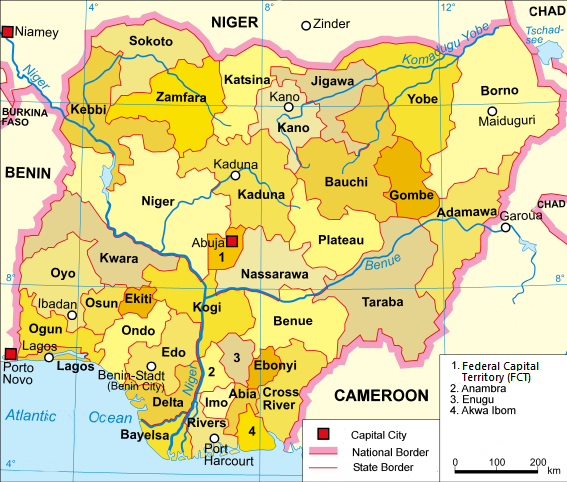
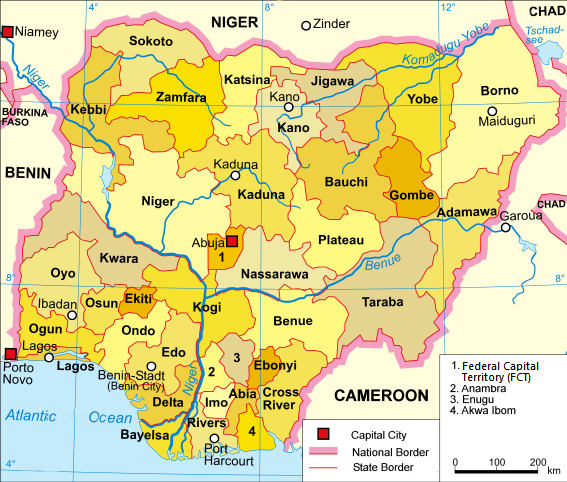
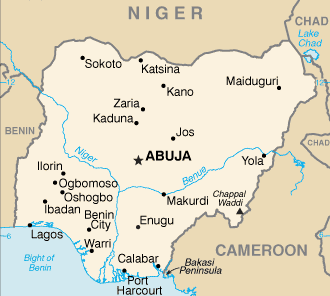
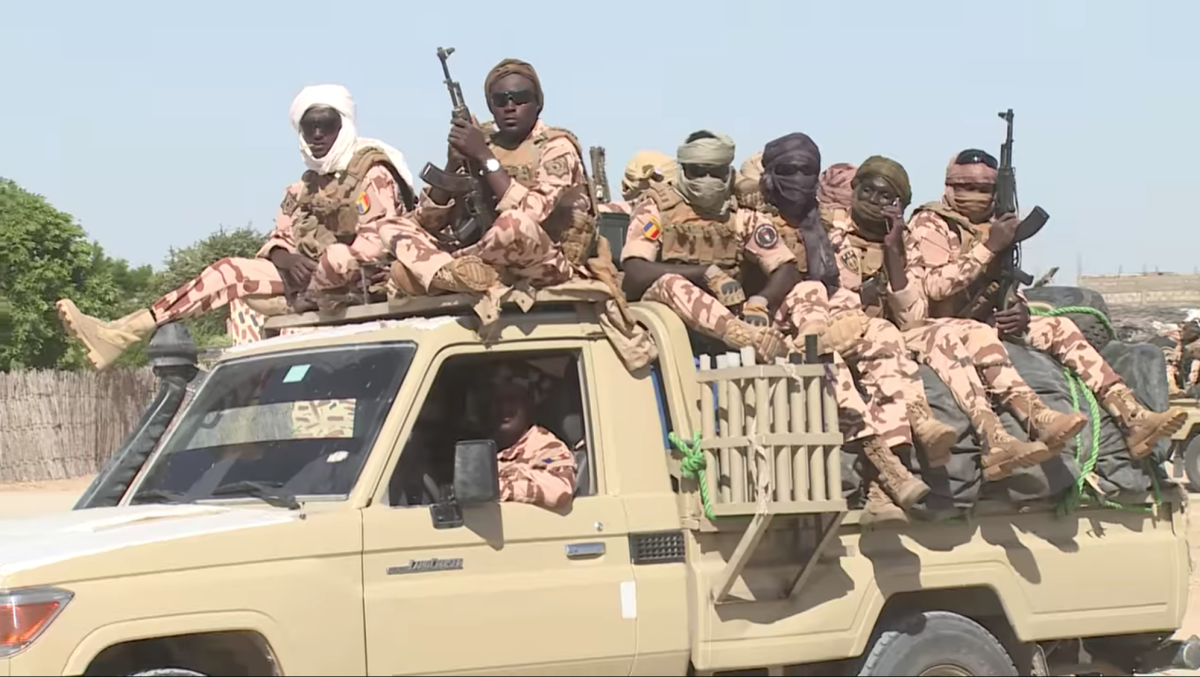
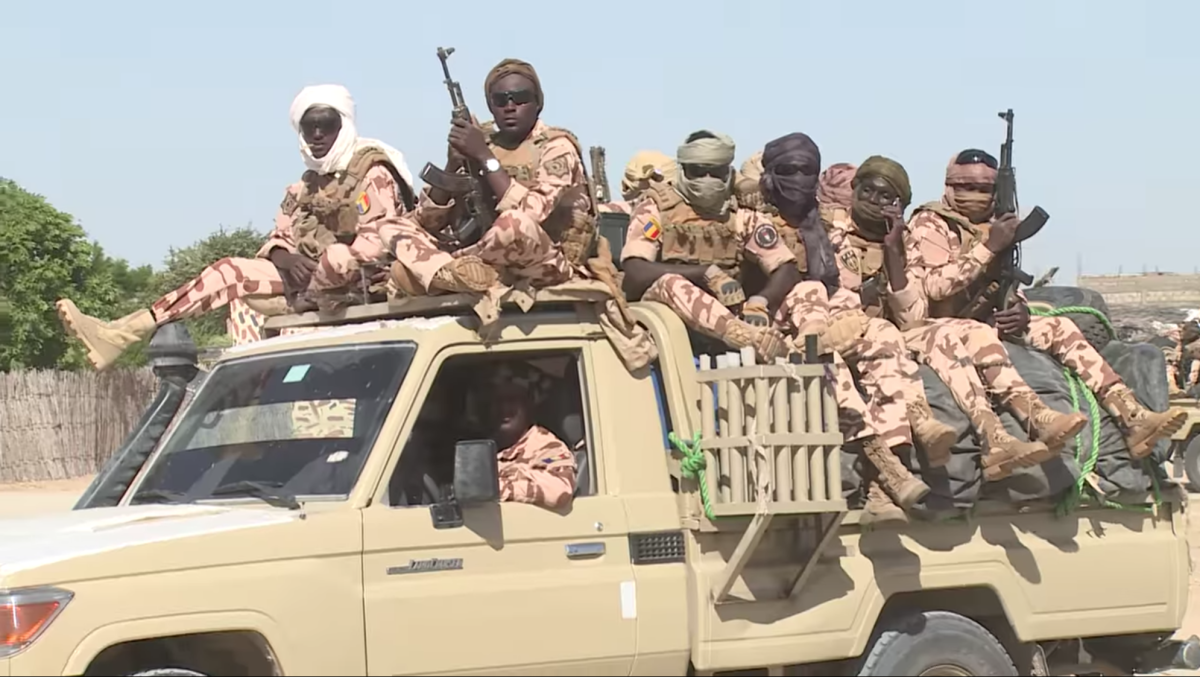
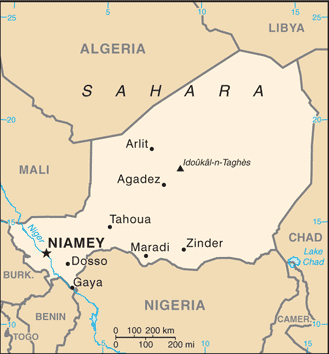
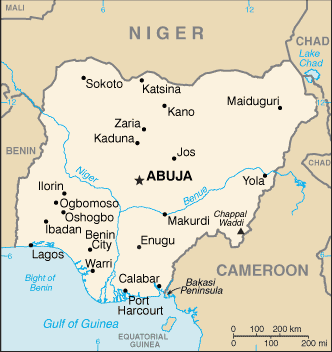
US and Nigerian forces jointly conducted a raid that killed one of the Islamic State’s highest-ranking leaders in the country. Abu Bilal al-Minuki was said to be a commander of the Islamic State West Africa Province (ISWAP). The strike took place in the Lake Chad area in Nigeria’s northeast. Meanwhile, dozens of Nigerian fishermen are feared dead after Chadian forces struck alleged Boko Haram strongholds along Lake Chad, which straddles the border of the two countries. Additionally, at least 100 civilians were killed in a Nigerian government air-strike on a crowded market in bandit-affected northwest ​Zamfara state, according to Amnesty International. Nigerian authorities have denied the report, but if confirmed, it would be thesecond air-strike to kill scores of people in a northern Nigerian market in a month. (Map: Wikipedia)

Africa
ISWAP

Nigeria: ISIS franchise steps up insurgency

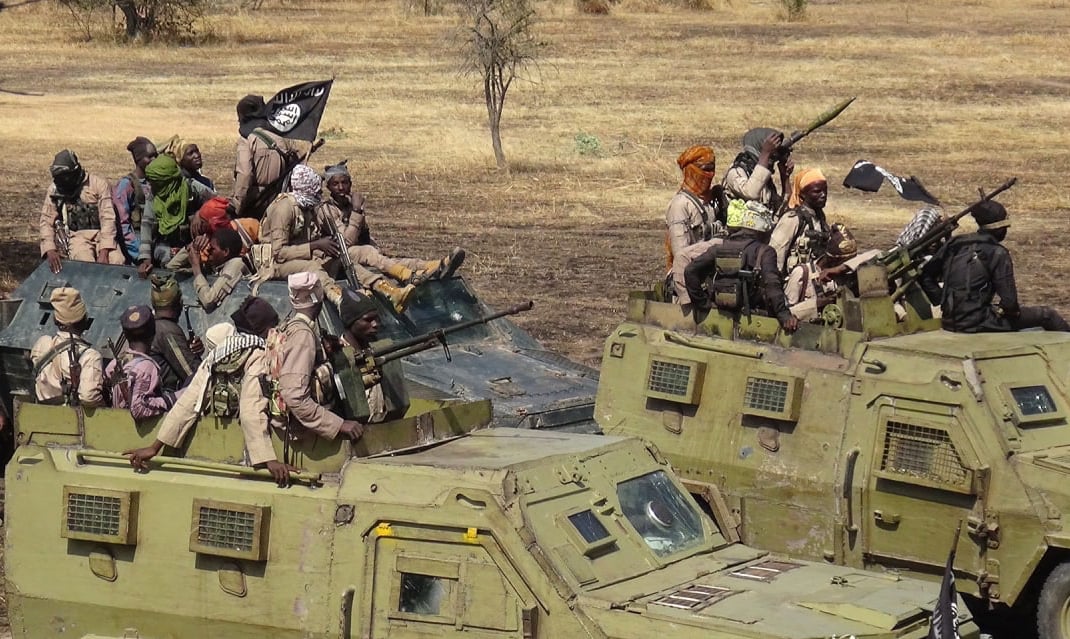
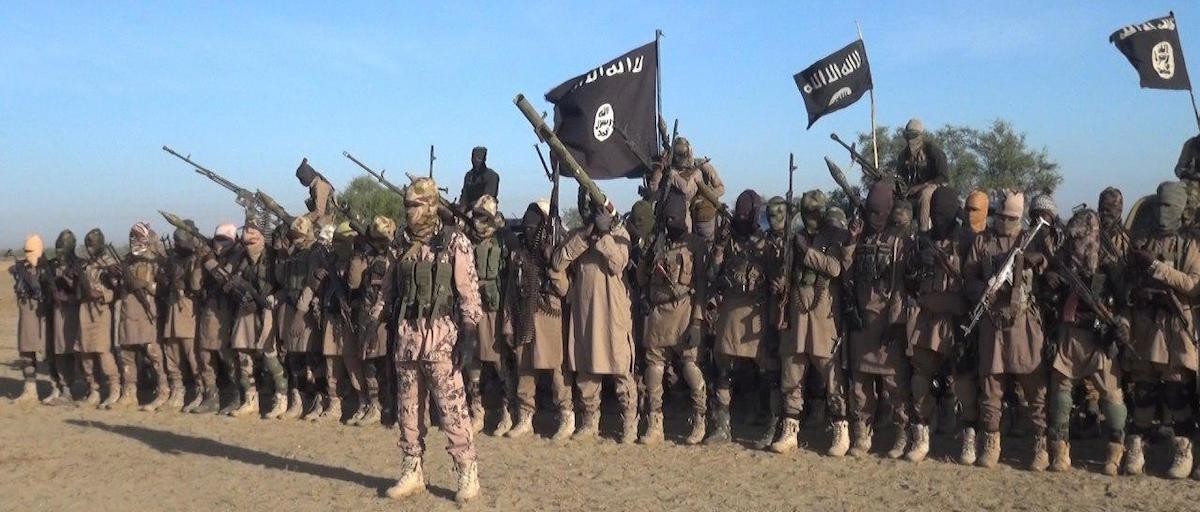
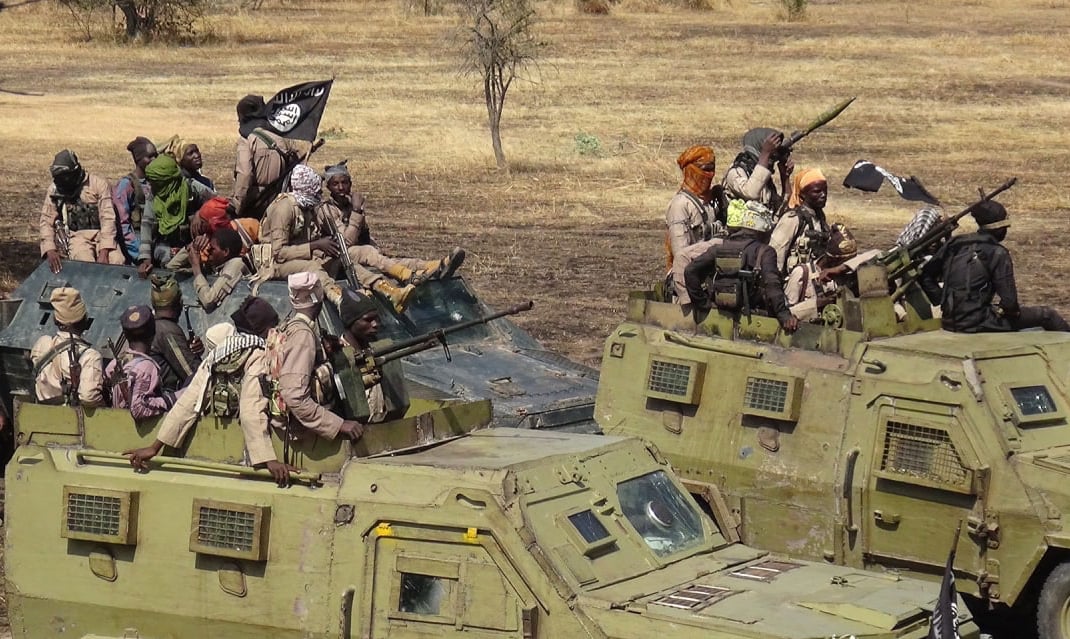
At least 65 soldiers—including three senior officers—have been killed in jihadist raids on military garrisons in Nigeria’s northeast this month. Five bases were overrun by the Islamic State West Africa Province (ISWAP)—four of them in a single night, showing a notable level of coordination. Military equipment was also torched or captured, including armored vehicles. ISWAP’s “Burn the Camps” offensive began last year, and is accelerating against an overstretched military. (Photo via TNH)

Africa
Tomahawk

Podcast: MAGA-fascism and the struggle in Nigeria

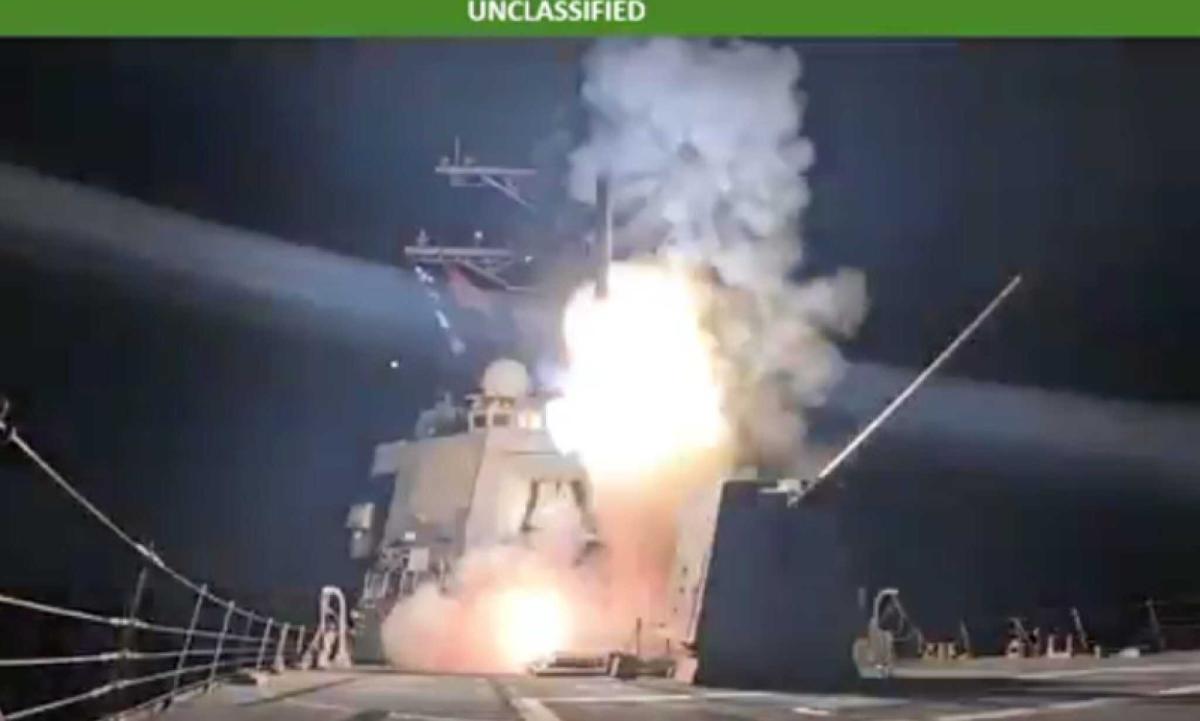
With his Christmas air-strikes on Nigeria, Trump is blundering into a conflict fundamentally driven by desertification related to the very climate change that he denies, and which now threatens democratic rule throughout the West African region. And while the Muslim-Christian sectarian strife that Trump hypes is a large element of the situation, the violence has gone both ways. Furthermore, making Christians the perceived beneficiaries of imperialist intervention is only likely to exacerbate the tensions and make Christians more of a target. In Episode 310 of the CounterVortex podcast, Bill Weinberg takes an in-depth and unsparing look. (Photo: AFRICOM via Long War Journal)

Africa
Sokoto

US strikes supposed ISIS targets in Nigeria

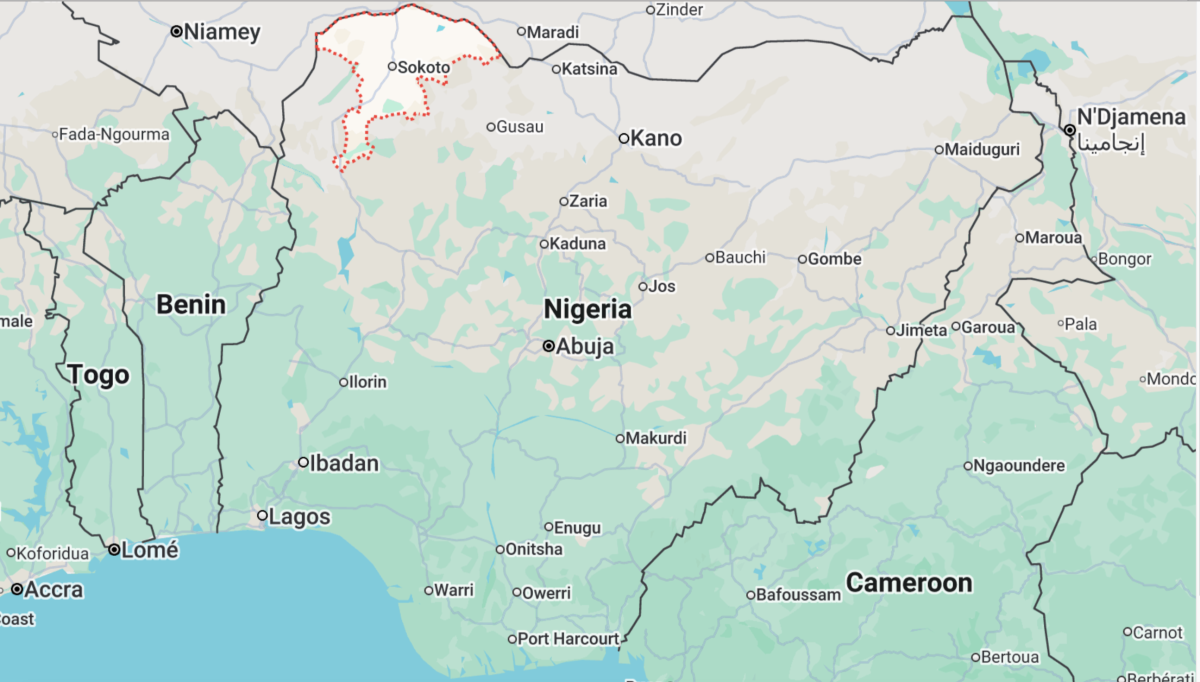
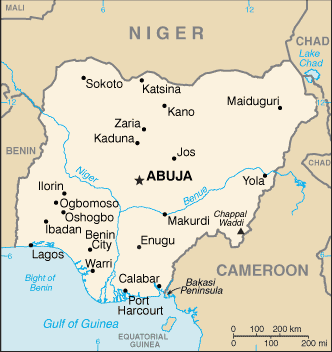
Following through on threats made last month, President Donald Trump announced on social media Christmas Day that he had ordered air-strikes against Islamic State targets in Nigeria, ostensibly in retaliation for the group’s targeting of Christian communities. Trump’s post did not specify where the military action took place, though the Pentagon’s Africa Command later stated that the strikes were in “Soboto State” —an obvious misspelling of Sokoto state, in Nigeria’s northwest. The Nigerian government confirmed the bombings, stating that they were conducted in a “joint operation” —but added that the strikes had “nothing to do with a particular religion.” (Map: Google)

Africa
iswap

ISIS franchise claims Nigeria massacre

At least 81 people were killed in an attack by militants on the village of Mafa, in Nigeria’s northeastern Yobe state. A statement listing grievances against the village was left at the scene in the name of Islamic State West Africa Province (ISWAP), a Boko Haram splinter group. The attack appears to have been in revenge for villagers alerting the military to the insurgents’ presence in the area—which lies on a smuggling route to ISWAP bases in the Lake Chad region. (Photo: ISS Africa)

Africa
Nigeria

Drone massacre in northwest Nigeria

The Nigerian military says it is investigating an army drone attack at a religious gathering on a village in northwest Kaduna state that killed 85 civilians and wounded more than 60 others. Residents of Tudun Biri village were holding festivities for the birthday of the Prophet Muhammad, Eid-e-Milad an-Nabi, when the drone struck. Since 2017, hundreds of civilians have been killed in air-strikes carried out by the Nigerian military, ostensibly targeting armed rebel and bandit groups, according to monitors. (Map: Perry-Castañeda Library)

Africa
Fulani

Podcast: West Africa’s forgotten wars

In Episode 161 of the CounterVortex podcast, Bill Weinberg provides an overview of the under-reported conflicts in West Africa, where government forces and allied paramilitary groups battle multiple jihadist insurgencies affiliated either with ISIS or al-Qaeda on a franchise model. Horrific massacres have been committed by both sides, but the Western media have only recently started to take note because of the geopolitical angle that has emerged: both Mali and Burkina Faso have cut long-standing security ties with France, the former colonial power, and brought in mercenaries from Russia’s Wagner Group. In both countries, the pastoralist Fulani people have been stigmatized as “terrorists” and targeted for extra-judicial execution and even massacre—a potentially pre-genocidal situation. But government air-strikes on Fulani communities in Nigeria have received no coverage in the Western media, because of the lack of any geopolitical rivalry there; Nigeria remains firmly in the Anglo-American camp. Listen on SoundCloud or via Patreon. (Photo: Sahara Reporters)

Afghanistan
ground zero

Podcast: 9-11 and the GWOT at 20

In Episode 88 of the CounterVortex podcast, Bill Weinberg revisits his predictions from 20 years ago and from a month ago about what the world would look like on the 20th anniversary of 9-11. The attack, and Dubya Bush’s Global War on Terrorism, did not lead to a wave of new attacks within the US, as the jihad has proved more concerned with the struggle within Islam. But this has meant an invisible catastrophe for the Muslim world. The ongoing wars in Afghanistan, Iraq, Syria and Yemen get at least some international media attention. There are many more nearly forgotten wars and genocides: the serial massacres in Pakistan, the insurgency in Egypt’s Sinai Peninsula, the Boko Haram war in Nigeria that is now spilling into Cameroon, the mounting massacres in the Sahel nations. Even the insurgency in Somalia, where the US has had a military footprint, wins little coverage—despite the fact that it is spilling into Kenya. The insurgency in Mozambique has now prompted an African-led multinational military intervention. The insurgency on the Philippine island of Mindanao has been met with air-strikes. All waged by entities claiming loyalty to either al-Qaeda or ISIS. The new imperial doctrine appears to be that this violence is acceptable as long as it is not visited upon the West. Listen on SoundCloud or via Patreon. (Photo: CounterVortex)

Africa
ISIS Nigeria

ISIS franchise claims attack on Nigerian military

The self-proclaimed Islamic State West Africa Province (ISWAP) issued a statement claiming its fighters killed 40 Nigerian soldiers in an ambush along the Damboa-Maiduguri highway in northern Borno state. The statement said ISWAP fighters captured five all-terrain vehicles, weapons and ammunition, and burned an armored vehicle during the attack. The Nigerian military confirmed the attack but said only two soldiers were killed. Boko Haram has now split into two factions. One, under longtime leader Abubakar Shekau, is notorious for suicide bombings and indiscriminate killings of civilians. Shekau pledged allegiance to ISIS leader Abu Bakr al-Baghdadi in 2015, but ISIS only recognizes the rival faction, which calls itself ISWAP. (Photo: Sahara Reporters)

Africa
Niger displaced

Niger counterinsurgency sparks displacement crisis

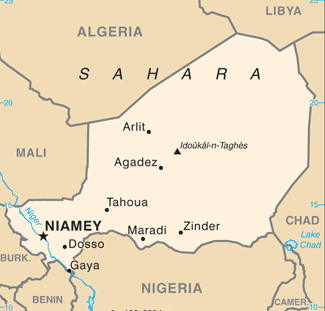
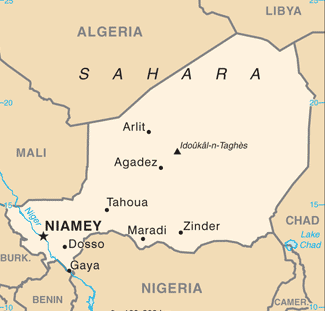
The French-backed military campaign against Islamist militants in Niger is claiming victories against the insurgency that has mounted in the country since 2015. Niger’s defense ministry claims that over the past month, “120 terrorists have been neutralized,” a presumed euphemism for killed. The operation has centered on the Tillabéri region near the borders with Mali and Burkina Faso, where a state of emergency has been in place for two years. The claimed progress comes amid a massive displacement crisis, however. According to UNICEF, nearly 78,000 people have been displaced in Tillabéri and adjoining regions. Nearly 3 million people in Niger, more than half children, are said to be in need of humanitarian assistance, amid risks posed by insecurity, malnutrition, recurrent disease epidemics and outbreaks, cyclical floods, droughts and displacement. (Photo: UNHCR)

Africa
ISIS Nigeria

Vigilantism fears in Nigeria’s conflicted north

Traditional rulers in Nigeria’s strife-torn north are warning that vigilante militias now forming to fight Boko Haram are a sign of a generalized social breakdown in the region. The Sultan of Sokoto, Alhaji Sa’ad Abubakar, told a public meeting in Kaduna that the new paramilitaries could themselves metamorphose into terror groups. “Governors must see that they do more to address insecurity, just imagine that there are over 50,000 orphans. They will be worse than Boko Haram if allowed to grow without proper care,” he said. Abubakar is chair of the Northern Traditional Rulers Council, but a youth-led Coalition of Northern Groups has emerged outside control of the traditional rulers, and launched a paramilitary network called Shege Ka Fasa to defend against the Islamist militias. (Photo: Sahara Reporters)

Africa

Podcast: the struggle in Ambazonia

In Episode 27 of the CounterVortex podcast, Bill Weinberg interviews Eben Egbe and Amy Dalton of the Global Initiative to end the Cameroons Colonial Conflict (Gi3C), who discuss the independence struggle in Ambazonia—a territory that was illegally annexed by Cameroon following the end of colonial rule in 1960. The past year has seen a terrible increase in state terror in Ambazonia from the French-backed neo-colonial Cameroon authorities, with protesters fired upon by helicopter gunships, and finally villages burned by military forces, sending the residents fleeing into the bush. Some 400,000 people have been internally displaced, with a further 20,000 having crossed the border into Nigeria as refugees. Cameroon also receives military aid from the US, ostensibly for the fight against Boko Haram in the north of the country—but this same military is now being unleashed against the civilian populace in the unrelated conflict in Ambazonia in the south. The Gi3C has issued an urgent call for the UN Human Rights Council, which convenes for it's 40th annual meeting this week in Geneva, to send a fact-finding delegation to the region. Listen on SoundCloud, and support our podcast via Patreon. (Photo: Ambazonia representatives with flag, far right, at France meeting of the Unrepresented Nations and Peoples Organization, via Bareta News)