

U.S. ALIEN TERRORISM COURT: CONGRESS LEFT OUT TORTURE SAFEGUARD
by Richard T. Herman, JURIST
For the first time since Congress created it in 1996, the Justice Department has invoked the Alien Terrorist Removal Court (ATRC), a specialized tribunal that may consider classified evidence a respondent never sees, and order a noncitizen accused of terrorism removed. What the statute does not say is who decides whether that removal will deliver the person to torture.
Almost everything about the case remains secret. The Justice Department’s publicly available application is little more than a cover page. The respondent’s identity, nationality and alleged conduct have not been disclosed, nor has whether the respondent is detained, or where.
The court’s first public order suggests the proceeding will not be perfunctory. The Department filed its application July 15. At a July 16 hearing held in camera, as §1533 requires, the government presented attorney argument but no sworn testimony. Joan Ericksen, chief judge of the removal court and a senior US district judge in Minnesota, questioned the asserted connection between the respondent’s conduct and the specific terrorism provisions cited by the government. She ordered the Justice Department to supplement its application with additional factual or legal analysis.
That scrutiny is essential. The ATRC permits the government to use classified evidence that the respondent may never see. The judge therefore serves as the principal institutional safeguard against error, exaggeration or misuse of intelligence.
But the case also exposes a different problem that Congress never adequately resolved: Even if an Article III judge carefully determines whether the respondent is legally removable, that judge apparently will not decide whether sending the respondent to a particular country would result in torture.
Under an obscure Justice Department regulation, that determination belongs to the attorney general—the same executive official whose department is asking the court to order the removal.
An extraordinary but carefully bounded court
Congress created the ATRC as part of the Antiterrorism & Effective Death Penalty Act of 1996. The tribunal consists of five federal district judges designated by the chief justice. According to the Federal Judicial Center’s history of the court, it had never received a removal application before this case.
The government may use this special process when the attorney general possesses classified information indicating that a noncitizen is an “alien terrorist” and maintains that proceeding through the ordinary immigration system would create a national-security risk. Under 8 U.S.C. § 1533, the initial application is submitted ex parte, under seal and in camera.
If a judge finds probable cause and approves the application, the case proceeds to a removal hearing. As provided by 8 U.S.C. § 1534, the respondent has the right to appointed counsel when financially necessary, an opportunity to present evidence and cross-examine witnesses, a verbatim record and a written decision. The government must prove removability by a preponderance of the evidence.
Those protections are substantially weakened when classified information is involved. The government generally must provide an unclassified summary sufficient to permit the respondent to prepare a defense. But if no adequate summary can be produced, the proceeding may continue using evidence presented to the judge in camera and ex parte.
A lawful permanent resident may then receive assistance from a security-cleared special attorney who can review and challenge the classified evidence without disclosing it to the respondent. A respondent who is not a permanent resident receives no comparable adversarial safeguard under the procedures established by § 1534.
Congress also sharply limited the judge’s authority. Under 8 U.S.C. § 1534(k), the judge may not grant asylum, statutory withholding of removal, cancellation of removal, adjustment of status, voluntary departure or registry.
The statute thus authorizes an Article III judge to determine whether the government has proved that a person is an alien terrorist, while preventing that judge from granting most forms of protection ordinarily considered in removal proceedings.
That limitation becomes especially consequential when the respondent asserts that removal would expose the person to torture.
Terrorism does not eliminate the torture prohibition
The United States has adopted a categorical prohibition against involuntarily returning a person to a country where that person is more likely than not to be tortured. Congress implemented the United States’ obligations under Article 3 of the Convention Against Torture (CAT) through Section 2242 of the Foreign Affairs Reform and Restructuring Act of 1998.
Unlike asylum and statutory withholding of removal, protection against removal to torture does not disappear because a person is dangerous, has committed a serious crime or is accused of terrorism. The form of relief may be narrower, but the prohibition remains.
In ordinary immigration proceedings, a person barred from asylum or withholding may receive deferral of removal under the CAT. Deferral does not confer lawful status, require release from detention or prevent removal to a safe third country. It prohibits only removal to the particular country where the person is likely to be tortured.
The distinction matters. A determination that someone is removable—even because of terrorism—does not answer the separate, country-specific question of where the United States may lawfully send that person.
Congress enacted the removal court statute two years before it implemented the convention in the Foreign Affairs Reform and Restructuring Act of 199, and three years before the Justice Department wrote the regulations. The 1996 statute therefore says little about how torture claims should be adjudicated within this specialized system.
The Justice Department attempted to fill that gap in 1999. Under 28 C.F.R. § 200.1, a removal order issued by the ATRC may not be executed when doing so would violate Article 3 of the CAT.
But the regulation then states that CAT claims “shall be determined by the Attorney General, in consultation with the Secretary of State.”
That allocation of authority is the central defect.
A decision without defined procedures
In an ordinary removal case, an immigration judge adjudicates a torture claim on an evidentiary record. The noncitizen may testify, present expert opinions, submit reports concerning conditions in the proposed country of removal and challenge the government’s evidence. An adverse ruling may be appealed to the Board of Immigration Appeals and then reviewed by a federal court of appeals.
The Supreme Court held in Nasrallah v. Barr (2020) that a CAT order is legally distinct from the underlying removal order. A court of appeals may review constitutional, legal and factual challenges to the torture determination, with factual findings reviewed under the deferential substantial-evidence standard.
The special regulation governing ATRC cases supplies none of that detail. It does not require notice of every country to which the government may seek removal. It does not guarantee a hearing before a neutral adjudicator, an opportunity to testify or present country-conditions evidence, access to the evidence supporting an adverse determination, or a written decision applying the “more likely than not” standard.
Most importantly, the regulation does not identify a clear procedure through which the respondent may obtain judicial review before removal occurs.
It simply assigns the decision to the attorney general after consultation with the secretary of state.
The statute also gives the executive branch substantial control over the destination. Under 8 U.S.C. § 1537, a respondent may initially designate a country, but the attorney general, in consultation with the secretary of state, may reject that designation for treaty or foreign-policy reasons. The attorney general may then arrange removal to another country willing to receive the respondent.
A CAT determination cannot meaningfully be made in the abstract. The risk depends on the particular destination, the respondent’s identity and history, the receiving government’s practices and any assurances offered by that government. The respondent therefore must know where the government intends to send them before the torture claim can be fairly adjudicated.
The judicial-review provisions do not fit together
The division of authority also creates an unresolved jurisdictional problem.
Under 8 U.S.C. § 1535, either party may appeal the removal-court judge’s decision to the US Court of Appeals for the District of Columbia Circuit. The removal order generally may not be enforced while that appeal is pending.
But the torture determination is not made by the removal-court judge. It is assigned by regulation to the attorney general and could occur separately from—and potentially after—the judge enters the removal order.
The specialized statute also provides in 8 U.S.C. § 1533 that, once an application is approved, the respondent’s removal rights are governed “solely” by the ATRC provisions, except where another provision of immigration law is expressly incorporated.
Federal law ordinarily channels review of CAT claims through a petition for review of a final removal order. Yet the specialized appeal provision focuses on decisions made by the removal-court judge, while the regulation assigns the torture determination to an executive official.
Those provisions do not establish that judicial review is impossible. Constitutional avoidance and the strong presumption favoring review of executive action may support an interpretation preserving access to a court. But the statutory and regulatory texts do not clearly answer where, when or under what standard the respondent may challenge the attorney general’s determination before the government places that person on an aircraft.
A legal system committed to preventing torture should not leave that question unresolved until removal is imminent.
National-security expertise is not a substitute for process
The government has a serious response. Decisions involving foreign governments, diplomatic assurances, classified intelligence and potential terrorist activity implicate expertise traditionally housed in the executive branch. Consultation between the attorney general and the secretary of state may be necessary, and some information may legitimately remain classified.
But executive expertise does not resolve the procedural issue.
The question is not whether the attorney general and the State Department should participate. They plainly should. The question is whether the official pursuing removal should possess the final word on whether that same removal plan will violate the United States’ obligation not to deliver a person to torture—without a defined hearing, adversarial testing, a reasoned decision or assured judicial review.
National-security proceedings routinely employ procedures that protect classified information while preserving meaningful scrutiny. The ATRC statute itself requires judicial findings, permits sealed records and creates a special-attorney mechanism for some respondents. Confidentiality and adjudication are not mutually exclusive.
What the court and Congress should do
The court should require the Justice Department to address this issue before the proceeding advances much further. At minimum, the government should explain how it intends to implement 28 C.F.R. § 200.1, when the respondent will learn the proposed country of removal, what evidence the respondent may submit, whether a written decision will issue and how the respondent may obtain judicial review before removal.
If the government relies on classified evidence relevant to the torture determination, an adversarial safeguard should be available. A security-cleared special attorney could test classified assertions without disclosing protected information to the respondent or the public. There is little justification for limiting that safeguard to lawful permanent residents when the legal question is whether the United States is about to send a human being to torture.
Any eventual removal order should not be executed until the respondent has received notice of the intended destination, a meaningful opportunity to present evidence, a reasoned decision under the proper legal standard and a practical opportunity to obtain judicial review.
Should the case reach the DC Circuit, that court should construe the specialized appeal provisions, the CAT regulation and the federal implementing law together to preserve review of the attorney general’s determination. An interpretation permitting the executive branch to make an unreviewable decision about whether its own transfer plan will result in torture would raise grave due-process and separation-of-powers concerns.
Congress should ultimately eliminate the ambiguity. It should assign CAT claims to the same Article III judge who determines removability, require a defined evidentiary record and authorize appellate review before removal. Congress should also extend the special-attorney procedure to any case in which classified evidence would otherwise prevent an effective defense.
The government may eventually establish that the respondent is properly classified as an alien terrorist. It may identify a receiving country where the person faces no substantial risk of torture. The allegations and classified evidence may be compelling.
None of that eliminates the need for a lawful process.
The ATRC was designed to reconcile national security with judicial oversight. Its first case should not create a precedent under which the executive branch asks a court to authorize removal and then decides for itself whether executing that removal will deliver someone to a torturer.
———
Richard T. Herman is an immigration lawyer with more than 30 years of experience and the founder of the Herman Legal Group. He is the co-author of Immigrant, Inc.: Why Immigrant Entrepreneurs Are Driving the New Economy and writes frequently about immigration enforcement and due process.
This piece first appeared July 29 in JURIST.
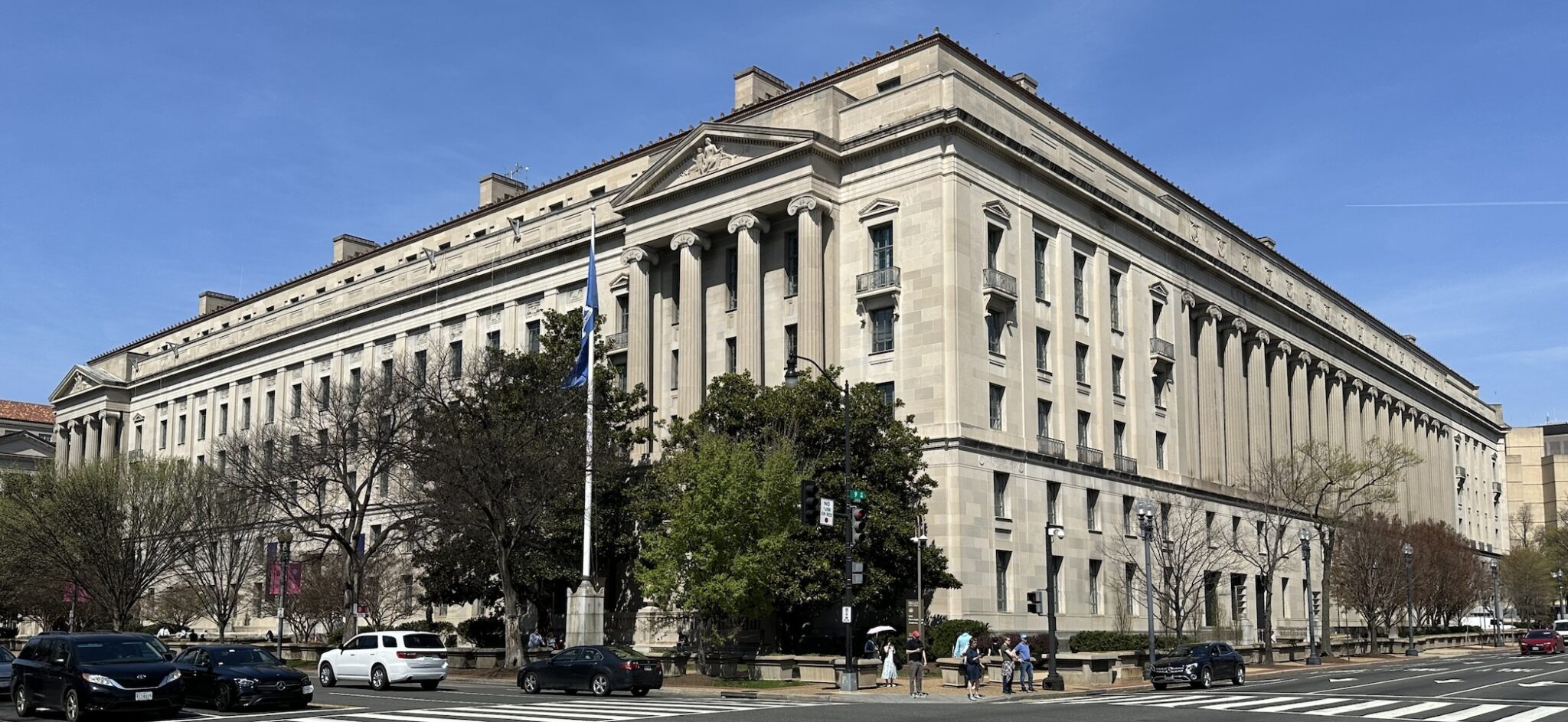
Image: Wikipedia
From our Daily Report:
Mahmoud Khalil sues US officials, pro-Israel groups
CounterVortex, July 20, 2026
See also:
WHEN CITIZENSHIP BECOMES CASTE
White Supremacy’s Push to Rewrite the Constitution
by Timothy Benston, The Black Eye
CounterVortex, December 2025
THE SUPREME COURT, SOMALIA AND SOVEREIGN IMMUNITY
Historic Ruling Means US Is Not a Safe Haven for War Criminals
by Pamela Merchant, Center for Justice and Accountability
CounterVortex, July 2010
—————————-
Reprinted by CounterVortex, July 30, 2026
Used with permission.