
Southern Cone
Ushuaia

Argentina: Milei offers Trump part of Tierra del Fuego?

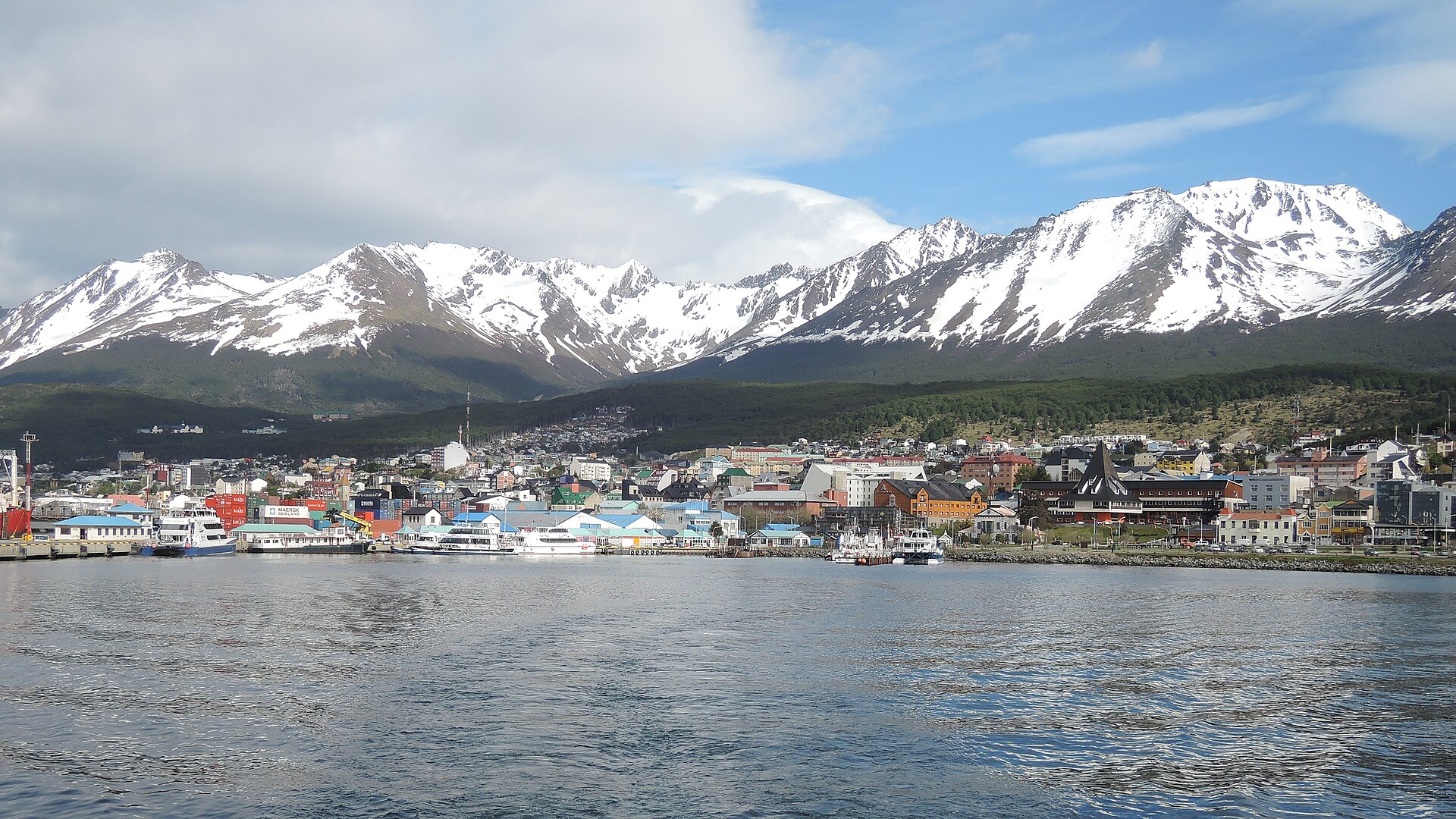
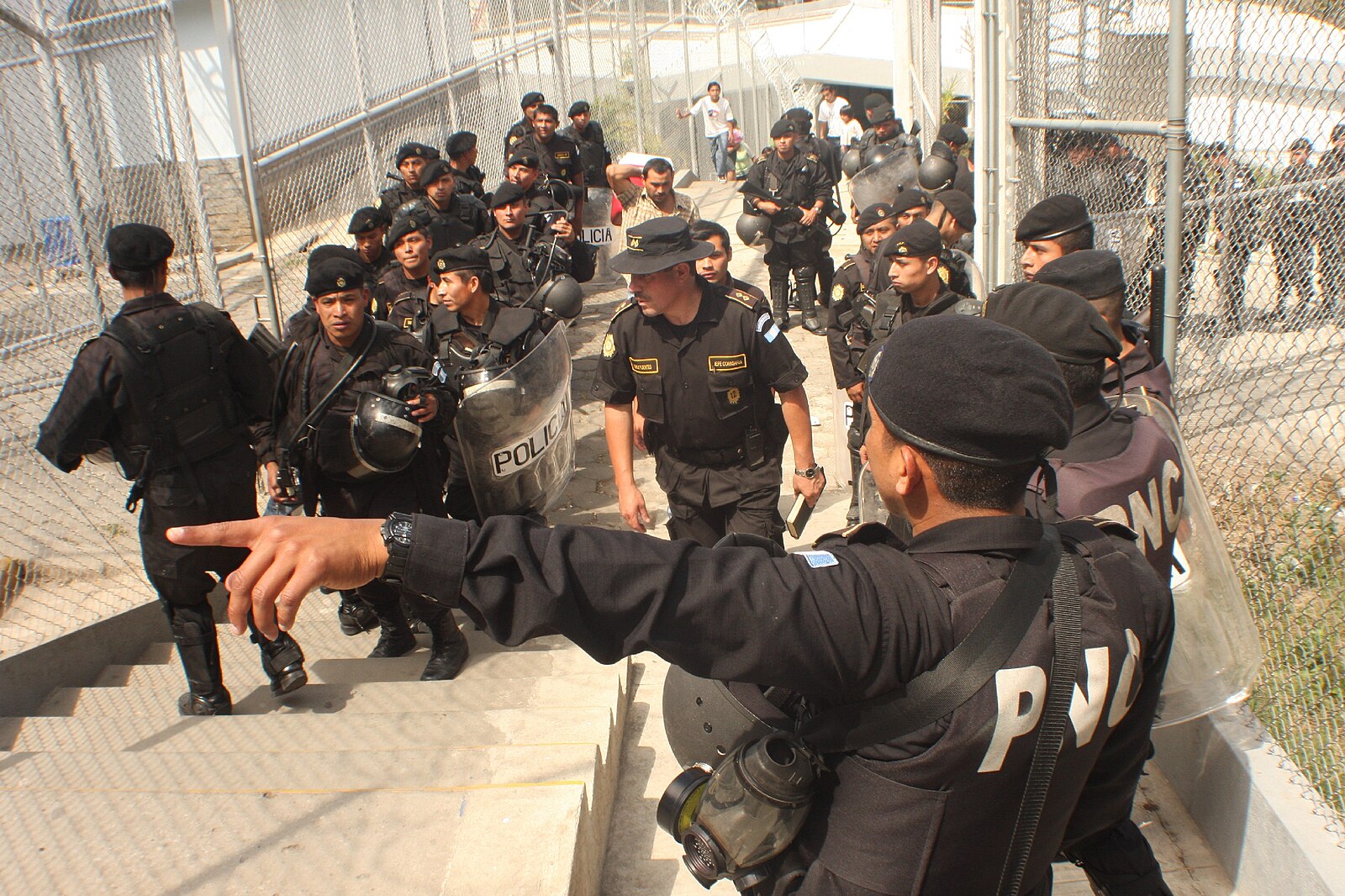
In a move sparking outrage from the country’s opposition, Argentina’s central government under President Javier Milei has taken control of the port of Ushuaia—the country’s southernmost seaport and a key gateway to Antarctica. Milei’s move places operation and administration of the port under his executive control for one year—over the objections of the Tierra del Fuego provincial government. The takeover came just days before a US Air Force jet landed at Ushuaia, bringing in a delegation of US lawmakers from the House of Representatives’ Energy & Commerce Committee. Milei, in power since December 2023, has already received two heads of the US Southern Command in Ushuaia. Both visited the Ushuaia Integrated Naval Base, which Argentina has been building since 2022. While Milei insists the base will be under full Argentine control, the country’s opposition press is full of speculation that on the sidelines of the Davos summit, Milei offered the base and all of Ushuaia to the US in exchange for an invitation to join the “Board of Peace” being touted by Trump as an alternative to the United Nations. (Photo: Wikipedia)

The Caribbean
USS Gerald Ford

Amnesty International condemns Trump’s attack on Venezuela

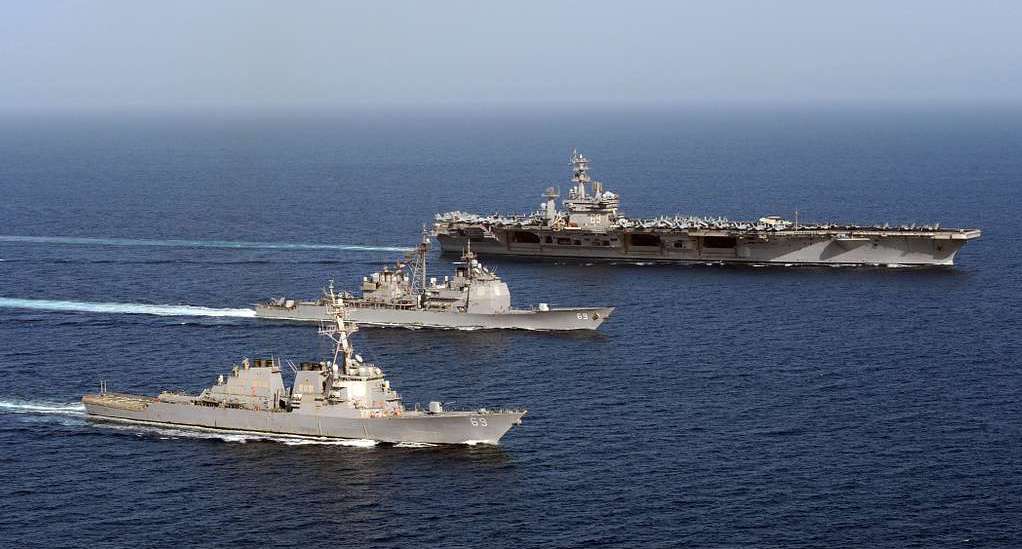
Amnesty International condemned both the January attack by the US military on Venezuela and the abuses committed by the ousted Maduro government. Amnesty said that the US capture of President Nicolás Maduro was an unlawful use of force and violated multiple articles of the UN Charter. Acknowledging the long legacy of grave abuses by the Maduro regime, Amnesty’s secretary general Agnès Callamard said: “Crimes against humanity do not end with Maduro’s removal… The fate and whereabouts of many people subjected to enforced disappearance remain unresolved. The state machinery responsible for those crimes is still firmly in place, now supported by the US authorities’ involvement… The US administration’s actions currently make the prospect of any potential justice proceedings concerning Nicolás Maduro much more challenging and complex.” (Photo: USS Gerald R. Ford. Credit: US Navy via Wikimedia Commons)

The Andes
Venezuela

Trump instates ’emergency’ measure on Venezuelan oil

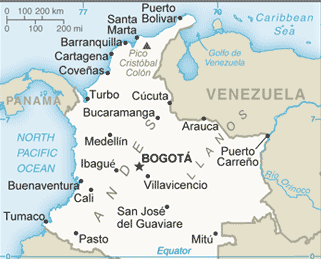
President Trump issued an executive order declaring a “national emergency” to block judicial processes from being instituted against Venezuelan oil funds held in the US, on the basis that it would “materially harm the national security and foreign policy of the United States.” This order follows statements from Trump that US oil companies will invest billions in Venezuela, with his Energy Secretary Chris Wright saying that the US will control and market Venezuela’s oil “indefinitely.” However, the CEO of ExxonMobil, Darren Woods, expressed concern about conditions in Venezuela, saying that the country is currently “un-investable.” Trump respondedangrily that he was “inclined” to keep ExxonMobil out of Venezuela. Companies including ExxonMobil and ConocoPhillips say that Venezuela owes them billions of dollars over lost investments. Trump’s executive order could hinder these companies from recovering their claims. (Map: Perry-Castañeda Library)

Watching the Shadows
Aegis

‘Donroe Doctrine’ threatens hemisphere

As Nicolás Maduro appeared in federal court in New York, Trump made explicit military threats against Colombia, Mexico, Cuba and Greenland—prompting protests from those countries’ leaders. In defense of his bellicosity, Trump invoked the notion of Latin America as a US influence sphere that was articulated in his recent National Security Strategy, calling it the “Donroe Doctrine.” (Photo: US Navy via Latin America Reports)

The Andes
Venezuela

Trump announces plan to ‘run’ Venezuela

Trump announced that the US would “run” Venezuela, following a strike on the country that led to the capture and transfer to the US of President Nicolás Maduro and his wife, First Lady Cilia Flores. In a press conference at his Mar-a-Lago estate, Trump emphasized the recent decline of Venezuela’s oil industry, stating that US oil companies would spend billions to repair the country’s infrastructure and bring in foreign exchange. Claiming to be acting in the interest of bringing “peace, liberty and justice for the great people of Venezuela,” he added that the US would be prepared to “stage a second and larger attack” if necessary. Maduro’s vice president Delcy Rodriguez, now sworn in as interim president, has offered no indication of acquiescence in Trump’s plans. (Map: Perry-Castañeda Library)

The Caribbean
Bella

China condemns US seizure of Venezuela-linked tankers

Chinese officials condemned the US seizure of oil tankers headed from Venezuelan ports, calling the acts a “serious violation of international law.” The protest came days after US troops boarded and seized the Panama-flagged tanker Centuries. According to the White House, while the ship was not on the US Treasury’s sanctioned vessel list, it carried state-owned oil as part of Venezuela’s “shadow fleet.” Reports have indicated that the Centuries was headed for China. Days earlier, the US seized the M/T Skipper, which the Justice Department claimed was “being used in an oil shipping network supporting Hizballah and the Islamic Revolutionary Guard Corps-Qods Force,” two US-designated “foreign terrorist organizations.” (Photo: VesselFinder)

Watching the Shadows
NSS

Trump Corollary: spheres of influence, white supremacy

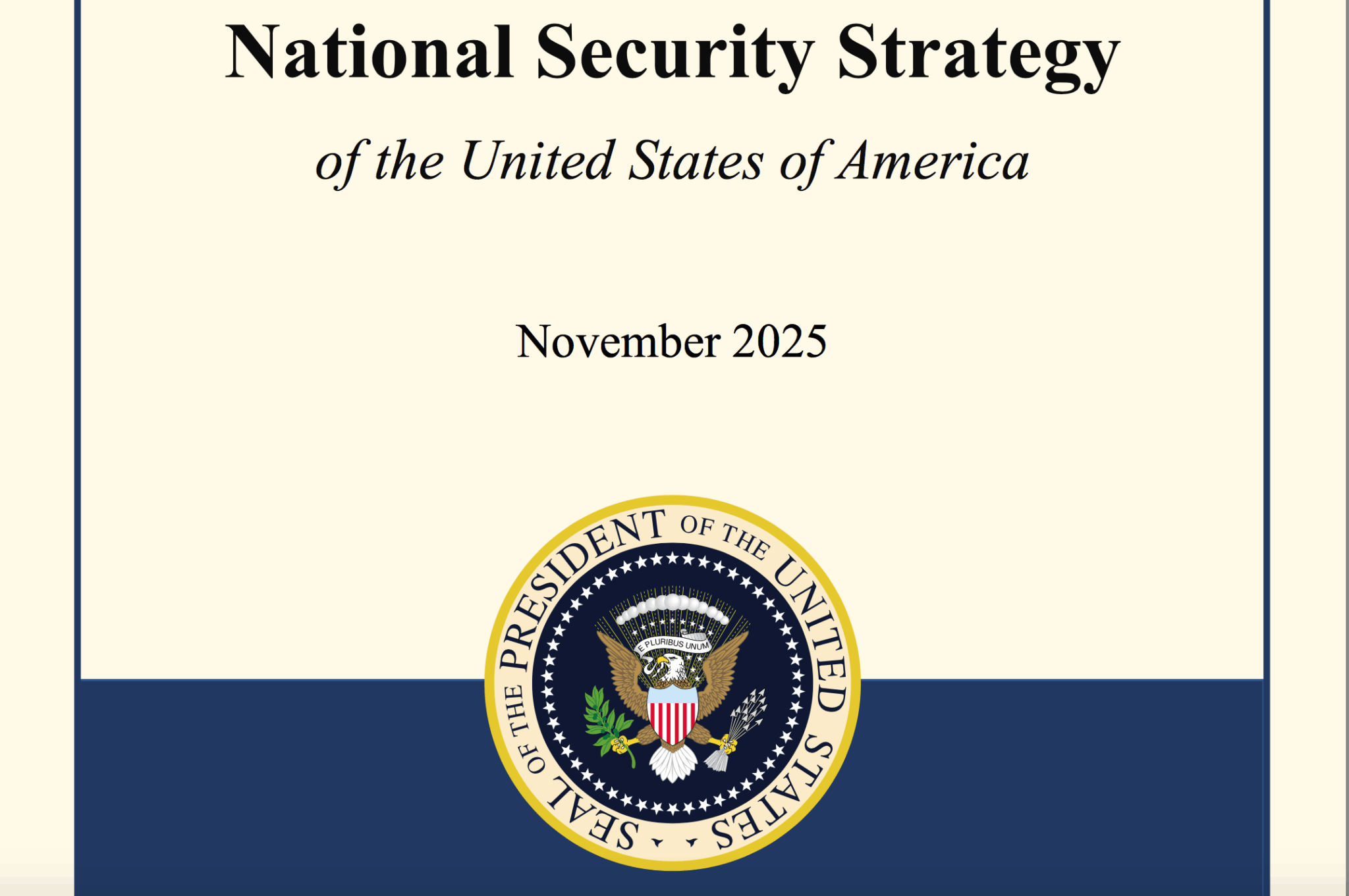
Donald Trump’s new National Security Strategy instates a “Trump Corollary” to the Monroe Doctrine. Like the Roosevelt Corollary of 1904, which was used to justify the “gunboat diplomacy” of that era, this new corollary openly calls for dividing the world into spheres of influence—with the Western Hemisphere assigned to the US. Russia is obviously pleased as punch over this, as it implicitly gives Moscow a free hand in Ukraine—and Putin will likely consider this an acceptable pay-off for his betrayal of Venezuela. However, China is less likely to surrender its massive investments and mega-projects in Latin America in exchange for a free hand to take over Taiwan. The document’s text on Europe is even more sinister, revealing a white supremacist agenda that looks not to Washington’s traditional allies to counter Russia, but to the continent’s Russian-backed far-right movements to counter Washington’s traditional allies. In Episode 308 of the CounterVortex podcast, Bill Weinberg exposes the NSS as a further step toward consolidation of a Fascist World Order. (Image: White House)

Watching the Shadows
USS Gerald Ford

US instates ‘Trump Corollary’ to Monroe Doctrine

President Donald Trump’s new National Security Strategy puts the Western Hemisphere at the center of US foreign policy and revives the Monroe Doctrine of 1823, appending it with a “Trump Corollary.” The document presents the Americas as the main line of defense for the US homeland and links that doctrine directly to ongoing military operations against suspected drug traffickers in Caribbean and Pacific waters. It places the Hemisphere as the top regional priority, above Europe, the Middle East and Indo-Pacific, with an imperative of controlling migration, drug flows, and foreign influence before they can reach US territory. It also states that the US will block “non-Hemispheric competitors” from owning or controlling “strategically vital assets” in the Americas, including ports, energy facilities, and telecommunications networks. (Photo: USS Gerald R. Ford. Credit: US Navy via Wikimedia Commons)

Watching the Shadows
Orwell

Podcast: Trump for War-is-Peace Prize III

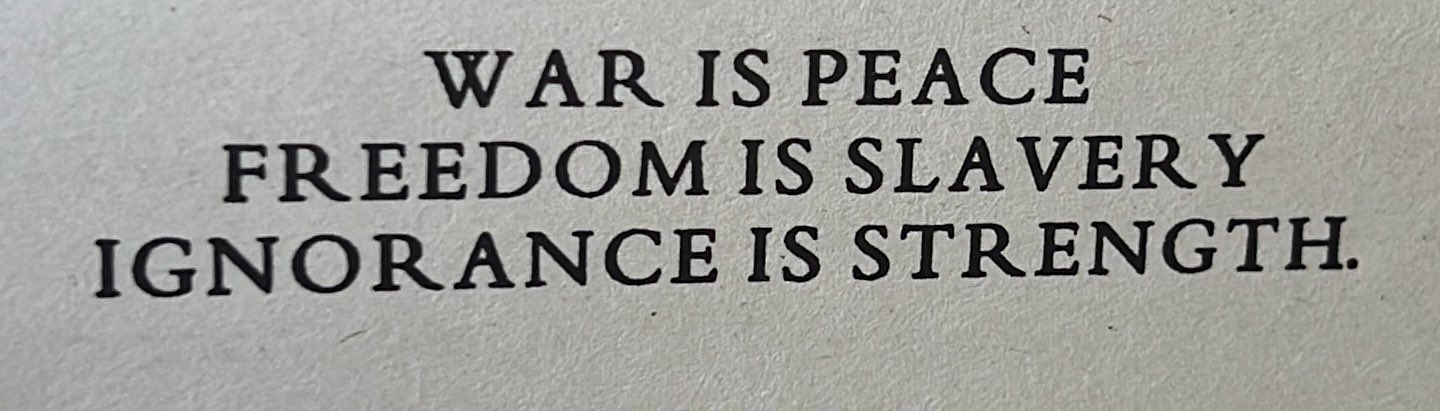
Trump’s perverse ambition to win the Nobel Peace Prize was given a boost by his “winning” of the first “FIFA Peace Prize“—just as he is carrying out illegal deadly air-strikes in the Caribbean, and threatening Venezuela with war. “Secretary of War” Pete Hegseth is denying claims that he gave orders to “kill them all” in the strikes, but Congress is preparing an investigation. Regardless of whether this order was given, the strikes are clearly illegal under the international laws of war. Nonetheless, the Pentagon has opened an investigation into Sen. Mark Kelly for his video calling for troops to refuse illegal orders. Trump—who pardoned soldiers convicted of war crimes in his first term—has called for Kelly to be hanged for sedition. In Episode 307 of the CounterVortex podcast, Bill Weinberg continues to be flabbergasted by the Orwellian war-is-peace propaganda. (Image via Twitter)

The Caribbean
CVN

UN protests as Trump threatens Venezuela

The United Nations urged all countries to respect international norms safeguarding civil aviation, following US President Donald Trump’s announcement of his intention to “completely shut down” Venezuelan airspace. The statement added that the Secretary-General is also “gravely concerned” about the strikes on Venezuelan civilian vessels at sea, which the US alleges were involved in drug trafficking. UN High Commissioner for Human Rights Volker TĂĽrk asserted that the strikes violate international human rights law, and called for transparent investigations into the attacks. TĂĽrk described the strikes as “extrajudicial killings,” emphasizing that “the intentional use of lethal force is only permissible as a last resort against individuals who pose an imminent threat to life.” (Photo: US Navy via Wikimedia Commons)

The Andes
Cuenca

Ecuador voters reject foreign military bases

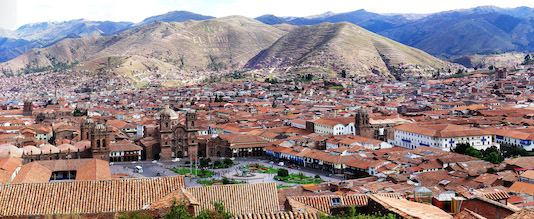
In a decisive referendum, Ecuadoran citizens overwhelmingly rejected a constitutional amendment that would have allowed foreign military bases on the country’s soil. Early counts show nearly two-thirds of ballots cast opposed the measure. President Daniel Noboa introduced the referendum, arguing that foreign cooperation was essential to combat the ongoing surge in violence related to drug-trafficking. The rejection represents a significant setback for Noboa and his broader security agenda, revealing public skepticism of solutions involving foreign military forces. (Photo: MartĂ­n Vasco via Wikimedia Commons)

Mexico
Manzo

Mexico: specter of US strikes amid cartel terror

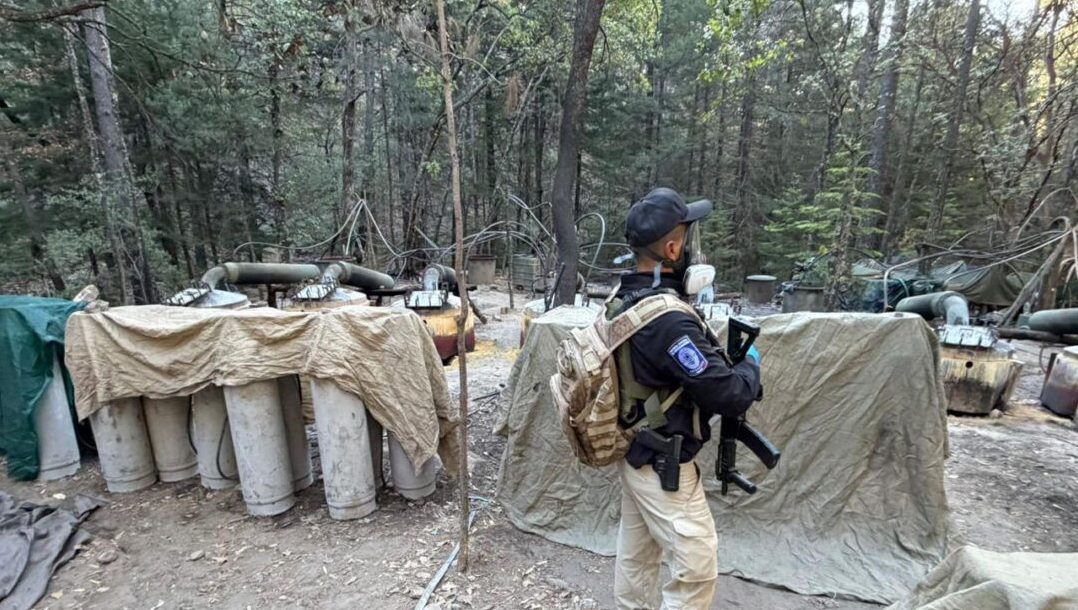
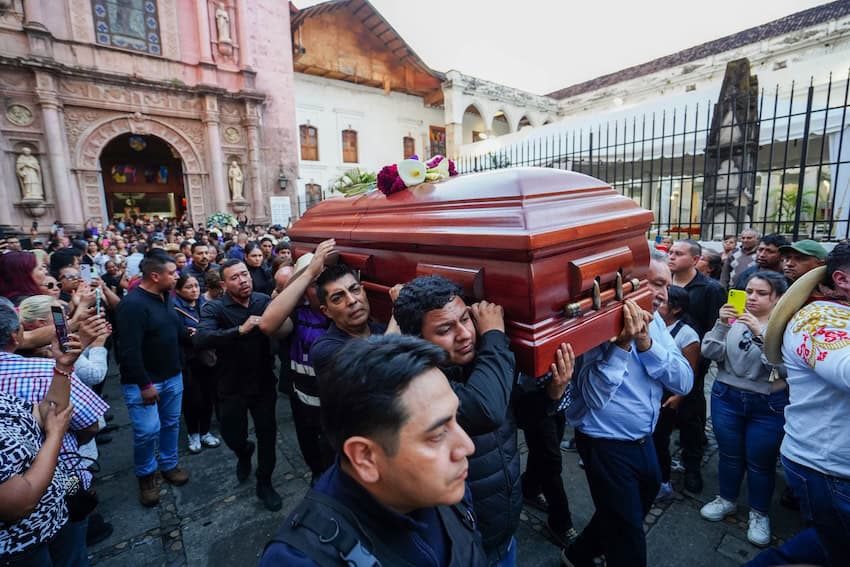
Mayor Carlos Alberto Manzo RodrĂ­guez was assassinated during a Day of the Dead celebration in the main square of Uruapan, in the violence-torn Mexican state of Michoacán. He had been an outspoken opponent of the drug cartels and their reign of terror in the state, and his death sparked protests across Michoacán. The US State Department said in response to the killing that the United States is ready to “deepen security cooperation with Mexico to wipe out organized crime on both sides of the border.” But this comes as the specter of unilateral US intervention has been raised. NBC News reports that the White House has started planning a “potential mission” involving US troops and intelligence officers to target the cartels on Mexican soil. (Photo: Juan JosĂ© Estrada SerafĂ­n/Cuartoscuro.com via Mexico News Daily)